
Traditional 358 mesh represents one of the best-known high-security configurations. Its narrow openings restrict convenient fingerholds and footholds. Wider mesh alternatives provide different levels of perimeter separation.
Understanding the entire assembly helps buyers select compatible components. It also prevents costly mistakes when comparing quotations. This guide explains how the system works, what each component does, and how contractors install it.
What Is Clear View Fence System? Basic Definition
A Clear View fence system creates a visible perimeter barrier using rigid welded steel mesh. Vertical and horizontal wires form rectangular openings. Steel posts support the panels at regular intervals.
Specialised clamps connect the mesh to the posts. Concrete foundations or approved base plates provide structural support. Gates create controlled entry points.
Unlike solid walls, the mesh allows people to observe activity beyond the boundary. This visibility supports security guards and CCTV systems. Narrow openings also make climbing more difficult than many wide-aperture fences.
The complete assembly matters more than an individual panel. Weak posts or incompatible fittings can undermine otherwise strong mesh. Buyers should therefore assess every component together.
What Is Clear View Fence System Compared With Ordinary Fencing?
Traditional chain-link fencing uses flexible interwoven wire. Clear View fencing uses rigid welded intersections. These construction methods produce different handling and installation characteristics.
Palisade fencing relies on spaced vertical steel members. Clear View mesh instead creates a continuous welded grid. Its open structure supports surveillance across the boundary.
Solid concrete walls provide visual privacy. However, they also obstruct views through the perimeter. Clear View fencing prioritises observation alongside physical separation.
What Is Clear View Fence System Made Of?
Manufacturers commonly use low-carbon steel wire for welded mesh production. Suitable steel grades support wire drawing, straightening, and resistance welding. The original BMP reference specifies Q195 steel.
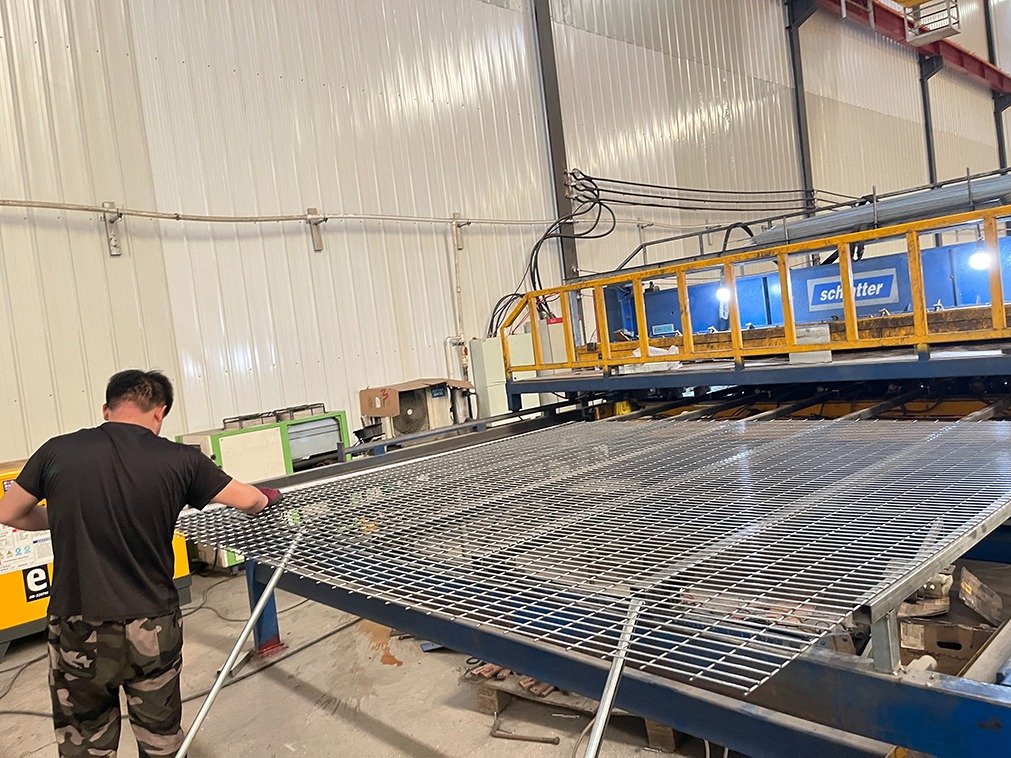
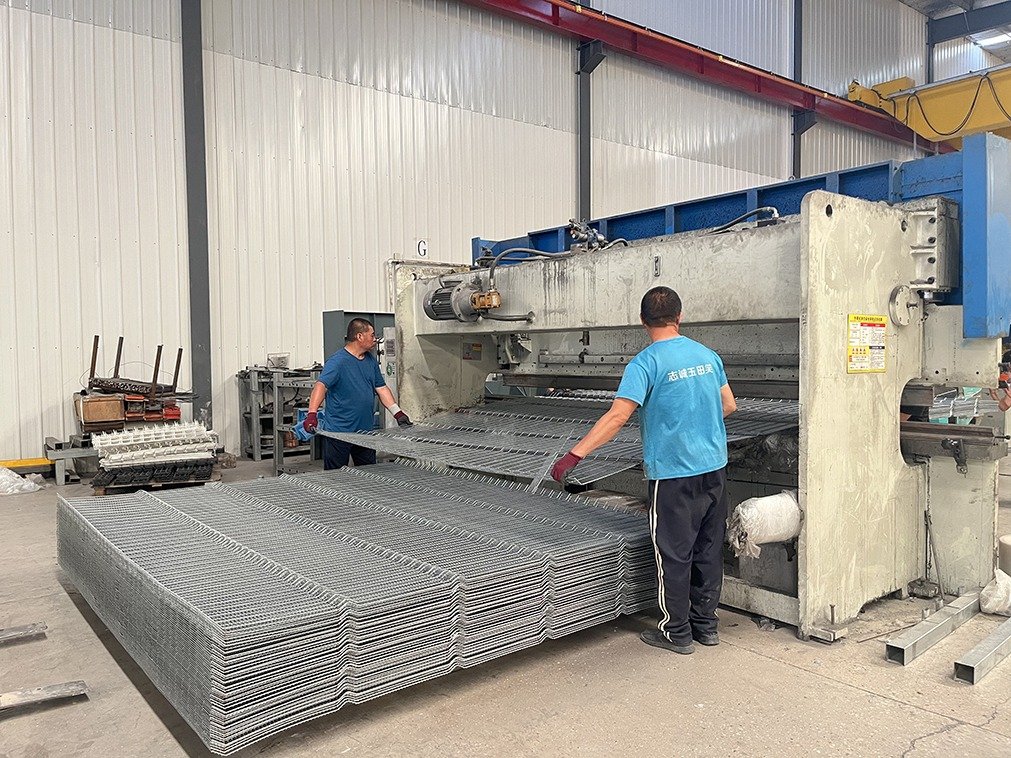
Production begins with preparing the required wire diameters. Welding equipment joins the horizontal and vertical wires. Workers then inspect panel geometry and welded intersections.
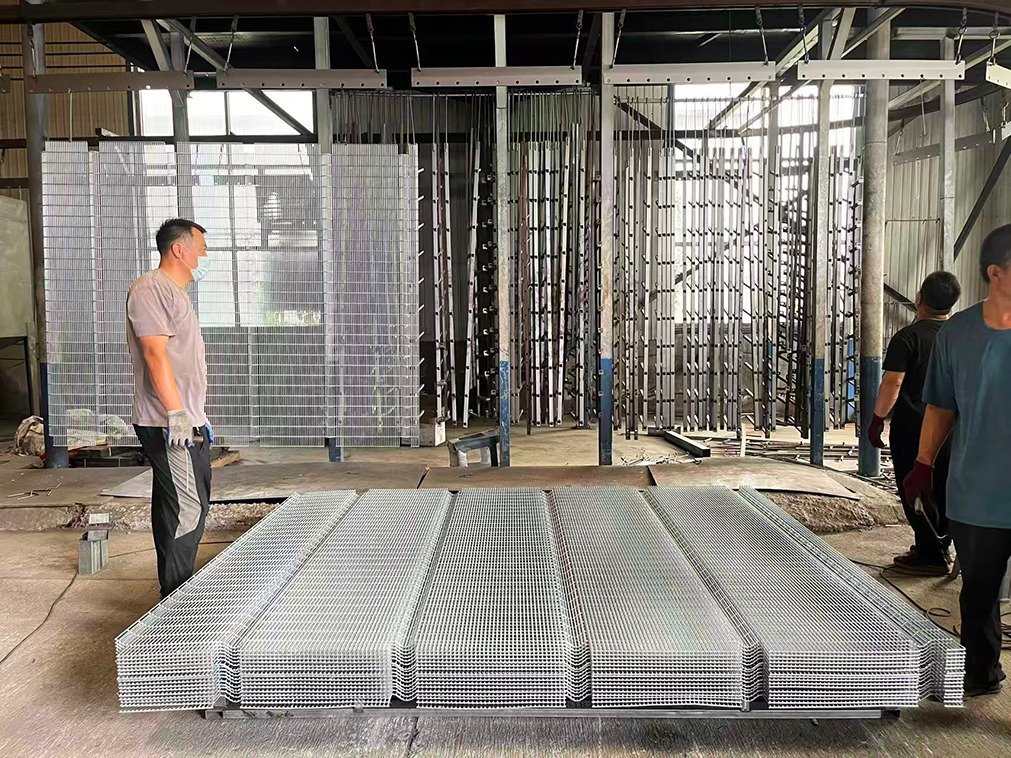
Some panels receive reinforcing bends. Others retain a completely flat profile. The selected surface treatment protects the finished steel against environmental exposure.
Low-Carbon Steel Wire
Low-carbon steel offers useful forming and welding characteristics. Actual mechanical properties depend on the selected material and manufacturing process. Buyers should request material certificates when contracts require them.
The original reference lists tensile strength between 500 and 650 MPa. However, this range requires verification for the actual wire grade. It should not automatically apply to every Clear View product.
What Is Clear View Fence System Welding Technology?
Resistance welding joins intersecting wires using controlled electrical current and pressure. Consistent production settings help maintain reliable joints. Weld quality influences panel integrity.
Factory inspections should identify incomplete welds and dimensional distortion. Contract specifications may also require mechanical testing. Suppliers should document the applicable acceptance criteria.
What Is Clear View Fence System Security Classification?
Clear View fencing includes low-, medium-, and high-security mesh configurations. The principal difference involves the spacing between adjacent wires. Wire diameter and fixing strength also influence performance.
| Security Grade | Nominal Mesh Centres | Typical Application | Main Characteristic |
|---|---|---|---|
| Low Security | 75 × 50 mm | General boundaries | Wider openings |
| Medium Security | 75 × 25 mm | Commercial properties | Intermediate mesh density |
| High Security | 76.2 × 12.7 mm | Industrial and sensitive sites | Narrow anti-climb openings |
These classifications describe common product categories rather than universal certified ratings. Project specifications should define the required performance. Different manufacturers may offer alternative dimensions.
Low-Security Clear View Mesh
Low-density mesh uses relatively wide openings. This design can reduce horizontal wire consumption. It may suit properties requiring visibility and general boundary separation.
Buyers should not assume every wide-mesh panel offers high anti-climb resistance. Site risks determine the appropriate selection. Security reviews should also consider nearby structures.
Medium-Security Clear View Mesh
Medium-density panels provide narrower openings than basic configurations. Commercial developments may choose these systems for balanced security requirements. Actual costs depend on wire diameter and finish.
Selected Clear View Mesh Fencing configurations support different perimeter applications. Contractors should confirm mesh centres before ordering.
What Is Clear View Fence System High-Security Mesh?
High-security configurations commonly use 358 mesh geometry. Narrow horizontal spacing restricts convenient climbing holds. Dense welded intersections also complicate some attacks with ordinary hand tools.
However, no steel fence guarantees complete intrusion prevention. Gates, posts, and nearby objects can create alternative vulnerabilities. Effective security requires coordinated planning.
Industrial buyers often select High Security Clearvu Fencing for demanding boundaries. The complete installation must match the required security specification.
What Is Clear View Fence System 358 Mesh?
The number 358 comes from traditional imperial measurements. Three inches describes one mesh dimension. Half an inch describes the narrower spacing.
Eight gauge refers to the approximate traditional wire diameter. In metric terms, the familiar configuration uses 76.2 × 12.7 mm centres. Wire diameter measures approximately 4 mm.
Understanding Wire Centre Measurements
Mesh centres measure distances between adjacent wire centre lines. They do not describe the exact open space between wires.
For example, a 12.7 mm pitch with 4 mm wire leaves approximately 8.7 mm clear space. Coatings and manufacturing tolerances can influence the final opening.
This distinction matters during technical comparisons. Suppliers should specify both wire diameter and centre spacing. Buyers can review Clear Fence designs for additional reference configurations.
358 Versus 3510 Mesh
The 3510 designation describes a related close-mesh concept using approximately ten-gauge wire. Its wire diameter differs from traditional eight-gauge 358 mesh.
Both designs can use narrow rectangular openings. However, their material weights and mechanical characteristics differ. Buyers should confirm exact metric dimensions.
What Is Clear View Fence System Anti-Climb Performance?
Climbing usually requires usable handholds and footholds. Narrow horizontal spacing limits convenient gripping positions. A smooth welded grid also reduces obvious climbing points.
Nevertheless, fence height and surrounding conditions influence real-world protection. Trees, stored materials, and adjacent buildings may provide alternative access. Security teams should assess the complete perimeter.
What Is Clear View Fence System Panel Specification?
Panel dimensions influence installation planning, structural design, and transport. Manufacturers offer different heights and widths. Custom sizes may suit unusual boundaries.
| Panel Height | Reference Width | Reference V-Bends |
|---|---|---|
| 1800 mm | 3000 mm | 3 |
| 2000 mm | 3000 mm | 3 |
| 2100 mm | 3000 mm | 3 |
| 2400 mm | 3000 mm | 4 |
| 3000 mm | 3000 mm | 5 |
These figures retain the original reference schedule for formed panels. Flat 358 panels may have no V-bends. Final drawings must establish actual panel geometry.
Panel Width Options
Common reference widths include 2300, 2400, 2500, 2900, and 3000 mm. Some systems also use approximately 3305 mm panels. Width affects post quantities and transport arrangements.
Wider panels can reduce the number of intermediate posts. However, structural loading and installation constraints may limit their suitability. Contractors should not assume automatic cost savings.
What Is Clear View Fence System Wire Diameter?
Manufacturers commonly offer 3.0, 4.0, 4.5, and 5.0 mm wire options. Some panels combine different horizontal and vertical diameters.
| Wire Combination | Vertical Wire | Horizontal Wire | Consideration |
|---|---|---|---|
| Option A | 3.0 mm | 3.0 mm | Lower steel content |
| Option B | 4.0 mm | 3.0 mm | Mixed wire arrangement |
| Option C | 4.0 mm | 4.0 mm | Traditional 358 reference |
| Option D | Custom | Custom | Project-specific design |
Thicker wire generally increases steel consumption. However, weld strength and fixing details also influence performance. Buyers should compare complete specifications.
What Is Clear View Fence System Panel Structure?
Panel structure influences stiffness, appearance, and installation. Manufacturers commonly offer flat and formed welded mesh designs. Some products also use additional reinforcing wires.
2D Flat Mesh Panels
Flat panels maintain a uniform surface without reinforcing folds. Traditional high-security 358 fencing commonly follows this arrangement. Compatible posts and clamps provide structural support.
Flat mesh offers a consistent visual pattern. However, panel strength still depends on wire diameter and fixing design. Engineers should confirm structural requirements.
3D V-Bend Panels
V-shaped folds introduce geometric stiffness. Manufacturers position these bends across selected panel heights. Their number depends on the approved design.
Formed panels can suit commercial and residential applications. Nevertheless, V-bends do not automatically establish a security certification. Buyers should review the entire system.
What Is Clear View Fence System 2D Plus Construction?
Some 2D designs include additional horizontal reinforcing wires. These wires increase steel content and change panel stiffness. Their positions depend on the manufacturer.
Contractors should verify clamp compatibility. Extra wires can affect connection geometry. Approved drawings must define the arrangement.
What Is Clear View Fence System Post Design?
Steel posts support welded mesh panels along the boundary. Their geometry influences installation and structural performance. Different systems use different sections.
| Post Type | Reference Section | Typical Feature |
|---|---|---|
| Square Post | 60 × 60 mm | Flat fixing faces |
| Round Post | Ø60 mm | Curved fixing surface |
| I-Section Post | 70 × 44 mm | Profile-specific connections |
| IPE Post | 100 × 55 mm | Structural steel profile |
| Tapered Post | Custom profile | Dedicated clamp arrangement |
These dimensions represent possible product configurations. They do not establish universal engineering requirements. Post selection depends on wind, soil, panel height, and loading.
Square Steel Posts
Square posts provide convenient flat mounting faces. Compatible clamps attach the mesh to the steel. Post caps help limit debris and moisture entry.
Some projects use embedded posts. Others require base plates and suitable anchors. Engineers should approve the foundation arrangement.
What Is Clear View Fence System with IPE Posts?
IPE posts use a different structural profile. Their flange geometry requires compatible connection hardware. Installers should check clamp positions before construction.
Specialised post systems may suit selected industrial projects. However, the design must match the actual loads. Contractors should follow approved installation drawings.
Tapered Posts
Tapered posts combine a shaped steel section with dedicated panel connections. Their geometry can support selected ClearVu designs. Suitable clamps remain essential.
Buyers should compare Clear Vu Fence systems when selecting matching components. Post compatibility influences the finished installation.
What Is Clear View Fence System Connection Technology?
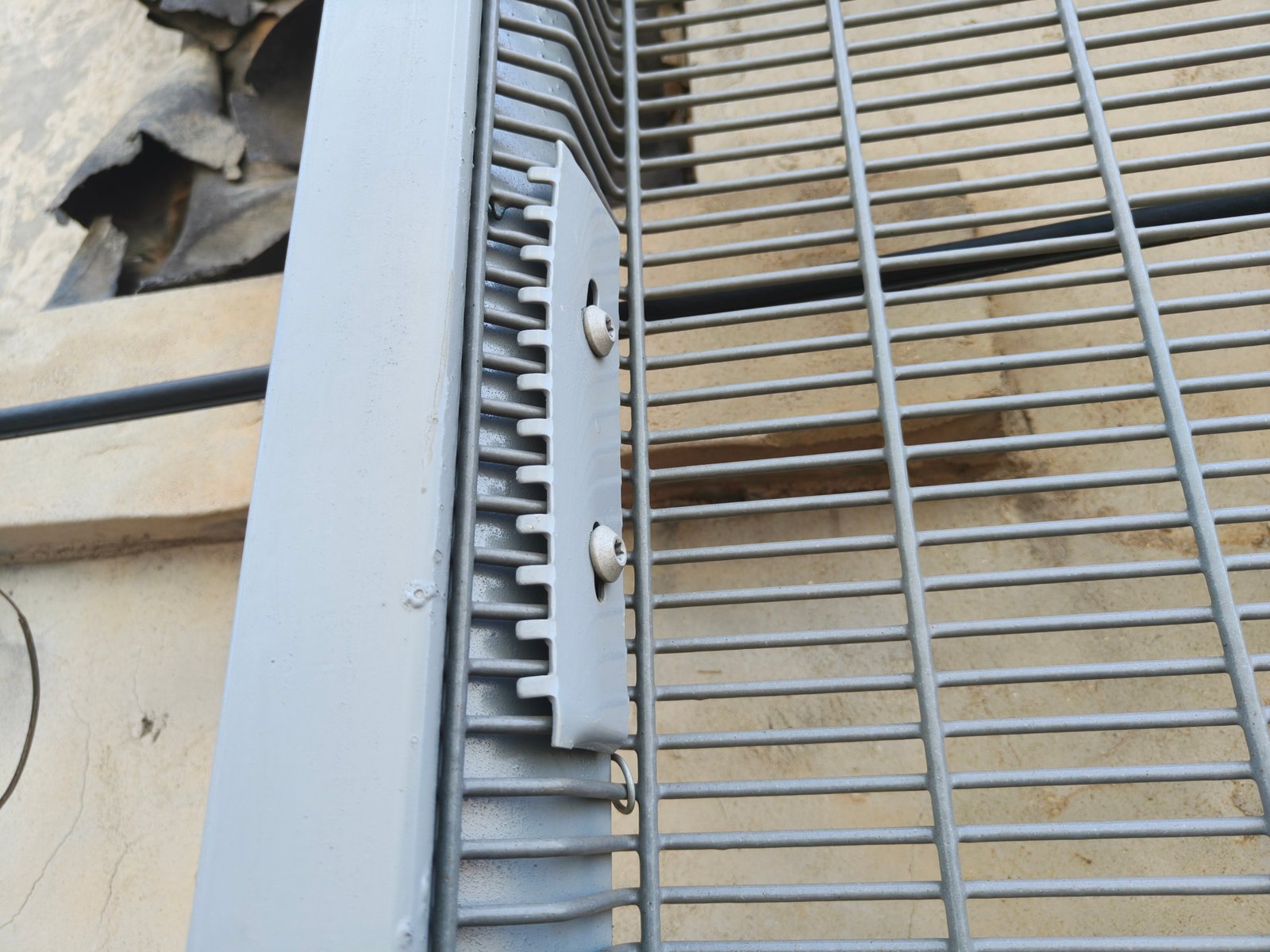
Clamps connect mesh panels to supporting posts. Different designs use spider clamps, flat bars, or shaped fixing plates. Security bolts help secure the connections.
Spider Clamps
Spider clamps grip selected mesh areas against compatible posts. Their dimensions must match the actual steel profile. Incorrect fittings can create loose connections.
Installers should verify bolt lengths and positions. Approved tightening procedures help maintain connection integrity. Missing hardware requires immediate correction.
Flat Bar Connections
Flat bars can secure panel edges along a vertical connection line. Some systems use multiple bolts throughout the bar. This arrangement differs from individual spider clamps.
Buyers should confirm the required steel thickness. Fastener spacing also matters. Connection drawings should specify all components.
What Is Clear View Fence System Security Fastening?
Security bolts and tamper-resistant nuts can discourage casual removal. Some assemblies use shear nuts. Others use specialised bolt heads.
Fastener selection depends on the security specification. Maintenance teams also need appropriate replacement procedures. No single fixing suits every fence system.
What Is Clear View Fence System Surface Treatment?
Surface protection helps steel resist corrosion. Manufacturers commonly offer galvanising, Galfan coatings, and compatible powder finishes. Some projects use thermoplastic coatings.
Actual durability depends on the coating process and environmental exposure. Buyers should request relevant standards and test results. Marketing descriptions alone cannot establish coating performance.
Galvanised Steel
Galvanising applies zinc-based protection to steel. Pre-galvanised wire and post-fabrication hot-dip galvanising follow different manufacturing processes. Their specifications are not interchangeable.
The original article lists several coating masses. These values represent different reference options. Buyers should confirm the actual coating method.
| Coating Category | Original Reference Values | Important Consideration |
|---|---|---|
| Light Zinc Coating | 50–60 g/m² | Confirm actual process |
| Higher Zinc Coating | 255–275 g/m² | Confirm applicable specification |
| Galfan | 195–220 g/m² | Verify alloy and coating mass |
| Powder Coating | 60–80 microns | Confirm pretreatment |
| Thermoplastic Coating | 250 microns minimum | Confirm selected product |
What Is Clear View Fence System Powder Coating?
Powder coating creates a coloured protective layer. Electrostatic application helps powder adhere before curing. Suitable pretreatment supports coating performance.
Popular colours include RAL 6005 green and RAL 9005 black. Buyers can request other colours when production permits. Colour selection should match the project requirements.
Galfan Coating
Galfan commonly uses a zinc-aluminium alloy. Its characteristics differ from ordinary zinc coatings. Buyers should verify alloy composition and coating mass.
Some projects combine Galfan with an additional organic coating. This creates a different protective system. The contract should specify the required finish.
What Is Clear View Fence System Used For?
Clear View fencing serves many property types. Its open mesh supports surveillance while creating a defined boundary. Security requirements vary between applications.
Residential Estates
Residential developments often require security without blocking outdoor views. Welded mesh can complement landscaped boundaries. Suitable gates manage visitor and resident access.
Architectural colour choices also influence appearance. Green panels can blend with vegetation. Black finishes suit selected modern buildings.
What Is Clear View Fence System for Warehouses?
Warehouses need controlled entrances and visible perimeter lines. Security staff benefit from unobstructed observation. CCTV can monitor loading areas through the mesh.
Vehicle gates must accommodate operational traffic. Corner posts require suitable protection. Lighting improves monitoring after dark.
Industrial Facilities
Industrial sites may require taller panels and stronger posts. Equipment yards also need reliable access control. Security plans should address nearby climbing aids.
For these applications, Anti-Climb Security Fencing offers relevant configurations. Engineers must assess the complete perimeter.
Schools and Public Infrastructure
Public facilities may prioritise visibility and controlled entry. Mesh fencing can separate restricted areas from public spaces. Safety requirements should guide design.
Sharp security toppings may be unsuitable in some locations. Gate hardware also requires careful selection. Local regulations remain important.
What Is Clear View Fence System for South African Environments?
South Africa includes coastal, inland, industrial, and residential environments. These locations create different installation challenges. Climate and security planning both influence product selection.
Durban Coastal Conditions
Durban experiences humid coastal conditions and airborne salts. Such exposure can accelerate corrosion on inadequately protected steel. Industrial environments may create additional challenges.
Appropriate galvanising and compatible coatings can improve protection. Maintenance teams should inspect damaged edges. Gate hardware also requires attention.
Commercial projects may use Clearview Fencing Durban configurations for visible perimeter protection.
What Is Clear View Fence System for Cape Town?
Cape Town combines coastal exposure with significant wind conditions in many areas. Taller fences require suitable structural design. Post foundations must reflect actual loads.
Marine exposure can also affect coating selection. Contractors should consider site orientation. Routine inspections help identify corrosion damage.
Buyers can compare Clear View Fence Cape Town systems when planning coastal installations.
Johannesburg Industrial Properties
Johannesburg contains extensive industrial and logistics facilities. These properties often require visible boundaries and controlled vehicle access. Security cameras can complement welded mesh fencing.
Site risks vary between neighbourhoods and properties. Security planning should reflect actual conditions. Gates and lighting deserve particular attention.
KwaZulu-Natal Commercial Projects
KwaZulu-Natal includes coastal industrial zones and inland developments. Environmental exposure changes across the province. Buyers should avoid using one coating specification everywhere.
Security needs also differ between factories and residential estates. Appropriate mesh density supports each application. Post and foundation design require separate review.
What Is Clear View Fence System Installation Process?
Installation begins with accurate site measurements. Contractors should confirm boundary positions, gate openings, and ground conditions. Approved drawings establish the final arrangement.
Step 1: Survey the Boundary
Measure the proposed fence line. Mark corners and access points. Identify underground services before excavation.
Record slopes and drainage routes. These conditions can affect panel positioning. Accurate planning reduces installation delays.
Step 2: Mark Post Positions
Use the approved panel dimensions to establish post centres. String lines help maintain alignment. Gate openings may require different spacing.
Never assume nominal panel width equals installed post spacing. Clamp geometry can change effective coverage. Check the manufacturer's drawing.
What Is Clear View Fence System Foundation Preparation?
Excavate foundations according to approved engineering details. Soil conditions influence required dimensions. Taller fences may need stronger supports.
The original article suggests a 300 × 300 × 500 mm hole. However, this example cannot establish a universal foundation requirement. Engineers must confirm suitable dimensions.
Step 4: Install Steel Posts
Position each post accurately. Temporary supports can maintain vertical alignment. Check levels before concrete placement.
Allow concrete to achieve the required condition. Curing depends on the specified mix and environment. Premature loading may disturb alignment.
Step 5: Attach Mesh Panels
Position the first panel against its supporting posts. Install compatible clamps and security bolts. Follow the approved fixing schedule.
Continue along the fence line. Check alignment at each stage. Avoid forcing panels between incorrectly positioned posts.
What Is Clear View Fence System Final Inspection?
Inspect post alignment and panel connections. Confirm that all required fasteners are present. Check coating damage and ground clearance.
Test pedestrian and vehicle gates. Record outstanding defects. Complete the installation report before handover.
What Is Clear View Fence System Gate Integration?
Gates create controlled openings within the security boundary. Different applications require pedestrian, double swing, or sliding systems. Their structural requirements differ from ordinary fence panels.
Pedestrian Gates
Pedestrian gates provide controlled entry for staff and visitors. Hinges and locks must suit the intended operation. Gate frames should match surrounding security requirements.
Double Swing Gates
Double swing gates use two hinged leaves. Their posts experience additional operational loads. Suitable foundations remain essential.
Gate stops and locking arrangements require inspection. Vehicle clearance must match site needs. Installation teams should test full movement.
What Is Clear View Fence System Sliding Gate Design?
Sliding gates move laterally along a suitable travel path. Some systems use ground tracks. Others use cantilever arrangements.
Motorised installations require compatible safety equipment. Qualified technicians should complete electrical work. Emergency operation also needs testing.
What Is Clear View Fence System Security Accessories?
Optional accessories can support additional perimeter protection. Their suitability depends on the site and applicable regulations. Some products require specialised installation.
| Accessory | Purpose | Important Consideration |
|---|---|---|
| Security Spikes | Climbing deterrence | Safety and legal requirements |
| Razor Wire | Additional perimeter barrier | Specialist installation |
| Barbed Wire | Supplementary boundary protection | Approved support arms |
| Y-Arms | Support approved toppings | Structural loading |
| Security Bolts | Discourage casual removal | Compatible fixing system |
| Post Caps | Protect hollow post openings | Suitable material and fit |
| CCTV | Perimeter monitoring | Lighting and camera placement |
| Gate Access Control | Manage authorised entry | Operational safety |
What Is Clear View Fence System with Razor Wire?
Some industrial boundaries combine mesh panels with approved razor wire arrangements. Supporting arms increase the overall assembly height. Additional loading requires engineering review.
Sharp materials create significant handling hazards. Qualified contractors should follow applicable regulations. Public-facing installations require particular care.
Electric Fence Extensions
Electric fencing may complement selected security boundaries. However, energised systems require specialised electrical design. Warning signs and safety measures remain essential.
Only qualified personnel should install these systems. Local regulations govern their operation. Ordinary fencing contractors should not improvise electrical connections.
What Is Clear View Fence System Packaging Method?
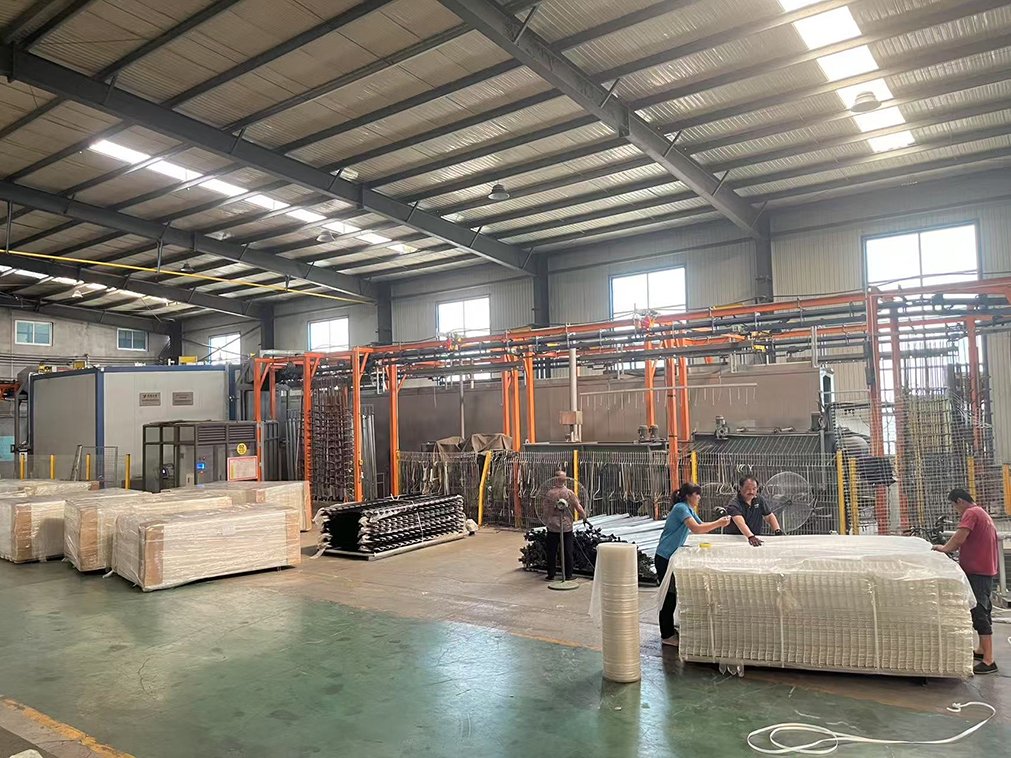
Export packaging protects steel components during handling and transport. Manufacturers commonly separate panels, posts, and accessories. Suitable packaging helps reduce coating damage.
| Component | Typical Packaging | Purpose |
|---|---|---|
| Mesh Panels | Steel pallets | Support stacked panels |
| Steel Posts | Bundles or pallets | Organise long components |
| Clamps | Cartons or suitable containers | Prevent losses |
| Bolts and Nuts | Labelled cartons | Identify quantities |
| Post Caps | Protective cartons | Prevent damage |
| Gate Assemblies | Protective packing | Support safe handling |
Panel Packaging
Steel pallets can support stacked welded mesh panels. Protective separators help reduce contact damage. Packaging must suit panel geometry and transport conditions.
Post Packaging
Long posts require secure bundling. Suitable supports help prevent movement. Labels should identify lengths and sections.
What Is Clear View Fence System Export Documentation?
Export shipments commonly require commercial invoices and packing lists. Additional documents depend on destination requirements. Importers should confirm customs procedures.
Buyers sourcing Clearview Fencing from China should compare shipping terms and packaging quantities. Container capacity depends on actual dimensions.
What Is Clear View Fence System Compared With Temporary Fencing?
Permanent Clear View fencing requires structural posts and foundations. Temporary fencing uses portable components for short-term separation. Their intended applications differ.
Construction sites may use Temporary Fencing before installing a permanent boundary. Portable panels can accommodate changing work areas.
Some projects need Temporary Hoarding for visual screening. Solid hoarding differs from see-through welded security mesh.
Public events may also require Crowd Control Barriers for pedestrian management. These products serve different operational purposes.
What Is Clear View Fence System Maintenance?
Routine maintenance helps preserve structural and coating performance. Inspection frequency depends on exposure and use. Coastal properties may need additional attention.
Inspect Clamps and Fasteners
Check for missing or loose hardware. Inspect panel movement and alignment. Replace damaged components with compatible fittings.
What Is Clear View Fence System Corrosion Maintenance?
Look for scratches and exposed steel. Clean accumulated dirt where appropriate. Repair coating damage using approved materials.
Salt exposure can accelerate deterioration. Regular washing may help in suitable environments. Follow the coating supplier's maintenance instructions.
Gate Maintenance
Inspect hinges, locks, and moving components. Check motorised systems according to manufacturer guidance. Remove obstructions from gate travel paths.
Test safety devices regularly. Record maintenance activities. Prompt repairs help prevent operational failures.
What Is Clear View Fence System Warranty Coverage?
Warranty coverage depends on the manufacturer and product specification. Buyers should request written terms before purchasing. Coating and installation conditions may affect eligibility.
BMP offers a 15-year manufacturer warranty for its ClearVu and Clearview fencing products, subject to written terms. Customers should review exclusions and maintenance obligations.
Long-term performance also depends on suitable installation. Poor foundations can cause structural problems. Incompatible hardware may damage protective finishes.
What Is Clear View Fence System Procurement Checklist?
International buyers should provide complete technical requirements. Accurate specifications help manufacturers prepare consistent quotations. Missing information can delay production.
| Requirement | Information Needed |
|---|---|
| Fence Length | Total linear metres |
| Panel Height | Required finished height |
| Panel Width | Nominal panel dimensions |
| Mesh Centres | Horizontal and vertical spacing |
| Wire Diameter | Both wire directions |
| Post Profile | Section, wall thickness, length |
| Fixing System | Clamp type and quantity |
| Surface Treatment | Coating process and specification |
| Colour | RAL reference |
| Gates | Type, width, quantity |
| Accessories | Caps, bolts, toppings |
| Destination | Port and delivery location |
What Is Clear View Fence System Quality Inspection?
Factory inspections should confirm wire diameter and mesh spacing. Panel dimensions also require measurement. Coating checks depend on the agreed specification.
Inspectors should examine welded intersections. Packaging quantities must match shipping documents. Buyers may request inspection photographs before dispatch.
Comparing Factory Quotations
Compare identical specifications across suppliers. Different wire diameters can create misleading price differences. Post thickness and coatings also affect costs.
Request an itemised component schedule. Confirm the agreed Incoterms. Check production lead times and payment conditions.
What Is Clear View Fence System? Frequently Asked Questions
Is Clear View Fencing the Same as 358 Fencing?
Not always. Clear View describes a broader product category. Traditional 358 fencing uses a specific narrow mesh reference.
What Makes Clear View Fencing Difficult to Climb?
Narrow openings restrict convenient fingerholds and footholds. However, overall protection depends on the complete perimeter design.
Can Clear View Fence Panels Be Cut?
Steel mesh can suffer damage from suitable cutting tools. Dense mesh may complicate certain attacks. No system guarantees absolute resistance.
What Is the Best Mesh Size?
The appropriate size depends on security requirements. High-security sites often consider 358 mesh. General boundaries may use wider openings.
Are V-Bends Necessary?
Some panel systems use V-bends for stiffness. Traditional flat 358 mesh may contain none. Buyers should follow approved specifications.
Can Clear View Fencing Use Round Posts?
Yes, suitable systems can use round posts. Compatible clamps are essential. Structural design must match the selected profile.
Which Coating Suits Coastal Properties?
Coastal environments require appropriate corrosion protection. Suitable galvanising and compatible coatings offer possible solutions. Maintenance remains important.
Can Buyers Order Custom Colours?
Manufacturers commonly offer different RAL colours. Availability depends on production arrangements. Confirm the final finish before ordering.
Does Clear View Fencing Support CCTV?
Its open mesh supports observation across the boundary. Camera placement and lighting determine monitoring effectiveness. Regular maintenance also helps.
Can I Import Complete Fence Kits?
Yes, manufacturers can supply panels, posts, clamps, and accessories. Buyers should confirm the definition of each kit. Packing lists must identify quantities.
What Is Clear View Fence System? Final Summary
What is clear view fence system? It is a coordinated security barrier combining welded mesh, steel posts, clamps, gates, and foundations. Narrow openings discourage climbing while preserving visibility.
Different mesh grades serve different applications. Suitable coatings help manage corrosion. Compatible fittings and approved structural design support reliable installation.
Successful purchasing requires complete technical specifications. Buyers should compare the entire system rather than panel prices alone. Accurate drawings and quality inspections reduce avoidable problems.
BMP manufactures ClearVu and Clearview fencing products for international projects. Available options include custom mesh panels, posts, security clamps, gates, and accessories.
For additional regional product options, ClearVu Fence Panels include related welded mesh configurations.