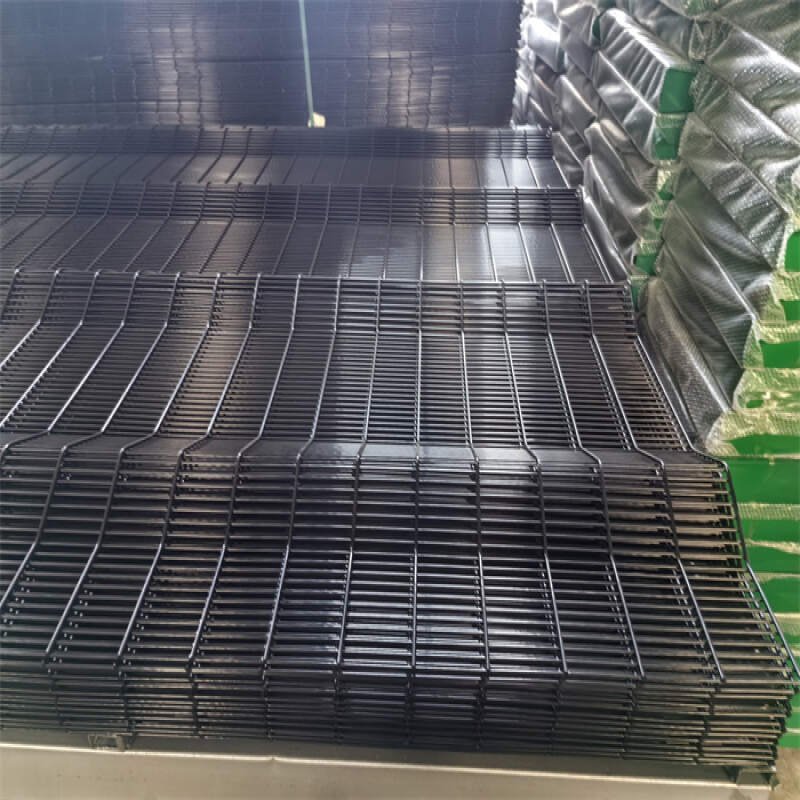
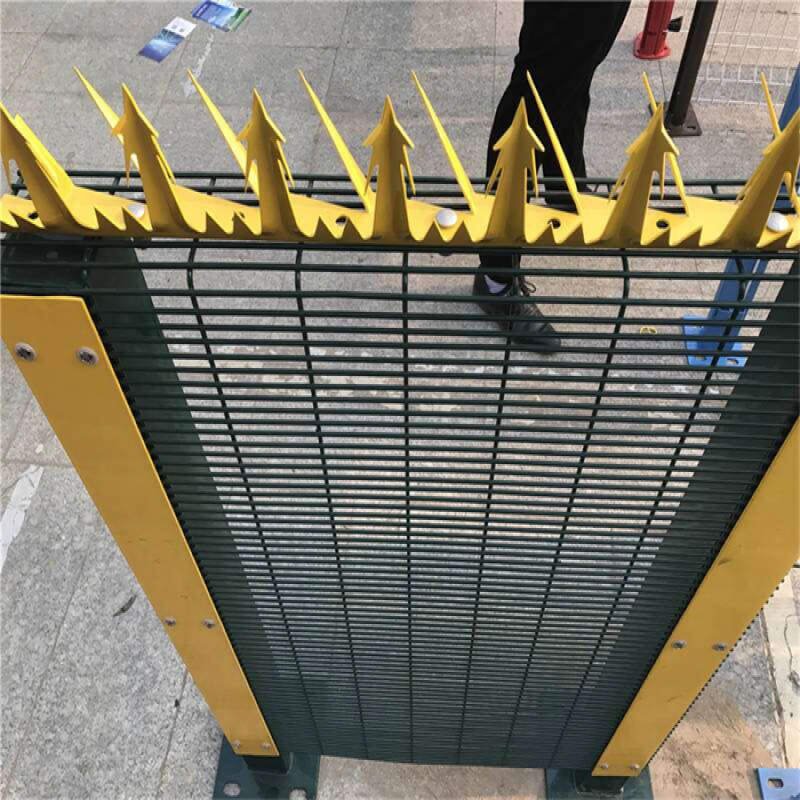
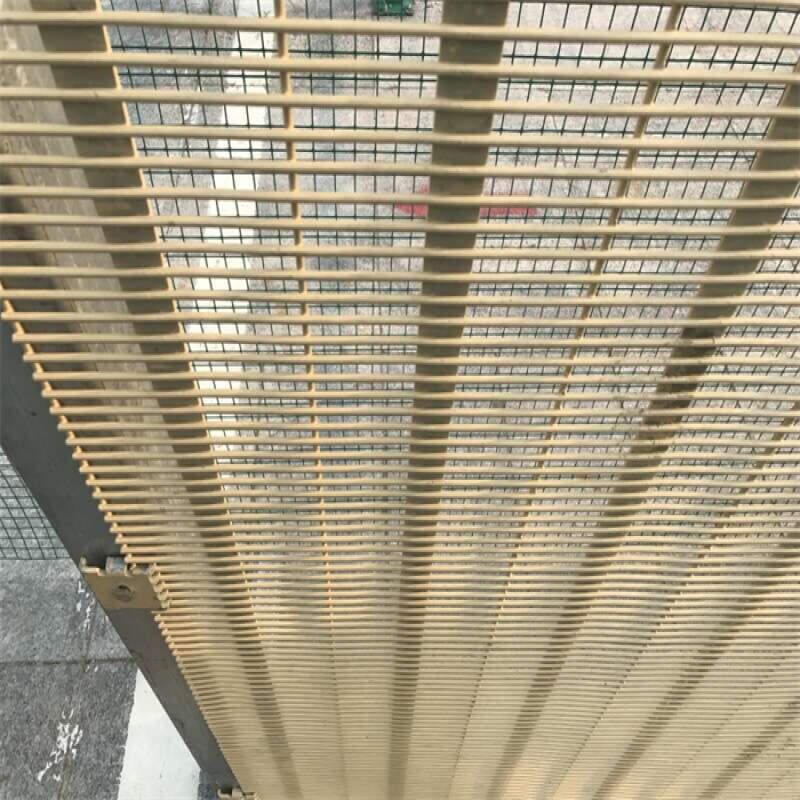
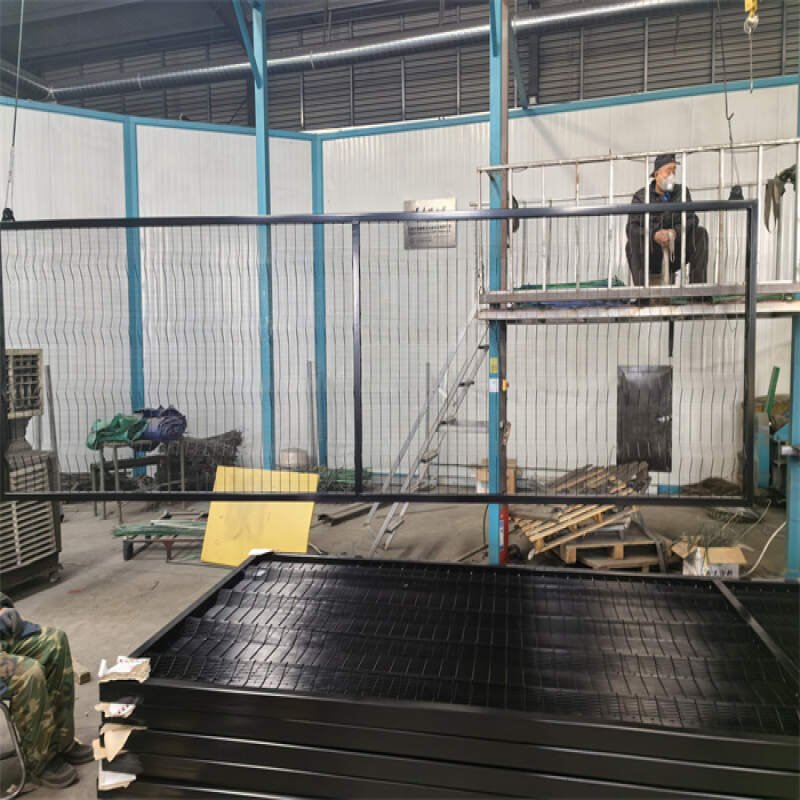
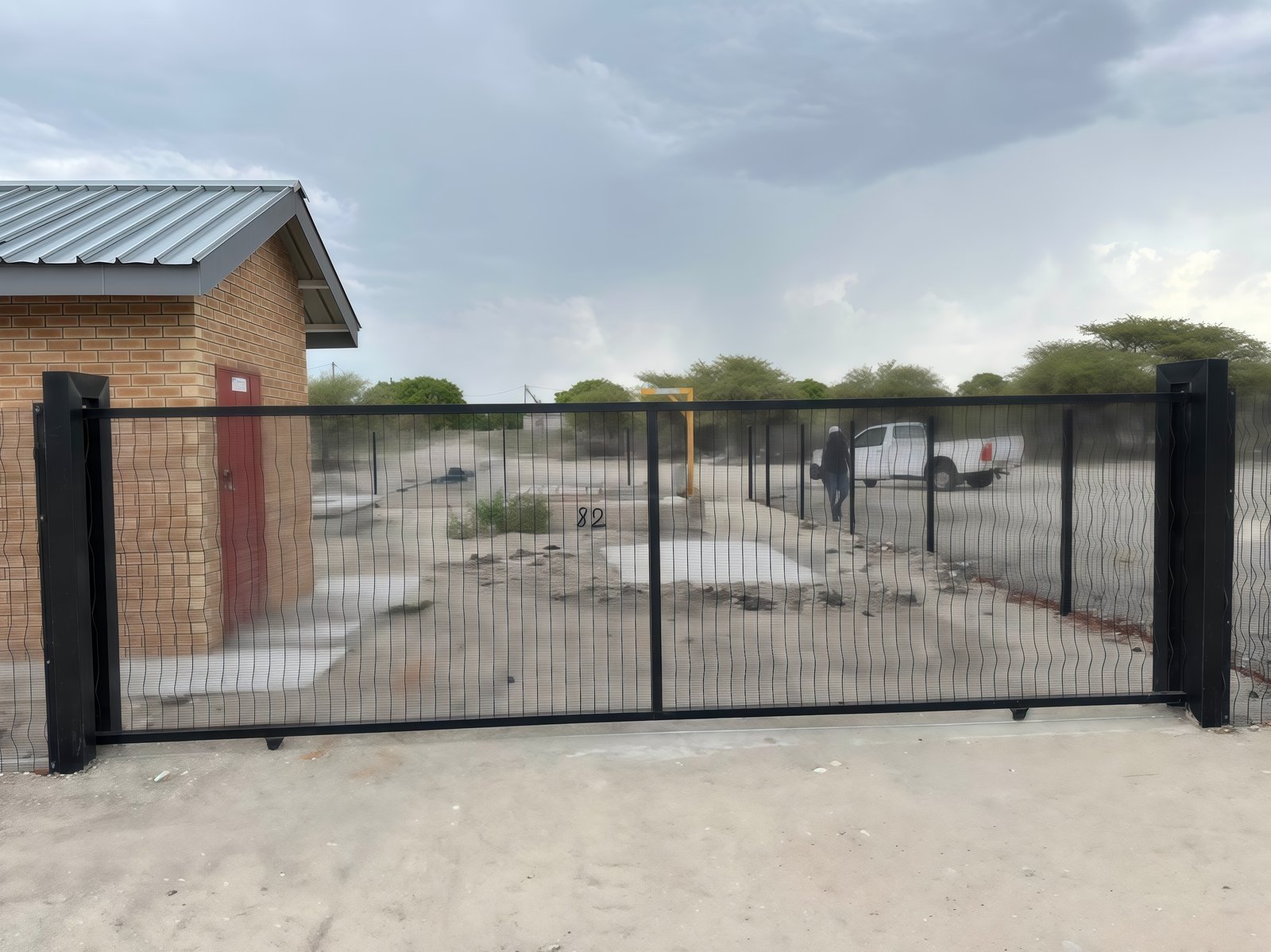
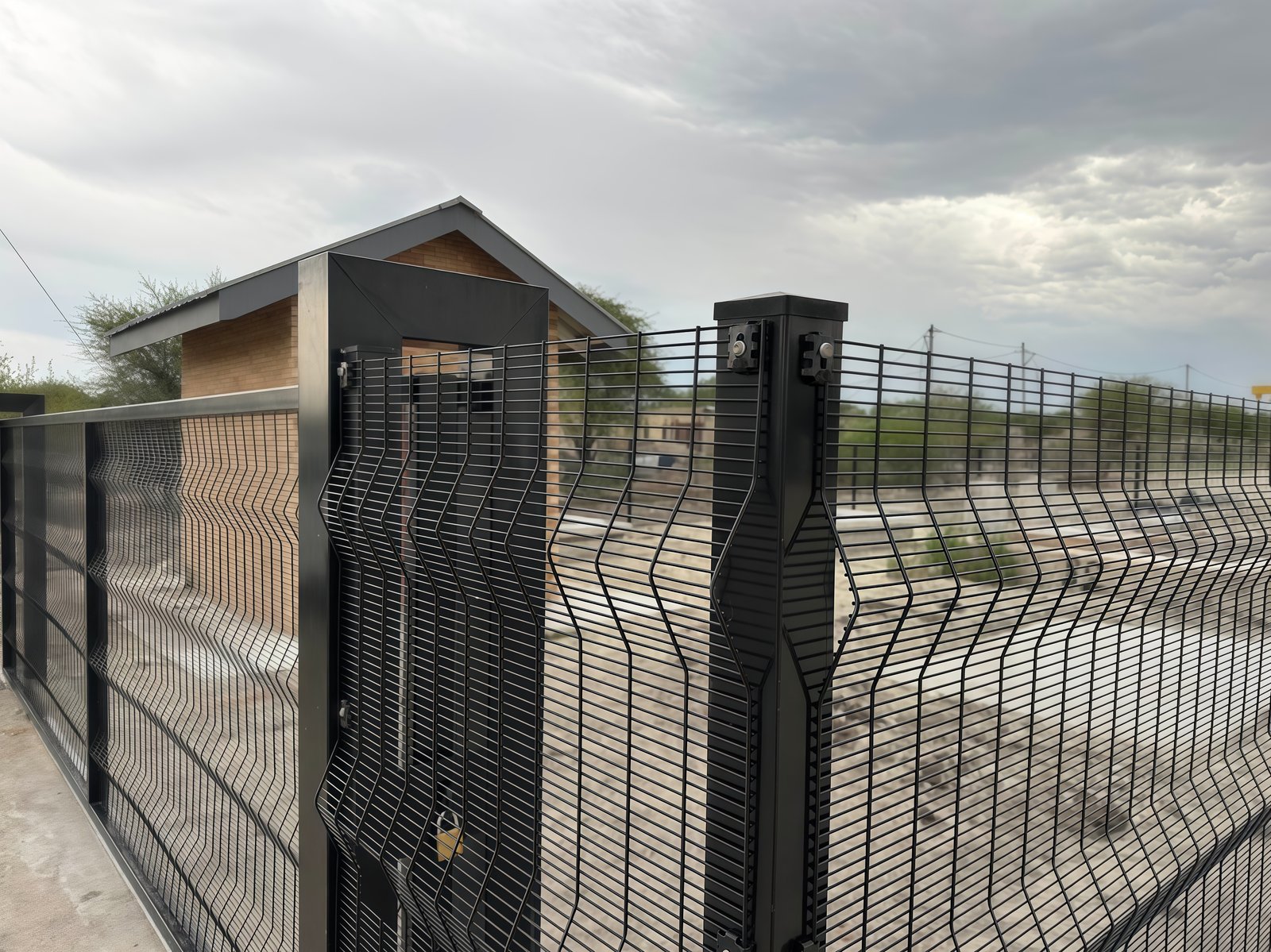
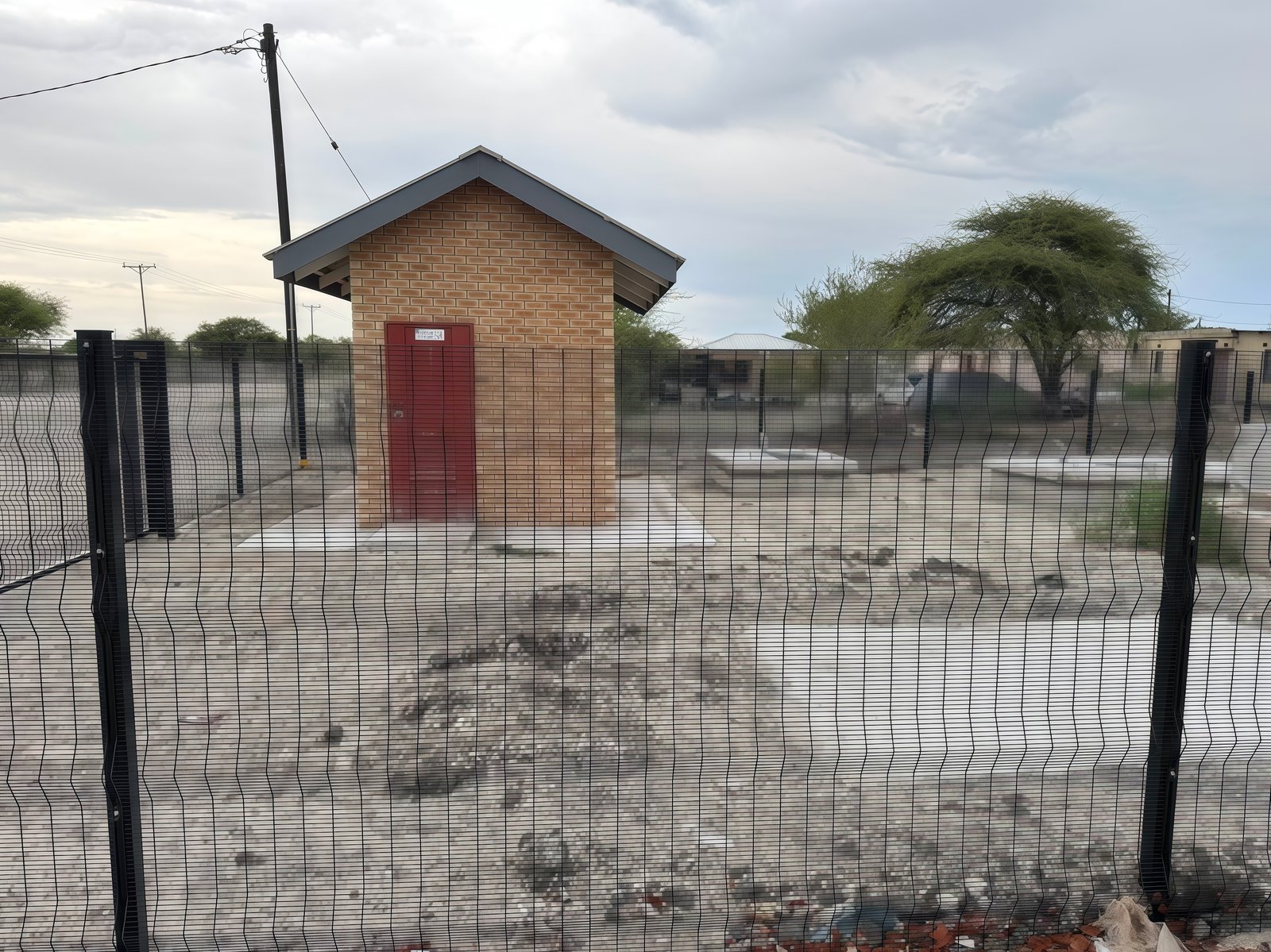
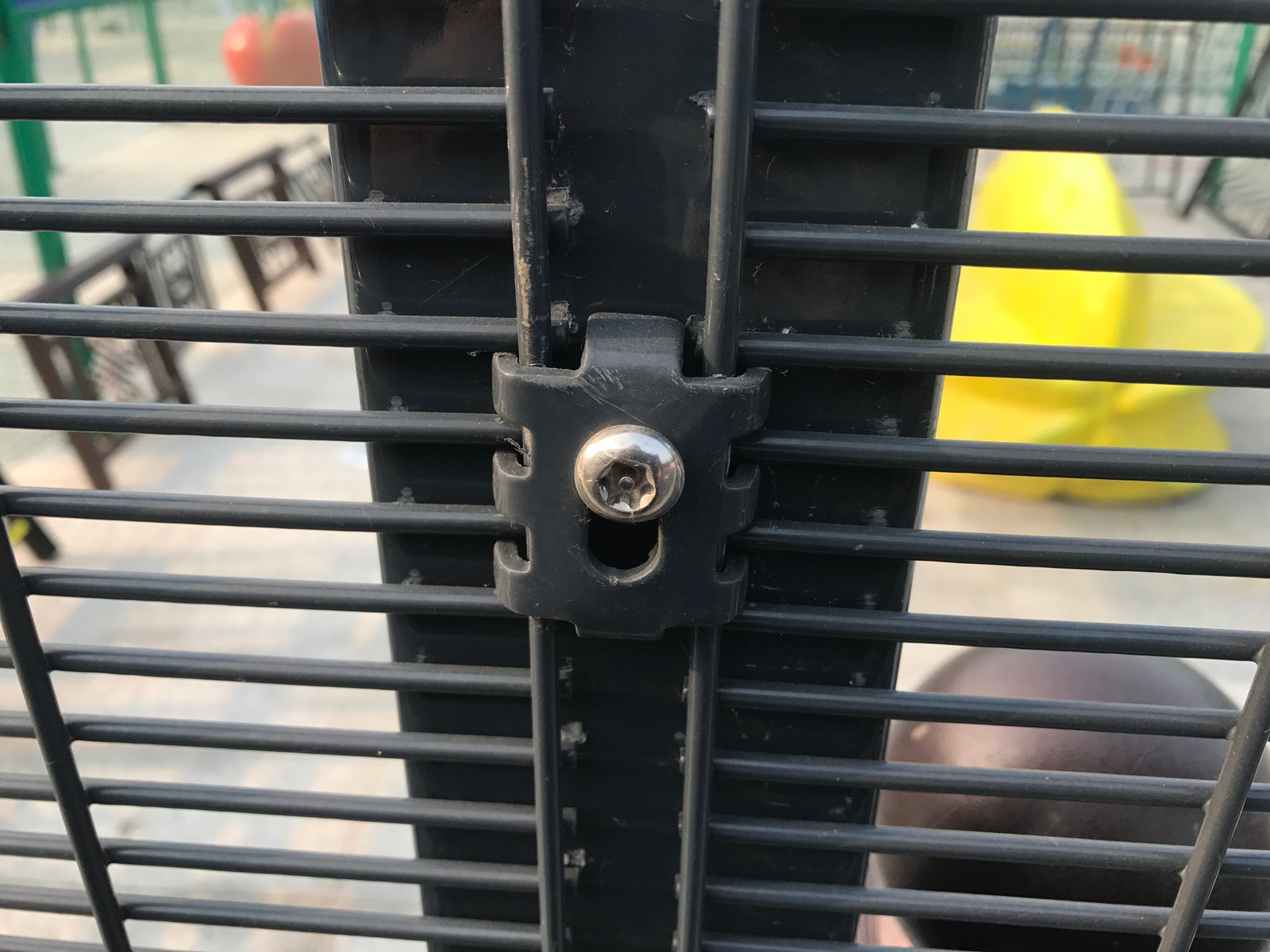
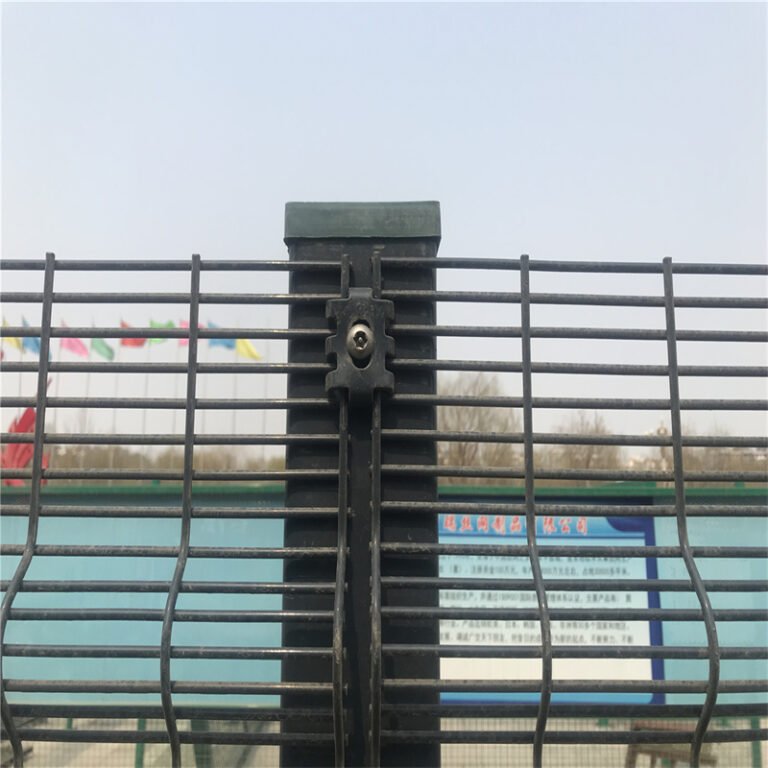
Description Galfan 358 mesh combines high-security welded steel construction with zinc-aluminium corrosion protection for demanding perimeter applications. BMP supplies this fencing system for prisons, airports, industrial compounds, mining facilities, and critical infrastructure. Its narrow openings discourage climbing while preserving visibility for cameras and security personnel. Durable alloy coatings help protect steel surfaces against moisture, atmospheric pollutants, and changing weather conditions.
Traditional security fences often face two challenges: unauthorized access and gradual deterioration. Galfan-coated fencing addresses both concerns through specialized wire geometry and protective metal technology. Strong welded intersections maintain panel rigidity, while closely spaced wires restrict ordinary footholds. Property owners also benefit from clear sightlines and compatible electronic security equipment.
BMP manufactures Galfan 358 mesh with several panel heights, structural posts, secure clamp bars, and optional colored finishes. Customers can request configurations that match engineering drawings, local conditions, and operational requirements. This guide explains the material, technical specifications, security benefits, installation methods, and important purchasing considerations.
What Is Galfan 358 Mesh?
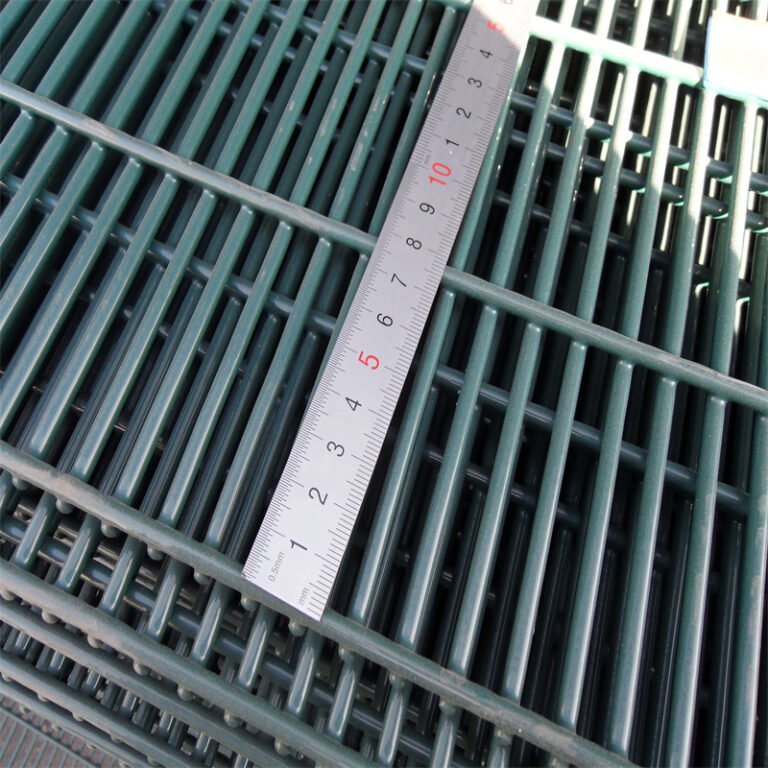
Galfan 358 mesh is a welded steel security fence that combines narrow rectangular apertures with zinc-aluminium alloy-coated wire. The designation 358 comes from traditional imperial measurements of three inches, half an inch, and eight-gauge steel wire. These dimensions correspond approximately to 76.2 mm horizontal spacing, 12.7 mm vertical spacing, and 4 mm wire diameter.
Manufacturers commonly describe this fencing system as prison mesh because its geometry discourages climbing. However, modern applications extend far beyond correctional facilities. Logistics centers, warehouses, airports, and private industrial properties also require dependable boundaries with limited climbing opportunities.
Each panel contains horizontal and vertical wires joined at regular intersections. The resulting structure provides substantial rigidity without creating an opaque perimeter wall. Appropriate posts, foundations, and secure connections complete the system.
Understanding the 358 Security Mesh Opening
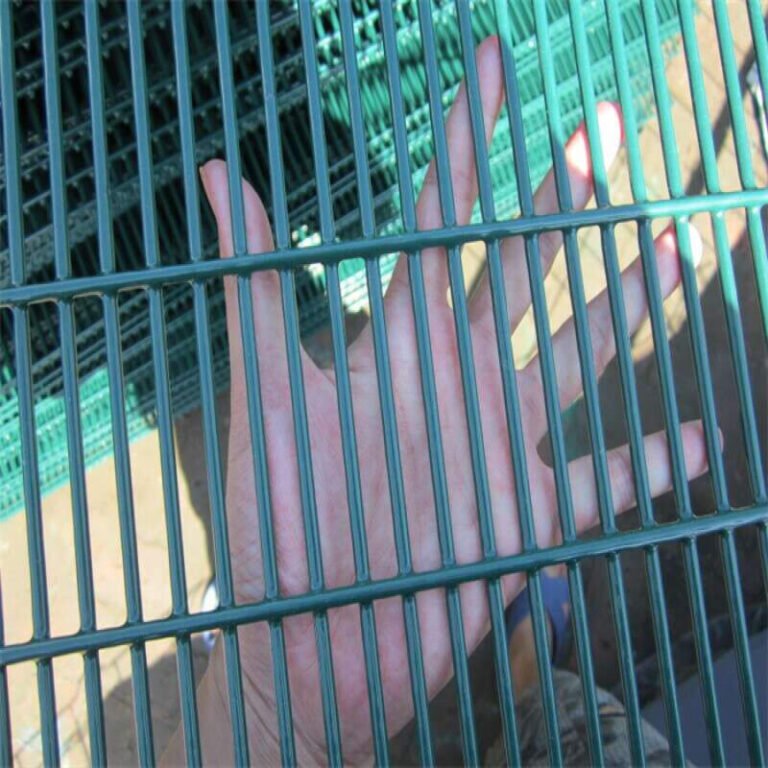
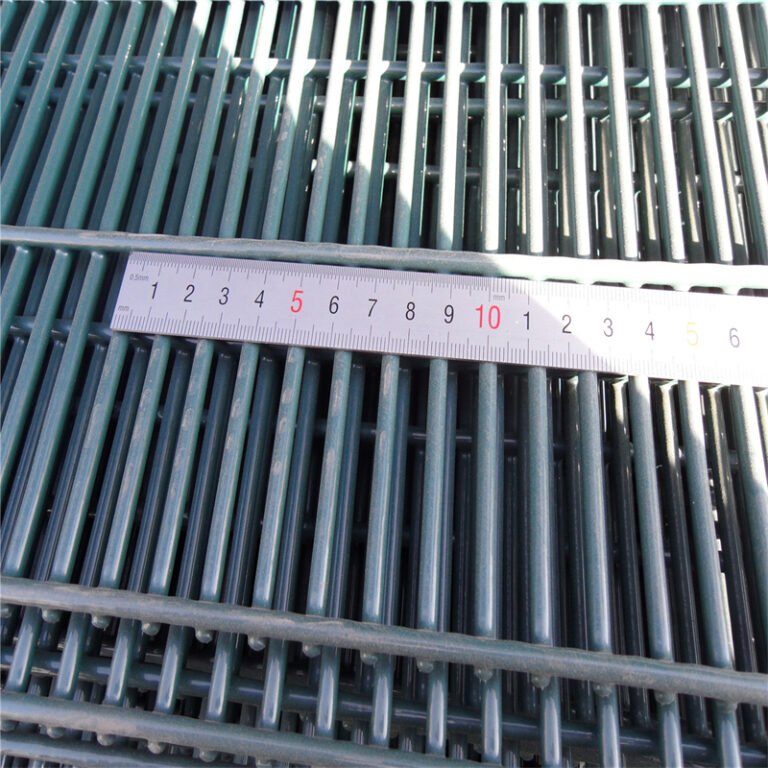
The standard nominal aperture uses 76.2 × 12.7 mm centre-to-centre wire spacing. Actual clear openings depend on the selected wire diameter. For example, 4 mm wires create approximate clear openings of 72.2 × 8.7 mm. Meanwhile, 5 mm wires reduce those dimensions to approximately 71.2 × 7.7 mm.
These small openings offer limited space for placing fingers or feet between adjacent wires. Conventional chain-link fencing generally provides larger openings and more accessible climbing points. Nevertheless, intrusion resistance depends on the complete installed system rather than mesh spacing alone.
 |
 |
 |
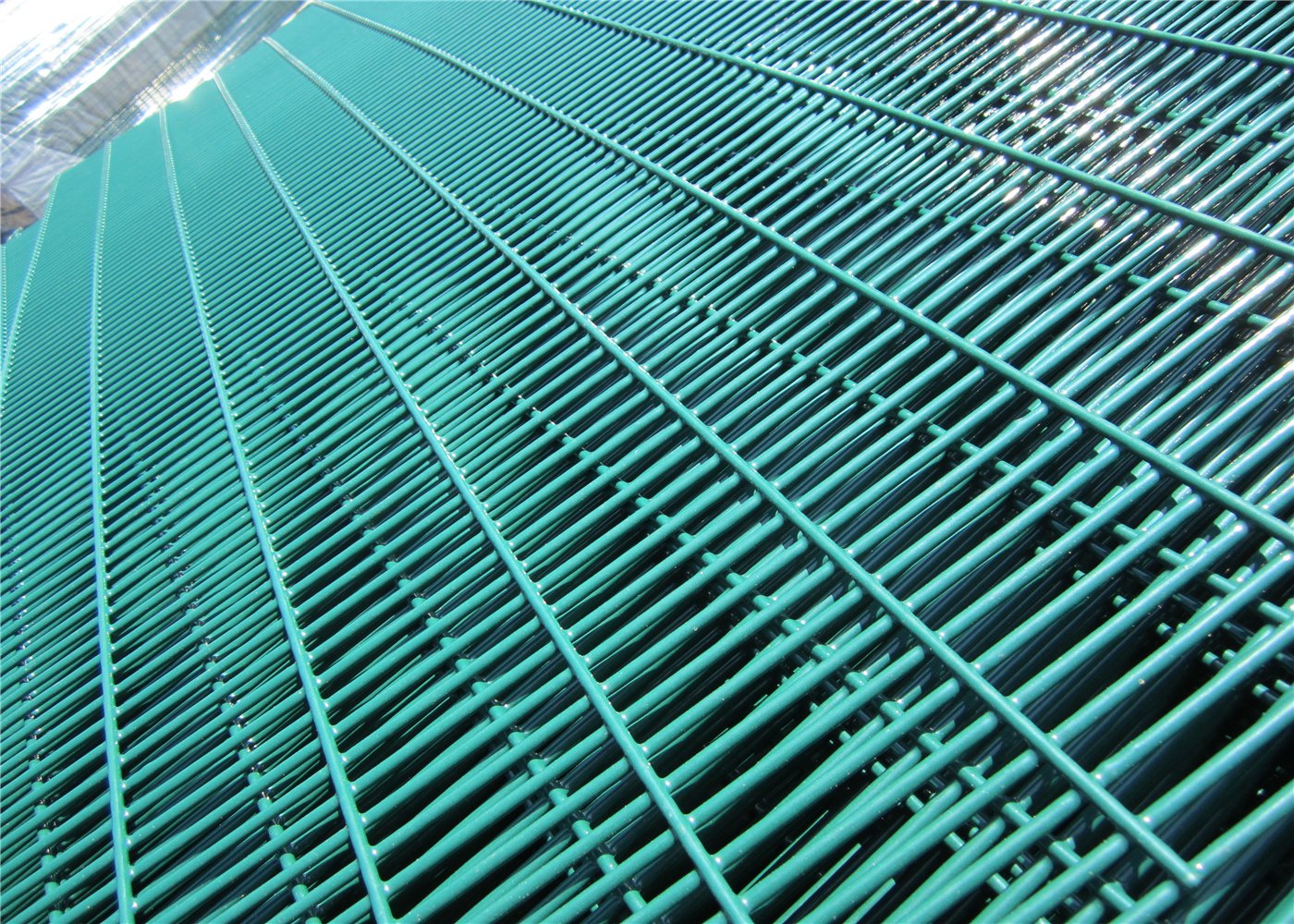
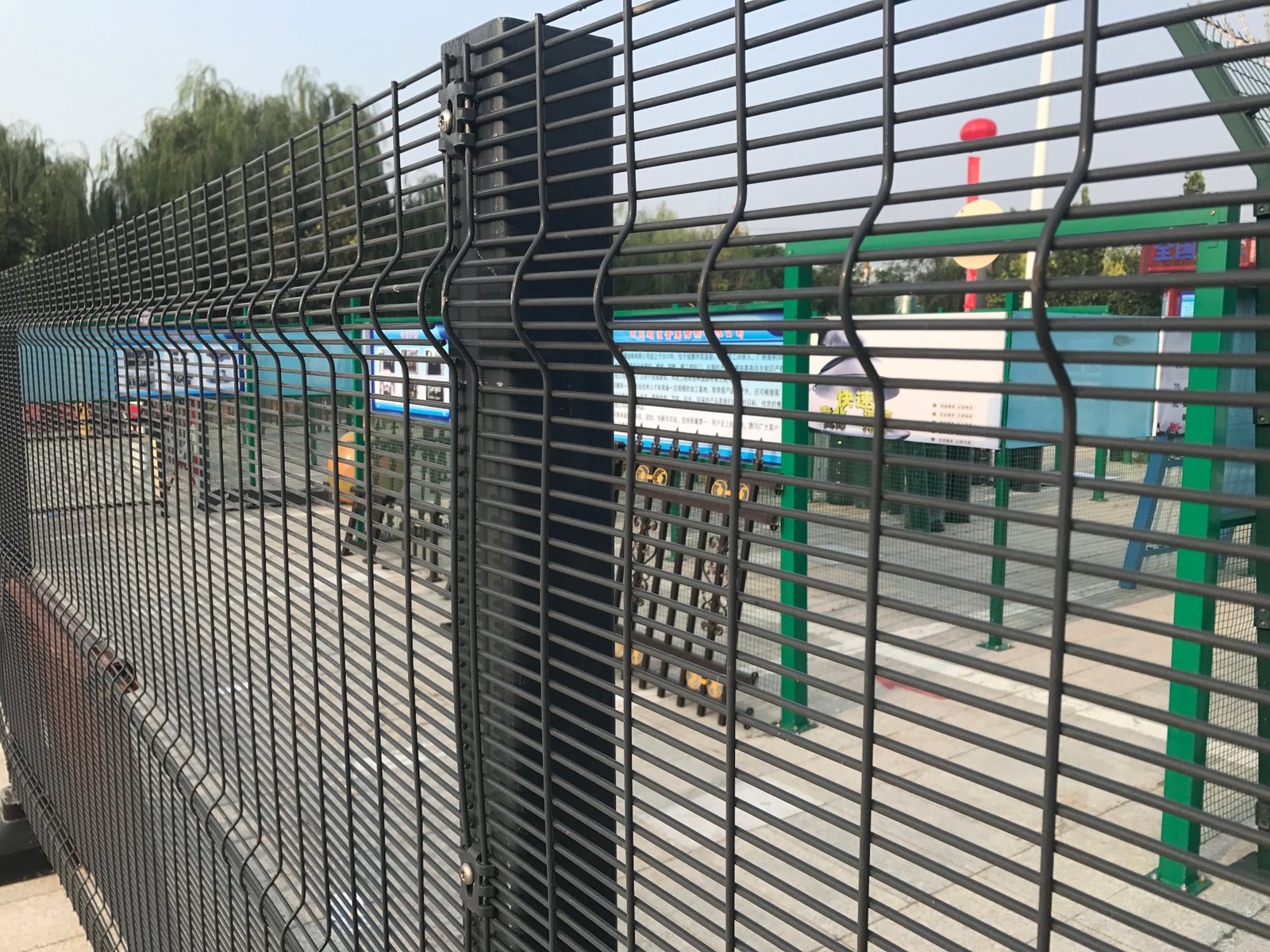
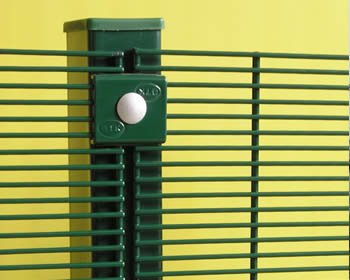
| Green security fencing offers a consistent appearance for commercial and industrial properties. |
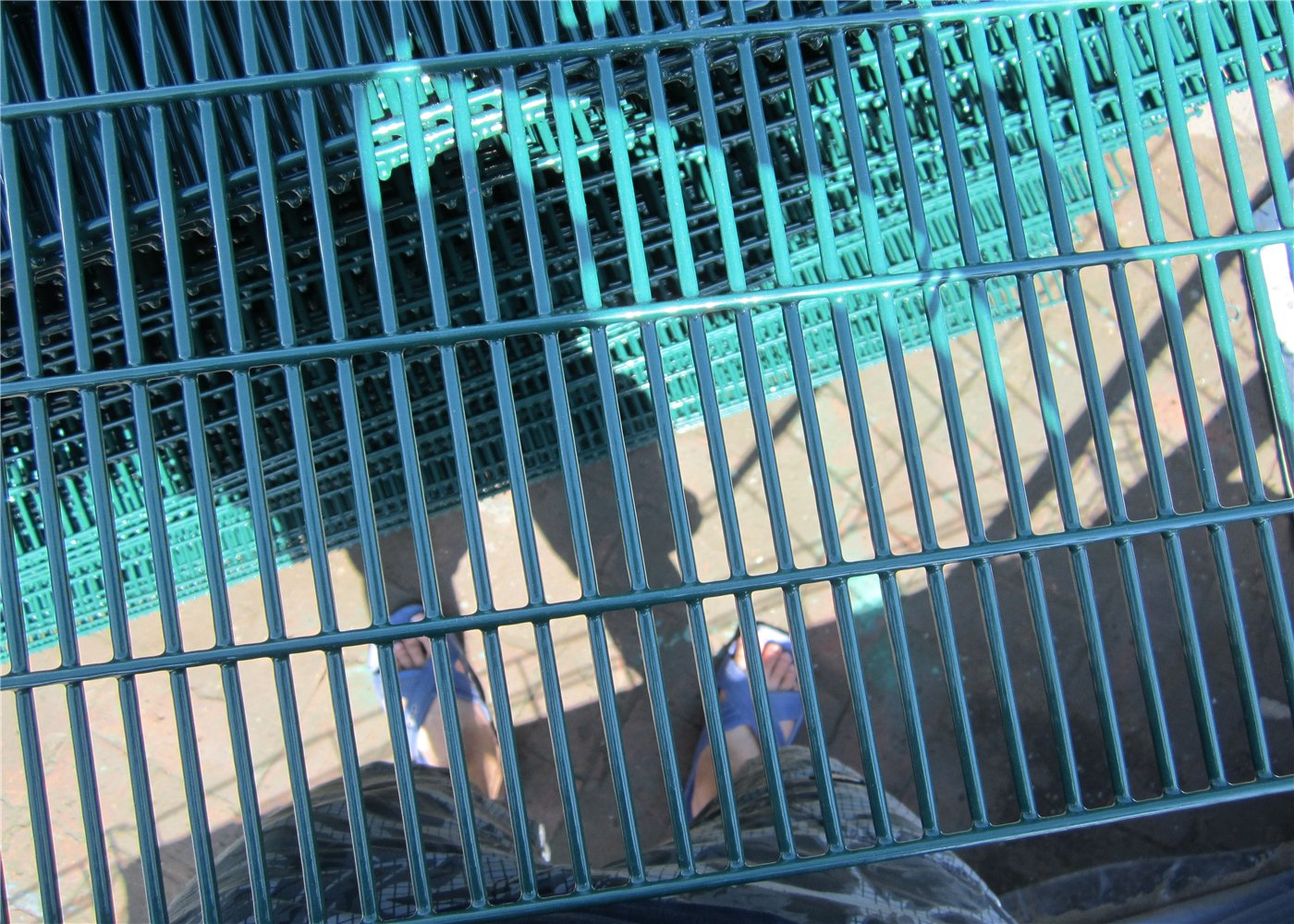
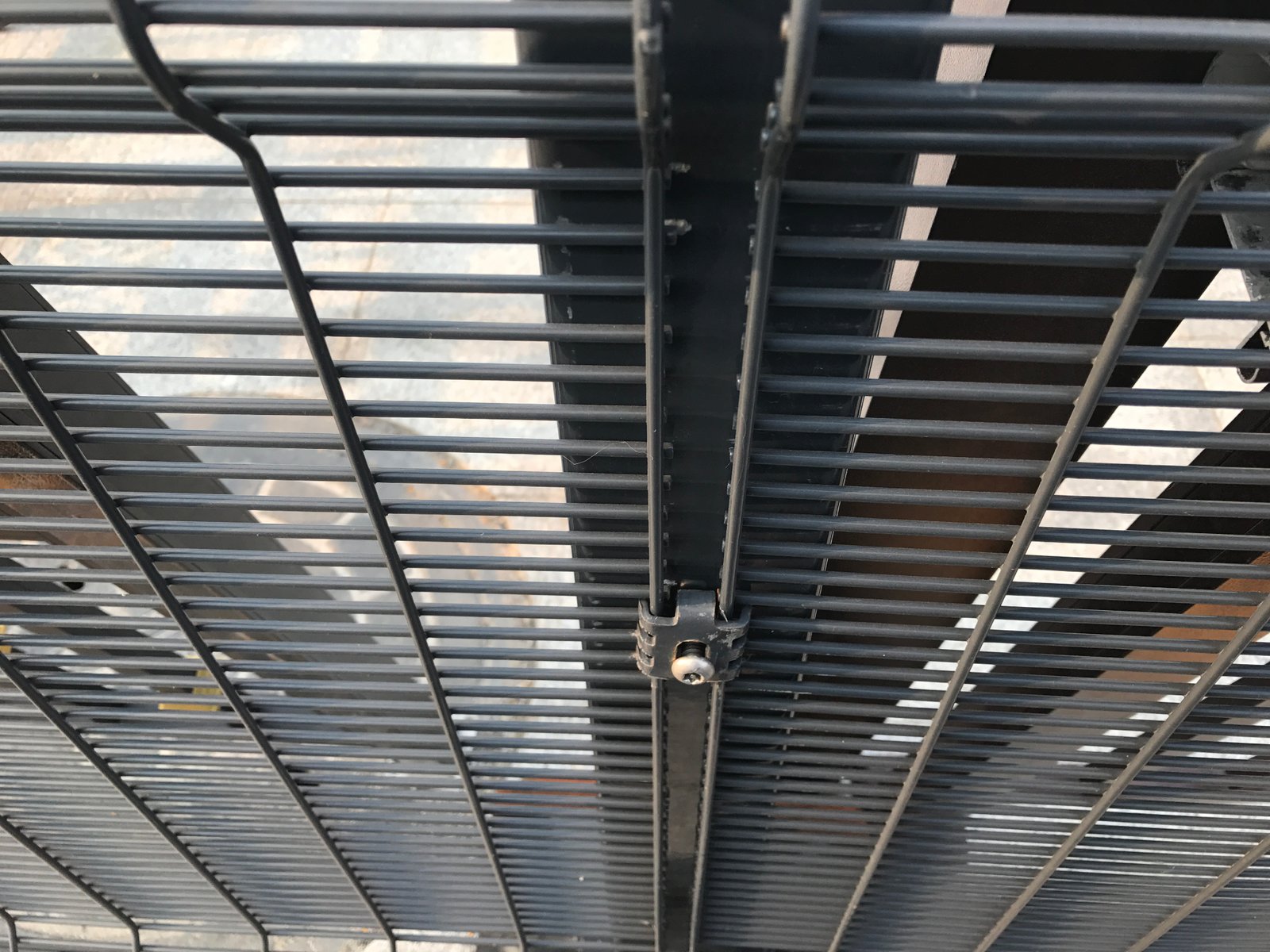
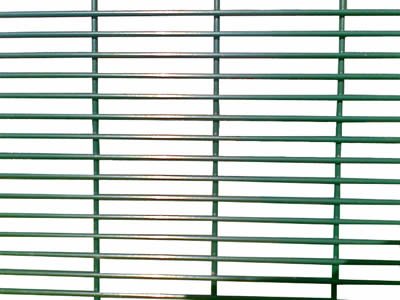
Close mesh spacing helps restrict climbing access while maintaining clear surveillance visibility. |
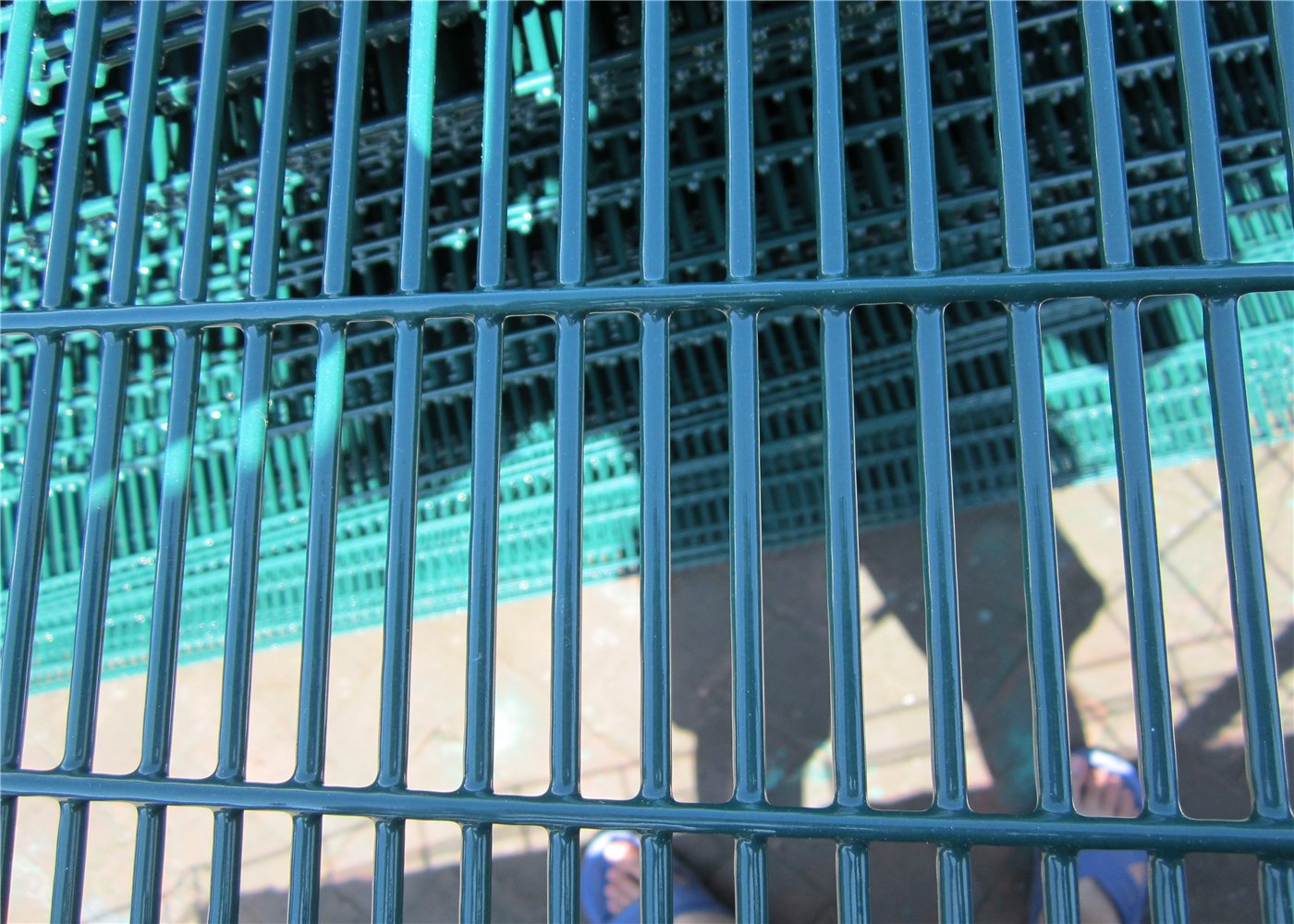
Metallic-coated security panels provide corrosion protection for outdoor perimeter applications. |
Galfan 358 Mesh Coating Technology Explained
Galfan 358 mesh uses a zinc-aluminium alloy coating rather than relying exclusively on conventional zinc protection. The metallic coating contains approximately 95% zinc and 5% aluminium. Certain formulations also include small additions of rare-earth elements to support coating performance.
Zinc provides sacrificial corrosion protection when atmospheric moisture reaches exposed steel. Aluminium contributes to protective corrosion products and improves several coating characteristics. Together, these elements create an effective protective system for suitable outdoor applications.
Galfan technology also offers useful coating ductility. This property helps reduce coating cracking during appropriate wire forming operations. Manufacturers must still control welding conditions and protect affected intersections.
Galfan 358 Mesh Alloy Composition
| Coating Component |
Nominal Composition |
Primary Function |
| Zinc (Zn) |
95% |
Sacrificial corrosion protection and barrier formation |
| Aluminium (Al) |
5% |
Improves protective coating performance and corrosion resistance |
| Minor Alloy Additions |
Dependent on specification |
Supports coating structure and processing characteristics |
Buyers should distinguish alloy composition from coating thickness. A 95/5 alloy description identifies the metal proportions, not the coating mass. Actual corrosion resistance also depends on coating quality, surrounding conditions, and processing history.
Why Zinc-Aluminium Coatings Matter
Unprotected carbon steel reacts with oxygen and moisture, gradually forming corrosion products. A suitable metallic coating limits direct exposure and provides electrochemical protection. This combination helps reduce premature deterioration when the coating remains effective.
Independent material research has demonstrated favorable corrosion behavior for zinc-aluminium coatings under various conditions. However, results vary with coating mass, exposure environment, and specimen preparation. Buyers should never treat laboratory comparisons as guaranteed field service periods.
Galfan 358 Mesh Technical Specifications
Galfan 358 mesh comes in several heights to accommodate different security and infrastructure requirements. BMP offers structural configurations with corresponding post dimensions and fixing schedules. Project engineers should verify each arrangement against site-specific loading conditions.
| Panel Height (m) |
Panel Size (H × W mm) |
Post Section (mm) |
Overall Post Length (mm) |
Total Fixings |
| 2.0 |
2007 × 2515 |
60 × 60 × 2.5 |
2700 |
Intermediate: 7 / Corner: 14 |
| 2.4 |
2400 × 2515 |
60 × 60 × 2.5 |
3100 |
Intermediate: 9 / Corner: 18 |
| 3.0 |
2997 × 2515 |
80 × 80 × 2.5 |
3800 |
Intermediate: 11 / Corner: 22 |
| 3.3 |
3302 × 2515 |
80 × 80 × 2.5 |
4200 |
Intermediate: 12 / Corner: 24 |
| 3.6 |
3607 × 2515 (Option 1) |
100 × 60 × 3.0 |
4500 |
Intermediate: 13 / Corner: N/A |
| 3.6 |
3607 × 2515 (Option 2) |
100 × 100 × 3.0 |
4500 |
Intermediate: N/A / Corner: 26 |
The listed dimensions represent reference configurations from BMP's product range. Structural requirements can change with wind loading, ground conditions, and installation arrangements. Confirm final post spacing and connection details before manufacturing.
Galfan 358 Mesh General Material Specifications
| Base Material |
Low-Carbon Steel Wire |
| Wire Diameter |
4.0 mm / 5.0 mm |
| Standard Mesh Spacing |
76.2 × 12.7 mm |
| Alternative Mesh Spacing |
75 × 13 mm |
| Coating |
Zinc-Aluminium Alloy, Zn95Al5 |
| Optional Finish |
Compatible Powder or Polymer Coating |
| Common Colors |
RAL 6005 / RAL 9005 / RAL 7016 |
| Available Accessories |
Posts, Clamp Bars, Security Fasteners, Gates |
| Manufacturing Options |
Custom Heights, Post Sections, and Finishes |
| Export Packing |
Steel Pallets with Protective Materials |
How Galfan Protects Welded Wire Intersections
Welded intersections deserve particular attention because manufacturing heat can affect nearby protective coatings. Welding parameters influence joint strength, surface condition, and the remaining metallic protection.
Production using alloy-coated wires requires suitable welding equipment and controlled operating conditions. Manufacturers should evaluate electrode settings, current, contact pressure, and weld consistency. Poor process control may damage coatings or create unreliable intersections.
Some zinc-aluminium coating studies report improved corrosion behavior around appropriately manufactured welded joints. Nevertheless, coating damage can still expose steel to moisture. Inspectors must examine weld areas rather than assuming complete protection.
Weld Integrity and Corrosion Inspection
A reliable quality plan covers mechanical joint performance and protective coating condition. Visual inspections can reveal inconsistent welding, excessive discoloration, and obvious surface defects. Project specifications may also require destructive weld testing or coating assessments.
Manufacturers should document the inspection methods and acceptance criteria before production. Customers can request representative samples when project security requirements justify additional verification.
Galfan 358 Mesh Versus Standard Galvanized Fencing
Galfan 358 mesh and conventional galvanized fencing both use metallic coatings to reduce steel corrosion. Their main distinction involves coating composition and corresponding material behavior.
Standard galvanizing relies primarily on zinc, while Galfan employs a zinc-aluminium alloy. Different coating systems offer different advantages depending on application and processing. Installation conditions also influence the final result.
| Comparison |
Galfan-Coated Steel |
Conventional Zinc-Coated Steel |
| Coating Composition |
Approximately 95% zinc and 5% aluminium |
Primarily zinc |
| Corrosion Protection |
Barrier and sacrificial protection |
Barrier and sacrificial protection |
| Formability |
Good coating ductility under suitable processing conditions |
Depends on the coating process and specifications |
| Welded Wire Production |
Requires controlled welding conditions |
Requires controlled welding conditions |
| Optional Organic Coating |
Compatible systems available |
Compatible systems available |
| Service Life |
Depends on coating mass and exposure |
Depends on coating mass and exposure |
Comparisons should use equivalent coating specifications and representative environmental tests. A thin alloy coating does not automatically outperform every thicker conventional galvanized finish. Complete product quality remains more important than the coating name alone.
Security Benefits of Galfan 358 Mesh
Galfan 358 mesh helps owners create controlled boundaries without blocking routine visual observation. Its security benefits come from several complementary design features.
Limited Climbing Opportunities
Narrow horizontal apertures provide very little room for ordinary fingers and footwear. This geometry increases the difficulty of unauthorized climbing. Additional measures can discourage attempts around gates, corners, and other vulnerable areas.
Resistance to Cutting Attempts
Closely spaced wires restrict the positioning of many conventional cutting tools. Strong steel construction increases the effort required to penetrate the barrier. However, determined intruders with specialized equipment may still defeat physical fencing.
Continuous Surveillance Visibility
Open mesh allows security staff to observe activity beyond the boundary. Appropriate camera placement can support monitoring throughout the protected area. Lighting, vegetation, and camera focus still influence operational visibility.
Compatibility with Detection Equipment
Security designers can integrate compatible intrusion detection equipment with rigid fence installations. Sensors may identify vibration, movement, or other relevant disturbances. System performance depends on correct installation and calibration.
Reduced Routine Surface Deterioration
Suitable zinc-aluminium coatings help limit atmospheric corrosion and support long-term product condition. Protective performance depends on environmental exposure and maintenance. Regular inspections remain necessary, especially near coastal locations.
Galfan 358 Mesh for Coastal South African Security
Galfan 358 mesh can address security and corrosion concerns across South Africa's diverse coastal environments. Durban, Cape Town, and Gqeberha each present different combinations of moisture, wind, salt exposure, and industrial activity.
Coastal air can carry salt particles onto exposed steel surfaces. Repeated moisture cycles may accelerate corrosion when protective coatings become damaged. Infrastructure near harbors can face additional industrial contaminants and frequent handling activity.
Durban's Humid Coastal Environment
Durban experiences warm, humid conditions and significant maritime activity. Industrial facilities, storage yards, and logistics operators often require secure boundaries with practical corrosion protection.
Zinc-aluminium coated mesh can help manage atmospheric exposure when its coating specification matches the site. Strong perimeter fencing also helps restrict unauthorized entry into valuable storage areas.
Customers planning related projects often compare ClearVu fence panels when selecting security mesh designs. Aperture geometry, coating requirements, and structural details determine the appropriate solution.
Cape Town's Salt Exposure and Strong Winds
Cape Town combines marine exposure with locally demanding wind conditions. Fence designers must consider corrosion resistance and structural performance separately.
Appropriate coatings protect metal surfaces, while engineered posts and foundations resist imposed loads. A corrosion-resistant panel cannot compensate for insufficient structural support.
Gqeberha's Port and Industrial Conditions
Gqeberha supports industrial operations, transport facilities, and commercial activities near coastal environments. Perimeter systems may experience moisture, airborne contaminants, and regular operational movement.
Security fencing can help define restricted areas without preventing external observation. Suitable alloy coatings offer additional protection against environmental deterioration.
Coastal Maintenance Considerations
Owners should inspect welds, fasteners, post bases, and exposed edges after installation. Cleaning can remove accumulated salt and contaminants where appropriate. Coating repairs should follow the original system's maintenance requirements.
Galfan 358 Mesh for Industrial Security in Gauteng
Galfan 358 mesh also suits inland industrial areas where security concerns may outweigh marine corrosion exposure. Johannesburg, Pretoria, and surrounding manufacturing districts contain extensive warehouses, workshops, logistics properties, and commercial infrastructure.
Unauthorized access, theft, and vandalism are relevant planning considerations for many industrial operations. Actual security requirements vary considerably by neighborhood, facility, and operating activity.
Rigid security mesh can help restrict access to storage yards and controlled equipment areas. Clear sightlines support patrols and surveillance, while narrow apertures discourage ordinary climbing attempts.
Industrial environments can also expose coatings to dust, pollution, and periodic moisture. Property managers should match protective finishes to site-specific exposure rather than relying on regional assumptions.
Galfan 358 Mesh Applications in Critical Infrastructure
Galfan 358 mesh supports perimeter protection wherever unauthorized entry could disrupt operations or create safety risks. Different facilities require different fence heights, access controls, and inspection procedures.
Correctional Facilities
Prison security demands controlled movement and clear observation throughout restricted areas. Narrow mesh can discourage climbing while supporting perimeter monitoring. Facility designers may require additional security layers and electronic detection.
Airport Boundaries
Airports need clearly defined operational perimeters with controlled entry points. Security fencing can support restricted access without creating a solid visual obstruction. Designs must follow applicable aviation security requirements.
Electrical Substations
Substations contain equipment that requires protection from unauthorized access. Strong fencing establishes physical boundaries around restricted electrical areas. Engineers must address electrical clearances, earthing, and emergency access.
Industrial Storage Yards
Storage facilities often hold valuable machinery, materials, and equipment outdoors. Security mesh can complement surveillance cameras, controlled gates, and nighttime lighting. A coordinated security design improves overall operational control.
Railway and Transport Infrastructure
Rail infrastructure may require fencing beside maintenance depots, technical equipment, and restricted tracks. Fence placement must consider visibility, operational access, and safety requirements.
Mining Operations
Mining companies manage extensive properties containing machinery, workshops, and controlled infrastructure. Strong perimeter boundaries help restrict access to sensitive areas. Ground conditions and environmental exposure may influence the final construction method.
Hospitals and Specialized Care Facilities
Selected healthcare facilities require controlled boundaries for safety and access management. Fence designs should balance security with emergency evacuation and patient welfare. Institutional requirements determine suitable fence heights and accessories.
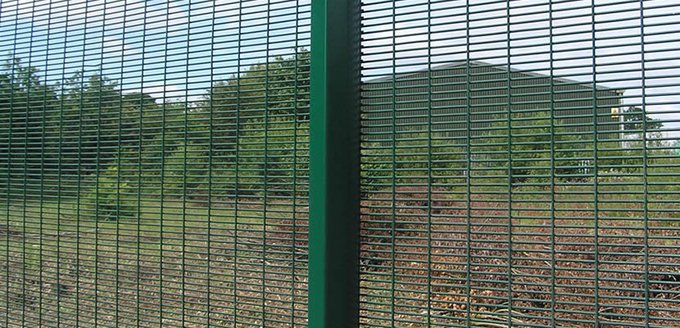 |
| Prison-style security fencing helps establish controlled boundaries around restricted facilities. |
Galfan 358 Mesh Wire Diameter and Structural Considerations
Galfan 358 mesh typically uses steel wires with nominal diameters around 4 mm or 5 mm. Wire diameter influences material consumption, panel mass, and resistance to localized deformation.
A thicker solid steel wire contains more material per metre. However, overall fence strength also depends on the welded intersections, support spacing, and connection design.
Comparing 4 mm and 5 mm Steel Wires
| Wire Diameter |
Approximate Steel Weight per Metre |
Relative Steel Content |
| 4.0 mm |
0.0987 kg |
100% |
| 5.0 mm |
0.1542 kg |
156.25% |
Theoretical values assume a steel density of approximately 7,850 kg per cubic metre. Actual coated wire weights differ slightly because the metallic coating adds material.
A 5 mm steel wire contains approximately 56.25% more steel than a 4 mm wire of equal length. This difference influences raw material cost and handling requirements. It does not establish a corresponding percentage increase in complete fence strength.
Panel Height and Post Selection
Taller panels generally increase the structural demands on posts, foundations, and connections. Wind exposure and soil properties also influence the required post section.
Engineering calculations should determine the final structural configuration. Reference product dimensions alone cannot establish suitability for every location.
Galfan 358 Mesh Installation Planning
Galfan 358 mesh installation requires accurate setting-out, secure connections, and suitable foundations. The correct construction sequence helps protect panel alignment and prevents unnecessary coating damage.
Site Survey and Boundary Assessment
Surveyors should establish property boundaries, ground levels, and proposed gate positions. Underground services and drainage routes require attention before excavation.
Foundation Preparation
Installers must follow approved foundation dimensions and structural requirements. Soil capacity, wind loading, and fence height influence excavation depth and concrete quantities.
Steel Post Alignment
Correct post positioning ensures consistent panel connections throughout the fence line. Temporary support may help maintain vertical alignment during construction.
Panel Mounting and Fastening
Workers should use equipment suitable for each panel's weight and dimensions. Clamp bars and security fasteners must match the approved drawings. Careful handling reduces coating damage.
Final Installation Inspection
Inspectors should examine panel alignment, fastening security, gate operation, and protective finishes. Any exposed steel requires appropriate corrective treatment before final acceptance.
The ClearVu fence installation guide covers related site preparation and panel installation principles. Specific Galfan fencing connections must still follow their approved drawings.
Galfan 358 Mesh Coating Inspection and Quality Control
Galfan 358 mesh quality control should cover both the steel structure and the protective metallic coating. Buyers need consistent documentation that matches their purchase specifications.
Verify Wire Diameter and Mesh Centres
Technicians should measure wire dimensions and spacing using suitable instruments. Measurements must distinguish nominal wire centres from clear openings.
Inspect Welded Intersections
Production inspectors should check weld consistency and identify visibly defective connections. Appropriate tests can help verify mechanical performance when purchase requirements specify them.
Check Coating Mass and Surface Condition
Metallic coating performance depends partly on coating mass and uniformity. Buyers should define relevant acceptance criteria and inspection procedures before manufacturing.
Confirm Panel Geometry
Finished panels require dimensional checks for width, height, straightness, and squareness. Excessive dimensional variations can complicate installation.
Review Post and Clamp Compatibility
Post sections, holes, clamp bars, and fasteners must match the approved connection arrangement. Missing or incompatible accessories can delay site work.
Request Material Documentation
Customers may request material records, inspection reports, and coating certificates according to their purchase agreements. Testing standards should match the product and specific verification purpose.
How to Compare Galfan and Powder-Coated Security Fencing
Galfan 358 mesh can receive additional organic coatings when the manufacturing process and surface preparation are compatible. Different finishing systems provide different appearance and protection characteristics.
A metallic zinc-aluminium coating supplies the primary corrosion-protection layer. Powder coating adds color and can provide another environmental barrier. Coating adhesion depends on suitable pretreatment and production control.
Customers commonly request RAL 6005 green, RAL 9005 black, or RAL 7016 grey. Architects and property managers may also specify custom colors for surrounding buildings.
Not every powder coating formulation suits every metallic substrate. Buyers should confirm compatibility and approved processing methods before production.
Choosing a Finish for Coastal Properties
Coastal projects require careful evaluation of atmospheric corrosivity, coating thickness, and expected maintenance. An appropriate duplex system may offer additional protection for demanding exposure.
Contractors should request the proposed coating specification instead of relying on generic product descriptions. Site-specific requirements determine the most suitable finish.
Galfan 358 Mesh Perimeter Design and Access Control
Galfan 358 mesh works most effectively as part of a coordinated security arrangement. Fencing alone cannot address every intrusion method or operational vulnerability.
Security Gate Integration
Pedestrian and vehicle gates should provide protection consistent with adjacent fence sections. Gate hinges, locks, and access controls require appropriate structural support.
Surveillance Camera Placement
Camera positions should minimize blind spots along the boundary. Narrow mesh supports visual observation, although focusing through fencing requires careful equipment positioning.
Lighting and Nighttime Monitoring
Appropriate lighting supports camera performance and security patrols. Designers should minimize glare and consider surrounding properties.
Intrusion Detection Equipment
Compatible detection technologies can supplement physical fencing. Equipment selection should reflect environmental conditions and the site's acceptable alarm performance.
Emergency Access Requirements
Controlled access must not prevent necessary emergency response. Security designers should coordinate gate operation with applicable safety requirements.
Facilities requiring temporary pedestrian management may also use crowd control barriers outside their permanent security perimeter. Temporary barriers serve a different purpose from high-security mesh fencing.
Calculating Galfan 358 Mesh Requirements for Large Projects
Galfan 358 mesh quantity planning begins with accurate boundary measurements and approved structural drawings. A reliable material schedule identifies panels, posts, clamp bars, gates, and installation accessories.
Determine the Net Fence Length
Measure the total perimeter and deduct openings reserved for gates. Separate straight sections where terrain or panel arrangements differ.
Establish the Approved Bay Spacing
The nominal panel width does not necessarily equal post centre spacing. Connection details and manufacturing tolerances can change the final installed module.
Calculate the Number of Fence Bays
Divide each measured run by its approved spacing. Review partial bays near corners and entrances.
Prepare the Post Schedule
A straight run normally requires one more post than its number of bays. Shared corners and gates can change that relationship.
Confirm Fastening Quantities
Use the approved fixing schedule for each post connection. Different panel heights require different quantities of fastening components.
Include Spare Components
Project managers may reserve additional fasteners or replacement components for installation contingencies. The allowance should follow contract requirements rather than arbitrary assumptions.
Galfan 358 Mesh Export Packaging and Transport Protection
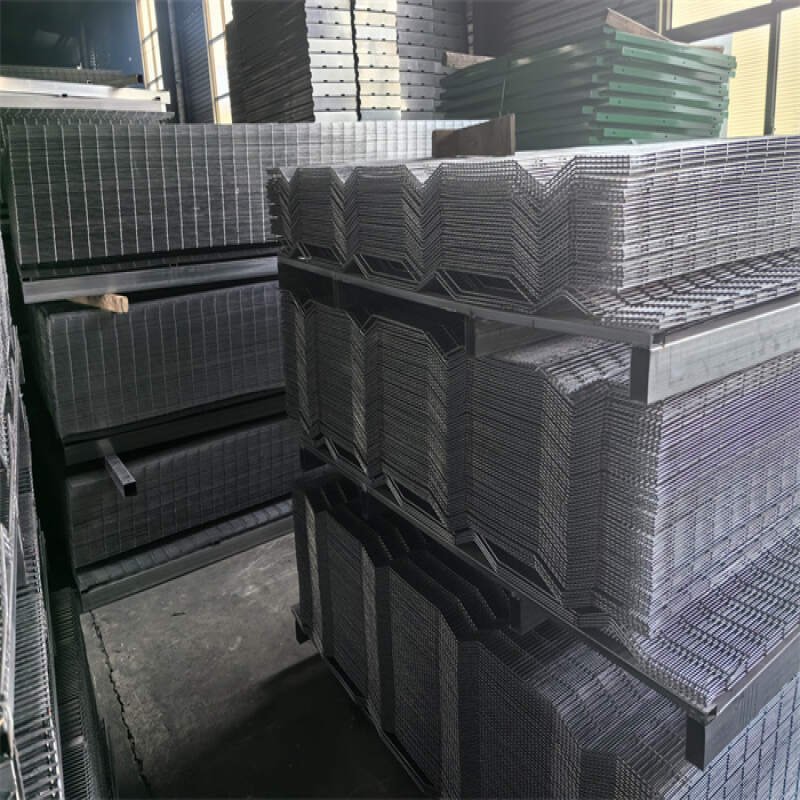
Galfan 358 mesh requires appropriate packaging during factory handling, container loading, and overseas transportation. Large rigid panels can suffer damage when loads move during shipment.
Steel Pallet Support Galfan 358 Mesh | Zinc-Aluminium Anti-Climb Security Fencing
Steel pallets help organize panel bundles and support controlled lifting operations. Pallet dimensions should match the actual cargo arrangement.
Protective Surface Separation
Separators can reduce abrasion between adjacent coated panels. Correct packaging becomes especially important when products include decorative powder finishes.
Secure Container Loading
Shipping teams must consider container payload limits, cargo dimensions, and restraint requirements. Loading plans should distribute weight appropriately.
Identification and Documentation
Clear markings help buyers match bundles with packing lists and installation drawings. Accessory identification also reduces confusion during unloading.
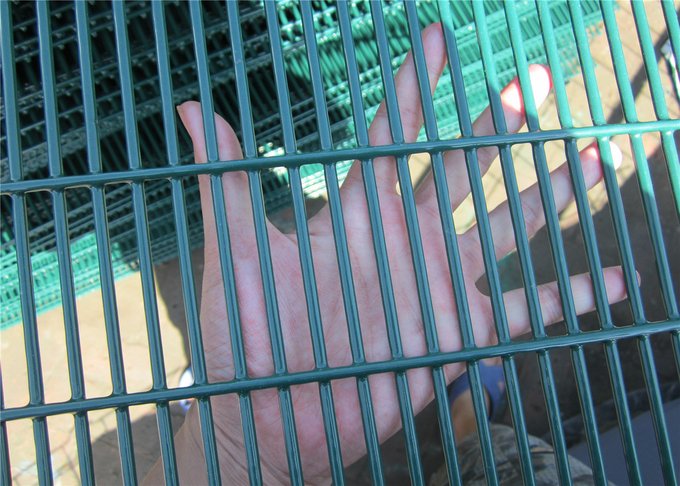 |
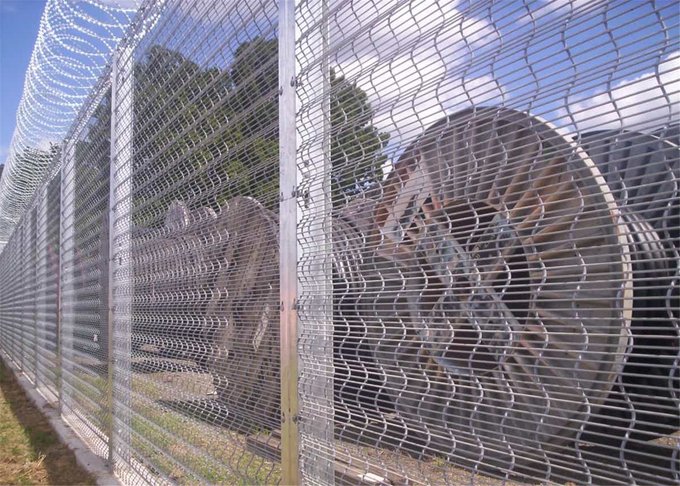 |
| Rigid welded mesh requires careful handling to preserve panel alignment and surface condition. |
Security fencing panels need suitable packing arrangements during transport and project delivery. |
Galfan 358 Mesh Maintenance in Different Environments
Galfan 358 mesh requires periodic inspections despite its corrosion-resistant coating. Maintenance needs vary according to environmental exposure, physical damage, and operational activity.
Marine Exposure
Coastal facilities should inspect areas where salt deposits accumulate. Suitable cleaning procedures can help remove contaminants without damaging protective finishes.
Industrial Pollution
Industrial emissions and deposits may influence coating deterioration. Regular inspections can identify developing corrosion near vulnerable connections.
Mechanical Damage
Vehicle impacts, improper handling, and vandalism can damage panels or expose steel surfaces. Correct repairs should restore the specified protective system.
Fastener Condition
Maintenance personnel should check connections for looseness, corrosion, and interference. Replacement hardware must match approved specifications.
Vegetation Control
Overgrown vegetation can obstruct surveillance and complicate maintenance. Property managers should keep the perimeter clear according to their security plans.
Common Mistakes When Buying Galfan 358 Mesh
Galfan 358 mesh purchases sometimes fail to meet expectations because technical and commercial specifications remain incomplete. Clear procurement documentation helps prevent avoidable disputes.
Confusing Galfan with Ordinary Galvanizing
The term galvanized does not automatically identify a zinc-aluminium alloy coating. Buyers should request the exact coating composition and applicable specifications.
Ignoring Coating Mass
Metal composition alone cannot establish protective performance. Coating mass, uniformity, and manufacturing quality also matter.
Assuming Every Weld Remains Fully Protected
Welding can affect metallic coatings near intersections. Buyers should require suitable production control and inspection.
Comparing Different Wire Diameters
Thicker steel wires increase raw material consumption. Quotations should use equivalent specifications when customers compare suppliers.
Overlooking Post and Foundation Design
Security performance depends on the complete installed system. Insufficient posts or foundations can compromise an otherwise suitable panel.
Excluding Accessories from Quotations
Panel-only pricing may omit important components. Buyers should request complete material schedules before evaluating project costs.
Using Unverified Service-Life Claims
General corrosion-resistance descriptions cannot guarantee a fixed lifespan. Actual performance depends on environmental conditions, coating quality, and maintenance.
Customers comparing related fencing investments can consult Clear View fence prices for additional purchasing context. Different products and specifications require separate quotations.
Galfan 358 Mesh Frequently Asked Questions
What does Galfan mean in security fencing?
Galfan identifies a zinc-aluminium alloy coating used on steel products. The nominal composition contains approximately 95% zinc and 5% aluminium.
Why does Galfan 358 mesh resist corrosion?
Its metallic coating combines barrier protection with zinc's sacrificial behavior. Aluminium also contributes to the coating's protective characteristics.
Is Galfan better than regular galvanizing?
Galfan can offer improved corrosion performance under suitable comparison conditions. Actual results depend on coating mass, product processing, and environmental exposure.
Can Galfan-coated wire form welded security panels?
Yes, appropriate welding processes can produce welded mesh from alloy-coated steel wire. Manufacturers must control welding parameters and inspect coating condition.
What is the standard wire diameter?
Common security mesh options include 4 mm and 5 mm steel wire. Buyers should follow their project specifications.
Does the fence prevent every climbing attempt?
No physical barrier guarantees complete protection. Narrow apertures increase climbing difficulty and support broader perimeter security measures.
Can the mesh receive powder coating?
Yes, compatible powder coating systems can provide decorative color and additional surface protection. Proper preparation remains essential.
Is this fencing suitable for Durban?
Suitable zinc-aluminium systems can help address coastal corrosion risks. Project designers should assess marine exposure, maintenance, and structural requirements.
What panel heights are available?
BMP reference configurations range from approximately 2.0 metres to 3.6 metres. Custom arrangements require technical confirmation.
Can the fence support surveillance equipment?
Rigid security fencing can form part of integrated monitoring systems. Camera mounting and sensor selection require site-specific design.
How should buyers specify the coating?
Purchase documents should identify alloy composition, coating requirements, testing methods, and acceptance criteria. Avoid relying exclusively on marketing descriptions.
Does BMP provide posts and accessories?
BMP can quote compatible posts, clamp bars, fasteners, and selected gates. Buyers should confirm the complete supply scope.
Can Galfan fencing protect industrial storage facilities?
Yes, narrow welded mesh can help establish secure industrial boundaries. Appropriate gates, surveillance, and operational procedures improve protection.
What determines the shipping cost?
Freight charges depend on shipment size, cargo weight, destination, container requirements, and commercial terms.
What information is necessary for a quotation?
Buyers should provide panel dimensions, wire diameter, coating requirements, quantities, accessories, and delivery destination. Engineering drawings help improve accuracy.
Why Choose BMP for Galfan 358 Mesh?
Galfan 358 mesh sourcing demands consistent technical communication and reliable manufacturing procedures. BMP helps customers coordinate product dimensions, wire specifications, coatings, accessories, and export requirements.
Our manufacturing approach emphasizes accurate fabrication and clear project documentation. Customers can discuss specific panel configurations before confirming production.
Buyers seeking related welded security products may also consider ClearVu fence panels for different perimeter specifications. Final selection should reflect security objectives and environmental conditions.
Conclusion: Long-Term Protection with Galfan 358 Mesh
Galfan 358 mesh combines narrow-aperture welded steel construction with protective zinc-aluminium coating technology. This combination makes it relevant for security projects exposed to demanding weather and operational conditions.
Successful perimeter protection requires more than corrosion-resistant wire. Structural posts, secure connections, sound foundations, and appropriate surveillance arrangements all contribute to performance.
BMP offers technical support for customers planning industrial, commercial, correctional, and infrastructure fencing projects. Our team can review required dimensions, protective finishes, and shipping arrangements.
Contact BMP to request a detailed Galfan 358 mesh quotation and discuss your project's technical requirements.