Steel fence panels offer a practical boundary for homes, schools, factories, gardens, and commercial buildings. Their tubular structure combines clear visibility with a strong physical barrier. Buyers can choose spear-top or flat-top pickets according to security needs and site conditions. Boss Metal and Plastic Co., Ltd. manufactures steel fencing components in Hebei, China. We review drawings, tube sizes, surface finishes, and export packaging before production.
Common designs include square pickets, round pickets, two horizontal rails, and matching steel posts. A protective finish reduces corrosion exposure and supports regular maintenance. The complete system needs suitable foundations, secure gate hardware, and careful installation.
Steel Fence Panels for Secure and Attractive Boundaries
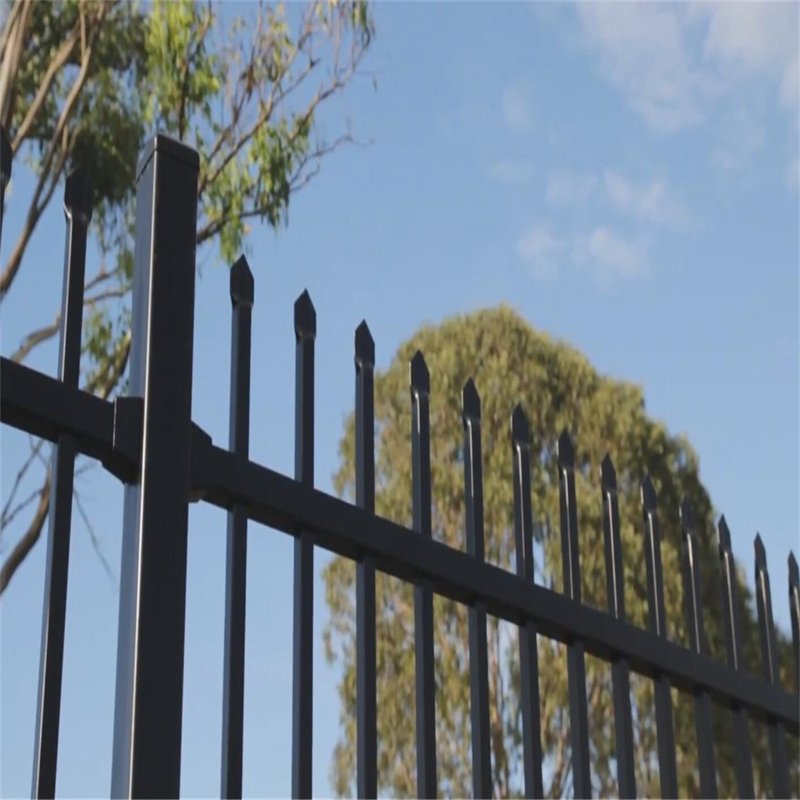
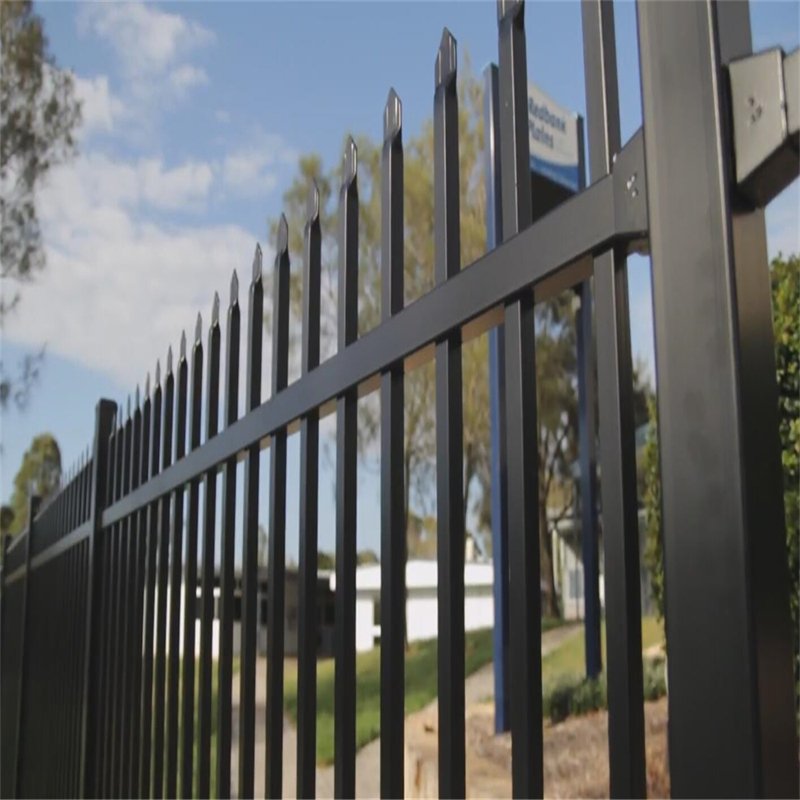
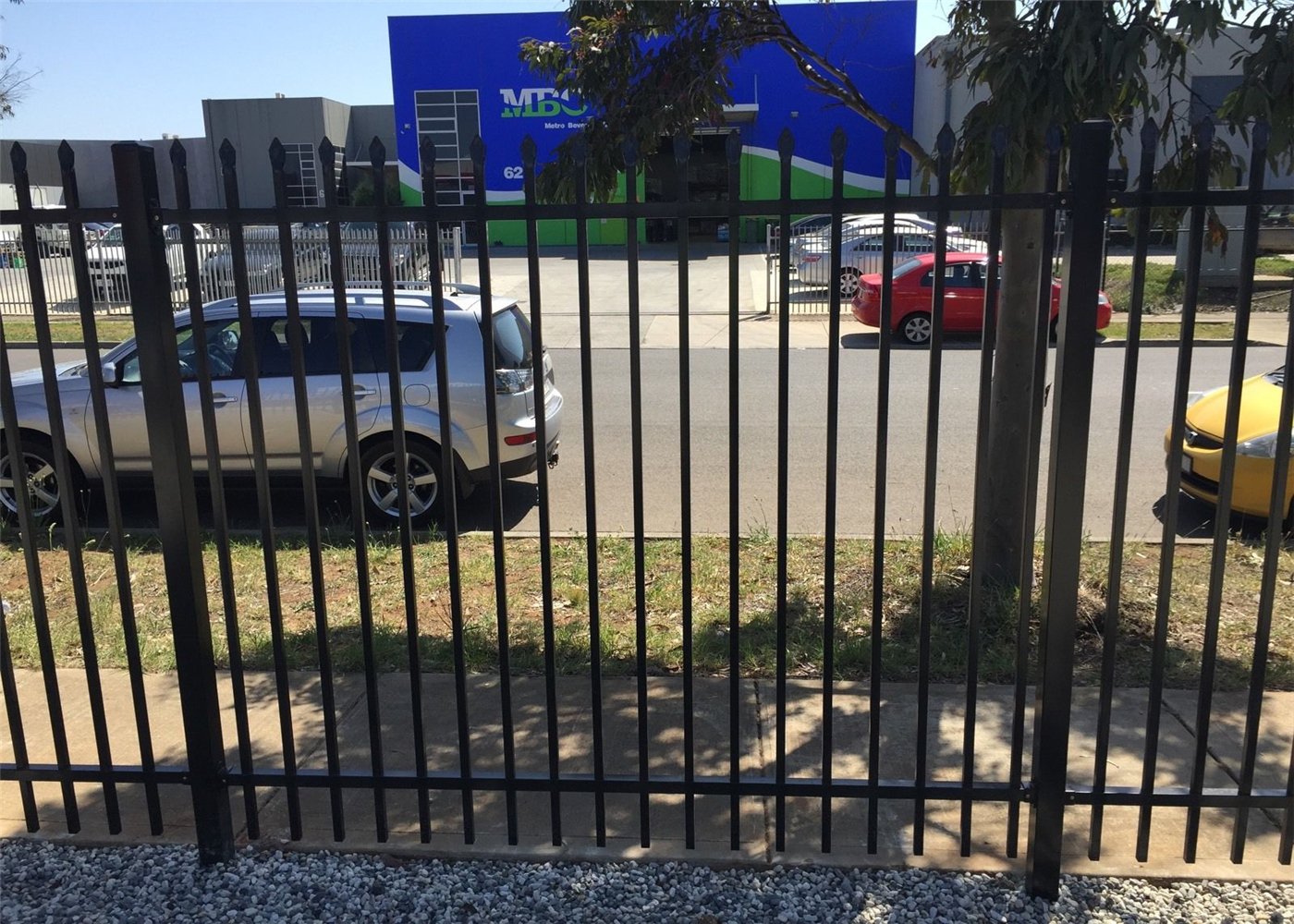
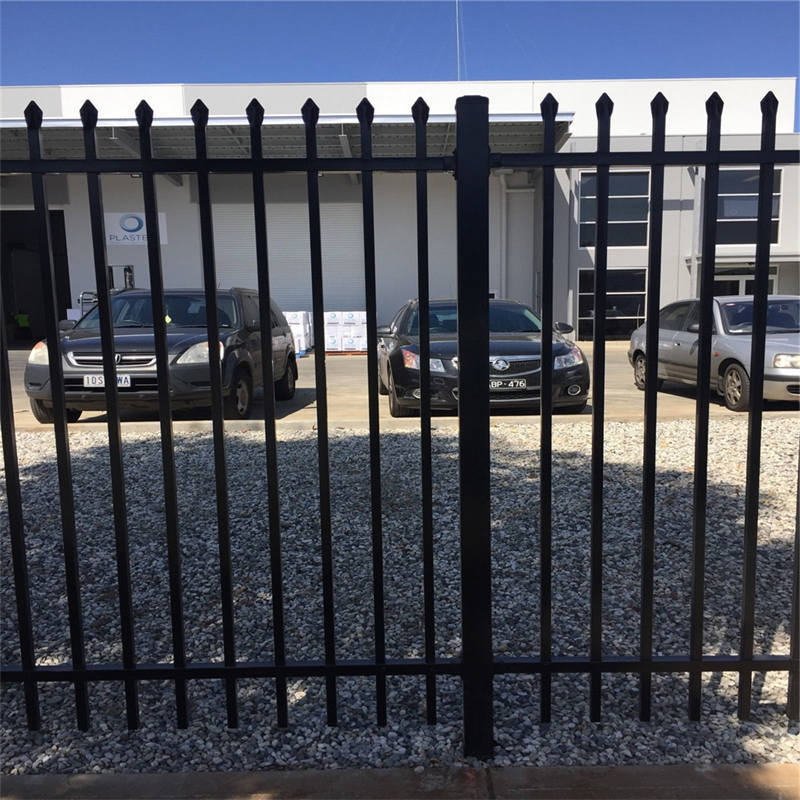
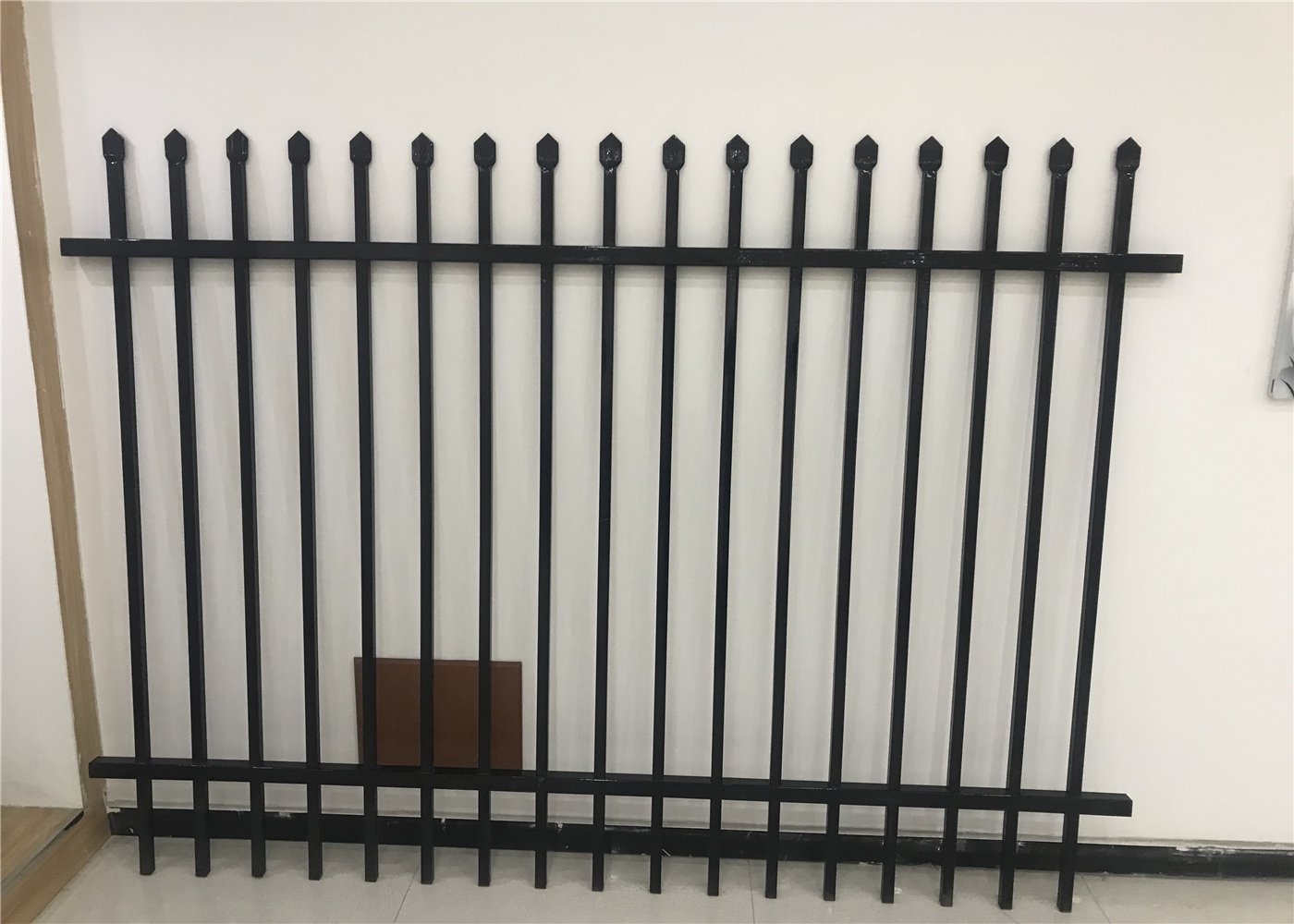
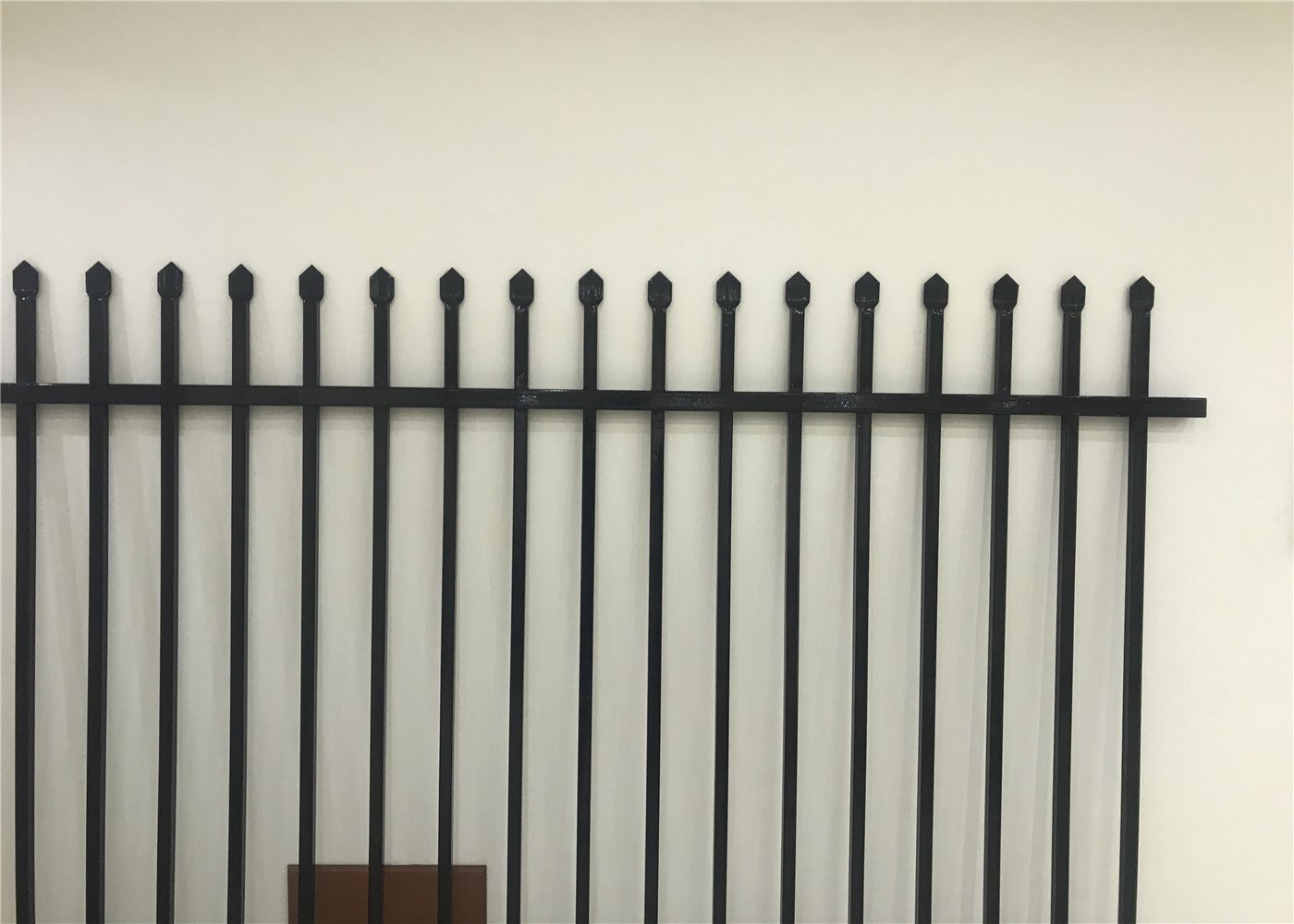
Most garrison-style panels use vertical tubular pickets between horizontal steel rails. Fabricators cut each tube, prepare the joints, and weld the assembly. The completed panel provides open sightlines without the appearance of a solid boundary wall. Steel Fence systems include several perimeter designs for different properties.
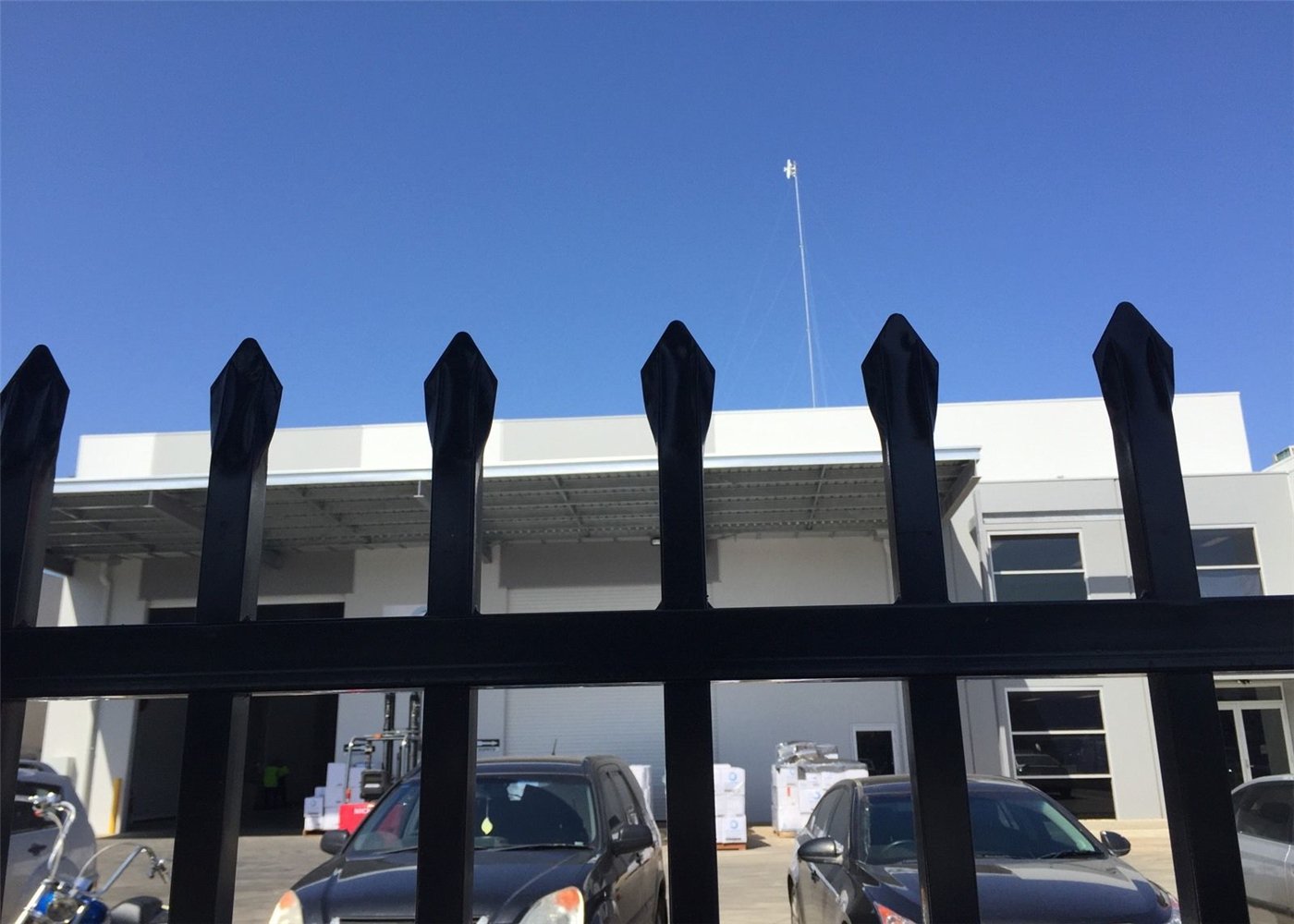
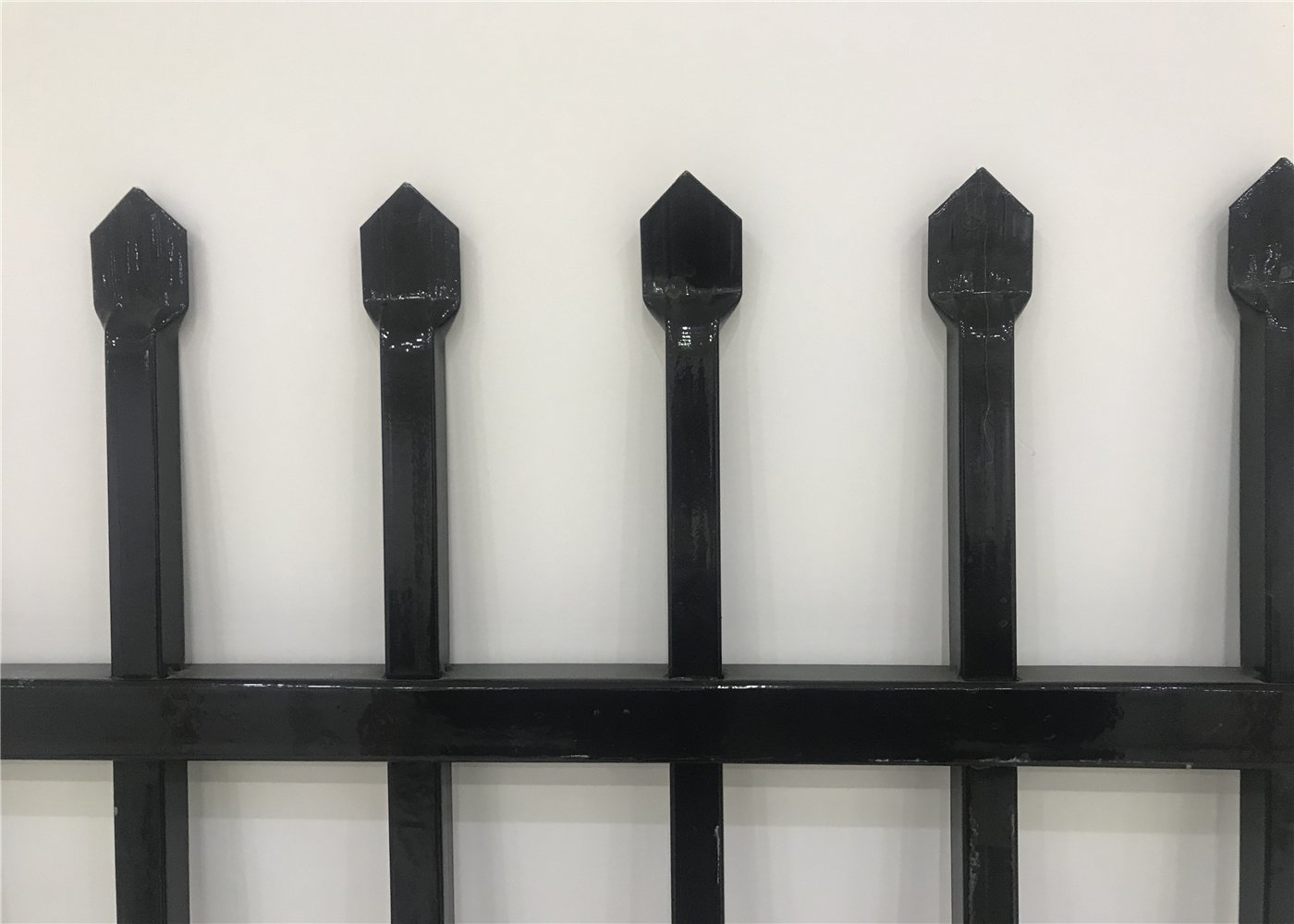
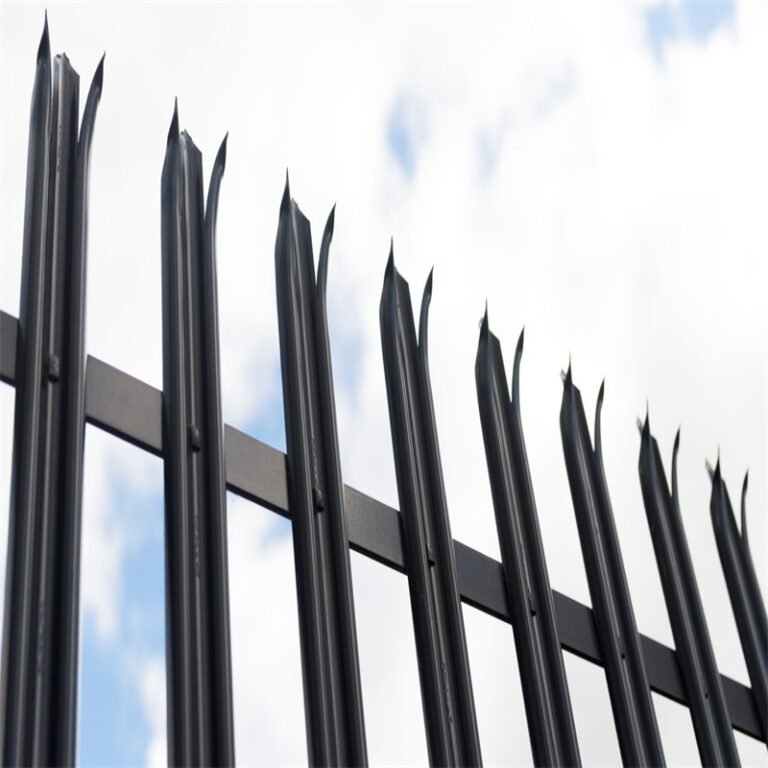
Pointed picket heads discourage casual climbing, while flat heads suit locations where safer contact surfaces matter. The correct choice depends on visitors, site access, and local safety requirements. No ordinary fence guarantees complete protection against forced entry.
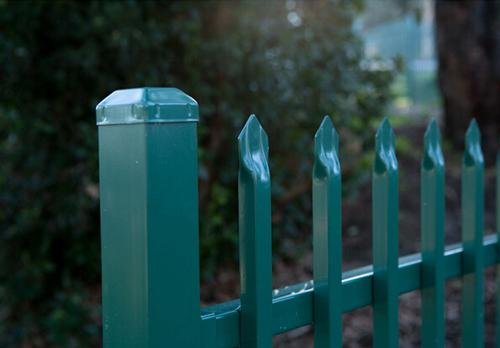
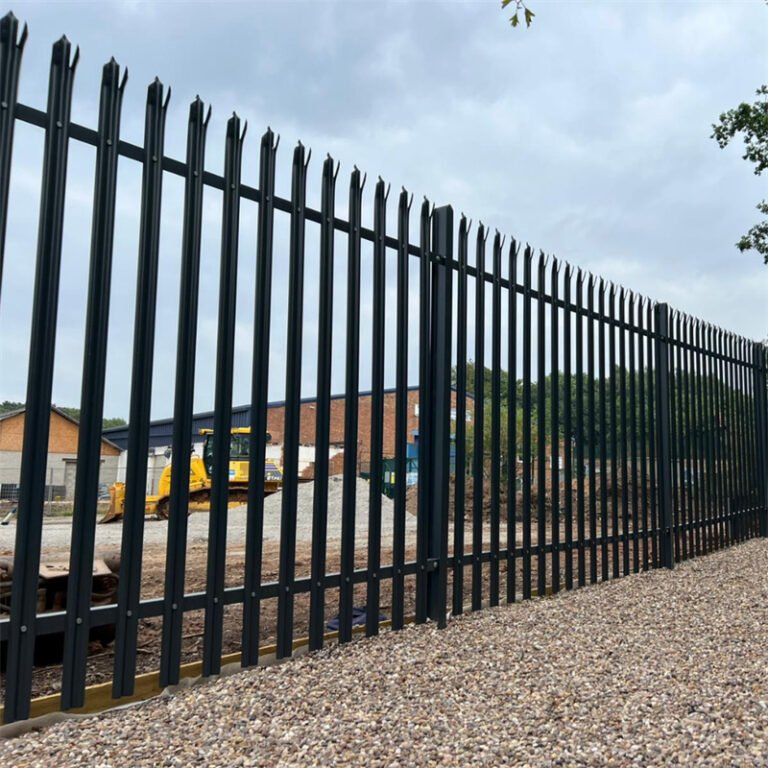
Steel fence panels use rails and vertical pickets to create visible boundaries with different top designs.
How Tubular Garrison Construction Works
Steel rails keep the pickets aligned and distribute everyday loads toward the supporting posts. Square pickets create straight lines, while round pickets offer a different architectural appearance. Buyers can compare the wider Tubular Steel Fence category when selecting rail and picket profiles.
Fabrication quality matters more than appearance alone. Uniform gaps, sound welds, and straight rails help panels fit correctly during installation. A drawing should identify every connection before the factory begins production.
Steel Fence Panels Specifications
Our reference range includes several panel widths and heights. All dimensions below use millimetres, with width listed before height. Final production dimensions depend on the approved drawings and post spacing.
Table 1: Reference steel fence panel sizes
No.
Panel width (mm)
Panel height (mm)
1
2000
1200
2
2000
1500
3
2000
1800
4
2400
1200
5
2400
1500
6
2400
1800
7
2400
2400
8
1800
1200
9
1800
1500
10
1800
1500
11
1500
1200
The source range repeats the 1800 × 1500 mm option. We retain both original entries for reference. Actual projects can mix different widths around gates and corners.
Panel Dimensions and Tube Options
Rail dimensions affect rigidity, panel weight, and the available welding surface. Picket sections influence appearance, opening size, and total steel consumption. A heavier section does not replace a proper structural design.
Ask for the outside tube dimensions and actual wall thickness. The factory should identify these dimensions separately from any paint thickness. A production drawing should also show rail positions and picket spacing.
Steel Fence Panels: Rail and Picket Selection
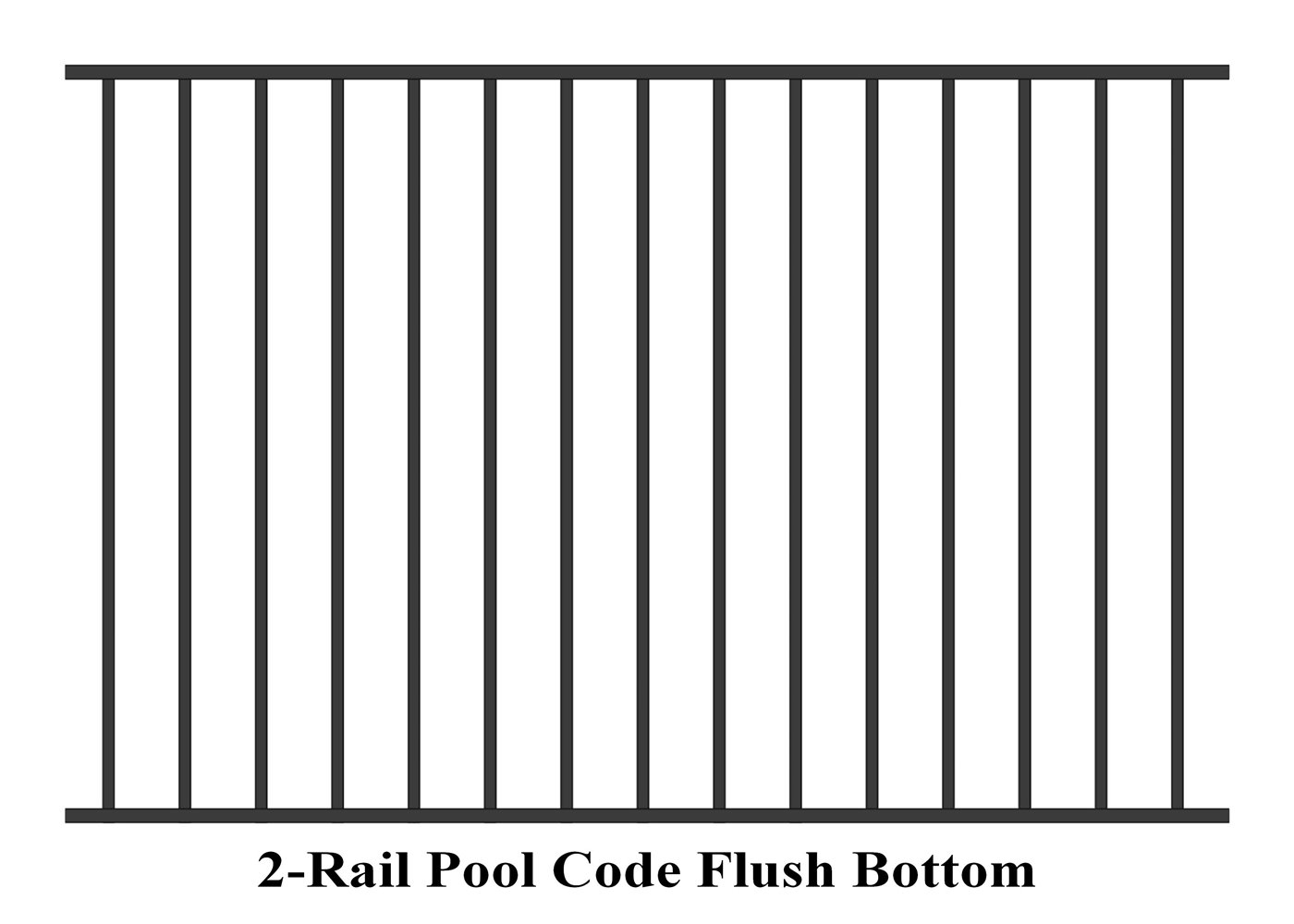
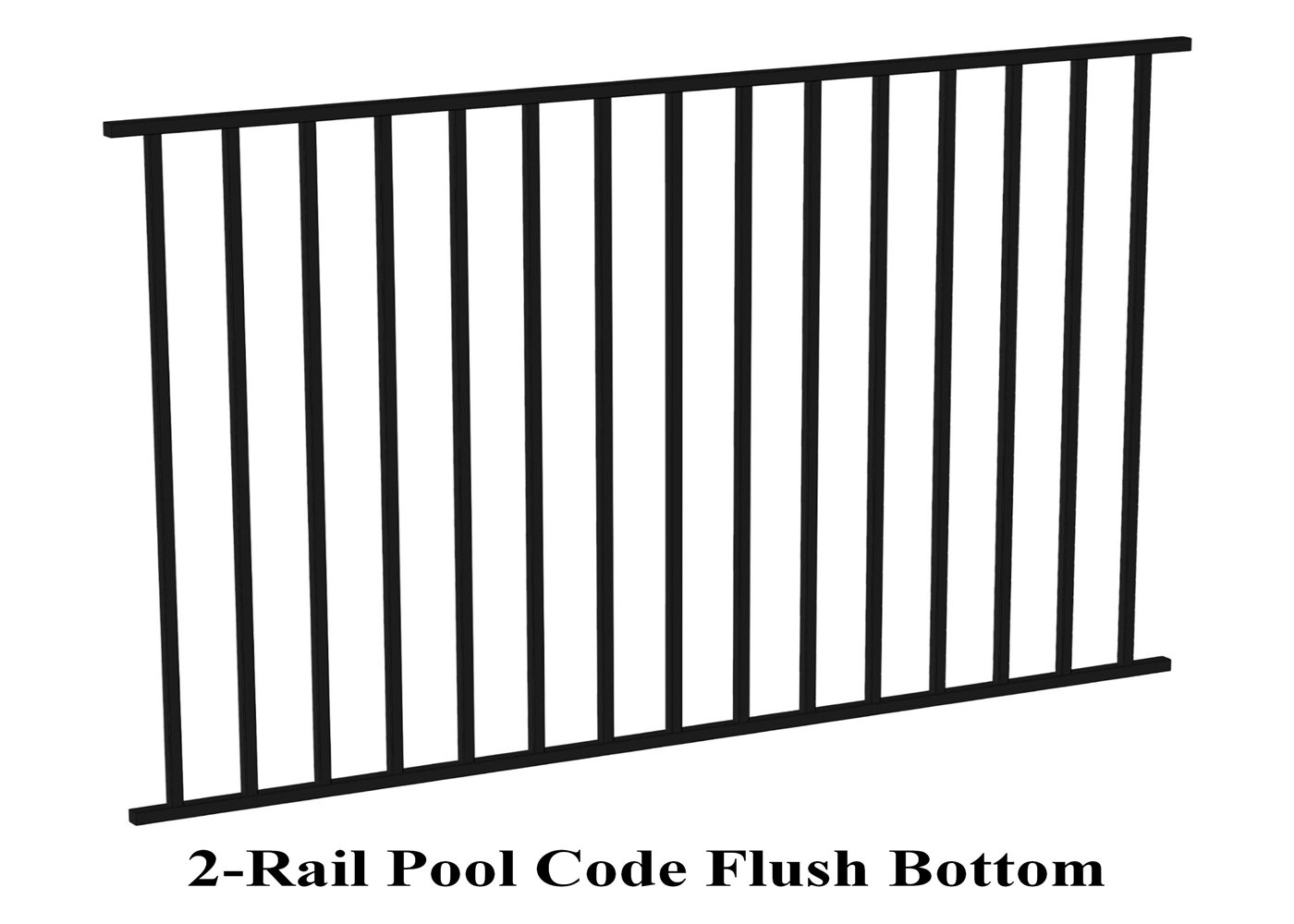
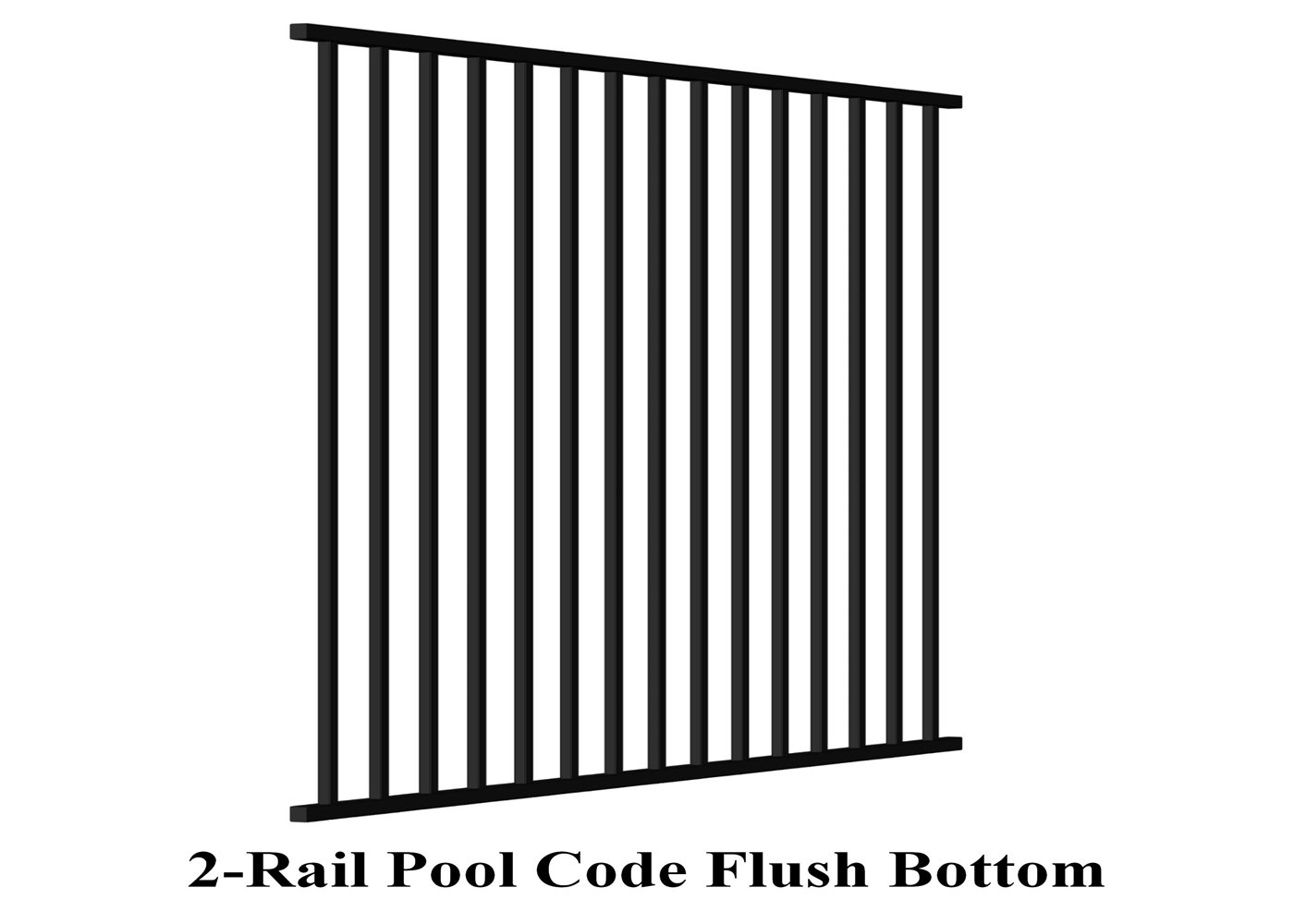
Two-rail panels suit many standard residential and commercial boundaries. Taller configurations may need extra rails after a structural review. The suitable arrangement depends on panel width, wind exposure, foundation design, and picket dimensions.
Garrison panels use tubular pickets rather than woven or welded wire mesh. For a different steel profile, Palisade Fencing uses shaped steel pales and rails. Each construction offers a distinct appearance and connection method.
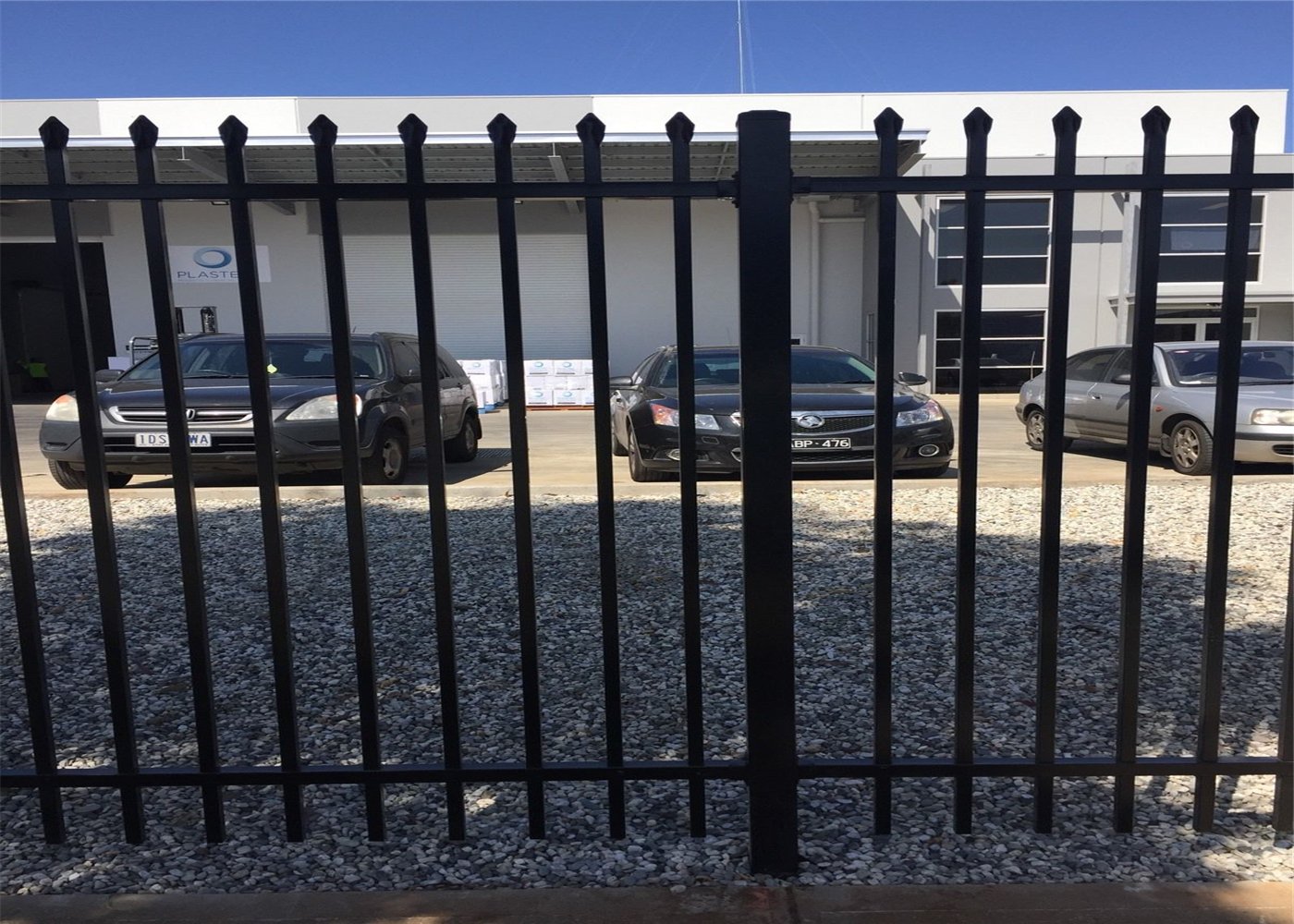
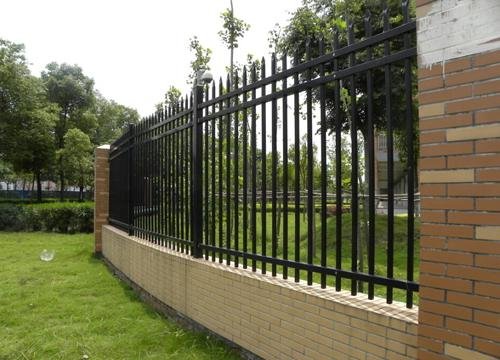
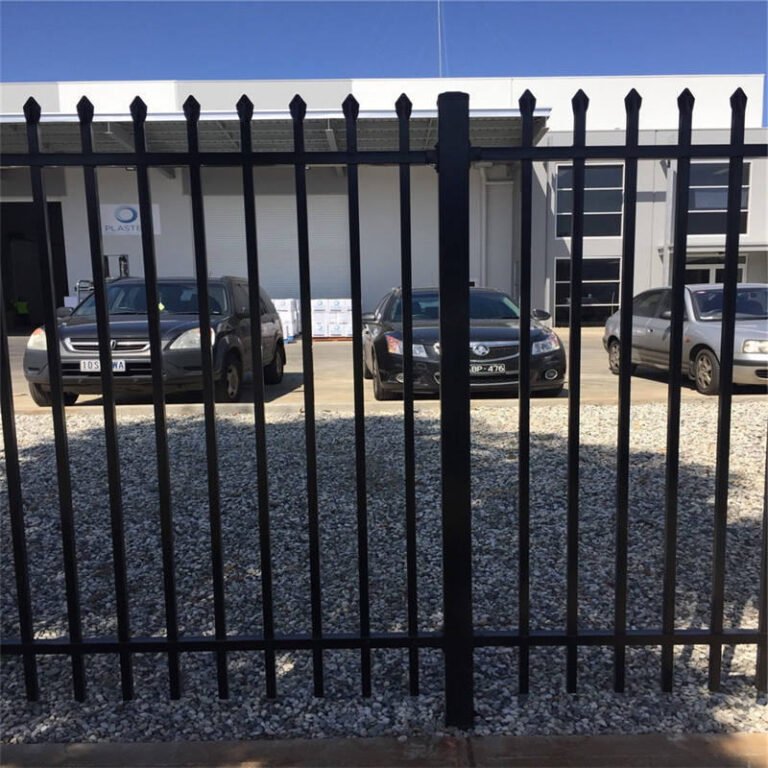
Garrison steel fencing uses vertical pickets and horizontal rails in an open perimeter design.
Pointed Tops and Flat-Top Designs
Spear-top pickets make casual climbing less convenient. Flat-top panels can reduce contact hazards near children and public activity areas. School boundaries may require specific height limits or restrictions on sharp projections.
Choose picket spacing with the intended users in mind. Closely spaced vertical members can discourage access while preserving visibility. A completed design should consider entrapment risks, climbability, and emergency exits.
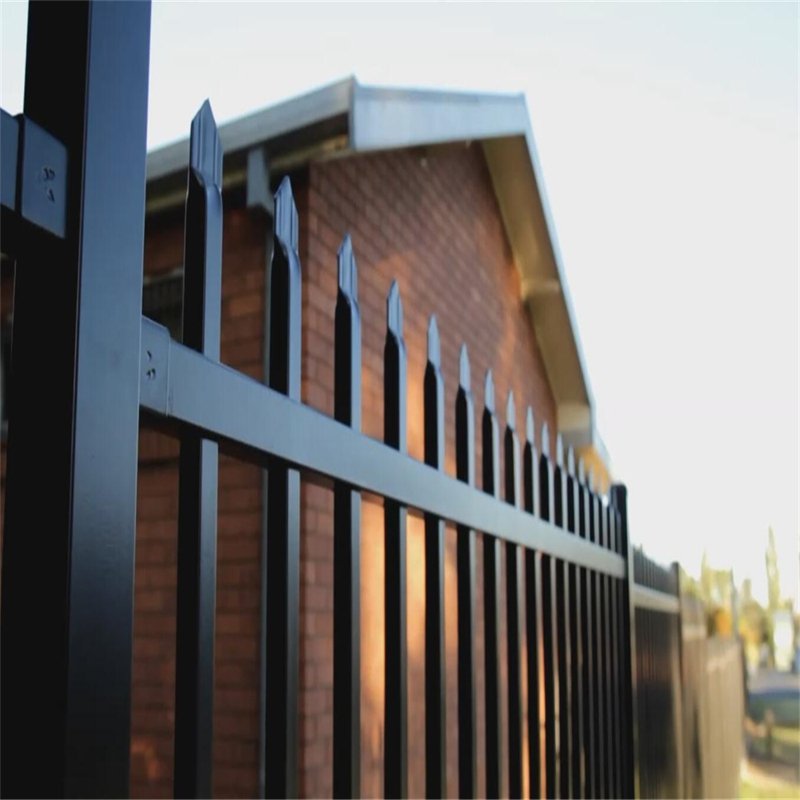
Steel Fence Panels for Residential Properties
Homes often benefit from fencing that allows daylight and garden views. Black powder coating suits many contemporary buildings, while green finishes blend with planted landscapes. A consistent picket layout gives long boundary runs an orderly appearance.
Residential designs need practical access for deliveries, maintenance, and emergency services. Gates should match the fence height and the household's daily traffic. Colour selection should complement the house rather than replace coating performance.
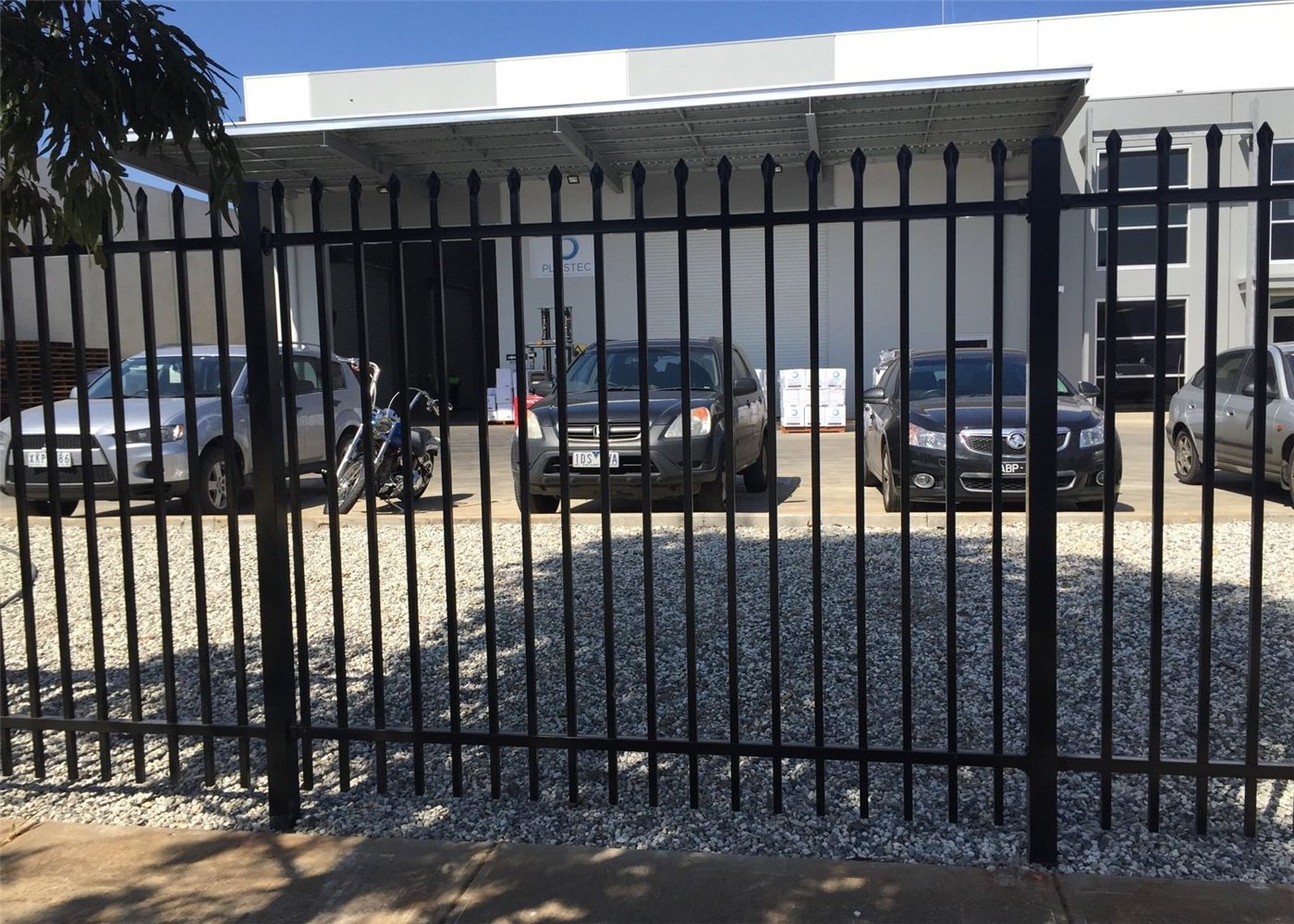
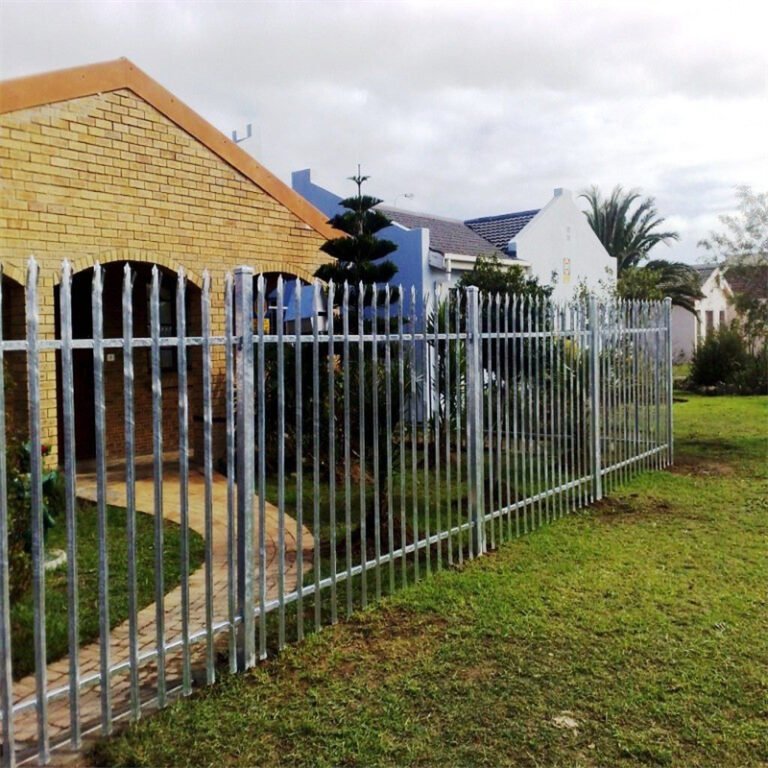
Steel garrison panels support residential boundaries where visibility and appearance both matter.
School and Public-Space Considerations
Schools, parks, and recreation facilities need layouts that protect access without creating avoidable hazards. Sharp tops may be unsuitable in some public-facing areas. Choose approved picket spacing and gate hardware for the intended age groups.
Some projects prefer 3D Fence Panels with welded mesh and reinforcing folds. Others prefer Twin Wire Fence configurations for visible boundaries. These products use different structures from tubular picket panels.
Steel Fence Panels for Industrial Sites
Factories and warehouses need reliable fencing around equipment, loading areas, and staff entrances. Tubular steel pickets provide a visible boundary and can match steel entrance gates. Site drawings should identify access routes and vehicle clearances.
For sensitive compounds, 358 Mesh Fence uses narrow apertures with a different anti-climb approach. A site risk assessment can help compare these options. Cameras, lighting, locks, and monitored entrances remain important beyond the fence itself.
Tubular perimeter panels can separate industrial working areas while maintaining useful sightlines.
Choosing Alternative Perimeter Systems
Not every site needs steel pickets. Welded Wire Mesh suits projects requiring a grid rather than tubular uprights. Chain Link Fence offers a woven mesh option for broader boundaries.
Higher-security buyers may compare Clearvu Fence Panels against the tubular design. The smaller openings support visibility while reducing practical footholds. Select each system according to the actual site risk and budget.
Steel Fence Panels Coating Options
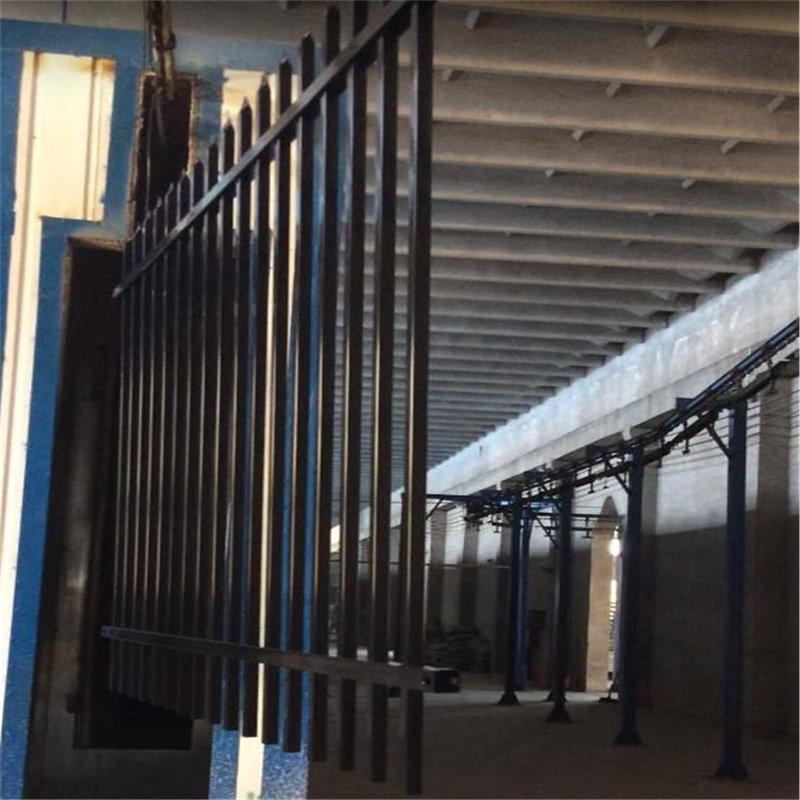
A protective finish reduces corrosion exposure and improves appearance. Buyers can choose galvanising, powder coating, or a compatible combination. Each option needs a clear specification covering steel preparation and final inspection.
Galvanising: Zinc provides sacrificial protection against corrosion.
Powder coating: Polyester coating adds colour and an outer protective finish.
Duplex finish: A compatible zinc layer and powder coating work together.
Custom RAL colours: Match the project appearance using an approved colour reference.
Do not assume every coating system provides the same service life. Coating preparation, thickness, salt exposure, and mechanical damage all affect performance.
Choose the steel panel finish according to site exposure, cleaning routines, and maintenance plans.
Coastal Exposure and Maintenance
Coastal sites face airborne salts, moisture, and sometimes stronger wind loading. Request a coating system suitable for that environment. Inspect weld areas, base plates, fasteners, and scratched surfaces during maintenance.
Prompt repairs can limit corrosion around exposed steel. Clean accumulated salts according to the coating supplier's instructions. Ask for project-specific documentation before making service-life commitments.
Steel Fence Panels Posts and Foundations
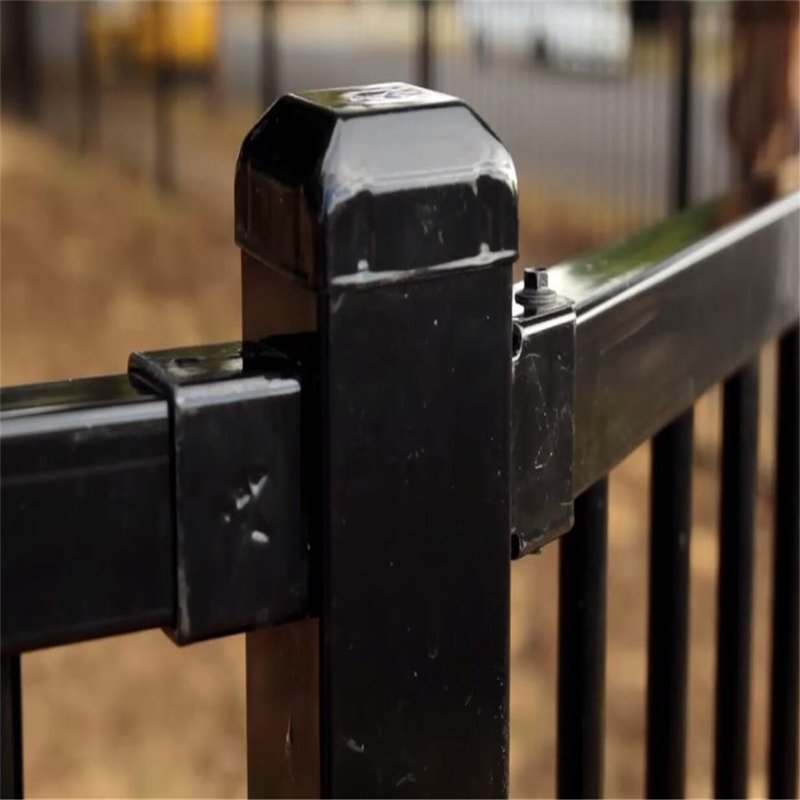
Posts transfer loads from the panels into concrete foundations or approved anchors. Their dimensions should match panel height, site exposure, and spacing. The original product list gives panel sizes but does not establish one universal post design.
Square posts suit many straight fence runs. Corner posts, gate posts, and terminal posts may need different sections. For security mesh comparisons, Clearvu Fencing Post illustrates a separate matching-post approach.
Compatible post sizes and fixing details help maintain an aligned and secure steel fence installation.
Footings, Slopes, and Drainage
Review soil strength and underground utilities before excavating foundations. An engineer should size foundations for local wind loads and project requirements. Sloping ground may need stepped panels or specially arranged posts.
Keep drainage routes clear around foundations and gate thresholds. Avoid trapping water inside steel posts or at damaged welds. Check every panel against the approved site levels before final fixing.
Steel Fence Panels Gate Planning
Access points need the same attention as straight fence runs. Gate leaves place different loads on supporting posts and foundations. Specify hinges, locks, latches, and opening clearances before manufacturing.
These are separate gate systems, not interchangeable parts for every garrison fence. Confirm frame compatibility, opening direction, and safety controls. Motorised gates require qualified installation and suitable obstacle protection.
Steel Fence Panels Manufacturing Checks
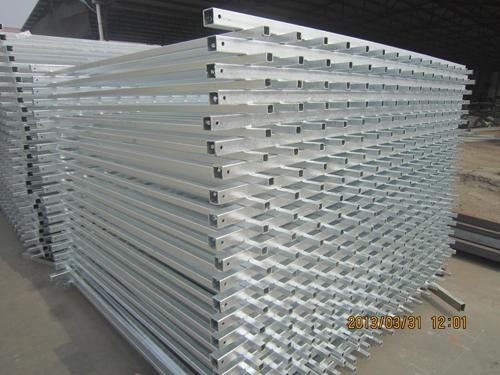
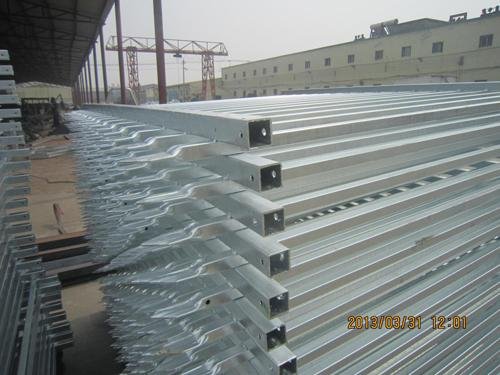
Consistent manufacturing starts with approved materials and drawings. Workers cut the tubes and position the pickets using suitable fixtures. They then weld the joints, inspect alignment, and prepare the surfaces.
A production checklist should record dimensions, weld appearance, picket spacing, and finish requirements. Sampling frequency depends on the purchase specification. Buyers can request inspection photographs and packing lists before shipment.
Welds, Alignment, and Protective Finish
Inspect joints for visible cracks, excessive spatter, and incomplete welding. Check rail straightness and panel diagonals before surface treatment. Verify coating coverage around welds, cut edges, and post bases.
Fixing hardware must match the specified post and panel profiles. Clearvu Fence Clamps belong to a different mesh system. Buyers can also examine Clearvu Fence Clamps when reviewing mesh-based alternatives. Never substitute clamps without checking the connection detail.
Steel Fence Panels Packing and Shipping
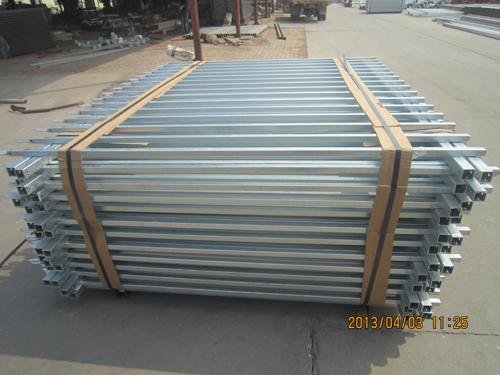
Export packing reduces scratches, crushing, and movement during transport. BMP can arrange steel pallets and protective material for panels, posts, and accessories. Packing drawings should reflect the container size and unloading method.
Panels: Place protective layers against pallet contact points.
Corners: Use metal protectors where strapping could mark the finish.
Top layers: Add suitable boards to protect the upper panels.
Posts: Separate steel sections and protect exposed caps.
Accessories: Group bolts, brackets, and fitting sets into labelled cartons.
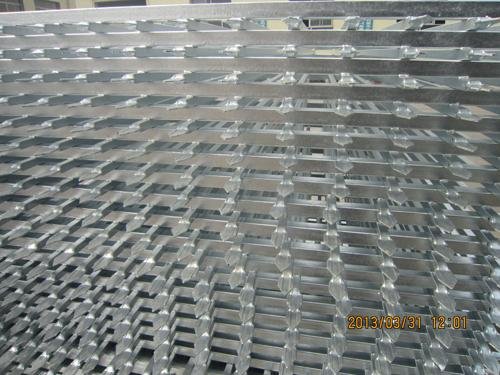
Protective pallet packing helps reduce surface damage while steel fencing panels travel through export logistics.
Pallet Protection and Accessories
Install protective padding between contact surfaces before applying straps. Secure each load without pressing directly onto painted pickets. Keep small hardware in labelled bags or cartons for easier installation.
Posts can travel on separate pallets according to length and weight. Record quantities for panels, posts, brackets, caps, and gates. A final loading checklist helps prevent missing parts at the destination.
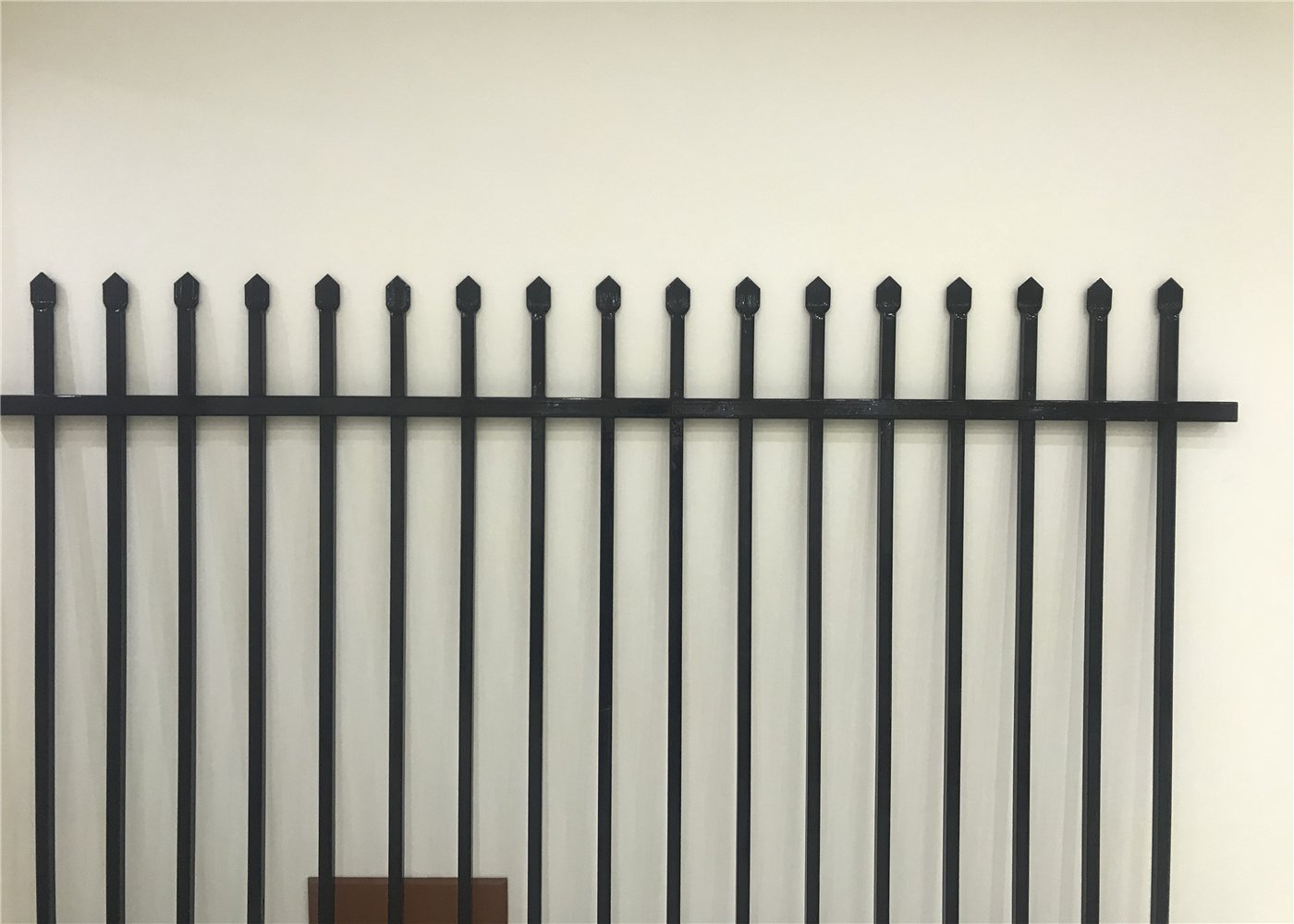
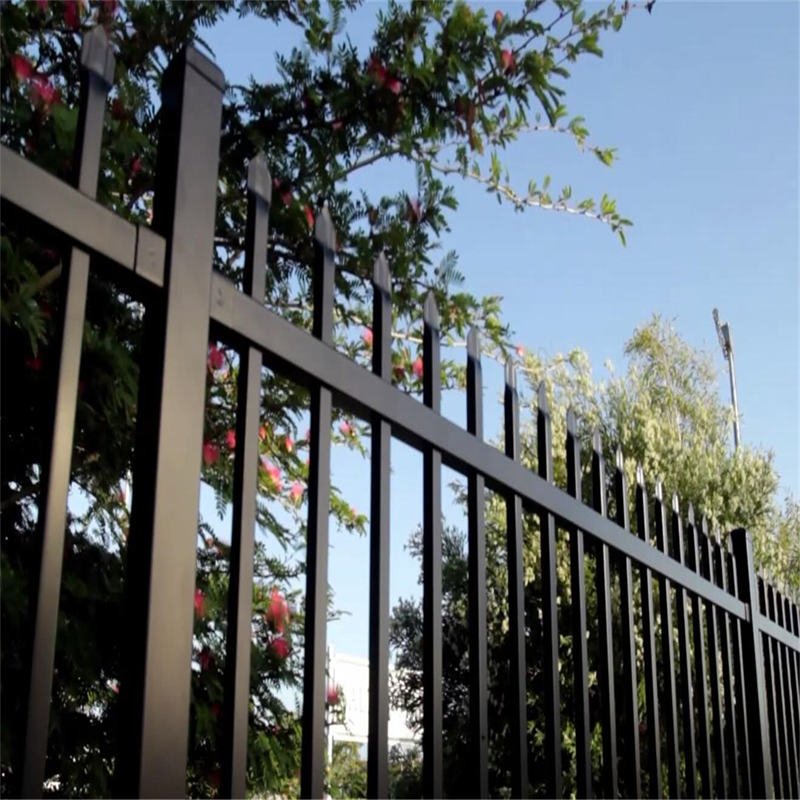
This garrison fencing reference illustrates an additional tubular picket panel configuration.
Steel Fence Panels Buying Checklist
A precise quotation begins with the total fence length and the intended height. Include a site sketch with gates, corners, slopes, and any existing walls. Identify the picket type and top shape clearly.
Buyers should also specify the requested galvanising method and powder colour. Ask for separate confirmation of material thickness and coating thickness. For projects requiring mesh instead, Clearvu Fence Posts form part of a different compatible system.
Measurements Buyers Should Confirm
Boundary length, individual panel widths, and panel heights.
Rail dimensions, picket dimensions, and spacing.
Top design, post centres, and foundation arrangement.
Gate quantities, opening directions, and hardware.
Surface finish, RAL colour, and inspection requirements.
Delivery terms, unloading plan, and packaging preference.
Approved drawings reduce changes during production and installation. Keep the drawings with the final order and inspection documents.
Steel Fence Panels Frequently Asked Questions
Can BMP produce custom sizes? Yes. We can review project drawings and discuss suitable panel dimensions. The factory must confirm tooling, material availability, and production feasibility.
Are pointed tops suitable for every site? No. Public areas may require flat tops or additional safety precautions. A local installer should confirm applicable rules.
Do galvanised panels require maintenance? Yes. Regular inspection and timely repairs help preserve the protective finish.
Can steel fencing match entrance gates? Yes. Matching pickets and finishes can support a consistent design. Gate structures still need separate engineering checks.
Installation and Service Questions
Can installers place panels on sloping ground? Often, yes. The site may require stepped sections or special post arrangements.
What information helps with a quotation? Send the boundary dimensions, panel specification, coating choice, drawings, and delivery destination.
Does the factory install fencing overseas? BMP supplies manufactured products and export documents. Buyers should confirm local installation services separately.
BMP welcomes clear drawings and written project requirements. Our team can review the complete steel fencing package before production approval.
The garrison fencing reference highlights another option for visible perimeter boundary design.