Razor mesh gives security teams a physical barrier with sharp-edged strands and a clearly defined perimeter. Its welded diamond or rectangular grid reduces convenient climbing routes around industrial and restricted sites. Buyers can choose different openings, materials, and support arrangements to match their risk assessments. Unlike ordinary welded fence panels, razor mesh requires strict handling controls and careful placement near public areas.
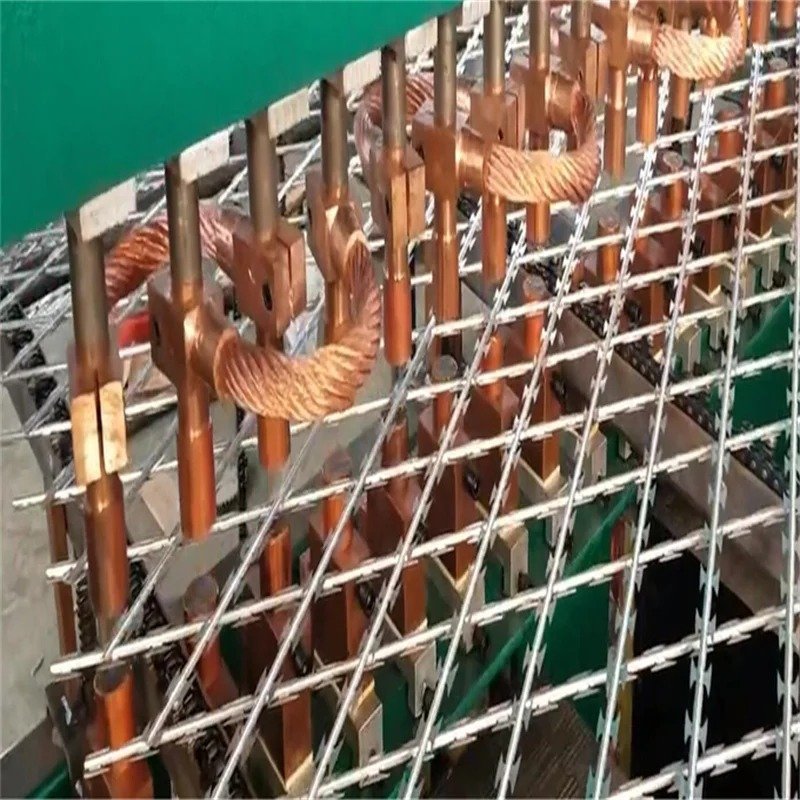
Welded designs combine shaped blade tape with steel core wire and fixed mesh intersections. The Razor Wire Mesh category includes several configurations for different boundary conditions. Selecting the correct mesh starts with dimensions, not marketing labels.
Razor mesh construction and security purpose
Razor mesh uses repeated sharp-edged strands to discourage climbing and unauthorized access. The pattern forms a visible deterrent without needing an opaque wall. It can guard substations, warehouses, water facilities, border compounds, and other controlled premises. Each project still needs a suitable access plan, clear warning signs, and monitored entry points.
Razor mesh differs from conventional Clearvu Mesh, which uses ordinary welded wires without exposed blades. These systems demand different handling methods, fixing details, and site-safety reviews. Buyers should never assume their posts and clips are interchangeable.
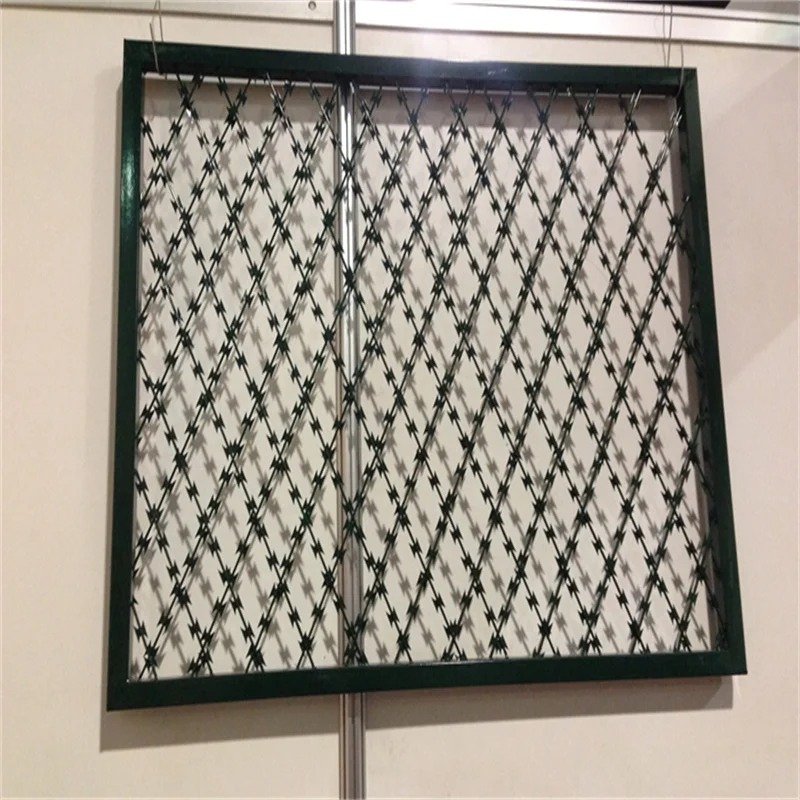
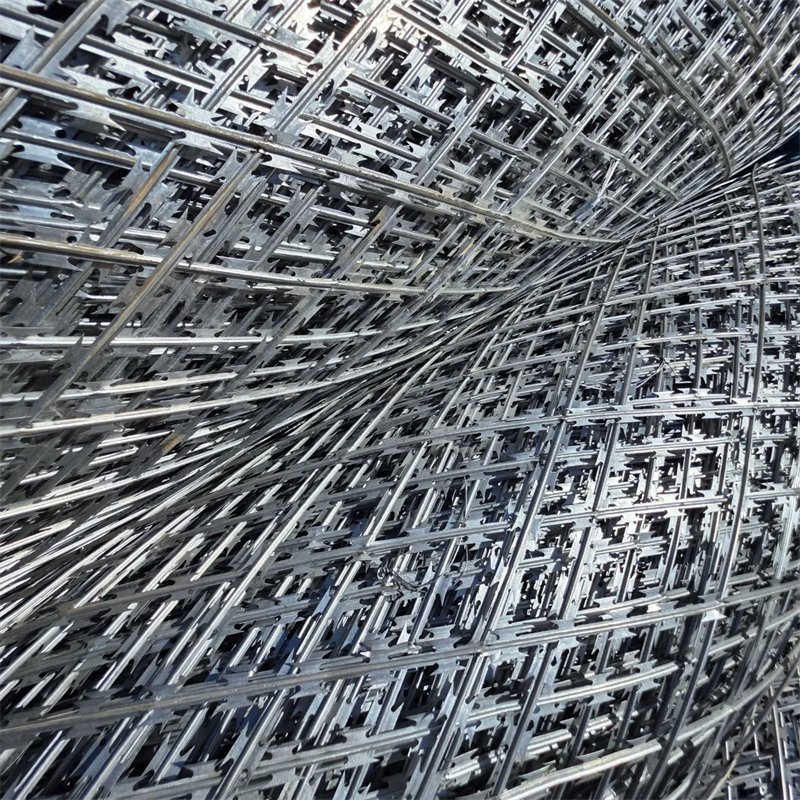
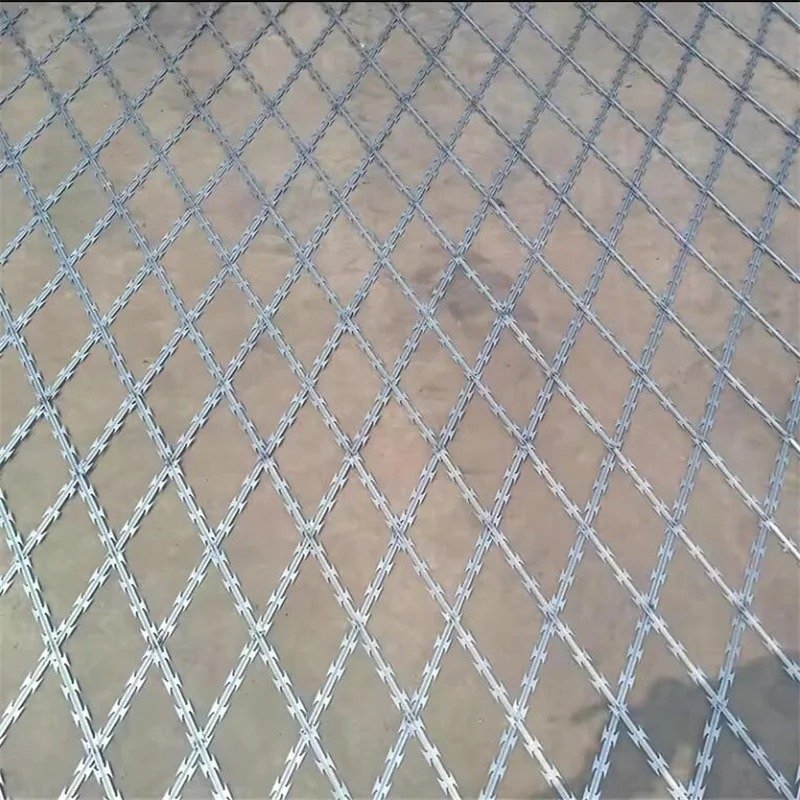
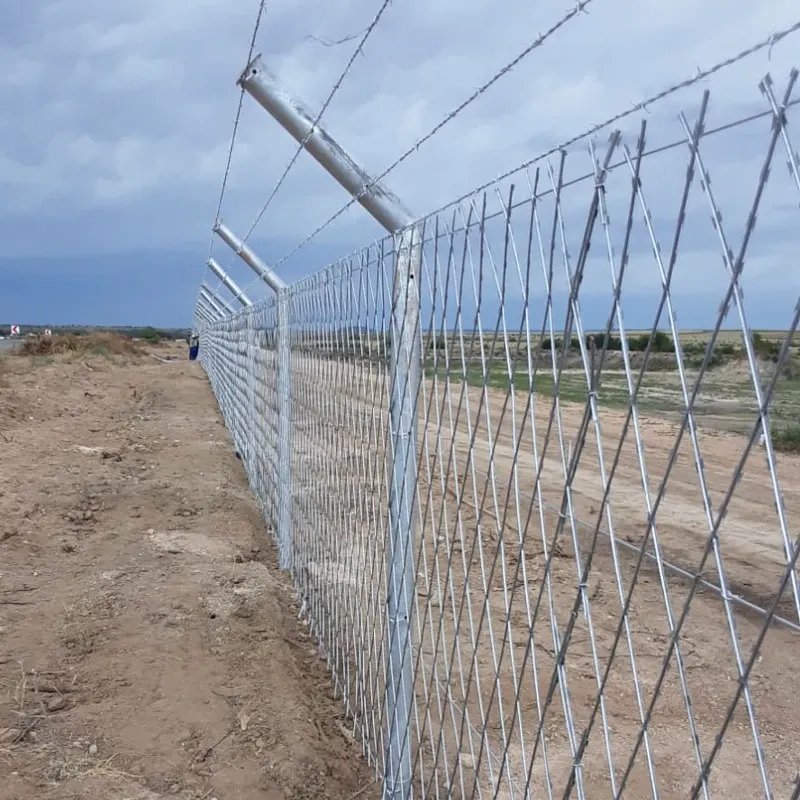
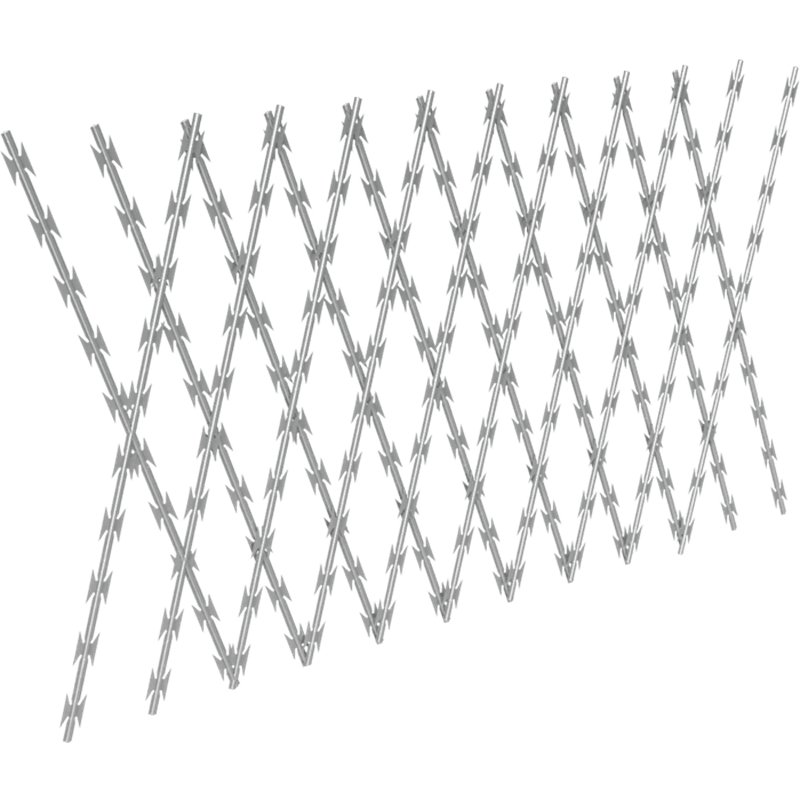
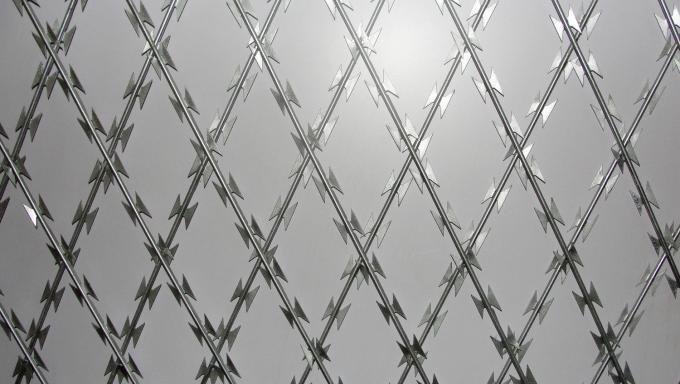
Diamond-pattern razor strands create an exposed-blade perimeter barrier for controlled locations.
Diamond patterns and spacing choices
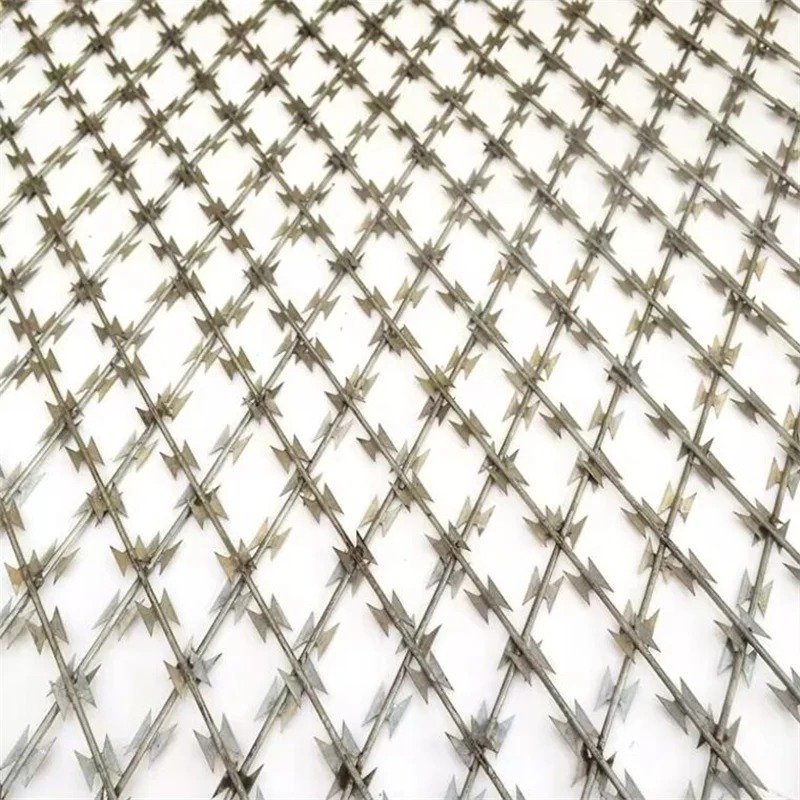
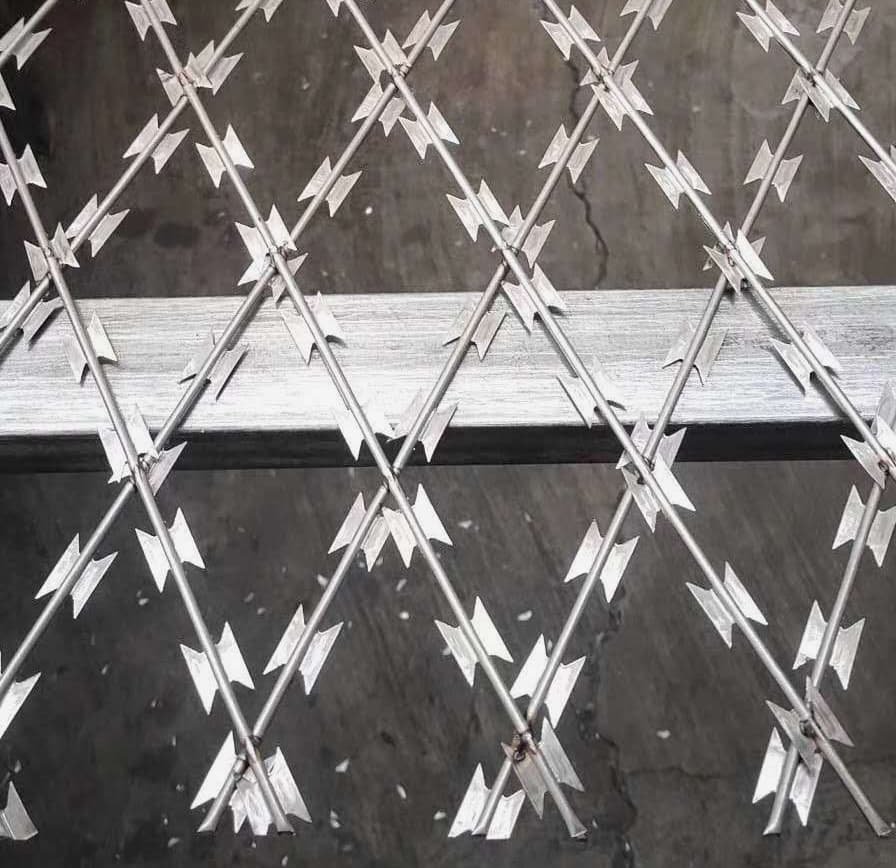
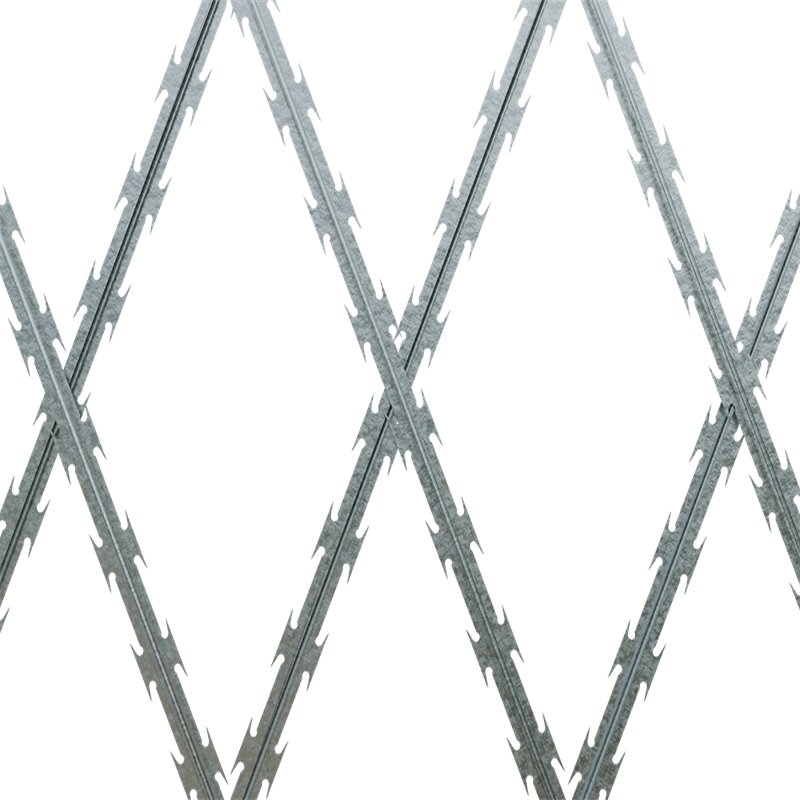
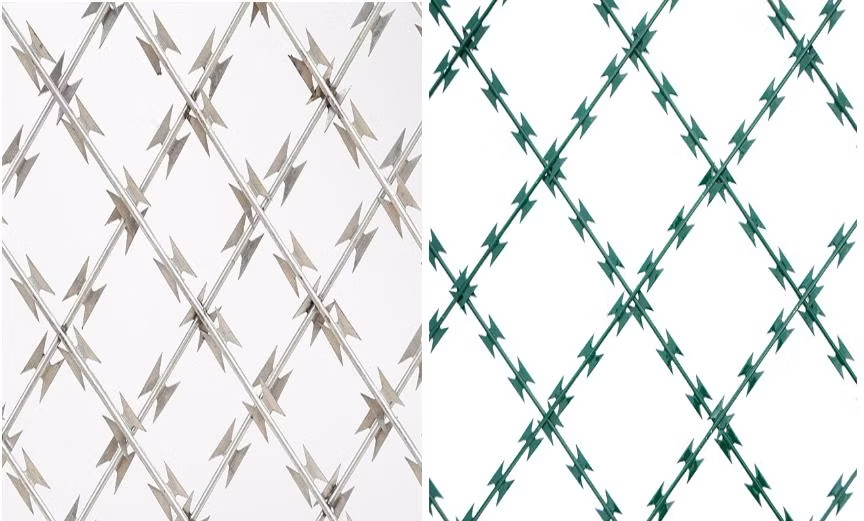
Mesh geometry changes how closely the blades form the security barrier. The smaller 75 × 150 mm diamond pattern offers a denser grid. A 150 × 300 mm diamond pattern creates a more open configuration. Other reference options include 100 × 150 mm and rectangular patterns such as 50 × 150 mm.
The Diamond Mesh Razor Wire configurations show how project drawings can specify different opening sizes. Razor mesh buyers should define both dimensions and the measuring direction. A drawing must also identify panel orientation, overall height, and usable finished length.
Smaller openings do not automatically guarantee a certified performance level. Weld quality, attachment strength, support spacing, and foundation capacity influence overall protection. Confirm any required security test against the complete assembly.
Razor mesh technical specifications
The table below retains the main razor mesh material data from the source specification. It distinguishes steel core diameter from the separate blade-strip thickness. The listed sizes are ordering references, not universal product tolerances.
Reference welded razor mesh material and aperture specifications
Item
Reference specification
Purchasing check
Steel core wire
2.50 ± 0.05 mm
Confirm material grade and measured diameter
Razor blade strip
0.50 ± 0.05 mm
Confirm steel grade and sheet thickness
Core material
High-tensile galvanised steel or stainless steel
Specify grade and corrosion protection
Blade material
Galvanised sheet steel or stainless steel sheet
Specify material matching the core
Rectangular pattern
50 × 150 / 75 × 150 / 100 × 150 mm
Confirm orientation on drawing
Diamond pattern
75 × 150 / 150 × 300 mm
Confirm both measured axes
Other mesh sizes
Custom upon technical review
Approve sample and tooling feasibility
Some Welded Razor Mesh designs offer alternative openings and blade types. Ask the supplier to identify the actual blade profile before ordering. Descriptions such as reinforced or patented require model-specific documentation.
Material grades and coating decisions
Galvanised steel offers zinc-based corrosion protection for many industrial settings. Stainless steel can suit applications that justify its higher material cost. Material selection depends on exposure, required life, cleaning practices, and maintenance access. Coastal salt, standing moisture, and industrial contaminants can accelerate corrosion.
For razor mesh, request consistent protection across the core wire, blade strip, and connection hardware. Mixed finishes can create weak points even when the visible mesh looks uniform. The Welded Razor Wire Mesh range covers further material and finish options. Buyers should confirm coating tests, zinc mass, and required inspection methods in the contract.
Powder coatings may provide colour and added protection where the manufacturing process supports them. They do not replace suitable metallic protection in every environment. Inspect blade edges, welded junctions, and shipping contact points for finish damage.
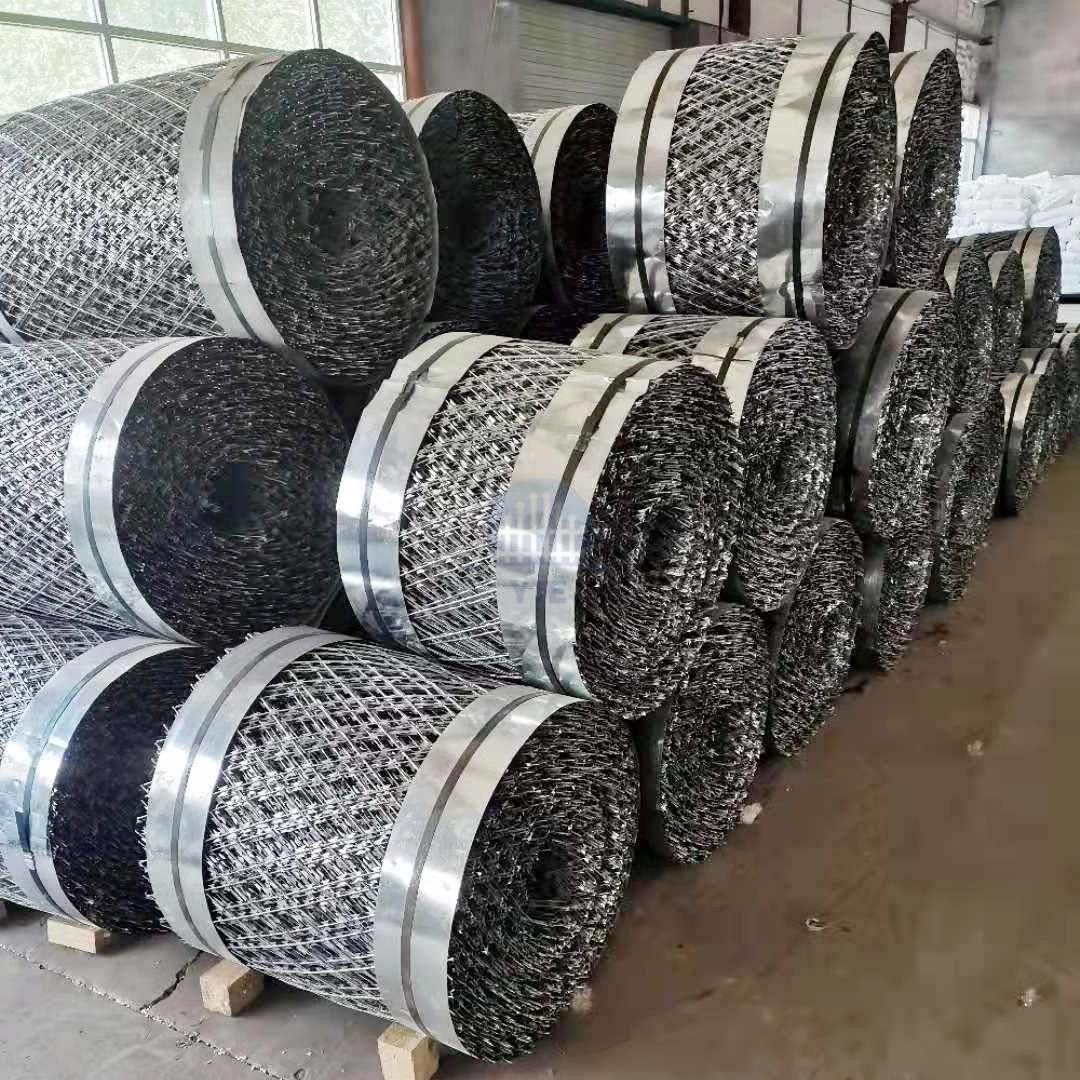
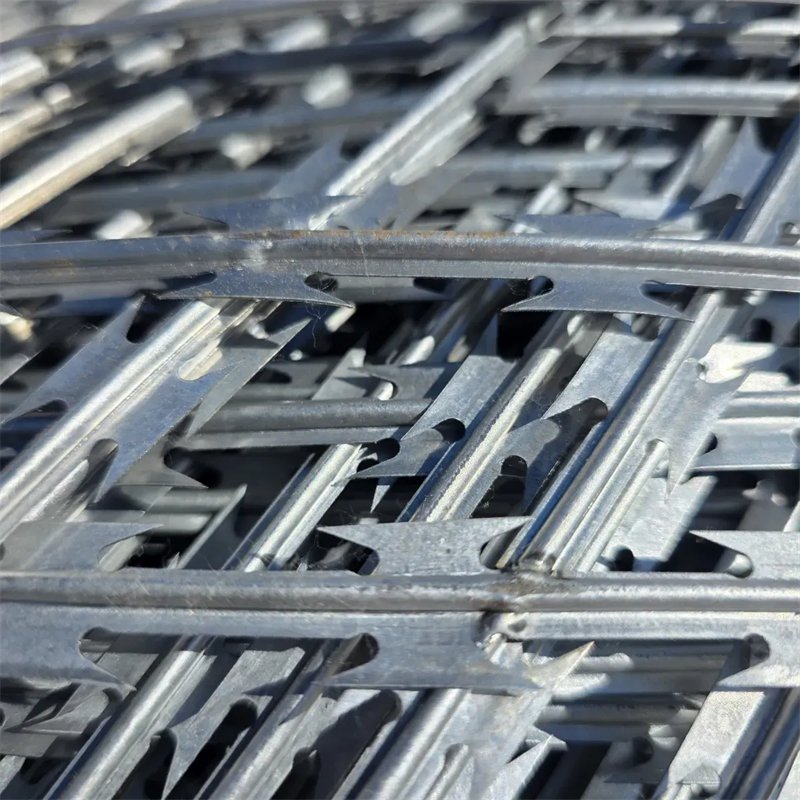
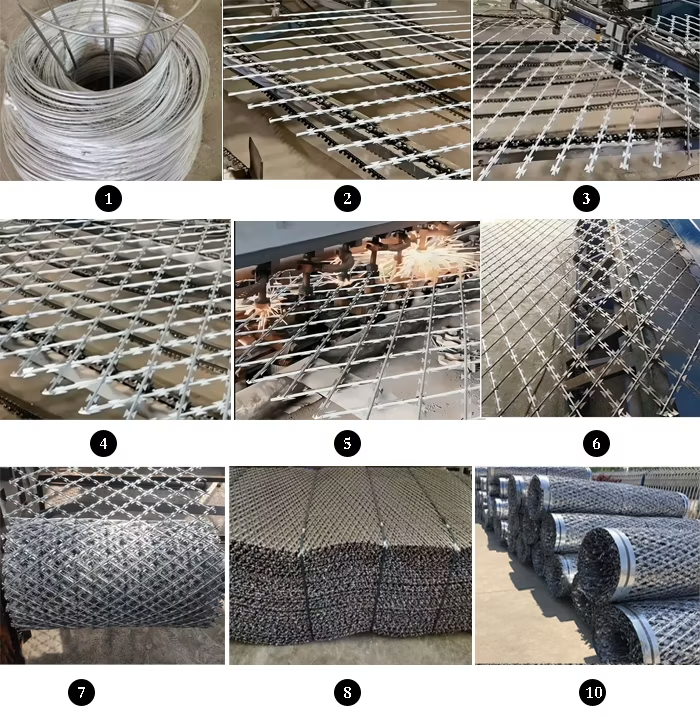
Core wire, blade profile, and welding quality all affect the finished mesh assembly.
Razor mesh as a freestanding barrier
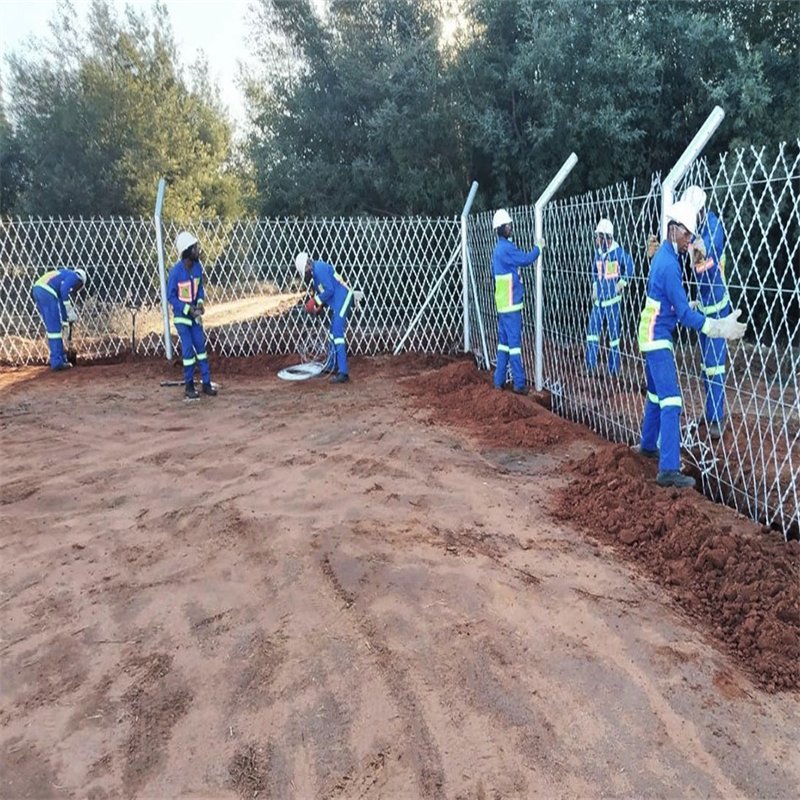
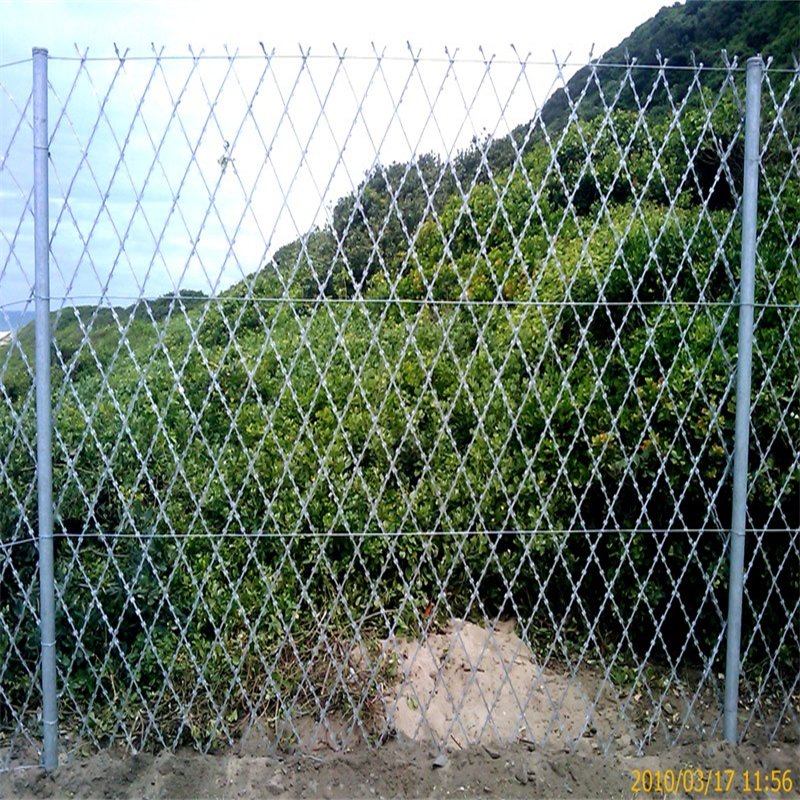
Freestanding razor mesh needs structural posts, foundations, and compatible attachment hardware. The design must resist site loads while keeping exposed edges within controlled boundaries. Fence height and support geometry vary with terrain, project drawings, and local requirements. Contractors should confirm underground services before construction.
For a razor mesh perimeter, examine corners, gates, drainage, and slopes before confirming the bill of materials. A six-metre sheet length does not necessarily equal the final post-to-post bay length. Fixing overlaps and edge details may alter net installed coverage. The Razor Mesh Fencing options include several sheet heights and nominal lengths.
Sharp materials demand trained installers and suitable protective equipment. Keep pedestrians and animals clear of installation areas. Confirm local setback, access, and warning-sign rules before placing exposed blades.
Wall toppings and alternative blade systems
Not every site needs razor mesh across the full boundary height. Existing walls sometimes use separately designed deterrent toppings, subject to local approval. The structural engineer should examine support capacity before anyone adds a new barrier. A topping can increase maintenance hazards and must not obstruct emergency exits.
For sites requiring additional perimeter protection, Razor Ribbon Fence creates a visible deterrent along security boundaries. Property owners can install Razor Wire Flat Wrap where limited space makes compact wall toppings more practical. Larger security compounds may prefer Razor Coils to strengthen exposed perimeter sections and discourage unauthorized access.
For compact locations, Razor Spikes may suit a different boundary detail. These products are alternatives, not automatic attachments for every fence. Specify blade geometry, dimensions, support loading, and safe access independently.
Razor mesh applications and site suitability
Razor mesh can suit high-control facilities such as depots, substations, secured warehouses, and restricted infrastructure. Airports, military sites, and reservoirs may also consider it under project-specific approvals. The decision should follow a documented security and public-safety assessment. Sharp barriers can create unacceptable risks around schools, playgrounds, or pedestrian routes.
Where normal staff circulation matters, controlled entrances deserve dedicated attention. Clearvu Gates provide a separate access solution for compatible perimeter designs. Match gate clearances, locking hardware, alarms, and safe maintenance access to the overall security plan.
Other environments may prefer conventional welded fence panels instead of Welded Razor Wire Mesh. The linked product uses blades, while conventional welded mesh does not. Make this distinction explicit whenever comparing tender submissions.
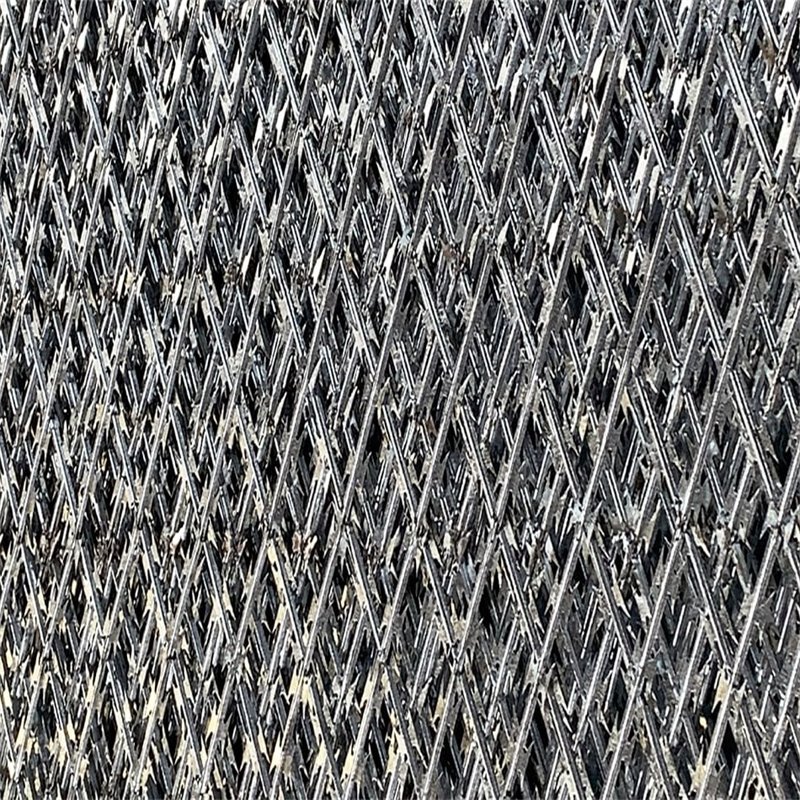
Evaluate exposure, boundary clearance, and maintenance access before choosing the mesh arrangement.
Factory inspections before shipment
Quality control for razor mesh should separate dimensional checks from material and coating checks. Inspectors can measure core diameter, blade-strip thickness, aperture spacing, sheet dimensions, and overall appearance. Samples should match the approved drawing and purchase order. Record weld defects, damaged blades, loose intersections, and coating discontinuities.
Each razor mesh shipment should identify its material grade, blade type, aperture, and finish. Independent test certificates matter when the contract requires specific material or corrosion performance. Avoid accepting an unsupported claim that every design meets the same security rating. Diamond Mesh Razor Wire details can help buyers define their sample inspection checklist.
Confirm measured sheet lengths before calculating quantities. Roll length and usable installed length may differ when installation details require overlaps. Include replacement allowances only after reviewing site complexity and procurement risk.
Export packing and safe unloading
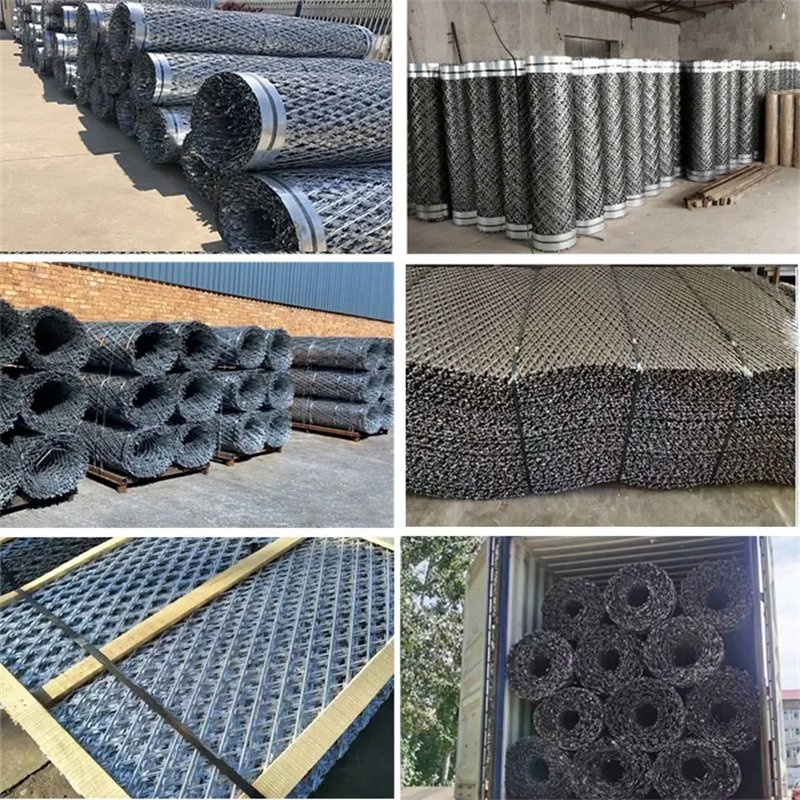
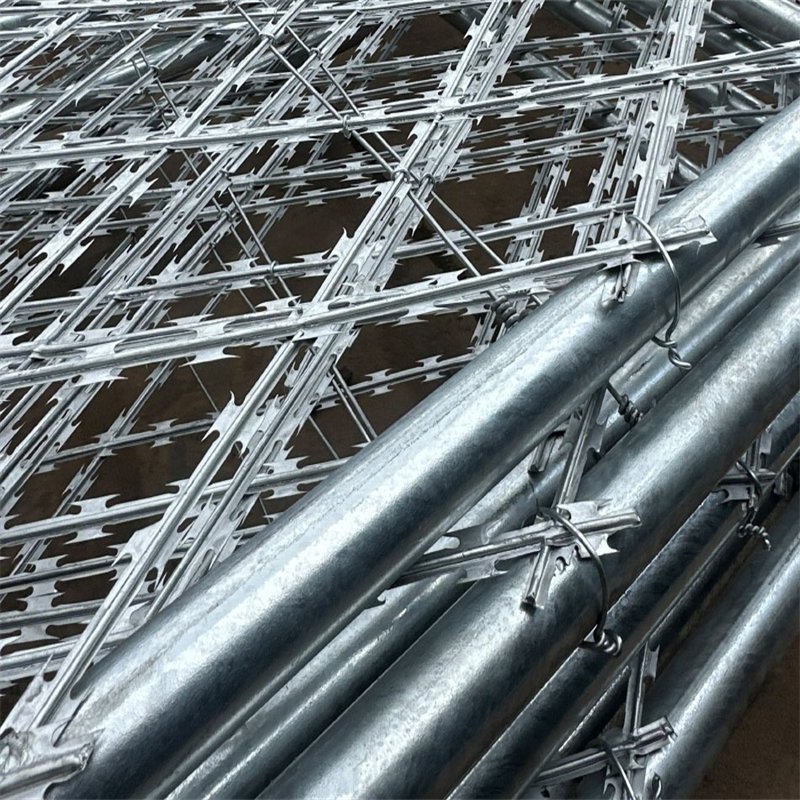
Razor mesh packaging must restrain sharp sheets or rolls against accidental movement. Use suitable separation, rigid restraints, and clearly visible handling warnings. Match pallet capacity to the shipment weight and unloading equipment. Prevent protruding blades from contacting unprotected packing surfaces or nearby cargo.
Pack connection hardware in labelled cartons and count it separately from the mesh. Record pallet numbers, weights, and shipment dimensions on the packing list. Keep installation drawings and material certificates with the commercial documentation. The Razor Wire Mesh Fencing range illustrates other transport formats for welded blade products.
Do not open tightly restrained blade packages without trained personnel and a safe work area. Contractors must use suitable protection and follow the supplier's handling instructions.
Comparing razor mesh with other security fences
Traditional palisade, 358 welded mesh, and razor mesh offer different risk profiles. Razor mesh brings exposed blades, which increase deterrence alongside injury risks. Non-bladed welded fencing typically supports simpler maintenance and safer routine access. Selection should account for public exposure, liability, local rules, and the site's actual threats.
The Razor Wire Mesh Fence option highlights a dedicated blade barrier. Other projects may combine conventional fence sections with controlled topping systems. The Razor Wire Solutions range covers these distinct product families.
Do not evaluate security only by blade count or an aggressive appearance. Structural continuity, supervised gates, safe access, and maintenance planning often determine the project's real performance.
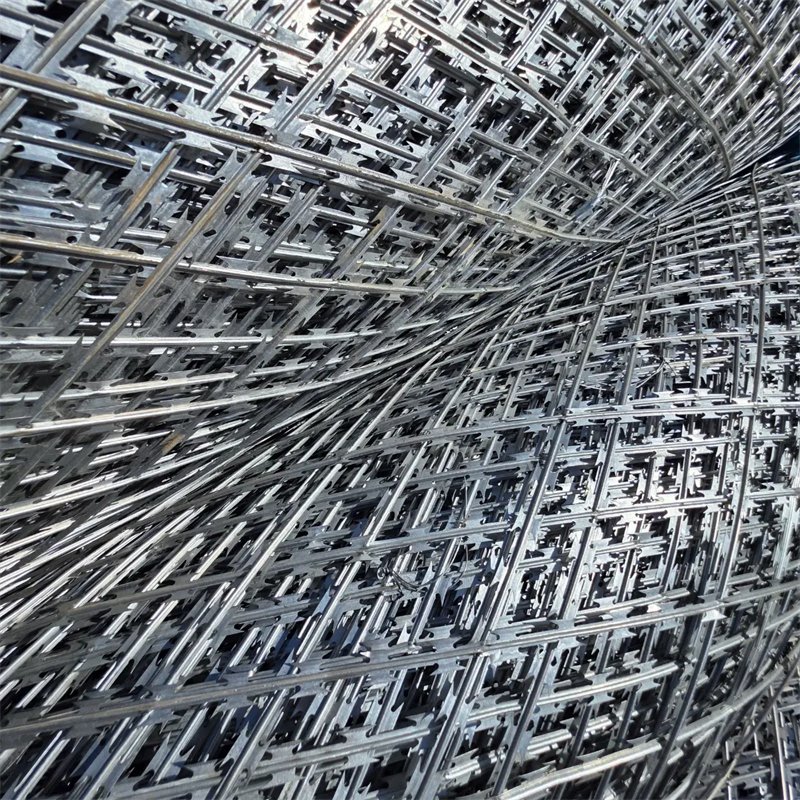
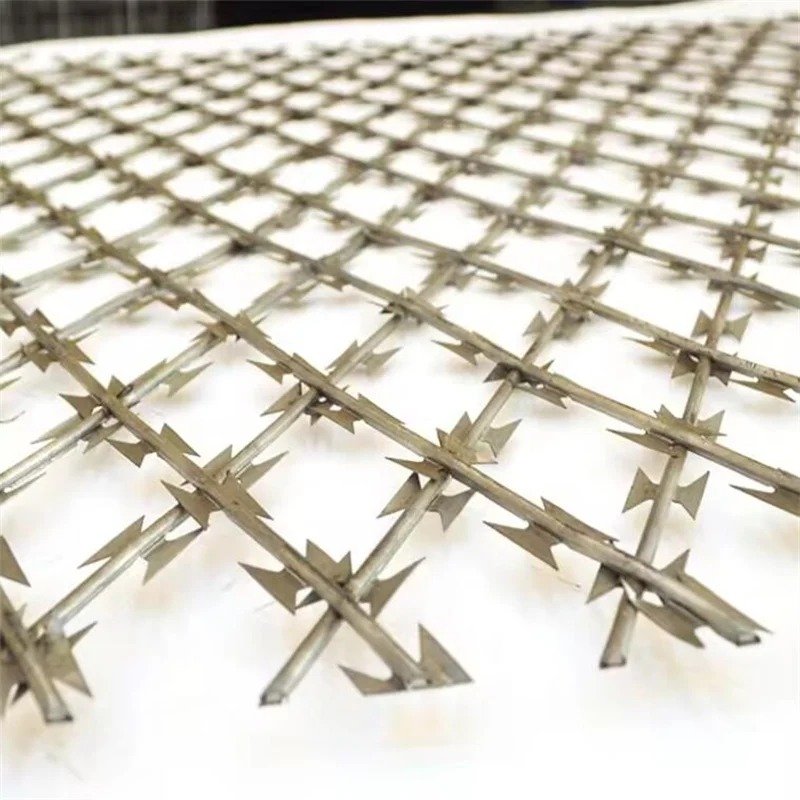
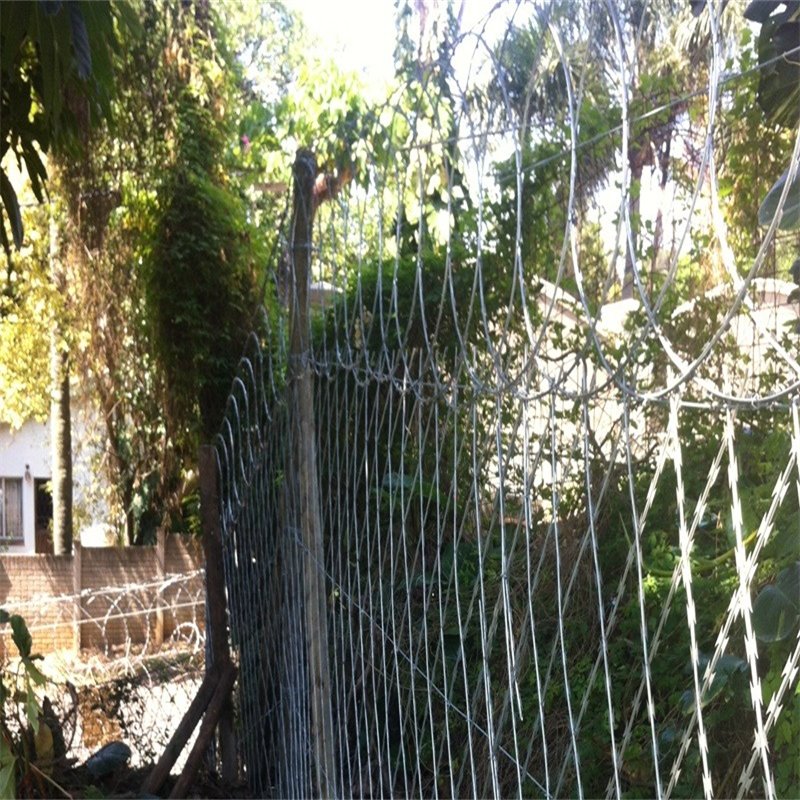
Compare the diamond direction and opening size against the approved panel drawing.
Razor mesh project quantity planning
Before quoting razor mesh, calculate the required perimeter length after removing gate openings. Divide the remaining runs by the usable installed sheet length. Then review corners, overlaps, terminations, and slope changes separately. Do not round down quantities or ignore support posts.
For example, a straight 120-metre run needs 20 nominal six-metre lengths before overlap allowances. This figure only illustrates arithmetic; actual installed coverage depends on the fixing design. Confirm the cutting schedule and replacement allowance with the contractor.
Specify whether the quotation includes steel posts, foundations, security hardware, loading, and delivery. A price per linear metre cannot represent every mesh height and fixing arrangement equally.
Maintenance and inspection intervals
Inspect razor mesh after storms, suspected intrusion, and scheduled maintenance visits. Look for corrosion, damaged welds, displaced supports, loose fixings, and dangerous fallen material. Keep vegetation away from blade edges and access points. Only trained teams should repair or replace exposed-blade sections.
Coastal and chemically exposed properties may need shorter inspection intervals. Record defects and repairs so managers can trace recurring damage. Replace unsuitable components rather than relying on temporary improvised fixes. Maintenance procedures should protect personnel and anyone passing near the site boundary.
Razor mesh specification questions before ordering
Buyers should identify their desired blade profile and aperture before asking for razor mesh prices. Share the full perimeter length, height, finish, sheet dimensions, destination, and intended mounting method. Add the site drawing and any local safety requirements. The supplier can then separate material quantities from optional supporting components.
Confirm whether the proposed configuration uses galvanised or stainless steel core and blade tape. Ask for tolerance limits, packing method, inspection criteria, and delivery conditions. The final contract should describe the exact product rather than broad claims of unbeatable security.
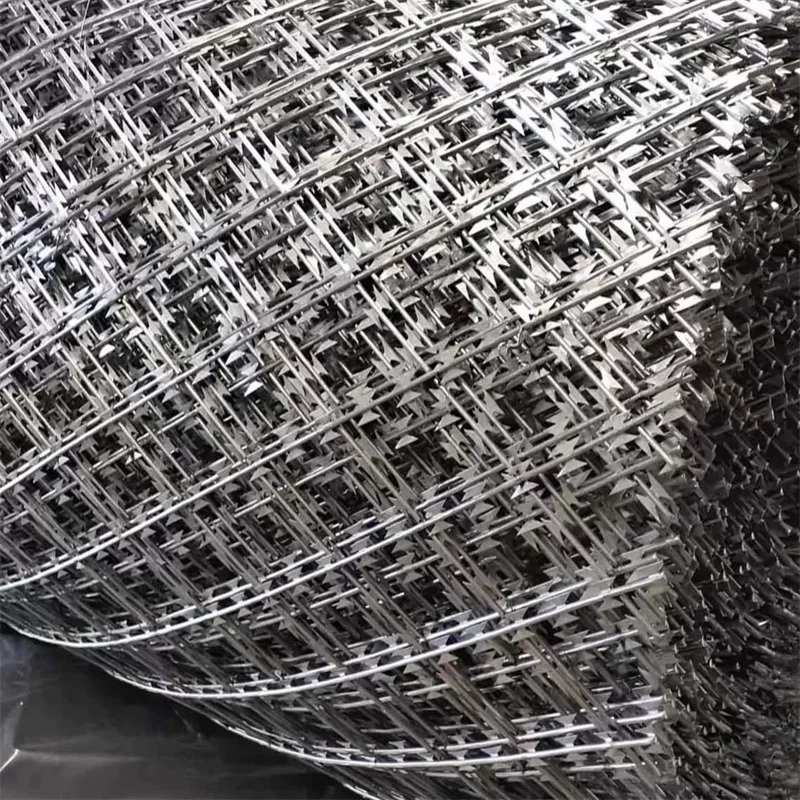
Confirm the supplied blade pattern and supporting details against the procurement specification.
Conclusion and enquiry details
Razor mesh combines an exposed-blade pattern with a strong physical boundary for appropriately controlled properties. Good procurement starts with drawings, documented materials, suitable supports, and safe working procedures. Choose the configuration that meets both the security brief and local safety requirements. Contact BMP with technical drawings and delivery details for a project-specific quotation.