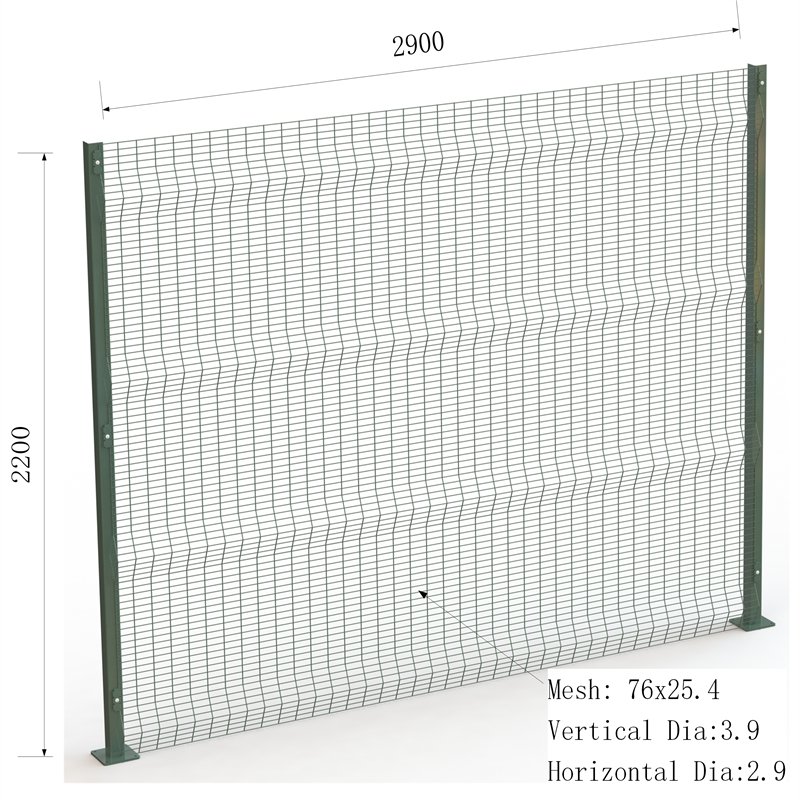
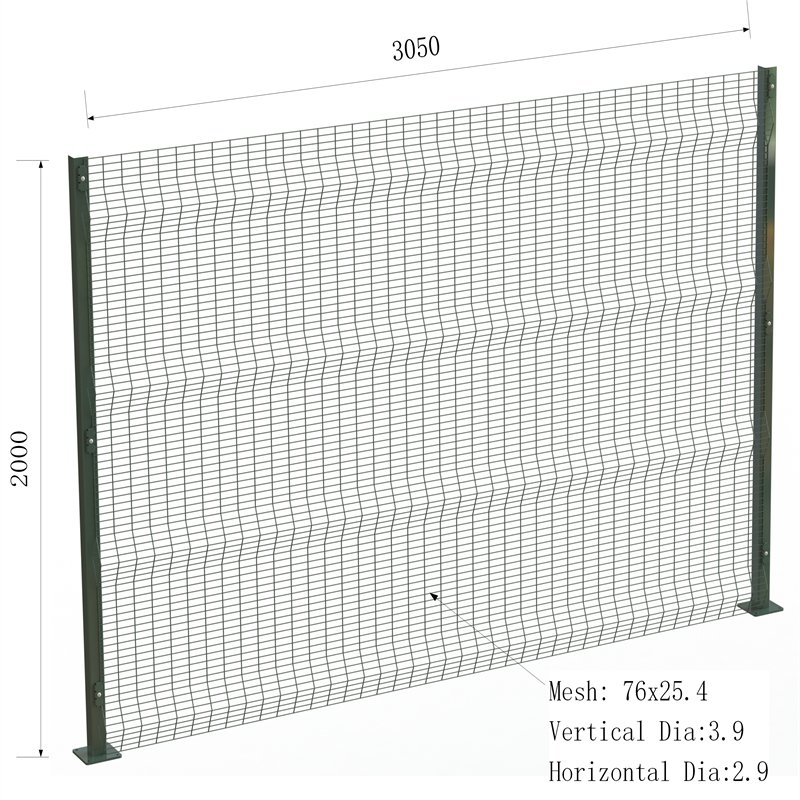
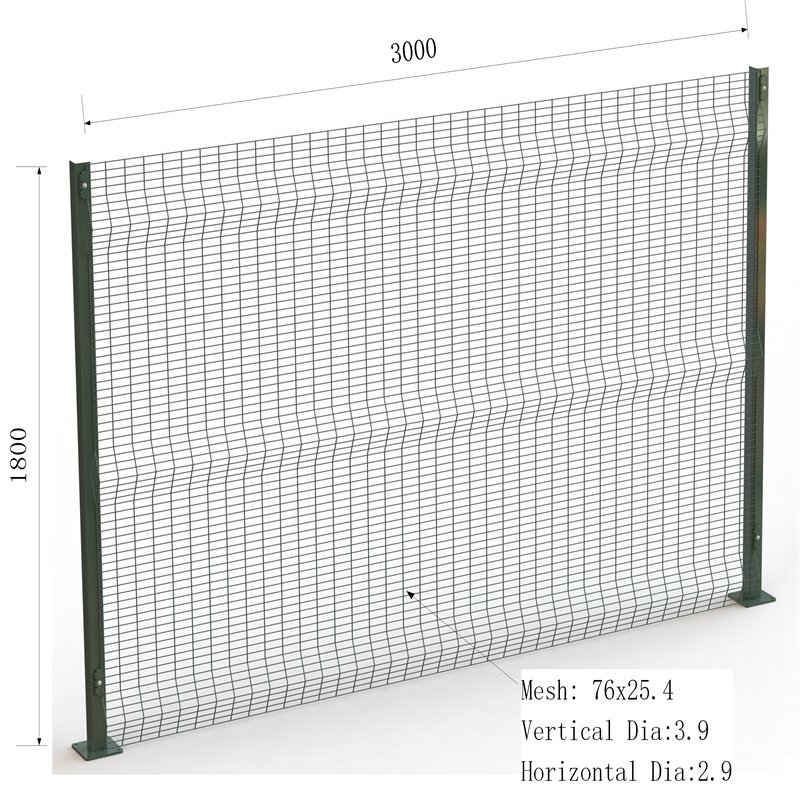
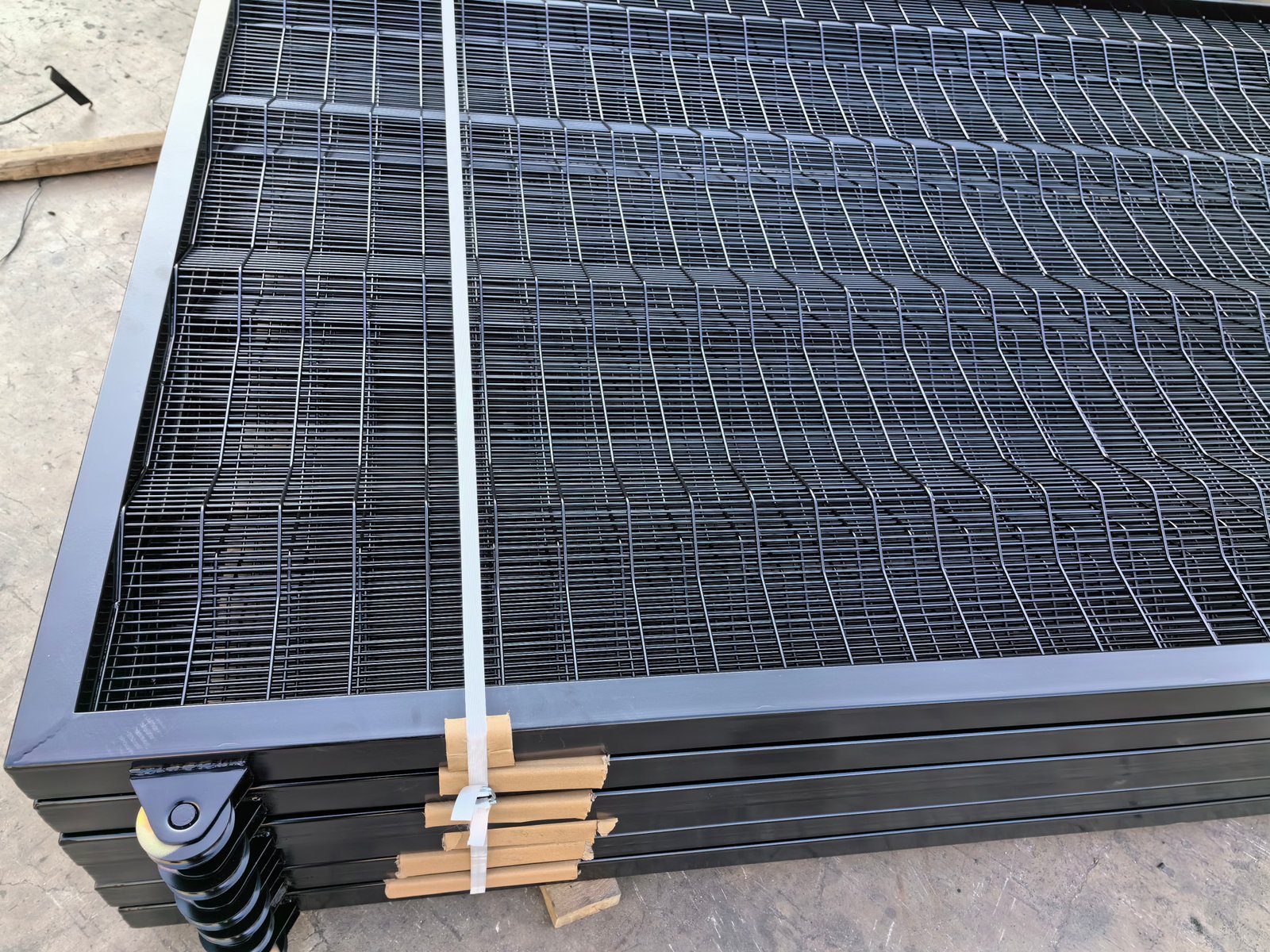
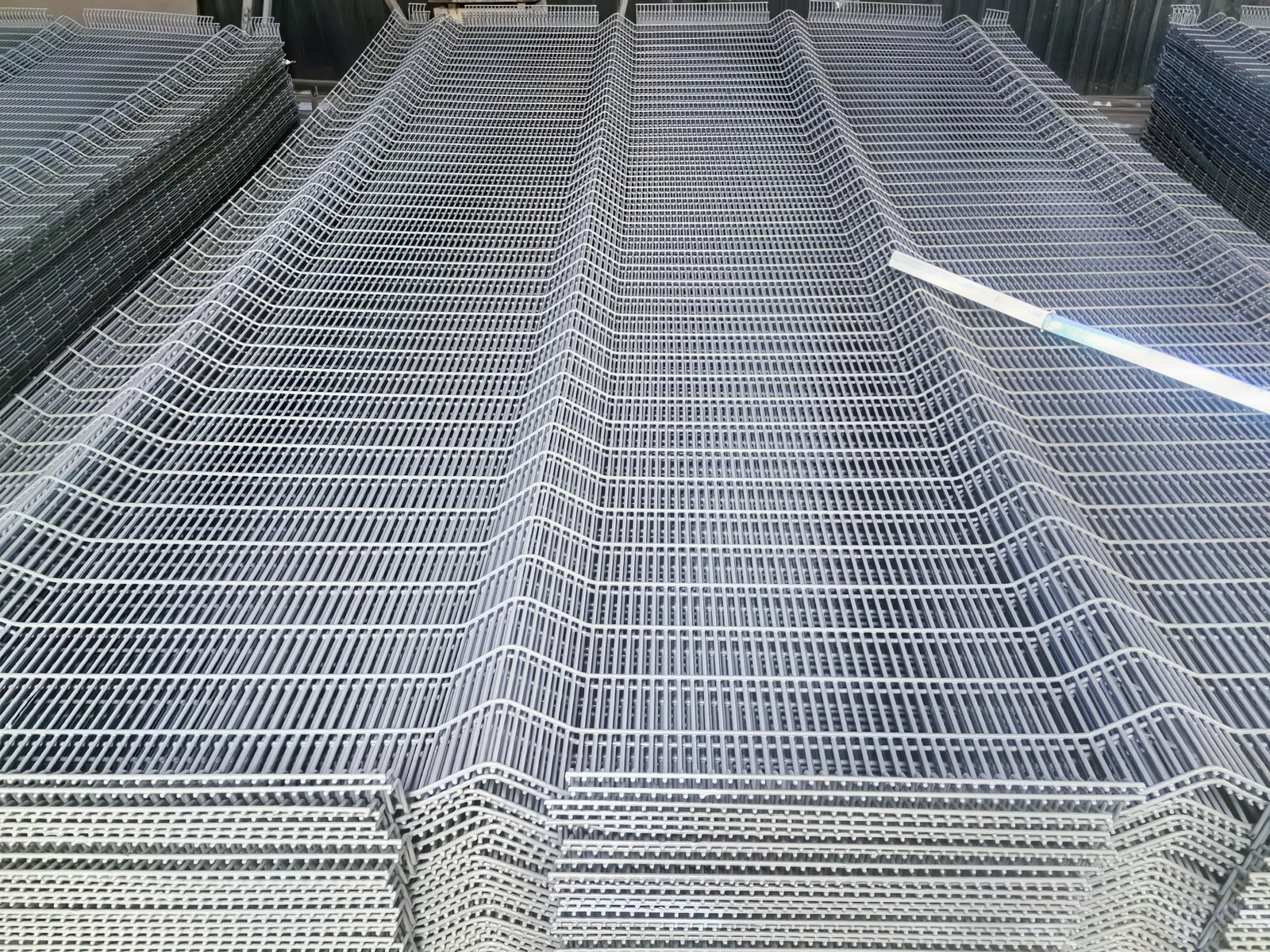
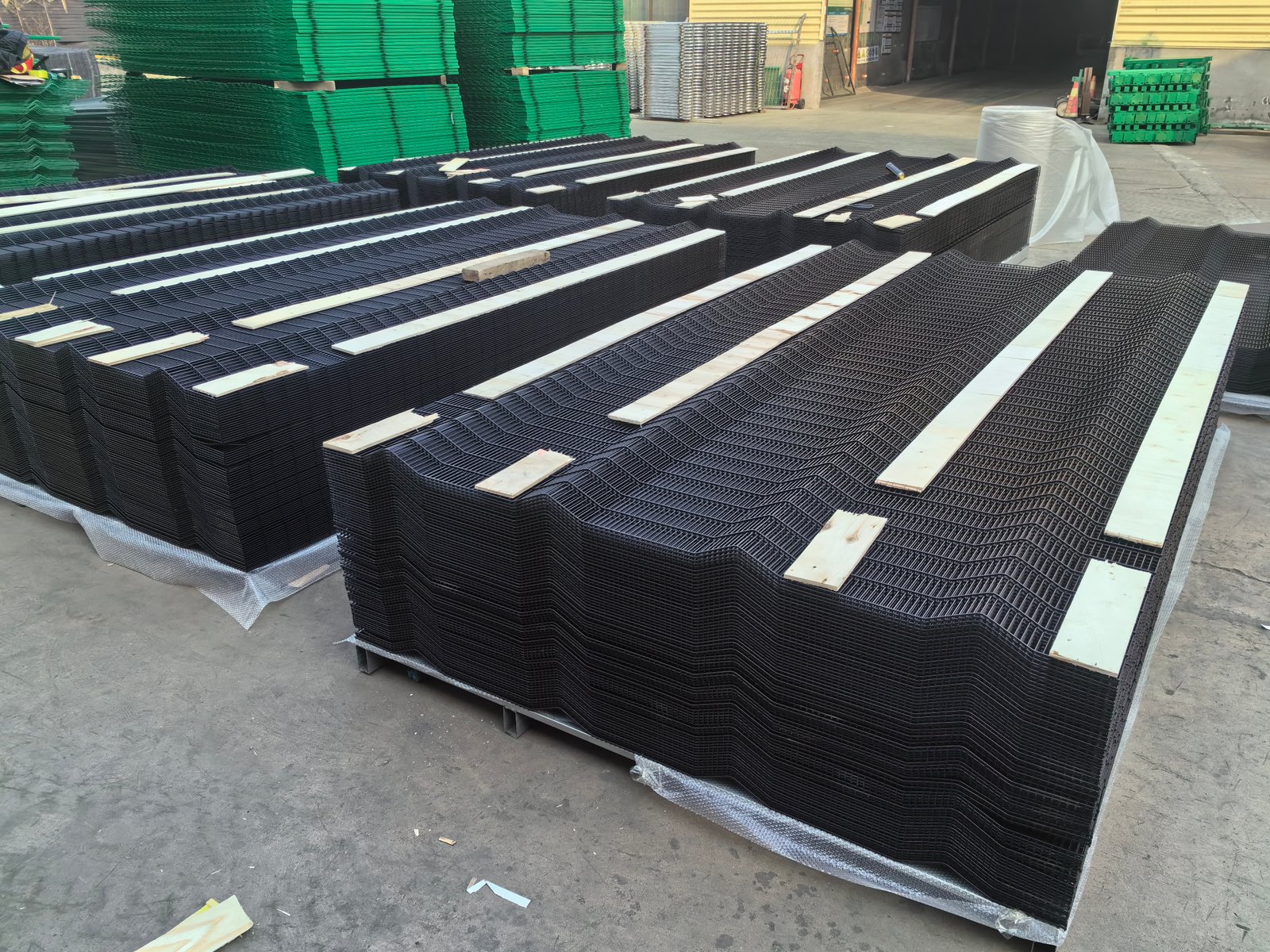
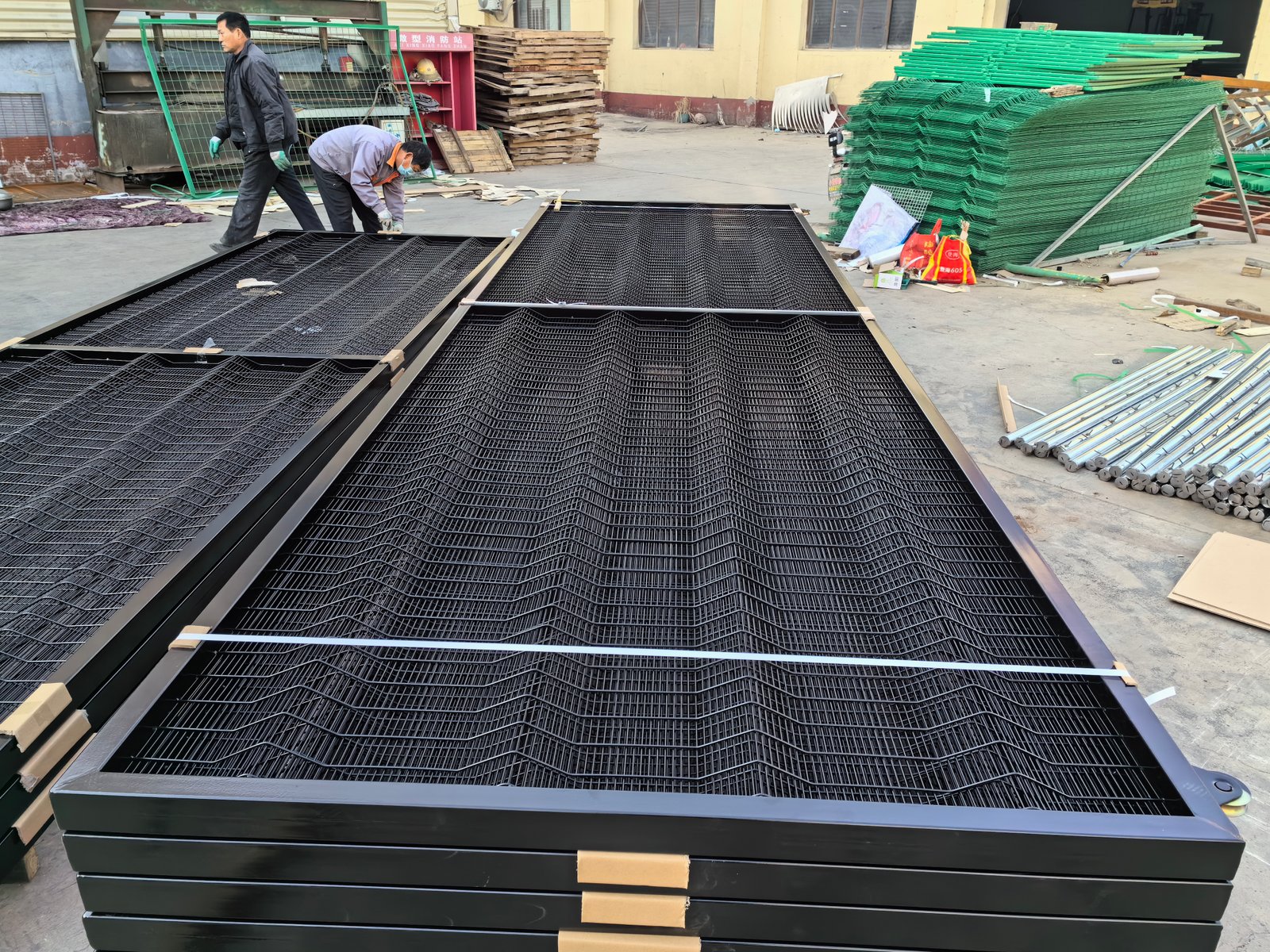
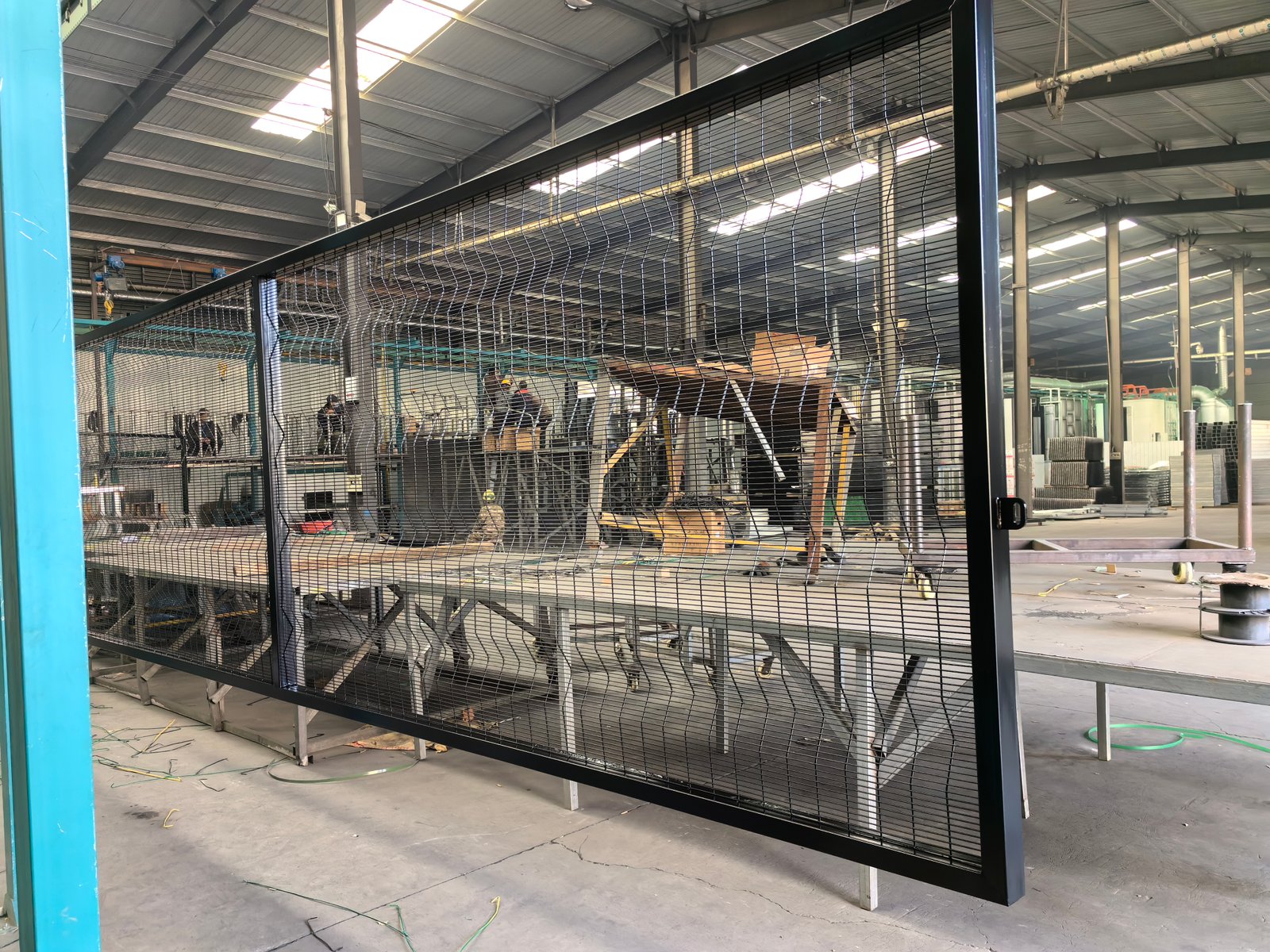
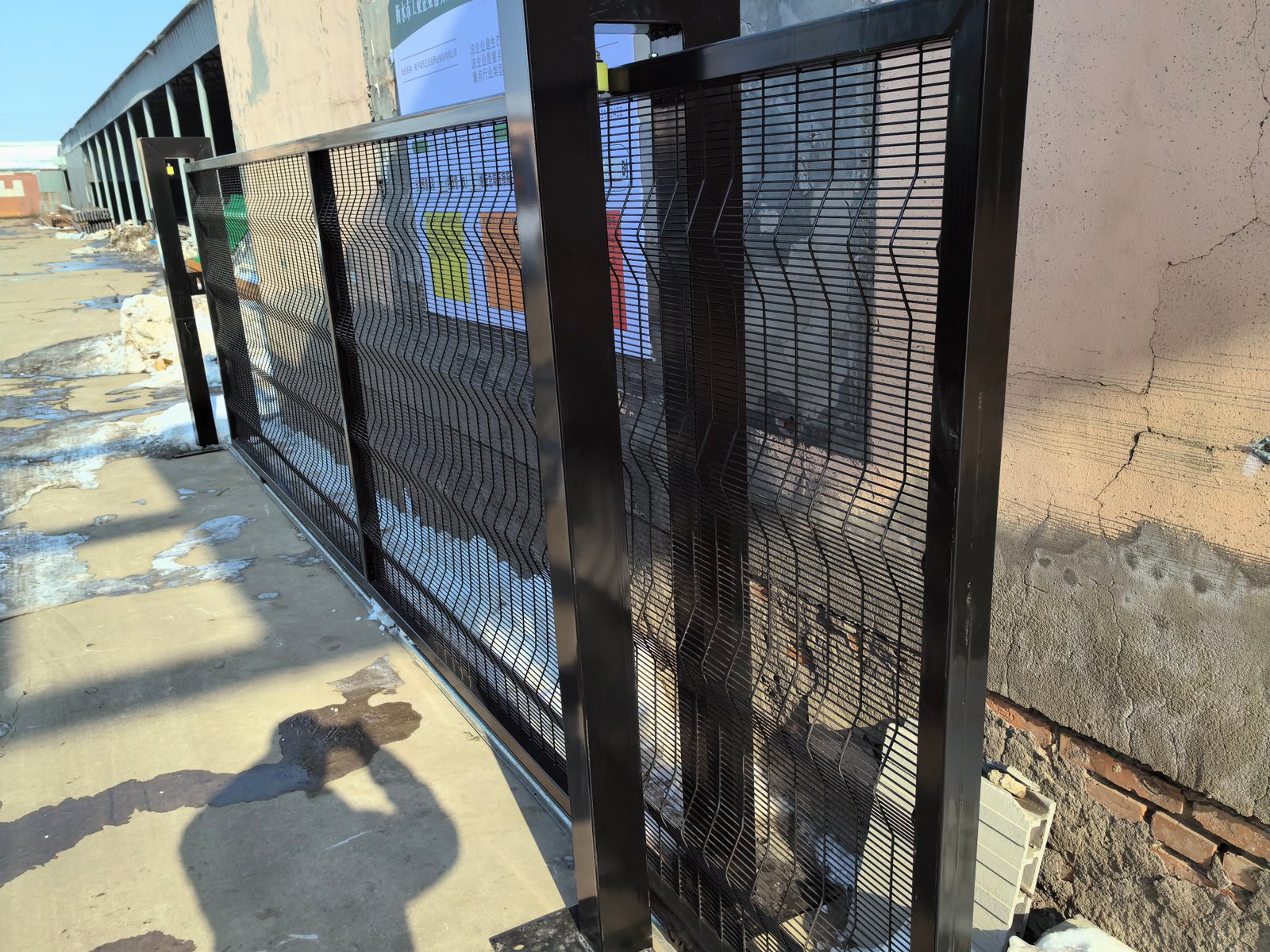
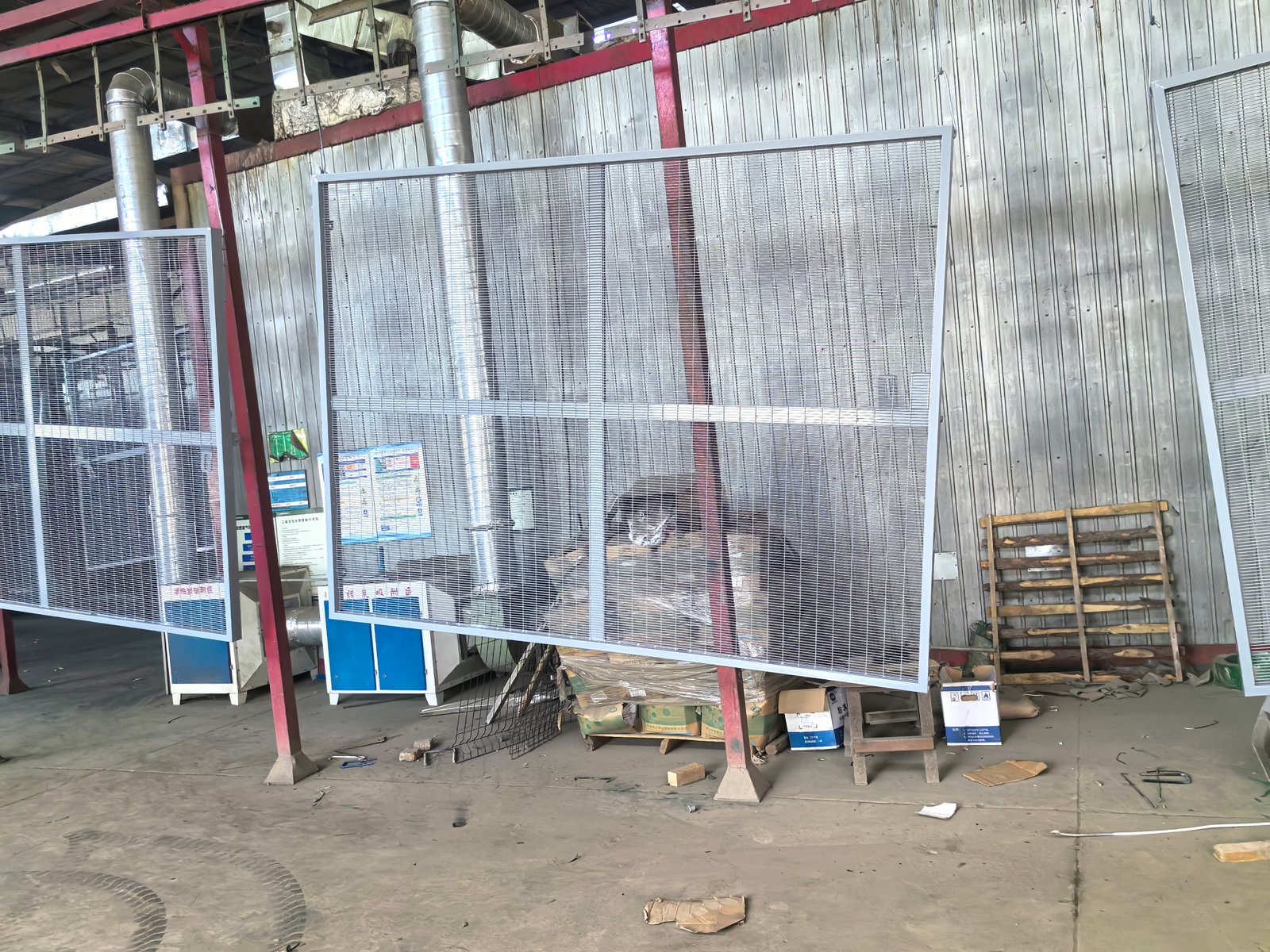
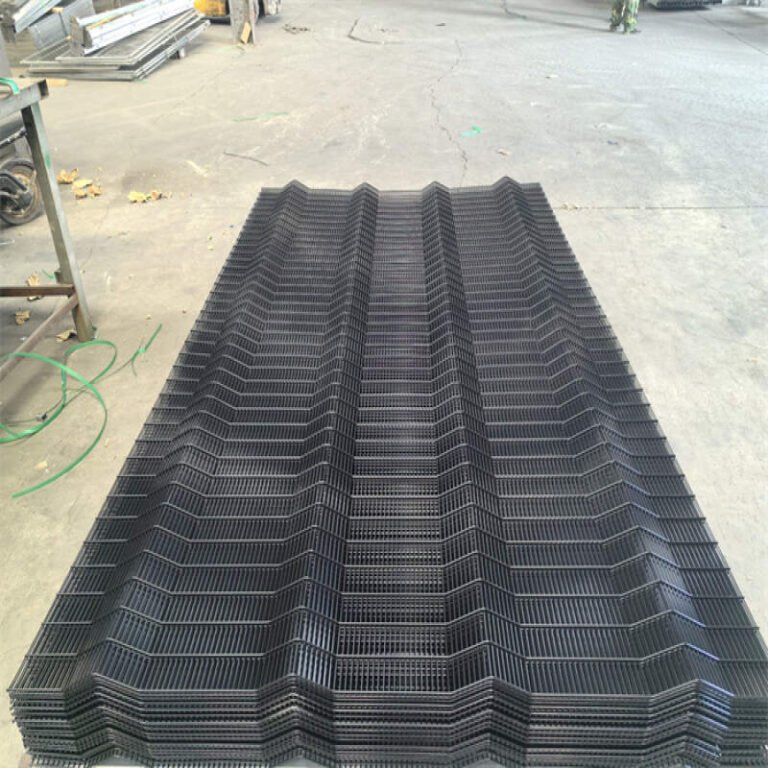
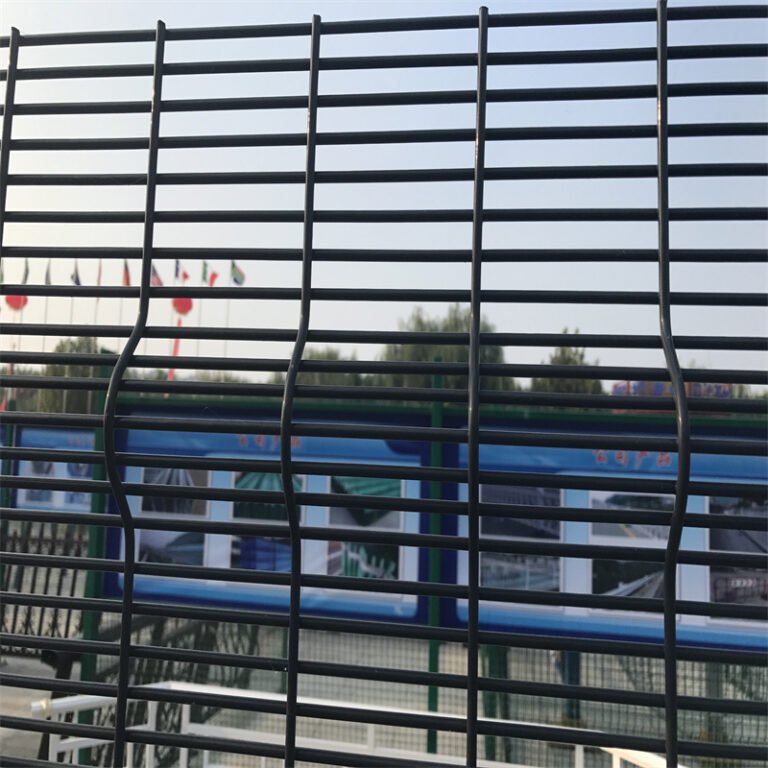
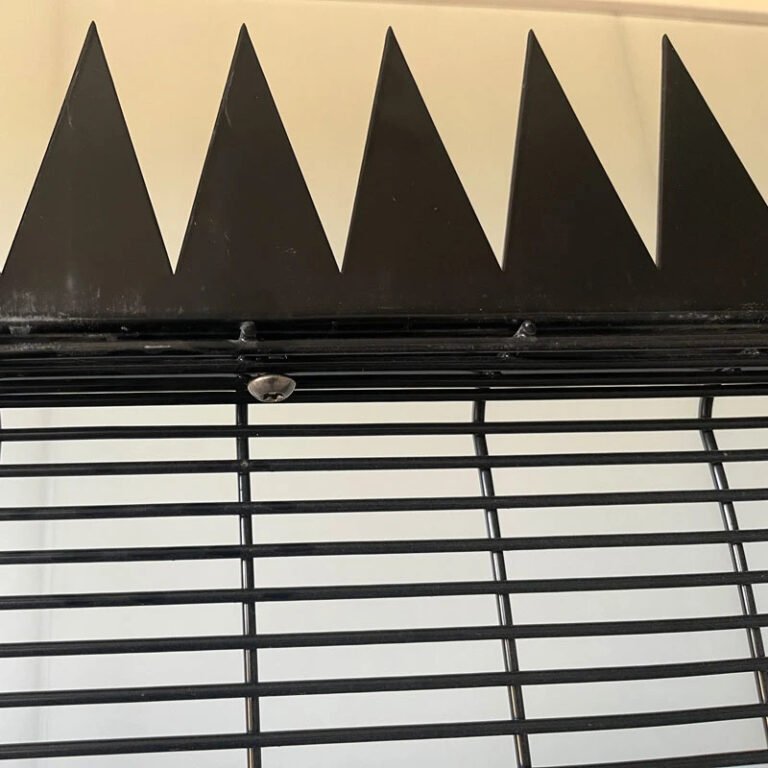
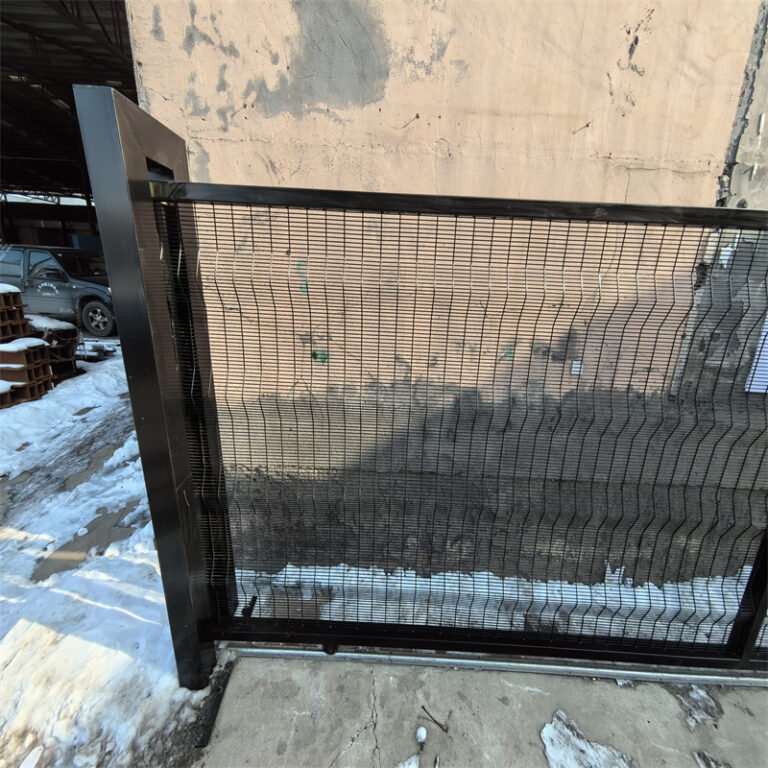
Description Prison Mesh Fencing provides a robust perimeter security system for correctional facilities, industrial compounds, airports, and critical infrastructure. BMP manufactures 358 welded steel mesh panels with narrow openings, reinforced posts, and secure fastening systems. The dense mesh restricts convenient climbing holds while maintaining visibility for patrols and surveillance cameras. Furthermore, galvanized and powder-coated finishes help protect the steel against outdoor exposure. Different panel heights, post profiles, and access gates allow contractors to match specific security requirements.
The traditional 358 designation refers to three inches, half an inch, and eight-gauge wire. These dimensions correspond to approximately 76.2 × 12.7 mm mesh spacing and 4 mm wire diameter. Manufacturers commonly describe this product as a 358 security fence, anti-climb fence, or ClearVu fence. However, its effectiveness depends on the complete system rather than mesh geometry alone.
Understanding Prison Mesh Fencing and 358 Security Mesh
High-security fencing creates a physical boundary between protected areas and unauthorized access routes. Therefore, panel strength, post connections, foundations, and gates all contribute to overall performance.
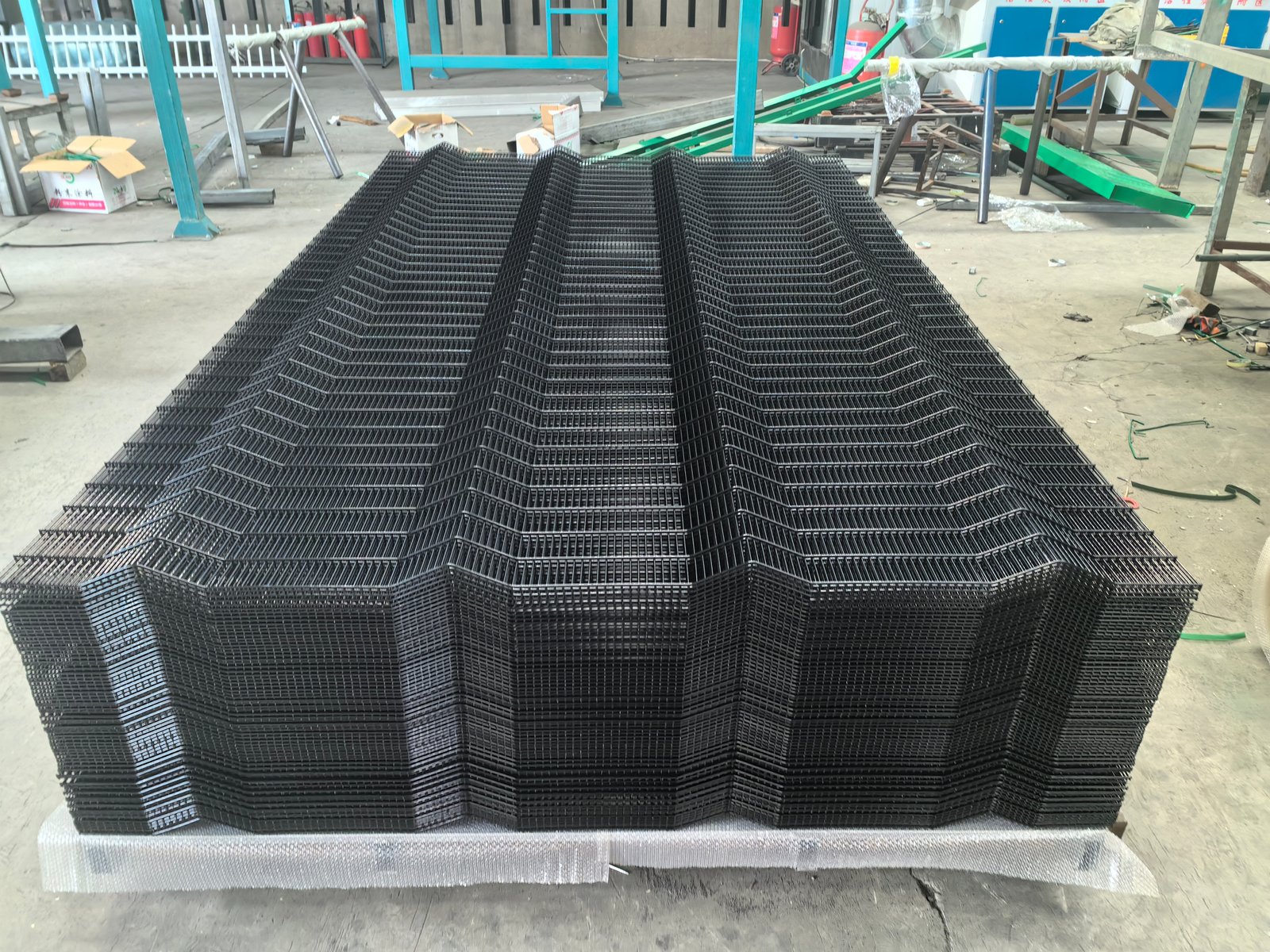
Conventional chain-link fences use flexible interwoven wires. In contrast, 358 panels feature welded intersections that maintain a rigid mesh structure. Consequently, the fence offers fewer convenient climbing holds than many ordinary perimeter systems.
Additionally, the narrow openings make some conventional hand-tool attacks more difficult. Nevertheless, no welded fence guarantees complete resistance against determined intrusion.
Why the 358 Mesh Pattern Matters
The 76.2 mm dimension describes the wider spacing between wire centres. Meanwhile, 12.7 mm represents the narrow dimension.
With 4 mm wire, the approximate narrow clear opening measures 8.7 mm before coating adjustments. Consequently, users cannot easily insert their fingers through the narrow gap.
This geometry also reduces convenient footholds. However, the fence still requires suitable height, foundations, and secure connections.
Prison Mesh Fencing Versus Ordinary Welded Mesh
General welded mesh may use larger openings and lighter wire. These configurations can suit gardens, warehouses, and low-risk boundaries.
However, demanding security sites require more restrictive mesh geometry and suitable structural support. Therefore, buyers should compare actual specifications rather than product names alone.
Why Visibility Matters
Solid perimeter walls can restrict external observation. In contrast, narrow steel mesh allows security personnel to see through the boundary.
Consequently, patrol teams can observe activity along selected perimeter sections. Cameras may also benefit from the open structure.
Nevertheless, lighting, vegetation, and camera positioning still influence surveillance performance.
Prison Mesh Fencing Advantages and Features
The original 358 design combines narrow mesh openings with welded steel construction. Consequently, it offers several advantages for demanding perimeter applications.
- Anti-Climb: Small openings restrict convenient toe and finger holds.
- Anti-Cut: Strong steel wires and welded intersections increase resistance against ordinary cutting attacks.
- High Strength: Controlled welding helps maintain reliable connections between intersecting wires.
- Clear Visibility: Open mesh supports security patrols and surveillance systems.
- Rigid Construction: Welded intersections help preserve panel geometry.
- Custom Heights: Different configurations accommodate varying security requirements.
- Protective Finishes: Galvanizing and powder coating help limit corrosion.
- Matching Components: Compatible posts, clamp bars, gates, and fasteners complete the system.
- Architectural Flexibility: Selected mesh arrangements can incorporate formed bends and alternative finishes.
Security Beyond the Fence Panel
Panel strength represents only one element of perimeter protection. Consequently, designers should also consider gates, corners, foundations, and adjacent structures.
For example, nearby buildings may create unintended access opportunities. Meanwhile, weak gate hardware can undermine an otherwise strong boundary.
Therefore, project teams should assess the complete perimeter during planning.
Resistance Against Climbing
Narrow welded openings provide fewer convenient climbing holds than conventional large-aperture mesh. Furthermore, suitable fence height increases the difficulty of crossing.
However, adjacent trees, equipment, and structures may reduce the effective security height. Consequently, site surveys should identify nearby climbing aids.
Resistance Against Cutting
Wire diameter, steel strength, and weld quality influence cutting resistance. Thicker wires generally require more effort to sever than lighter alternatives.
Nevertheless, performance varies with the attacking tools and installation details. Therefore, manufacturers should avoid describing the fence as completely cut-proof.
Prison Mesh Fencing Compared With 3510 Security Fencing
Traditional 358 fencing commonly uses approximately 4 mm wire. Meanwhile, selected 3510 configurations use lighter wire around 3 mm.Both systems can share narrow mesh geometry. However, wire diameter influences material weight, stiffness, and resistance against mechanical damage.
| Feature |
358 Security Mesh |
3510 Security Mesh |
| Typical Mesh Spacing |
76.2 × 12.7 mm |
76.2 × 12.7 mm or project-specific |
| Typical Wire Diameter |
Approximately 4.0 mm |
Approximately 3.0 mm |
| Panel Weight |
Generally heavier |
Generally lighter |
| Material Consumption |
Higher for comparable geometry |
Lower for comparable geometry |
| Visual Openness |
Good |
Potentially greater |
| Typical Selection |
Demanding security applications |
Selected commercial applications |
| Engineering Requirement |
Project-specific |
Project-specific |
Steel prices influence manufacturing costs, but market conditions change over time. Consequently, buyers should compare current quotations rather than assume fixed savings.For demanding facilities, thicker wire may provide a useful security advantage. Meanwhile, lighter configurations can suit projects with different priorities.
Prison Mesh Fencing Production Process
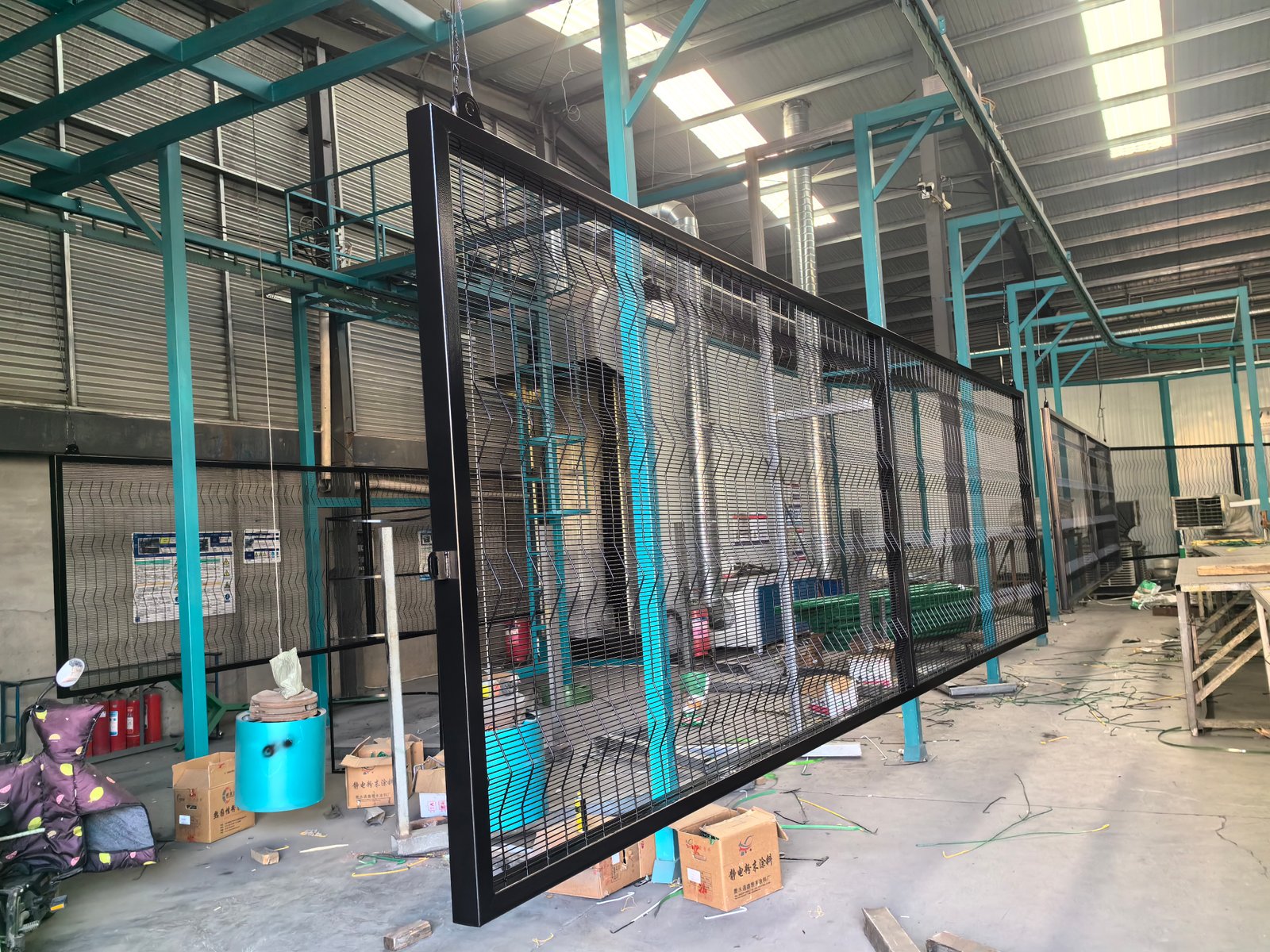
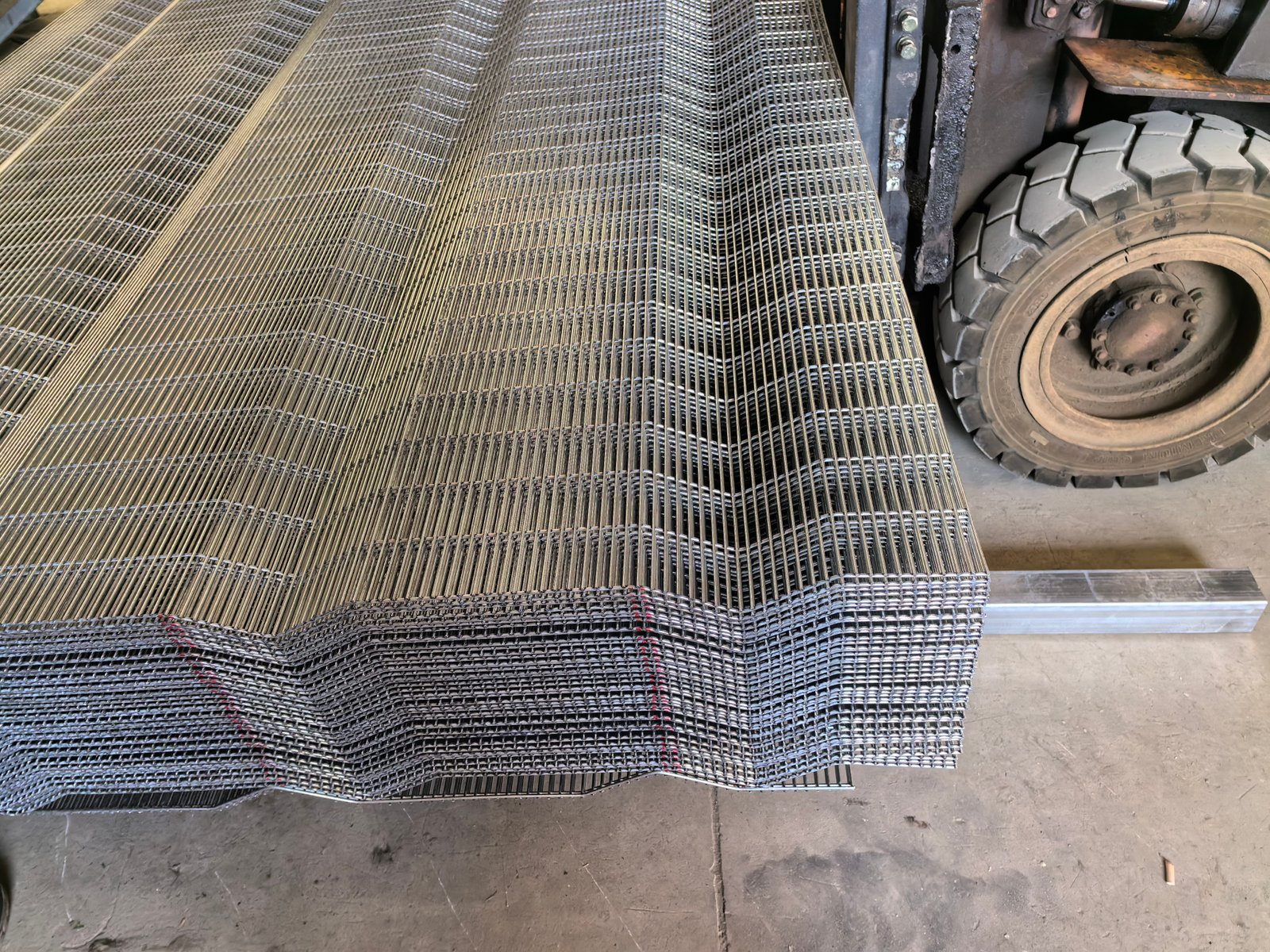
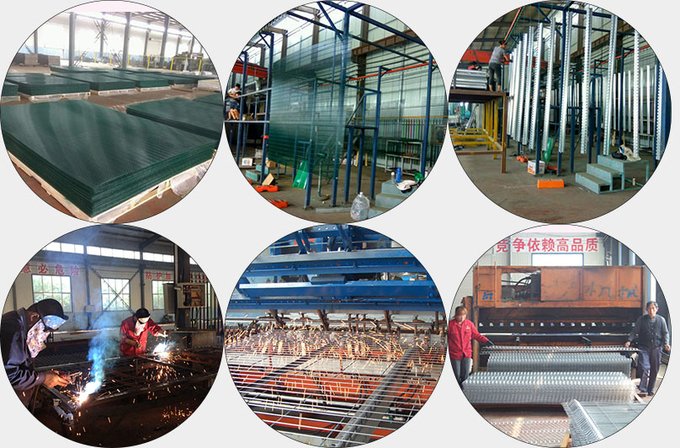
BMP manufactures welded security mesh through controlled steel-wire preparation, resistance welding, inspection, and protective finishing.
Each production stage influences the finished panel. Consequently, consistent manufacturing helps maintain dimensional accuracy and appearance.
Steel Wire Preparation
Production begins with steel wire that meets the selected material specification. Workers verify diameter and surface condition before welding.
Furthermore, accurate wire positioning helps maintain consistent mesh spacing. This reduces dimensional variations across the finished panel.
Automatic Resistance Welding
Automatic welding equipment joins intersecting wires through controlled electrical resistance and pressure. Consequently, the machine creates repeated welded connections across the mesh.
However, welding quality depends on machine settings and material conditions. Therefore, production teams should inspect representative welds.
Panel Cutting and Edge Preparation
After welding, workers prepare the required panel dimensions. They also inspect the edges for unwanted sharp projections.
However, some security designs intentionally use specified wire projections. Consequently, the approved drawing should identify the correct edge treatment.
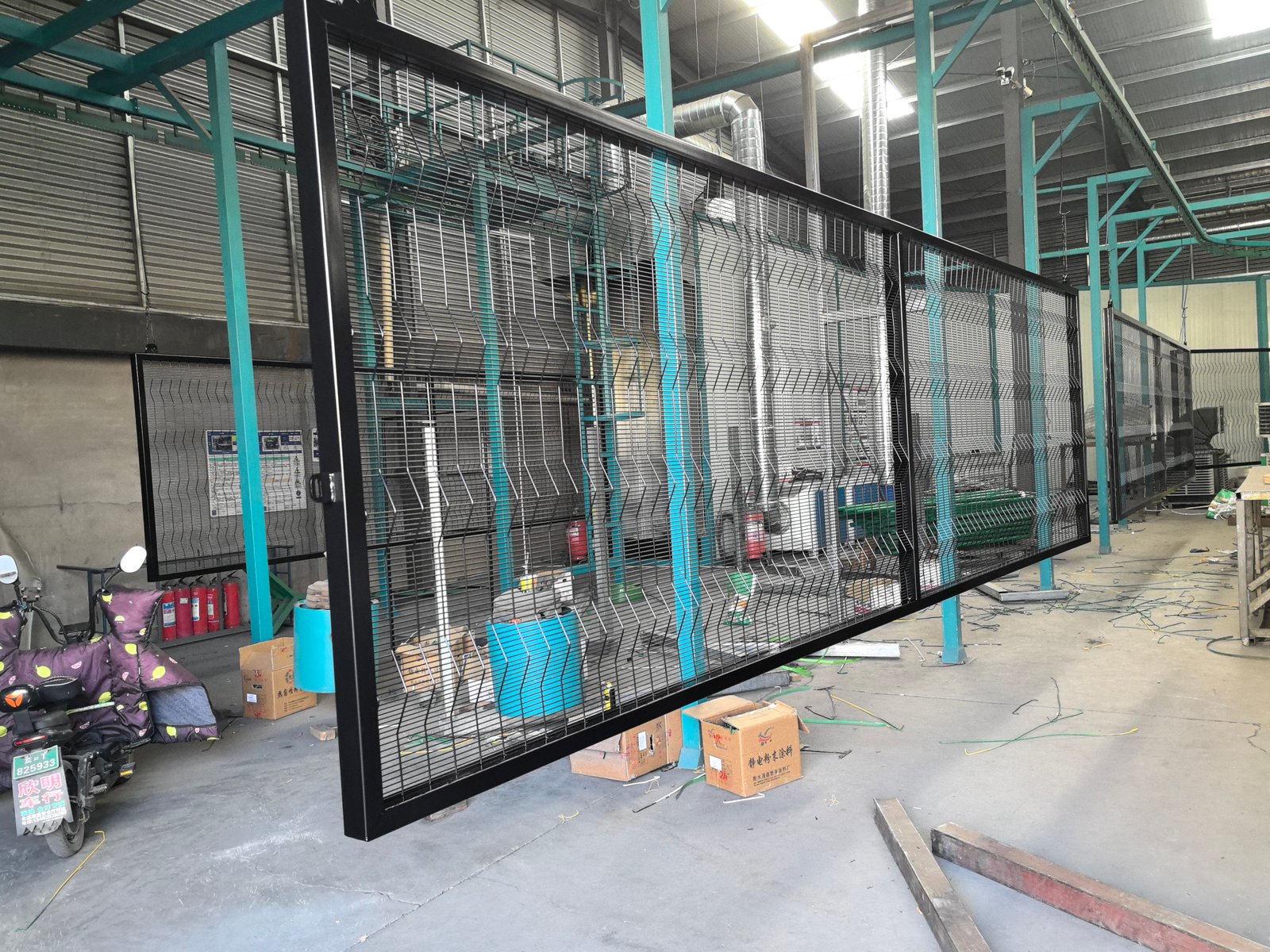
Galvanizing and Powder Coating
Suitable zinc coatings help protect steel against corrosion. Meanwhile, compatible powder coatings provide colour and additional surface protection.
However, different galvanizing processes require different technical standards. Therefore, buyers should confirm the exact treatment before production.
Final Inspection
Quality teams inspect mesh spacing, wire diameter, panel dimensions, and visible weld condition. Furthermore, coating inspections help identify surface defects.
Consequently, the factory can prepare suitable inspection records for project documentation.
Prison Mesh Fencing Applications
High-security welded mesh serves many facilities beyond correctional institutions. However, every application requires suitable engineering and operational planning.
Correctional Facilities and Detention Centres
Prisons require controlled boundaries and reliable access points. Dense welded mesh can support these objectives through its narrow openings and rigid construction.
Nevertheless, the complete security system must include suitable gates, surveillance, and operational procedures.
Bridge Anti-Climb Guarding
Bridges may require barriers that discourage unsafe climbing. However, pedestrian containment and structural safety require specialist engineering approval.
Psychiatric Hospital Security
Secure healthcare facilities may require controlled outdoor boundaries. Nevertheless, patient safety involves additional considerations beyond intrusion resistance.
Therefore, designers should assess potential ligature hazards, emergency access, and clinical requirements.
Factory Machine Guards
Industrial facilities use physical barriers around restricted machinery. However, machine guarding must meet applicable safety requirements.
Consequently, ordinary perimeter panels should not automatically replace certified machine guards.
Walkway Security Fencing
Walkways sometimes require separation from hazardous or restricted areas. Suitable welded mesh can establish clear boundaries while preserving visibility.
Airport Security Fencing
Airports need controlled access around sensitive operational zones. Consequently, perimeter design should coordinate physical barriers with surveillance and access management.
Shipping Port Security
Shipping ports protect cargo facilities, restricted compounds, and logistics infrastructure. Furthermore, coastal exposure increases corrosion-protection requirements.
Electrical Substation Fencing
Electrical substations require controlled entry and suitable clearances. Therefore, engineers must coordinate fencing with electrical safety requirements.
Gas Pipeline Security
Gas infrastructure may require protected access and clear maintenance routes. Consequently, fence foundations must avoid damaging underground services.
High-Security Residential Properties
Private estates and residential compounds may use dense security mesh around their boundaries. However, gate security and surrounding visibility remain important.
Prison Mesh Fencing Specifications and Post Sizes
Accurate specifications help contractors compare panel heights, post sections, and fixing quantities. Consequently, buyers should confirm every dimension before manufacturing.
The following table preserves all nine original panel configurations, including both 3.6 m post options.
| Panels Height (m) |
Fence Panel Size (mm) |
Post Size (mm) |
Post Height (mm) |
Total Number of Fixings |
| 2.0 |
2007 × 2515 |
60×60×2.5mm |
2700 |
7 |
| 2.4 |
2400 × 2515 |
60×60×2.5mm |
3100 |
9 |
| 3.0 |
2997 × 2515 |
80×80×2.5mm |
3800 |
11 |
| 3.3 |
3302 × 2515 |
80×80×2.5mm |
4200 |
12 |
| 3.6 |
3607 × 2515 |
100×60×3mm |
4500 |
13 |
| 3.6 |
3607 × 2515 |
100×100×3mm |
4500 |
13 |
| 4.2 |
4204 × 2515 |
100×100×4mm |
5200 |
15 |
| 4.5 |
4496 × 2515 |
100×100×5mm |
5500 |
16 |
| 5.2 |
5207 × 2515 |
120×120×5mm |
6200 |
18 |
These dimensions represent the original product schedule. However, the table does not establish universal structural suitability for every location.
Wind conditions, soil strength, panel connections, and foundation design influence the final installation. Therefore, project engineers should approve the selected configuration.
Prison Mesh Fencing Post Selection
Supporting posts transfer fence loads into their foundations. Consequently, post dimensions become increasingly important as panel height increases.
The original schedule uses 60 × 60 mm posts for selected lower configurations. Meanwhile, taller panels include larger square and rectangular sections.
However, post thickness alone cannot establish load capacity. Steel grade, support spacing, and connection details also matter.
Comparing Square and Rectangular Posts
Square posts offer symmetrical section geometry. Meanwhile, rectangular posts provide different bending properties along their principal axes.
Consequently, engineers should consider the direction of expected loading. The final arrangement must match approved calculations.
Panel Width and Post Centres
The original panel schedule uses a nominal 2515 mm width. However, actual post spacing depends on the selected overlap and fixing system.
Therefore, contractors should not assume panel width equals post-centre distance. Approved installation drawings must identify both measurements.
Fixing Quantity and Distribution
The original table includes seven to eighteen fixings for different panel heights. However, fixing distribution depends on the specified connection system.
Consequently, buyers should confirm bolt positions and clamp dimensions. The approved drawing should also identify suitable tamper-resistant hardware.
Prison Mesh Fencing Clamps and Flat Bars
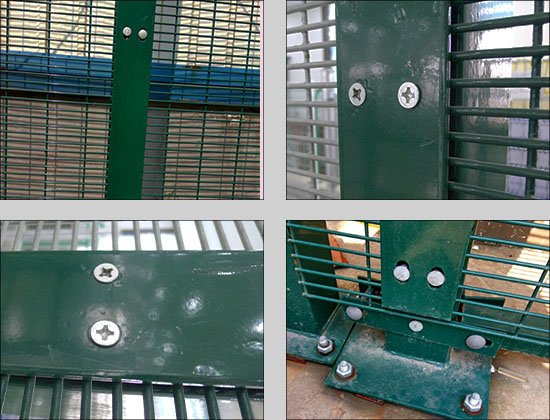
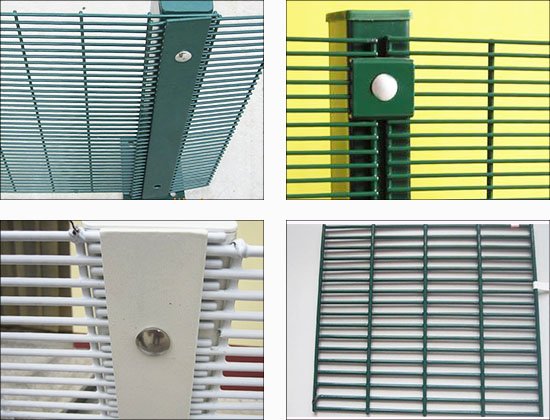
Secure connections help prevent unwanted panel movement and unauthorized removal. Therefore, clamps and flat bars deserve the same attention as mesh panels.
Continuous Flat Clamp Bars
Continuous clamp bars distribute fastening pressure along selected post connections. Consequently, they can provide consistent support across the panel edge.
However, bar thickness, bolt spacing, and material strength require engineering verification.
Individual Security Clamps
Individual clamps offer another connection method. Their suitability depends on panel geometry, post profile, and security requirements.
Therefore, buyers should specify compatible components rather than mixing unrelated systems.
Tamper-Resistant Bolts
Specialized fasteners discourage casual removal using ordinary tools. However, authorized maintenance teams still need suitable installation equipment.
Consequently, maintenance planning should include the correct tools and replacement components.
Corrosion Protection for Fittings
Exposed clamps and bolts experience the same environmental conditions as the fence. Therefore, suitable corrosion protection remains important.
Furthermore, incompatible materials may create additional corrosion concerns. Engineers should consider the complete connection assembly.
Clamp and Bar Show for 358 Prison Mesh:
Prison Mesh Fencing Installation and Foundation Design
Reliable installation requires accurate alignment and suitable foundations. Consequently, contractors should begin with a complete site survey.
Boundary Survey and Setting Out
First, contractors confirm the property boundary and identify underground services. Next, they establish suitable post positions and entrance locations.
Finally, the installation team checks ground levels and potential obstructions.
Concrete Foundations
Embedded posts commonly transfer lateral loads into concrete foundations. However, foundation dimensions depend on soil conditions and structural loading.
Therefore, engineers must establish appropriate footing requirements.
Surface-Mounted Posts
Some sites require base-plate installations over suitable concrete structures. However, existing concrete must support the additional loads.
Consequently, contractors should verify anchor capacity and slab strength before installation.
Installing Tall Panels
Tall panels require suitable lifting equipment and controlled handling. Furthermore, temporary support may be necessary during installation.
Therefore, contractors should prepare appropriate lifting and safety procedures.
Inspection Before Handover
Inspectors should verify alignment, fixing security, gate operation, and coating condition. Consequently, the completed installation can receive a structured handover assessment.
Prison Mesh Fencing Corrosion Protection in South Africa
South Africa contains different environmental exposure conditions. Consequently, coating selection should reflect the actual installation location.
Durban and KwaZulu-Natal Coastal Conditions
Durban's coastal environment exposes outdoor steel to salt-bearing air and seasonal moisture. Consequently, corrosion protection becomes particularly important around damaged surfaces.
Appropriate zinc and powder-coating systems can help preserve exposed steel. Furthermore, regular cleaning and inspection support long-term performance.
Cape Town and Western Cape Conditions
Cape Town combines coastal exposure with seasonal wind and rainfall. Therefore, perimeter design should consider both corrosion and structural loading.
High-security mesh can preserve visibility around commercial and industrial boundaries. However, appropriate foundations remain essential.
Johannesburg and Gauteng Conditions
Gauteng experiences strong sunlight and seasonal thunderstorms. Consequently, UV-resistant finishes and suitable drainage deserve attention.
Furthermore, secure perimeter fencing can support access control around commercial premises and residential estates. However, effective protection requires more than a fence alone.
Corrosion Protection for Industrial Facilities
Industrial sites may expose steel to airborne contaminants and operational moisture. Therefore, the coating specification should reflect actual environmental conditions.
Meanwhile, maintenance teams should inspect damaged surfaces and vulnerable connections regularly.
Prison Mesh Fencing and Security Surveillance
Open welded mesh supports observation across protected boundaries. However, effective surveillance requires suitable camera positioning and lighting.
CCTV Camera Placement
Camera lenses positioned too close to steel wires may experience focus problems. Furthermore, infrared lighting can create unwanted reflections.
Consequently, installers should test camera angles before final mounting.
Lighting Along the Perimeter
Suitable lighting improves visibility during nighttime operations. However, poorly positioned lights may create glare or shadows.
Therefore, lighting and camera design should work together.
Vegetation and Blind Spots
Trees and shrubs may obstruct observation near the boundary. Consequently, maintenance teams should manage vegetation around important surveillance areas.
However, landscape maintenance must also respect environmental and property requirements.
Prison Mesh Fencing Gates and Controlled Access
Security gates create necessary openings through the perimeter. However, their moving components require additional structural and operational planning.
Pedestrian Security Gates
Pedestrian gates support controlled movement between designated areas. Suitable locking systems and access procedures help maintain boundary integrity.
Double Swing Vehicle Gates
Double swing gates provide access for vehicles and service equipment. However, gate leaves create significant hinge loads.
Consequently, supporting posts may require stronger sections and foundations.
Sliding Security Gates
Sliding gates provide another option for controlled vehicle access. However, track arrangements and powered systems require suitable maintenance.
Therefore, designers should assess safety devices and emergency operation.
Emergency Access
High-security facilities still require suitable emergency procedures. Consequently, gate design must coordinate security with authorized emergency movement.
Prison Mesh Fencing Compared With Other Perimeter Systems
Different boundary products serve different operational needs. Consequently, buyers should compare security performance, visibility, and maintenance requirements.
| Fence Type |
Mesh or Structure |
Visibility |
Typical Application |
| 358 Security Mesh |
76.2 × 12.7 mm welded mesh |
High |
Correctional and critical infrastructure |
| 3510 Security Mesh |
Fine welded mesh with lighter wire |
High |
Selected commercial security |
| Chain-Link Fence |
Interwoven steel wire |
High |
General boundary applications |
| Steel Palisade |
Vertical steel pales |
Moderate to high |
Industrial perimeters |
| Concrete Wall |
Solid masonry or concrete |
None through the wall |
Privacy and physical separation |
For permanent boundaries, anti-climb security fencing provides an alternative security-mesh reference. Meanwhile, Clear View Fencing South Africa covers regional mesh and coating options.
For related mesh configurations, Clearvu Fence Panels offer additional product comparisons.
Temporary pedestrian management requires a different product category. For example, metal crowd control barriers support short-term public access arrangements.
However, portable crowd barriers cannot replace permanent correctional security fencing.
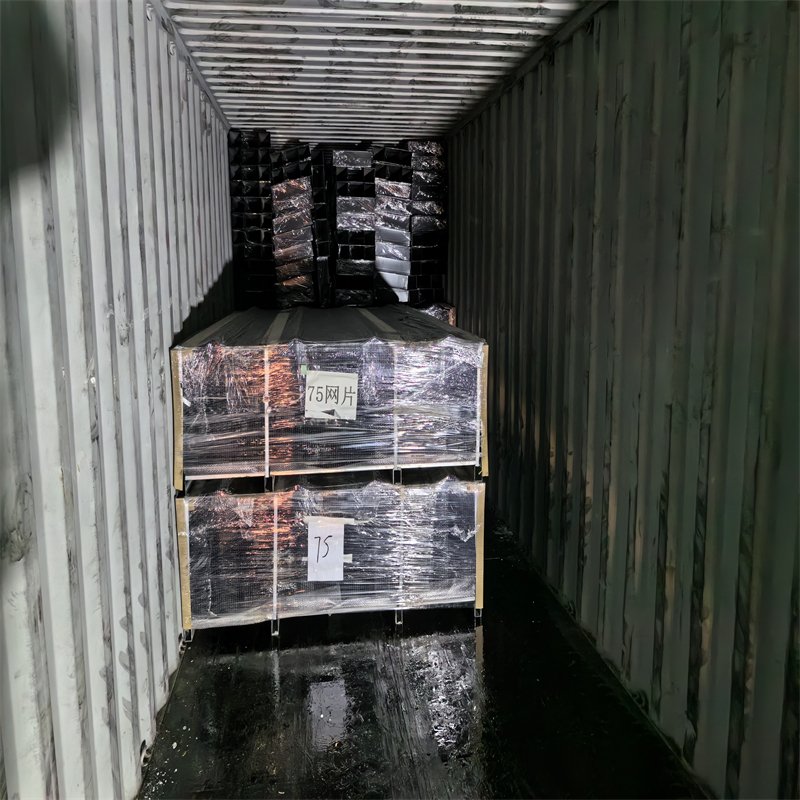
Prison Mesh Fencing Container Loading and Export Packing
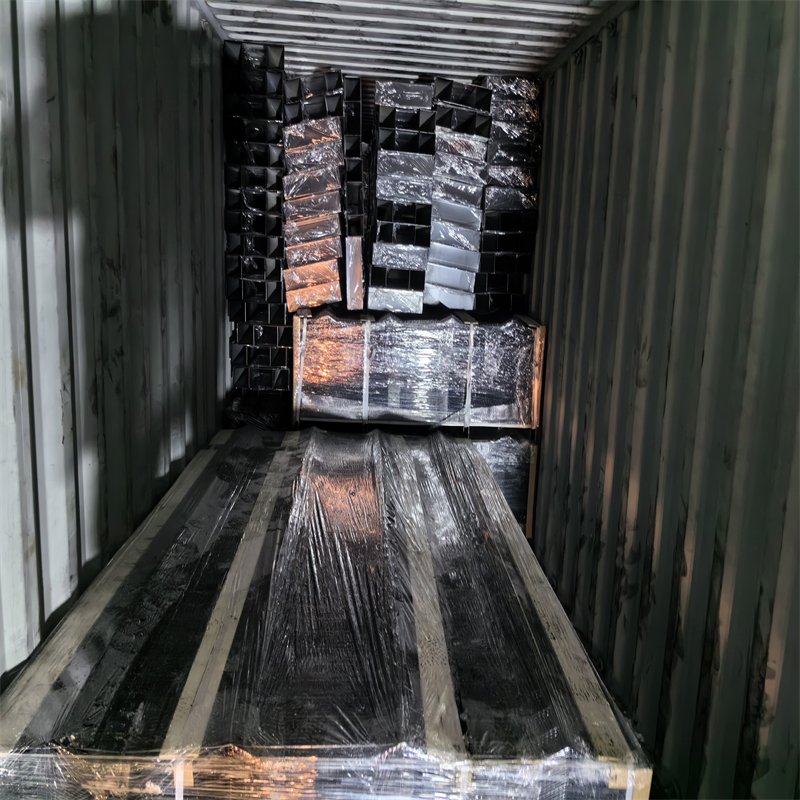
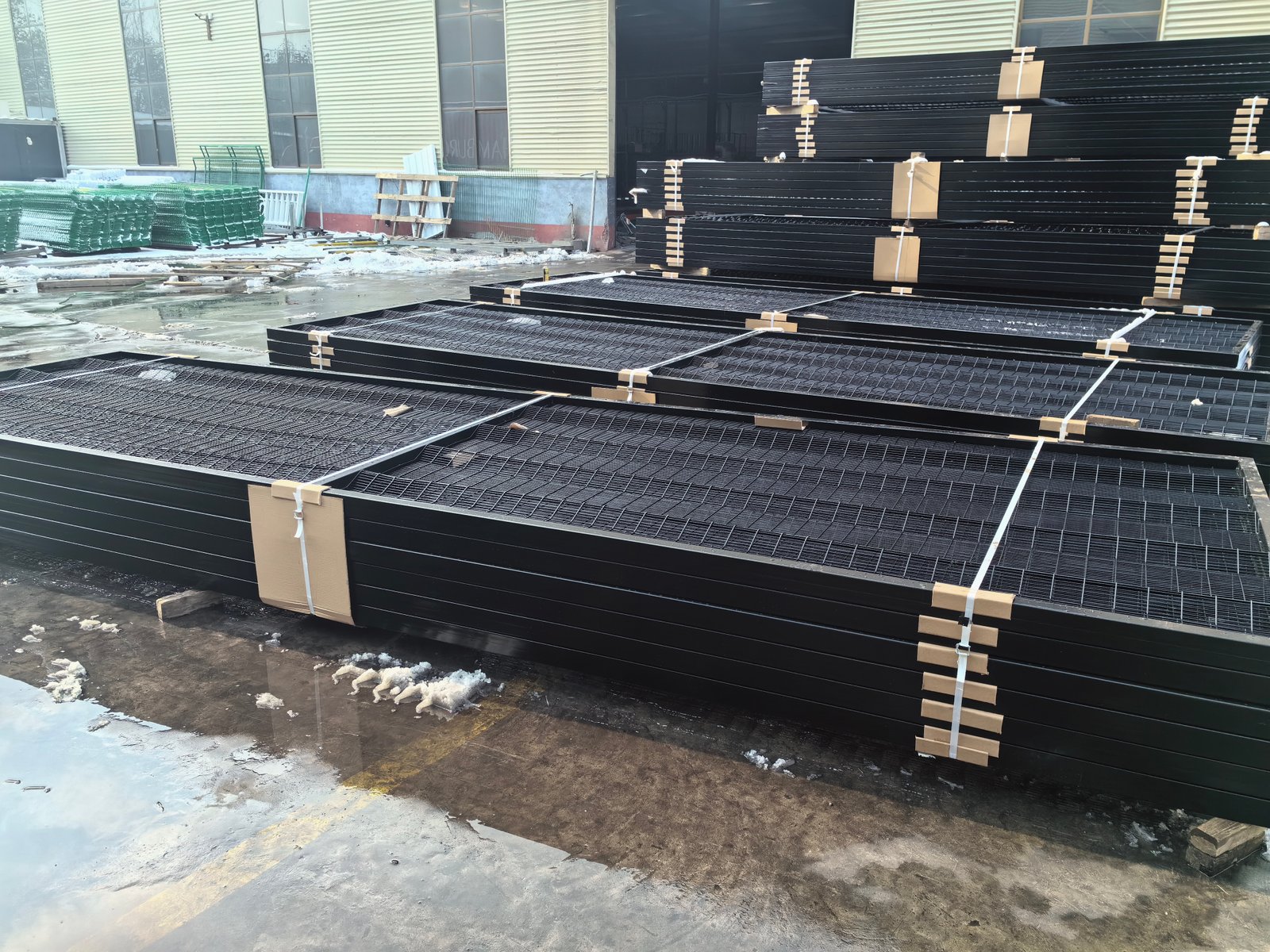
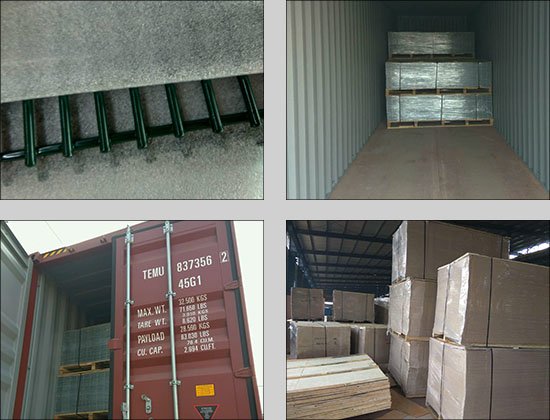
International shipments require appropriate protection against handling damage. Consequently, BMP prepares mesh panels, posts, and accessories according to shipment requirements.
Steel Pallet Packing
Steel pallets provide durable support for heavy mesh panels. Suitable separators help reduce abrasion between coated surfaces.
Furthermore, secure strapping limits unnecessary movement during transportation.
Wooden Pallet Packing
Wooden pallets offer another export packing option. However, applicable wood-packaging requirements must guide material selection.
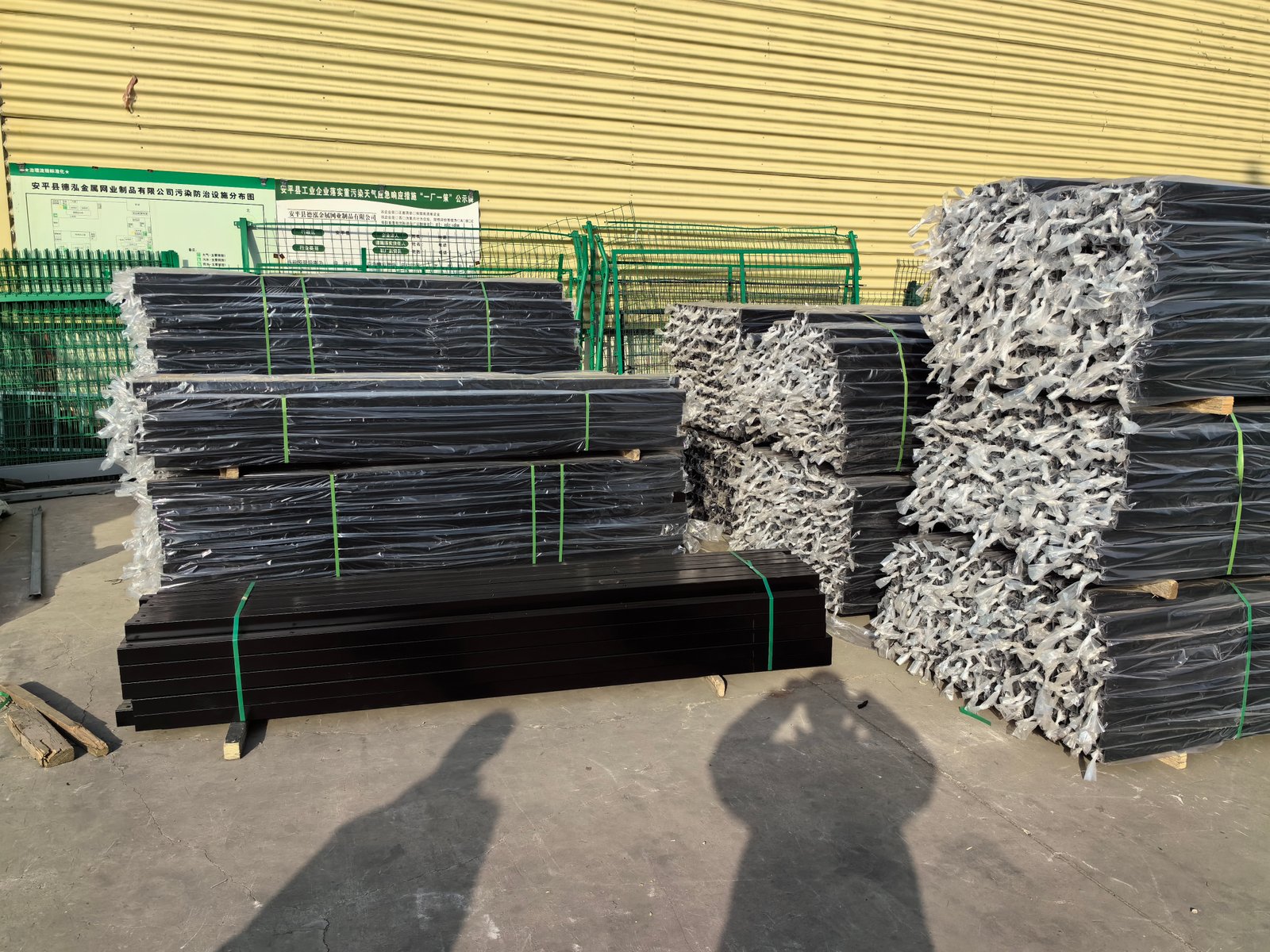
Post and Clamp Packing
Posts require suitable wrapping to protect their coatings. Meanwhile, clamps and bolts should remain in clearly identified packages.
Consequently, receiving teams can compare supplied quantities against the packing list.
Container Loading Preparation
Loading teams should verify package dimensions, gross weights, and container capacity. Furthermore, suitable cargo restraints help limit movement during transit.
However, final loading arrangements depend on actual cargo measurements and carrier requirements.
Prison Mesh Fencing Procurement and Quality Control
Large security projects require accurate technical documentation. Consequently, procurement teams should prepare a complete material schedule before ordering.
Panel Documentation
Buyers should identify mesh spacing, wire diameter, panel height, and panel width. Furthermore, approved drawings should show edge details.
Post Documentation
Post schedules should include section dimensions, wall thickness, length, and finish. However, final sizes must reflect structural requirements.
Coating Documentation
Coating specifications should identify the actual galvanizing process and powder finish. Consequently, quality teams can inspect against agreed requirements.
Connection Documentation
Clamp schedules should identify material, dimensions, bolt quantities, and fixing positions. Furthermore, installers need the correct security tools.
Inspection and Testing
Relevant inspections may include dimensional checks, weld assessments, and coating measurements. However, test methods should follow the agreed specification.
Frequently Asked Questions About Prison Mesh Fencing
What Does 358 Mean?
The designation refers to three-inch spacing, half-inch spacing, and approximately eight-gauge wire. Metric equivalents are approximately 76.2 × 12.7 × 4 mm.
Why Is Prison Mesh Difficult to Climb?
The narrow openings provide fewer convenient fingerholds and footholds. However, overall performance also depends on height and surrounding conditions.
Is 358 Mesh Completely Cut-Proof?
No. Strong steel wire increases cutting difficulty, but no conventional mesh guarantees complete resistance against every tool.
What Panel Heights Are Available?
The original BMP schedule includes configurations from approximately 2.0 m to 5.2 m. Additional dimensions require manufacturing confirmation.
Which Steel Posts Are Available?
The original specification includes square and rectangular posts from 60 × 60 mm through 120 × 120 mm.
Can BMP Supply Matching Gates?
Yes. BMP manufactures compatible pedestrian, swing, and sliding gate configurations according to project requirements.
Does Powder Coating Prevent All Corrosion?
No. Suitable coatings reduce corrosion risks, but damage and environmental exposure still require maintenance.
Can Cameras See Through 358 Mesh?
Yes. Open mesh supports observation, although camera placement and lighting influence actual image quality.
Can the Fence Be Used Near the Coast?
Yes, with suitable corrosion protection and maintenance. Coastal exposure should influence coating selection.
What Information Should Buyers Provide?
Provide the total fence length, panel height, post specification, coating, gates, delivery location, and project drawings.
Why Choose BMP for Prison Mesh Fencing?
BMP manufactures welded security mesh panels, steel posts, clamps, and compatible gates for international projects. Our manufacturing experience since 2006 supports customized dimensions and protective finishes.
Furthermore, coordinated production helps buyers organize complete perimeter material schedules. Accurate drawings also support installation planning and project inspection.
Ultimately, Prison Mesh Fencing combines narrow 358 mesh, rigid steel construction, and strong supporting components. Its performance depends on appropriate engineering, manufacturing, installation, and maintenance. BMP provides configurable products for correctional facilities, industrial properties, and demanding security projects.