Description 358 mesh sheets provide high-security perimeter protection through narrow welded openings, rigid steel construction, and excellent surveillance visibility. BMP manufactures security mesh panels for industrial compounds, airports, bridges, utilities, and controlled infrastructure. The dense wire pattern restricts ordinary climbing attempts and complicates access for many conventional cutting tools. Customers can select flat 2D panels, 3D V-bend designs, compatible posts, and protective surface finishes.
Security fencing must meet several objectives beyond creating a physical boundary. Facility managers need reliable access control, clear sightlines, durable materials, and manageable maintenance costs. Narrow-aperture welded steel helps balance these priorities without creating a solid visual barrier. Different panel designs also support particular engineering and architectural requirements.
BMP supplies 358 mesh sheets with multiple dimensions, post configurations, and security accessories. Our product range includes flat welded panels and selected V-bend alternatives. Project teams can choose suitable designs according to site conditions, installation drawings, and expected security performance.
What Are 358 Mesh Sheets?
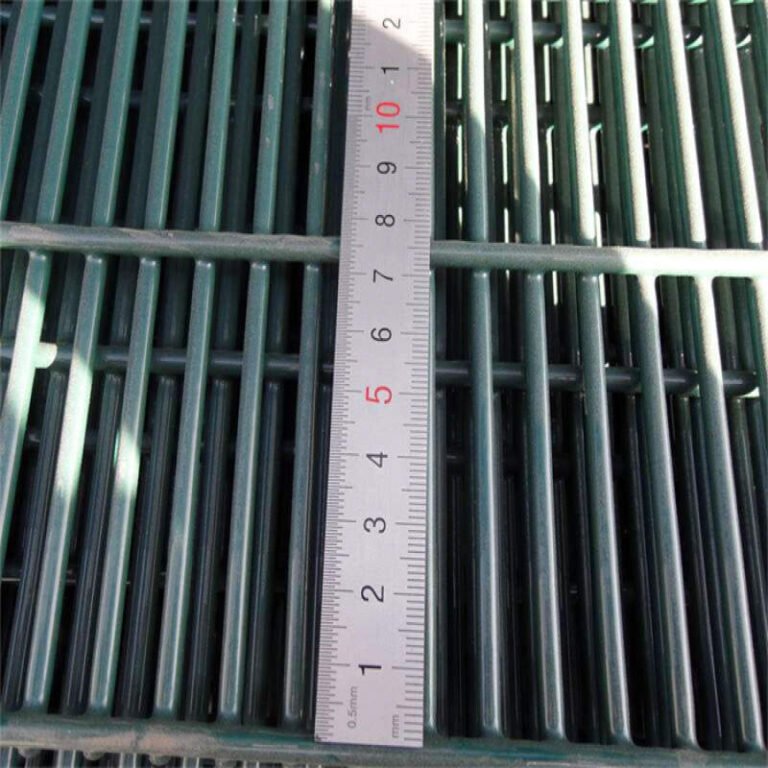
358 mesh sheets consist of closely spaced horizontal and vertical steel wires welded at their intersections. The designation originates from three inches, half an inch, and eight-gauge wire. These traditional measurements correspond approximately to 76.2 × 12.7 mm centres and 4 mm wire diameter.
The narrow mesh pattern creates limited space for ordinary fingers and footwear. Unlike flexible chain-link material, welded panels maintain a rigid rectangular structure. Steel posts and compatible fasteners support the sheets along the security perimeter.
Security professionals often describe this system as prison mesh. However, its applications extend beyond correctional facilities. Industrial plants, transport infrastructure, commercial compounds, and utility operators also use similar welded security panels.
358 Mesh Sheets Opening Dimensions
Manufacturers usually describe mesh dimensions using centre-to-centre wire spacing. The actual clear opening becomes smaller after accounting for wire diameter. With 4 mm wires, the approximate opening measures 72.2 × 8.7 mm.
This distinction matters during technical inspection. Buyers should identify whether specifications describe wire centres or clear openings. Manufacturing tolerances can also influence the finished measurements.
Why Dense Mesh Improves Climbing Resistance
Climbing generally requires suitable handholds and footholds. Narrow horizontal openings restrict these opportunities. The geometry creates greater climbing difficulty than many conventional wide-aperture designs.
However, no physical security fence guarantees complete intrusion prevention. Gates, nearby structures, and operational procedures can introduce additional vulnerabilities. A complete risk assessment should address these factors.
358 Mesh Sheets Product Images and Construction Details
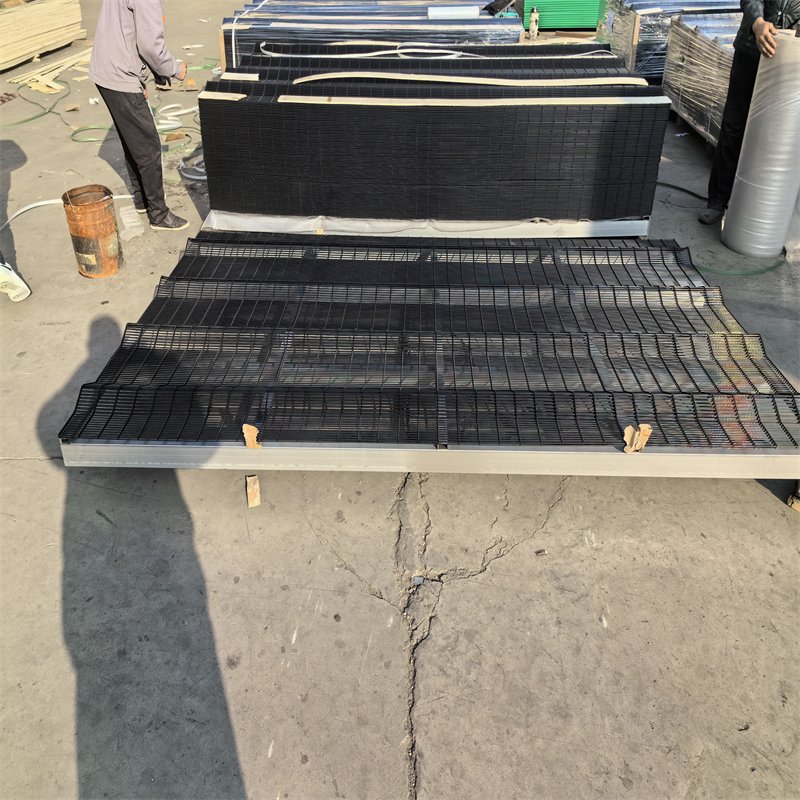
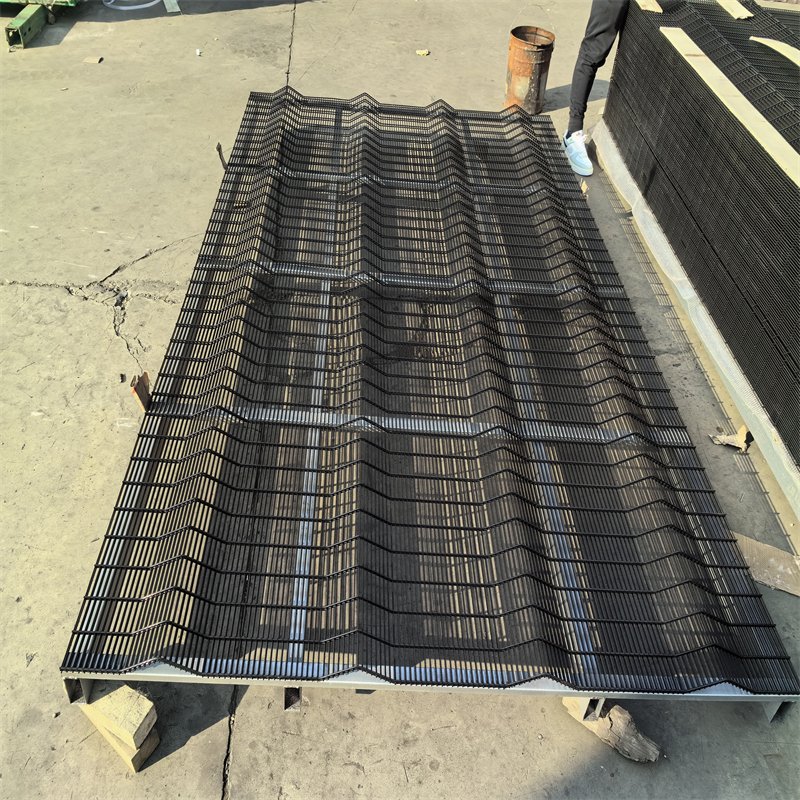
358 mesh sheets combine welded steel strength with a relatively open appearance. The compact openings support surveillance visibility without creating an opaque perimeter wall. BMP offers different configurations for various security environments.
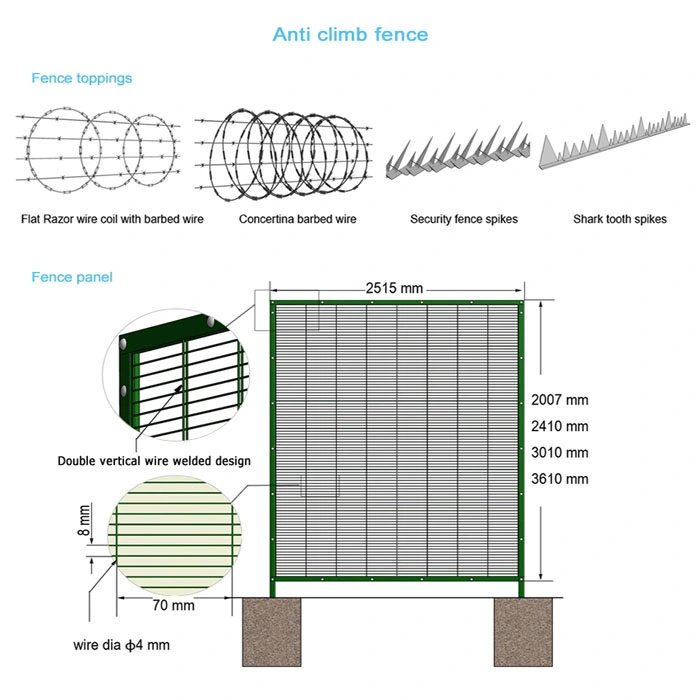 |
| High-security welded mesh combines narrow rectangular apertures with a rigid steel panel structure. |
Each panel forms part of a complete perimeter assembly. Structural posts, clamp bars, fasteners, and foundations help maintain alignment. Additional security measures require separate safety and technical approval.
358 Mesh Sheets Technical Specifications for 2D Fencing
358 mesh sheets in the flat 2D configuration use welded wires without decorative V-shaped bends. BMP offers several panel heights with matching posts and clamp bars. These combinations address different perimeter security requirements.
The following table preserves the original BMP product reference dimensions. Final structural approval must account for wind loading, soil conditions, and installation details.
| Item |
Fence Height |
Panel Size (H × W mm) |
Post (Length × Section × Wall mm) |
Clamp Bar (H × W × T mm) |
Intermediate / Corner Fixings |
| BMP-1 |
2.0 m |
2007 × 2515 |
2700 × 60 × 60 × 2.5 |
2007 × 60 × 5.0 |
7 / 14 |
| BMP-2 |
2.4 m |
2400 × 2515 |
3100 × 60 × 60 × 2.5 |
2400 × 60 × 5.0 |
9 / 18 |
| BMP-3 |
3.0 m |
2997 × 2515 |
3800 × 80 × 80 × 2.5 |
2997 × 80 × 6.0 |
11 / 22 |
| BMP-4 |
3.3 m |
3302 × 2515 |
4200 × 80 × 80 × 2.5 |
3302 × 80 × 6.0 |
12 / 24 |
| BMP-5 |
3.6 m |
3607 × 2515 |
4500 × 100 × 100 × 3.0 |
3607 × 100 × 7.0 |
13 / 26 |
| BMP-6 |
4.2 m |
4204 × 2515 |
5200 × 100 × 100 × 4.0 |
4204 × 100 × 8.0 |
15 / 30 |
| BMP-7 |
4.5 m |
4496 × 2515 |
5500 × 100 × 100 × 5.0 |
4496 × 100 × 8.0 |
16 / 32 |
| BMP-8 |
5.2 m |
5207 × 2515 |
6200 × 120 × 120 × 5.0 |
5207 × 100 × 8.0 |
18 / 36 |
358 Mesh Sheets 2D Design Characteristics
Flat panels provide a consistent surface without pronounced horizontal bends. Their regular structure supports straightforward alignment with suitable posts. Security contractors can use full-height clamp bars or approved brackets.
Taller configurations demand careful engineering. Greater panel height increases structural loads and handling requirements. Appropriate foundations and supporting sections remain essential.
Choosing 2D Panel Heights
Two-metre configurations may suit selected commercial boundaries. Taller panels can support facilities with greater access-control requirements. Security assessments should determine the appropriate height.
Projects above three metres require particular attention to wind loads and construction equipment. Engineers should approve the complete system before production.
358 Mesh Sheets Technical Specifications for 3D Fencing
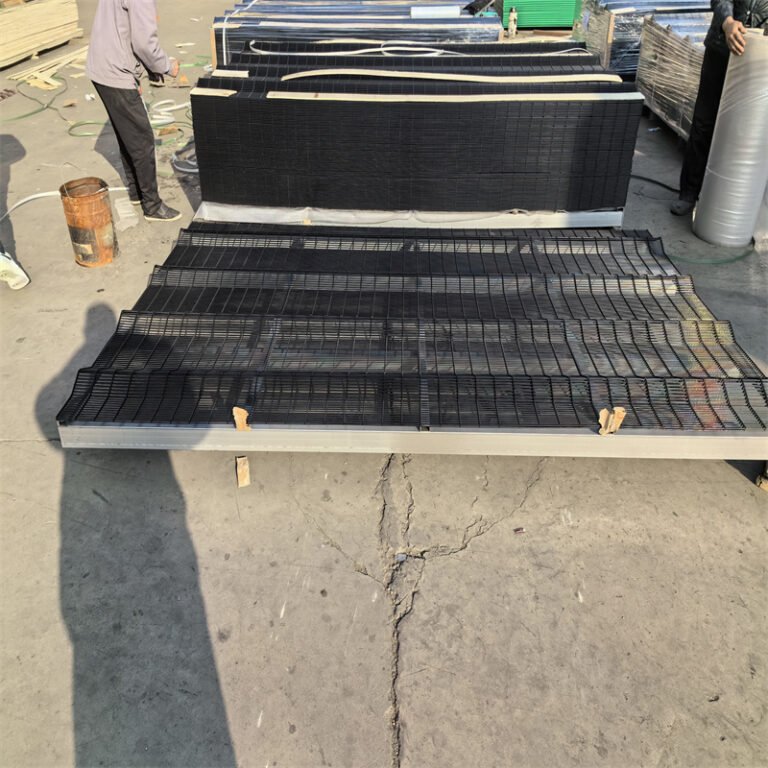
358 mesh sheets with 3D profiles introduce horizontal V-shaped bends into the welded structure. These formed sections create additional geometric depth. They can improve stiffness under suitable loading conditions.
Architectural projects may also prefer the profiled appearance. Manufacturers must confirm the relationship between wire diameter, bend geometry, and fastening arrangements.
| Item |
Fence Height |
Panel Size (H × W mm) |
V-Bends |
Post Length |
Reference Sections |
Intermediate Clamps |
Corner Clamps |
| BMP-1 |
2.0 m |
2000 × 2515 |
2 |
2700 mm |
RHS 80 × 60 × 2.0 / SHS 80 × 80 × 2.5 |
6 |
12 |
| BMP-2 |
2.4 m |
2400 × 2515 |
3 |
3100 mm |
RHS 80 × 60 × 2.0 / SHS 80 × 80 × 2.5 |
7 |
14 |
| BMP-3 |
3.0 m |
3000 × 2515 |
3 |
3800 mm |
SHS 80 × 80 × 2.5 |
10 |
20 |
RHS refers to rectangular hollow sections, while SHS identifies square hollow sections. The reference dimensions do not establish universal post compatibility. Final drawings must specify the actual structural and fastening components.
358 Mesh Sheets V-Bend Reinforcement
Horizontal bends create a profiled structure that differs from flat welded mesh. The additional depth can influence panel stiffness. Actual mechanical performance depends on wire specifications and bend geometry.
Buyers should request the required number of bends and their positions. Manufacturing drawings help confirm dimensional accuracy before production.
3D Panel Appearance and Visibility
V-shaped profiles provide a distinctive visual character. The mesh still maintains relatively clear sightlines across the perimeter. Camera placement should account for the panel profile.
Commercial facilities sometimes prefer this architectural appearance. High-risk applications still require a complete structural and security assessment.
358 Mesh Sheets: 2D Versus 3D Comparison
358 mesh sheets can serve different construction objectives depending on their panel geometry. Flat 2D models emphasize a uniform security surface. Profiled 3D versions introduce V-bends for alternative stiffness and appearance characteristics.
| Feature |
2D Flat Mesh |
3D V-Bend Mesh |
| Panel Geometry |
Flat Welded Structure |
Horizontal V-Bends |
| Reference Width |
2515 mm |
2515 mm |
| Available Heights |
Multiple Configurations to 5.2 m |
Reference Options to 3.0 m |
| Visual Appearance |
Uniform Flat Surface |
Profiled Surface |
| Structural Behavior |
Depends on Wires and Supports |
Depends on Bends and Supports |
| Connections |
Clamp Bars / Approved Brackets |
Compatible Profile-Specific Brackets |
| Typical Selection |
Controlled Security Perimeters |
Security and Architectural Projects |
Neither configuration automatically outperforms the other under every condition. Site loading, material specifications, and connection details determine actual suitability.
358 Mesh Sheets Welding Technology and Manufacturing
358 mesh sheets require precise wire positioning and consistent welding operations. Manufacturing quality influences panel rigidity, dimensions, and installation performance. BMP emphasizes controlled production and appropriate inspection.
Steel Wire Preparation
Production begins with steel wire matching the approved diameter and material specification. Straightness and consistent dimensions support accurate mesh geometry.
Resistance Welding
Welding equipment joins crossing wires through controlled current and pressure. Suitable parameters help achieve consistent intersections. Poor process control can reduce joint quality.
Panel Cutting and Sizing
Manufacturing teams trim panels according to approved dimensions. Accurate height and width improve installation alignment. Excessive distortion can create site difficulties.
3D Forming Operations
Profiled panels undergo forming operations to create horizontal V-bends. Operators must control bend positions and overall geometry. Accurate forming helps maintain connection compatibility.
358 Mesh Sheets Weld Inspection
358 mesh sheets depend on consistent intersections for reliable rigidity. Inspectors should examine visible weld quality and perform agreed tests. Buyers should specify suitable acceptance criteria.
358 Mesh Sheets Anti-Climb and Anti-Cut Characteristics
358 mesh sheets restrict ordinary climbing through narrow horizontal openings. Their closely spaced wires also complicate access for many hand-operated cutting tools. These characteristics help delay unauthorized entry attempts.
Limited Handholds
The compact apertures offer little space for ordinary finger placement. Climbing becomes more difficult than on many conventional wide-opening fences.
Restricted Cutting Access
Dense wire spacing can limit the positioning of conventional cutting tools. Strong steel wires further increase cutting effort. Specialized equipment may still penetrate the barrier.
Rigid Welded Intersections
Numerous welded joints contribute to panel stability. Correct welding helps preserve the intended geometry. Structural performance also depends on supporting components.
Clear Surveillance Visibility
Open mesh supports observation across protected boundaries. Security cameras can monitor activity when designers select suitable mounting positions.
Compatibility with Detection Systems
Electronic sensors can supplement physical perimeter protection. Proper installation and calibration support meaningful alarm performance. Environmental conditions may influence sensor selection.
358 Mesh Sheets for Bridge and Transport Protection
358 mesh sheets can help restrict access around selected bridges, transport depots, and technical installations. These locations require careful coordination with engineering and safety authorities.
Bridge Security Boundaries
Bridge infrastructure may need barriers around restricted maintenance areas. Welded mesh can discourage unauthorized climbing and entry. Structural authorities must approve mounting arrangements.
Railway Maintenance Compounds
Rail operators often protect equipment depots and maintenance facilities. Security mesh provides controlled separation from public access. Gates must support operational movement.
Airport Restricted Areas
Airports require physical boundaries around sensitive operational zones. Narrow welded fencing supports access control while preserving visibility. Aviation requirements guide the final design.
Port and Shipping Terminals
Shipping facilities manage cargo, machinery, and vehicle traffic. Security fencing helps establish restricted zones. Coastal environments also demand suitable corrosion protection.
358 Mesh Sheets for Industrial Machine Guarding
358 mesh sheets may serve selected industrial guarding applications when the complete assembly meets relevant machinery safety requirements. Machine guarding differs from ordinary perimeter security. Safety distances, access openings, and impact resistance require specific evaluation.
Factory Equipment Boundaries
Industrial facilities may need barriers around restricted equipment zones. Welded mesh can help define controlled areas. The actual arrangement must address machinery hazards.
Maintenance Access
Machines require safe access for inspection and repair. Guard doors and interlocks may be necessary. Engineers should follow applicable machinery safety standards.
Visibility During Operations
Open mesh can help operators observe selected equipment. However, visibility alone does not establish adequate guarding. Aperture size and distance from hazards remain critical.
358 Mesh Sheets and Electrical Substations
358 mesh sheets also suit selected electrical infrastructure perimeters. These installations help restrict unauthorized entry. Electrical clearances and earthing require separate engineering approval.
358 Mesh Sheets for Water Infrastructure Security
358 mesh sheets can protect technical compounds around water treatment facilities and pumping stations. Such properties often contain valuable electrical equipment and operational controls.
Water Treatment Works
Water facilities may require secure separation around restricted processing areas. Durable mesh provides visible boundaries without creating solid walls.
Pumping Stations
Remote pumping installations often need protection against unauthorized access. Suitable gates allow authorized maintenance teams to enter.
Reservoir Service Compounds
Technical facilities near reservoirs may contain valves, controls, and communication equipment. Fencing can help establish restricted access zones.
Environmental Considerations
Wet conditions can affect steel coatings and foundations. Project managers should assess drainage, humidity, and maintenance accessibility.
358 Mesh Sheets in South African Coastal Areas
358 mesh sheets can support security projects across South Africa's coastal industrial regions. However, marine environments create additional corrosion risks for outdoor steel products.
Durban's Port and Humid Climate
Durban combines warm humidity with extensive maritime operations. Salt deposits may accumulate on exposed steel structures. Warehouses also need controlled boundaries around valuable cargo.
Suitable protective coatings help reduce corrosion risks. Open welded mesh supports security observation near storage compounds. Routine inspection remains important.
Cape Town's Wind Exposure
Cape Town includes locations with strong wind conditions and coastal salt exposure. Taller fence panels may create significant structural loads. Engineers must verify posts and foundations.
Appropriate coatings address corrosion, while structural design addresses imposed forces. Both requirements contribute to reliable installations.
Gqeberha Industrial Facilities
Gqeberha supports manufacturing and maritime operations. Industrial dust and marine exposure may influence coating performance. Regular maintenance helps preserve protective finishes.
358 Mesh Sheets for Coastal Warehouses
358 mesh sheets provide controlled boundaries while allowing observation through the fencing. Suitable gates can support loading and vehicle movements. Camera placement should address operational blind spots.
358 Mesh Sheets for Johannesburg and Gauteng
358 mesh sheets can protect commercial compounds and industrial equipment throughout Gauteng. Johannesburg contains extensive logistics, manufacturing, and storage activity. Property security requirements differ significantly between individual sites.
Warehouse Perimeter Security
Warehouses may contain valuable stock and machinery. Unauthorized entry can disrupt operations and create financial losses. Strong welded mesh helps establish controlled boundaries.
Commercial Property Protection
Office properties and commercial developments often need clear sightlines. Black or green mesh can complement architectural surroundings. Controlled gates help manage visitor access.
Industrial Security Planning
Factories require boundaries around sensitive equipment and restricted areas. Security cameras and lighting can supplement welded fencing. Site procedures remain important.
358 Mesh Sheets for Mining Compounds
358 mesh sheets may suit selected mining workshops and storage facilities. Remote operating conditions can complicate maintenance. Durable components and spare hardware support practical repairs.
358 Mesh Sheets Posts and Connection Accessories
358 mesh sheets require supporting posts and suitable fastening components. BMP offers square and rectangular steel sections according to project requirements. Connection geometry influences installation spacing.
Square Hollow Steel Posts
Square posts provide flat mounting surfaces. Common reference sections include 60 × 60 and 80 × 80 mm. Taller systems may require larger profiles.
Rectangular Hollow Sections
Rectangular posts offer different bending properties along their principal axes. Engineers should verify their orientation and structural suitability.
Steel Clamp Bars
Clamp bars help secure panel edges to structural posts. Their dimensions depend on panel height and connection design.
Anti-Tamper Fasteners
Specialized bolt heads discourage removal using ordinary tools. Installation teams should follow approved tightening procedures.
Gate Integration
Vehicle and pedestrian gates require compatible mesh and structural frames. Gate posts may need additional reinforcement.
Suitable ClearVu fence sliding gates can serve related access-control projects. Buyers should verify connection compatibility before procurement.
358 Mesh Sheets Surface Treatment and Corrosion Protection
358 mesh sheets need protective finishes suitable for their operating environment. BMP offers galvanized steel, compatible powder coatings, and selected PVC finishes. Buyers should confirm the exact coating process.
Hot-Dip Galvanized Finish
Hot-dip galvanizing applies protective zinc to suitable fabricated steel components. Zinc provides barrier and sacrificial corrosion protection. The applicable standard depends on the product and process.
Continuously Galvanized Steel Wire
Some welded mesh products use previously galvanized steel wire. This process differs from batch galvanizing after fabrication. Buyers should specify the appropriate coating requirements.
Powder Coating
Polyester powder coatings provide decorative color and additional protection. Proper pretreatment helps maintain adhesion. Coating thickness should follow the purchase specification.
PVC Protective Finish
PVC coatings offer another protective option. Material compatibility and preparation influence long-term performance. Customers should confirm the selected manufacturing system.
358 Mesh Sheets RAL Colors
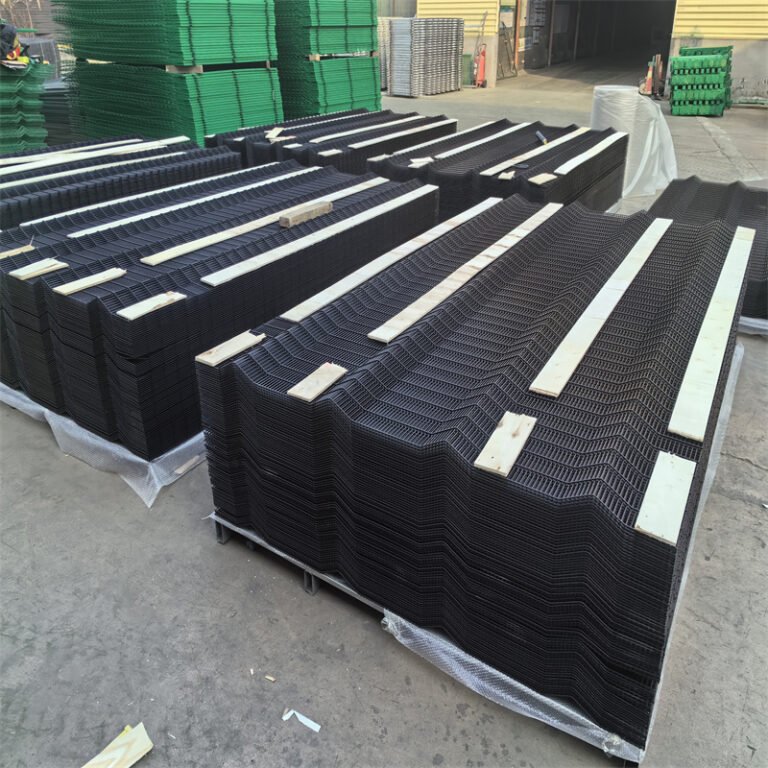
358 mesh sheets can receive selected RAL finishes. Popular choices include RAL 6005 green and RAL 9005 black. Other colors may suit individual projects.
 |
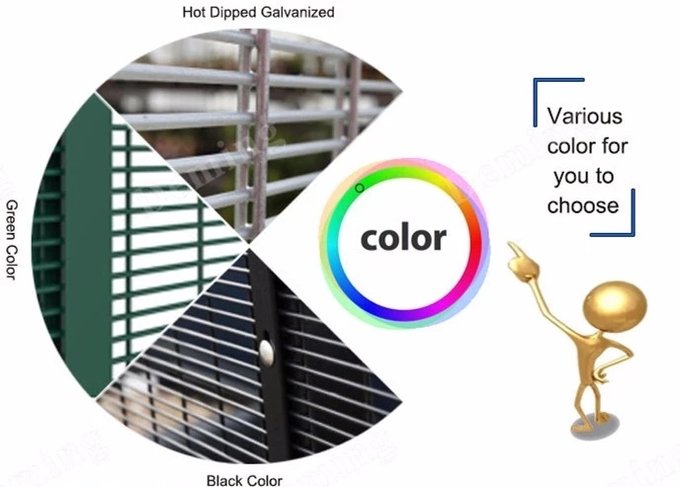 |
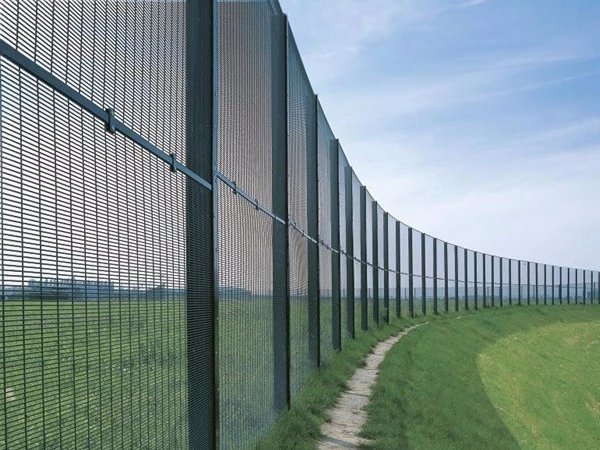
| Protective finishes help steel security panels resist outdoor exposure and maintain their appearance. |
Coating specifications should reflect the installation environment and required maintenance conditions. |
358 Mesh Sheets Installation Planning
358 mesh sheets installation requires accurate surveying, suitable foundations, and compatible connection hardware. Project teams should follow approved structural drawings.
Survey the Boundary
Measure the total perimeter and identify gates, corners, and changes in elevation. Check underground utilities before excavation.
Establish Post Positions
Use approved drawings to calculate post centres. Connection details may affect installed bay spacing.
Prepare Foundations
Excavate according to structural requirements. Soil bearing capacity and wind exposure influence foundation dimensions.
Install Supporting Posts
Position steel posts vertically and maintain alignment. Temporary bracing may support accurate installation.
Mount the Panels
Lift welded sheets using suitable equipment. Align edges carefully before fastening. Avoid damaging protective coatings.
Secure Connections
Install approved brackets, clamp bars, and security bolts. Check each connection for correct assembly.
358 Mesh Sheets Final Installation Inspection
358 mesh sheets require final checks for alignment, coating condition, and fastening security. Gate movement and ground clearance also need verification.
Related ClearVu fence installation guidance covers general site preparation. Specific mesh connections must follow the approved drawings.
358 Mesh Sheets Quality Inspection Checklist
358 mesh sheets manufacturing should include dimensional and visual quality checks. Customers can request inspection documentation according to their project specifications.
| Inspection Item |
Recommended Verification |
| Wire Diameter |
Measure horizontal and vertical wires. |
| Mesh Spacing |
Verify nominal centre dimensions. |
| Welded Joints |
Inspect consistency and agreed test results. |
| Panel Width |
Check finished dimensions. |
| Panel Height |
Confirm against approved drawings. |
| V-Bend Geometry |
Verify bend count and location. |
| Steel Posts |
Check section size and wall thickness. |
| Clamp Bars |
Inspect dimensions and hole positions. |
| Protective Coatings |
Examine finish and specified coating properties. |
| Packaging |
Check pallet strength and panel protection. |
Welding Inspection
Consistent welds contribute to structural rigidity. Inspectors should identify incomplete joints and visible manufacturing defects.
Dimensional Tolerances
Accurate dimensions simplify installation. Buyers should agree on acceptable tolerances before production.
Surface Finish Verification
Coating tests depend on the selected protective system. Metallic and organic finishes may require different inspection methods.
358 Mesh Sheets Packaging and Transportation
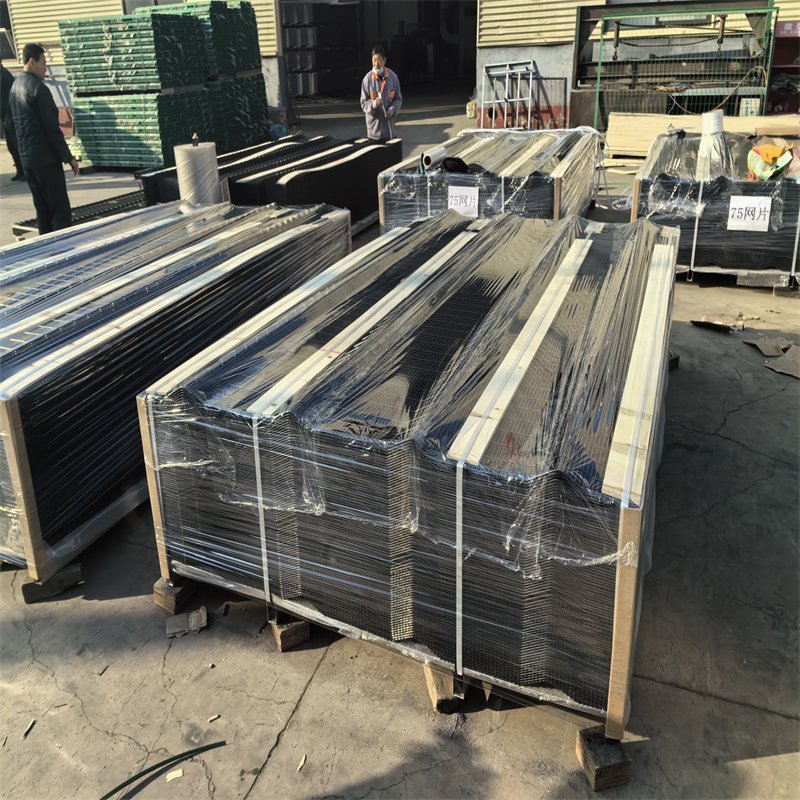
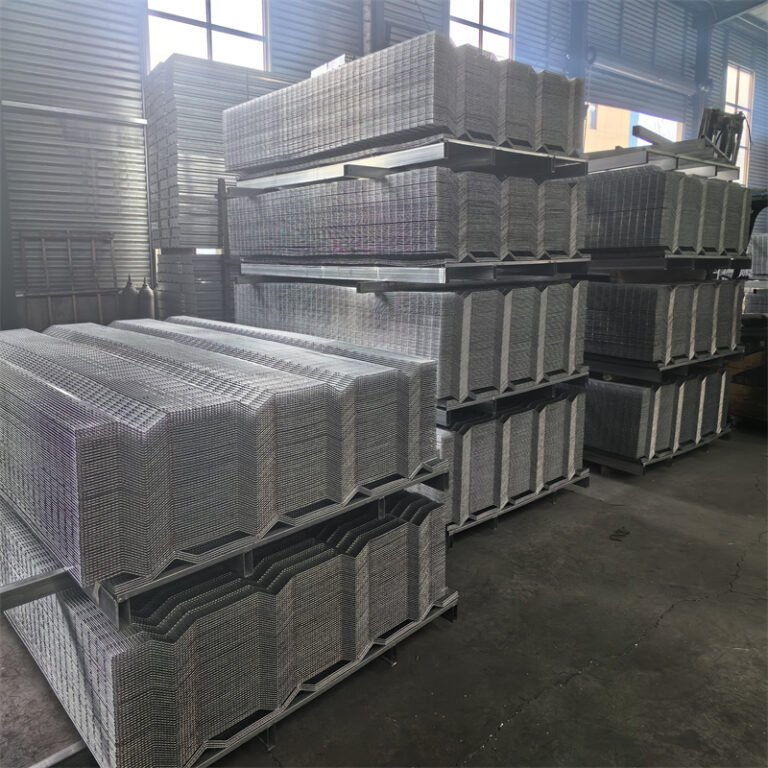
358 mesh sheets need suitable protection during loading, container shipment, and destination unloading. BMP uses pallet arrangements with protective materials according to cargo requirements.
Protective Sponge Padding
Sponge materials help separate panels and reduce surface contact. Padding also protects vulnerable edges.
Reinforced Pallet Corners
Metal reinforcement can improve pallet stability. Proper corner protection helps reduce handling damage.
Protective Strapping
Secure bands help prevent movement during transportation. Appropriate contact protection reduces abrasion beneath straps.
Stacking Protection
Wooden support plates can distribute stacking loads. Cargo teams must also respect container loading limits.
358 Mesh Sheets Export Packing Photographs
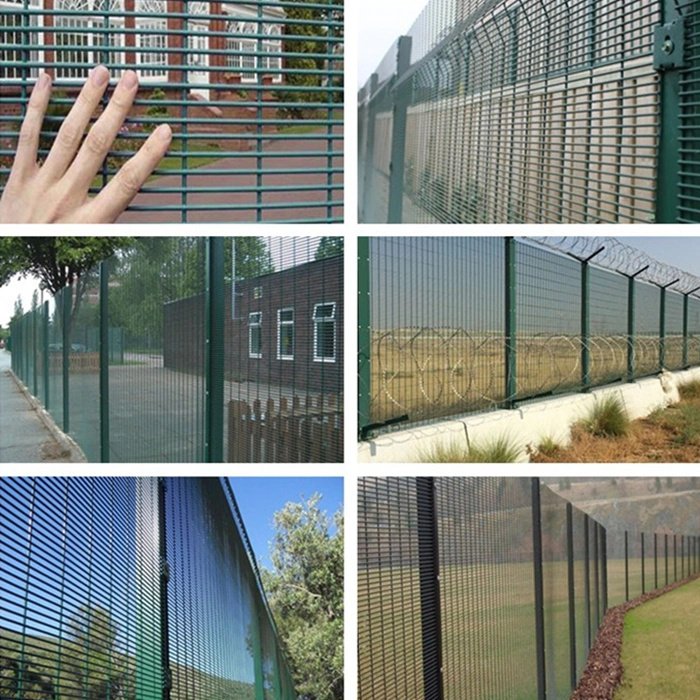 |
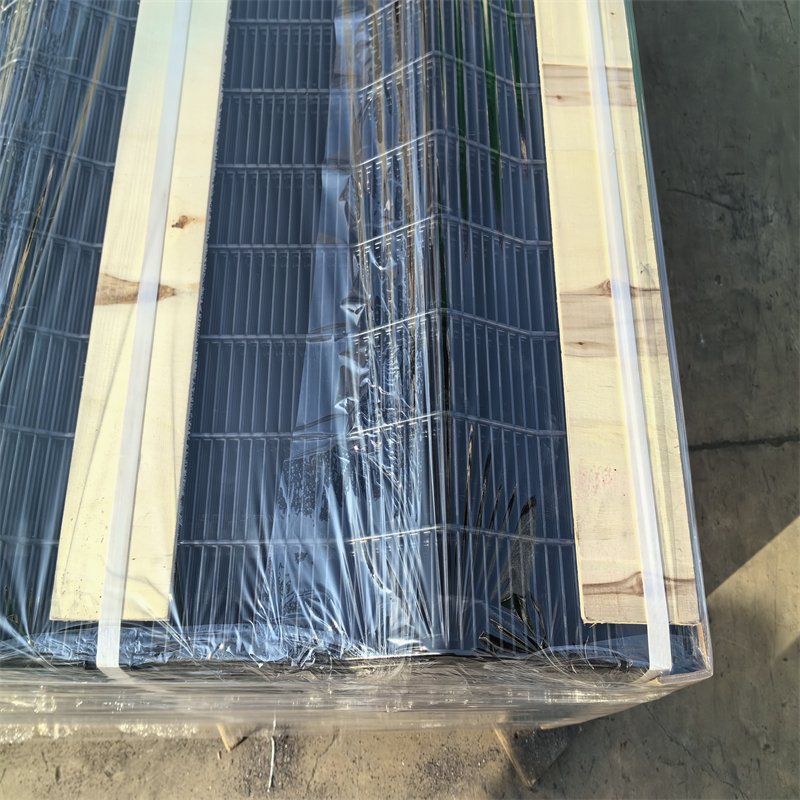
| Rigid welded mesh requires suitable support and protection during handling and international transportation. |
Project Quantity Calculation
358 mesh sheets purchasing requires accurate measurements and approved bay spacing. Panel counts depend on the installation system rather than nominal panel width alone.
Measure the Perimeter
Record each straight fence run separately. Deduct vehicle and pedestrian gate openings.
Confirm Bay Spacing
Use approved post centre dimensions. Clamp bars and bracket arrangements may influence the module.
Calculate Panel Quantities
Divide each run by its approved installed spacing. Review remaining distances for partial panels.
Calculate Post Positions
A single straight run usually needs one more post than its number of bays. Corners and gates change the calculation.
Prepare Accessory Quantities
Determine clamp and bolt requirements from the selected panel height. Include special connections and gates.
Example: 250-Metre Security Perimeter
Consider a straight perimeter measuring 250 metres. Assume an approved installed bay spacing of 2.5 metres.
| Calculation |
Illustrative Result |
| Total Fence Length |
250 m |
| Assumed Spacing |
2.5 m |
| Number of Bays |
100 |
| Panel Quantity |
100 |
| Post Positions |
101 |
| Clamps and Bolts |
According to Approved Drawings |
This example excludes gates and special sections. Actual spacing must match the selected structural connection system.
358 Mesh Sheets Maintenance and Service Planning
358 mesh sheets require periodic inspection despite their strong construction. Protective coatings and fasteners can deteriorate under demanding conditions. Regular maintenance helps identify problems early.
Inspect Welded Intersections
Check for visible corrosion, broken joints, and deformation. Address defects before further damage develops.
Examine Fasteners
Loose or missing bolts can compromise panel attachment. Replace damaged components with compatible hardware.
Maintain Protective Coatings
Repair scratches and exposed steel using approved materials. Coastal properties may need more frequent checks.
Control Vegetation
Plants can obstruct surveillance and inspection access. Keep security boundaries clear according to site requirements.
Check Gates
Inspect hinges, locks, and automated equipment regularly. Reliable gate operation supports controlled access.
358 Mesh Sheets Warranty Considerations
358 mesh sheets from BMP can qualify for the company's 15-year manufacturer warranty under applicable product terms. Coverage depends on the confirmed finish and contractual conditions.
Customers should review maintenance obligations and warranty exclusions. A warranty does not eliminate routine inspections.
358 Mesh Sheets Purchasing and Cost Factors
358 mesh sheets pricing depends on steel consumption, panel dimensions, protective finishes, and accessories. Buyers should compare equivalent technical specifications.
Wire Diameter
Thicker wire increases material consumption. The selected diameter affects panel weight and manufacturing costs.
Panel Height
Taller panels use more steel and may require larger posts. Transport and installation costs can also increase.
2D or 3D Construction
V-bend forming introduces additional manufacturing operations. Different structures may require different fastening arrangements.
Surface Coating
Galvanizing, powder coating, and PVC systems involve different processing requirements. Environmental exposure should guide selection.
International Freight
Container loading efficiency and shipment weight influence transportation costs. Buyers should confirm the agreed delivery terms.
Related Clear View fence price per meter information may assist early budgeting. Final quotations require confirmed product specifications.
358 Mesh Sheets Frequently Asked Questions
What does 358 mean?
The name references three inches, half an inch, and eight-gauge wire. These measurements correspond approximately to 76.2 × 12.7 mm spacing and 4 mm diameter.
What is the difference between 2D and 3D fencing?
Flat 2D panels have no pronounced V-bends. 3D designs incorporate formed horizontal profiles that change panel geometry.
Can ordinary tools cut the mesh?
Narrow apertures restrict access for many common cutting tools. Specialized equipment can still penetrate steel fencing.
Is this product suitable for airports?
Yes, suitable security mesh can support airport boundaries. Final designs must follow applicable aviation requirements.
Can these panels protect bridges?
Selected applications may use welded mesh around restricted bridge areas. Engineering authorities must approve the mounting arrangement.
Does BMP offer different panel heights?
Yes, BMP supplies several reference configurations. Custom dimensions require technical confirmation.
Which colors are available?
Green RAL 6005 and Black RAL 9005 are common choices. Other finishes may suit specific projects.
Can 3D panels provide additional rigidity?
V-shaped bends can influence panel stiffness. Actual performance depends on material specifications and structural design.
Are galvanized finishes suitable for coastal projects?
Appropriate protective systems can help manage coastal corrosion. Environmental assessments and maintenance remain necessary.
Can BMP supply matching posts?
BMP can quote compatible steel posts and fastening components. Buyers should confirm complete assembly details.
Does the fence require maintenance?
Yes, periodic inspections help identify damaged coatings and loose hardware. Maintenance frequency depends on site conditions.
How should contractors calculate quantities?
Use approved installed spacing and accurate boundary measurements. Gates and corners influence final counts.
Can customers order customized configurations?
Alternative sizes and finishes may be available. Manufacturing feasibility requires technical review.
What information helps prepare a quotation?
Provide mesh dimensions, wire diameter, panel height, coating, accessories, quantity, and destination. Drawings improve accuracy.
Why Choose BMP for 358 Mesh Sheets?
358 mesh sheets projects require accurate technical specifications and consistent manufacturing quality. BMP supplies welded mesh panels alongside compatible posts, clamp bars, and protective finishes.
Our team helps customers review 2D and 3D configurations, accessories, and export requirements. Clear drawings support efficient production and installation.
Related projects may also consider ClearVu fence panels for alternative mesh structures. Compatible ClearVu fence posts support selected related fencing assemblies.
Temporary pedestrian areas sometimes require crowd control barriers beyond the permanent security boundary. These products serve different operational purposes.
Conclusion: 358 Mesh Sheets for Security Projects
358 mesh sheets combine narrow welded openings, rigid steel construction, and practical visibility for demanding perimeter applications. Flat 2D and profiled 3D versions provide different structural and appearance options.
Successful projects depend on suitable posts, secure fasteners, appropriate coatings, and professional installation. Routine maintenance also supports long-term reliability.
BMP offers multiple panel sizes, structural accessories, and protective finishes for international buyers. Our team can review drawings and prepare project-specific quotations.
Contact BMP to discuss your 358 mesh sheets requirements and request a detailed technical quotation.