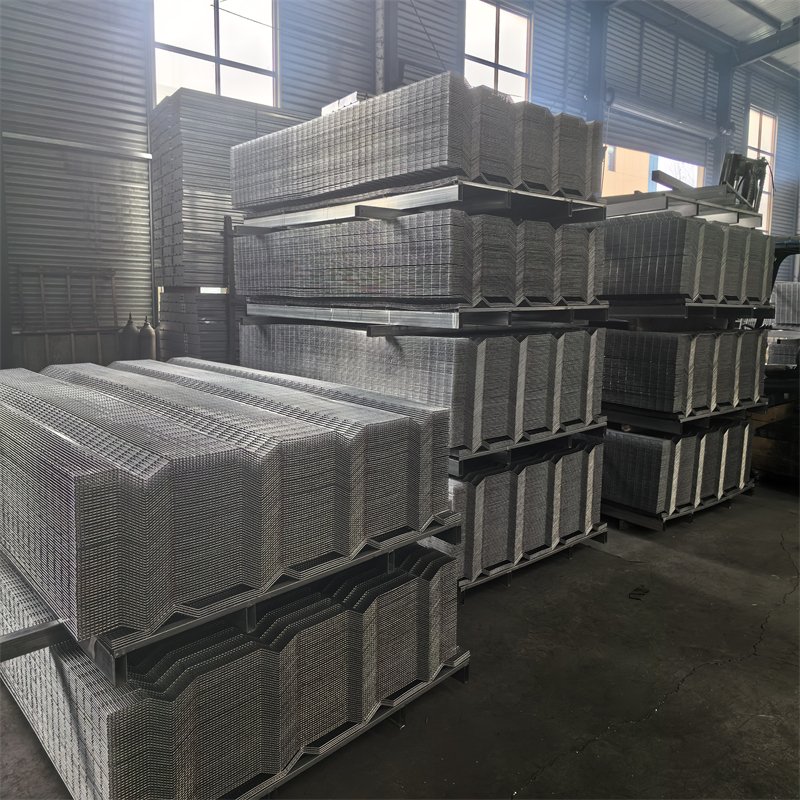
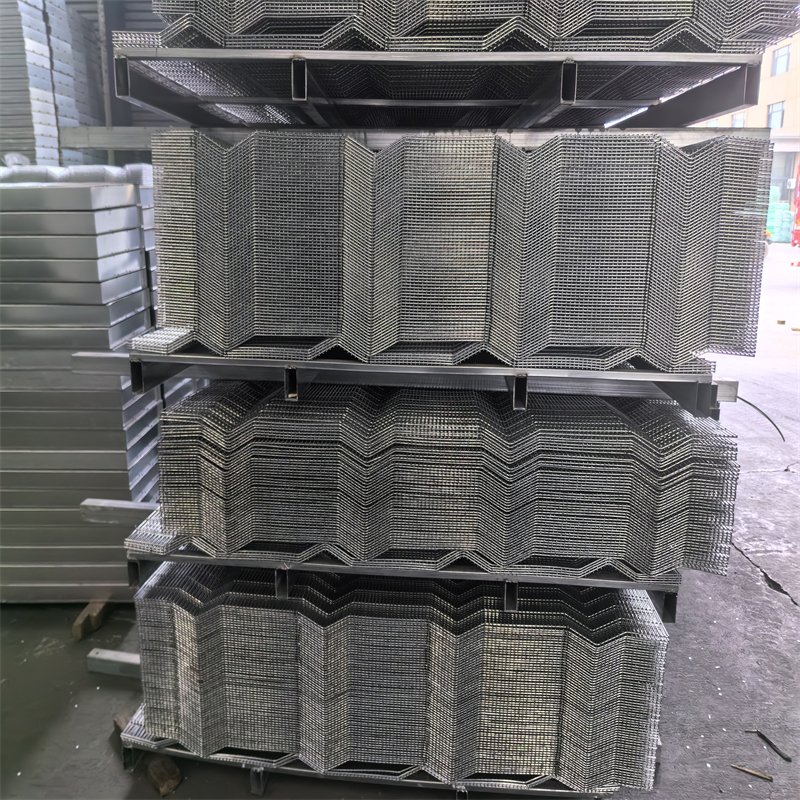
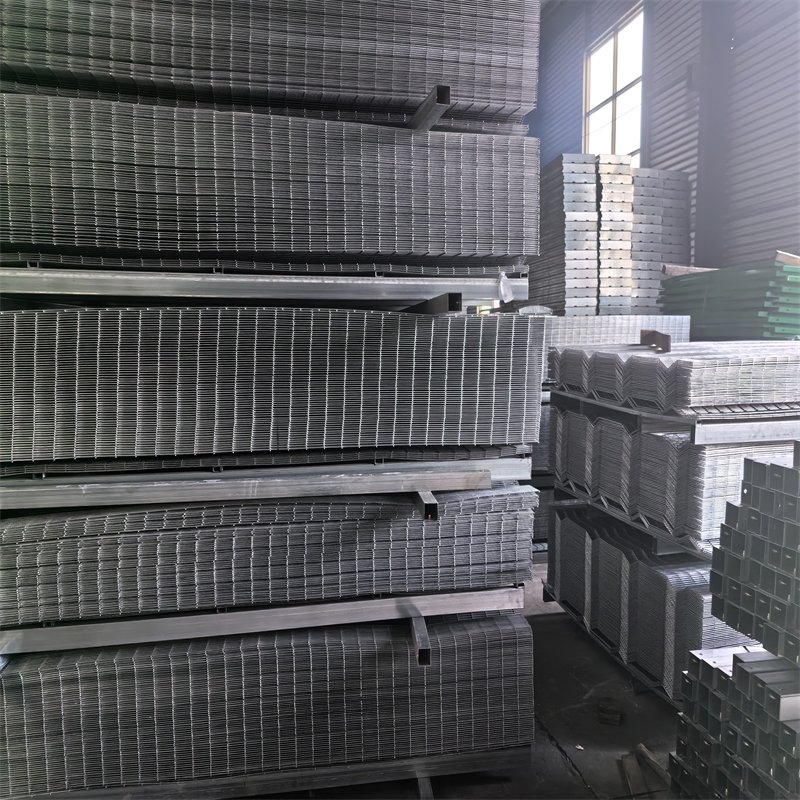
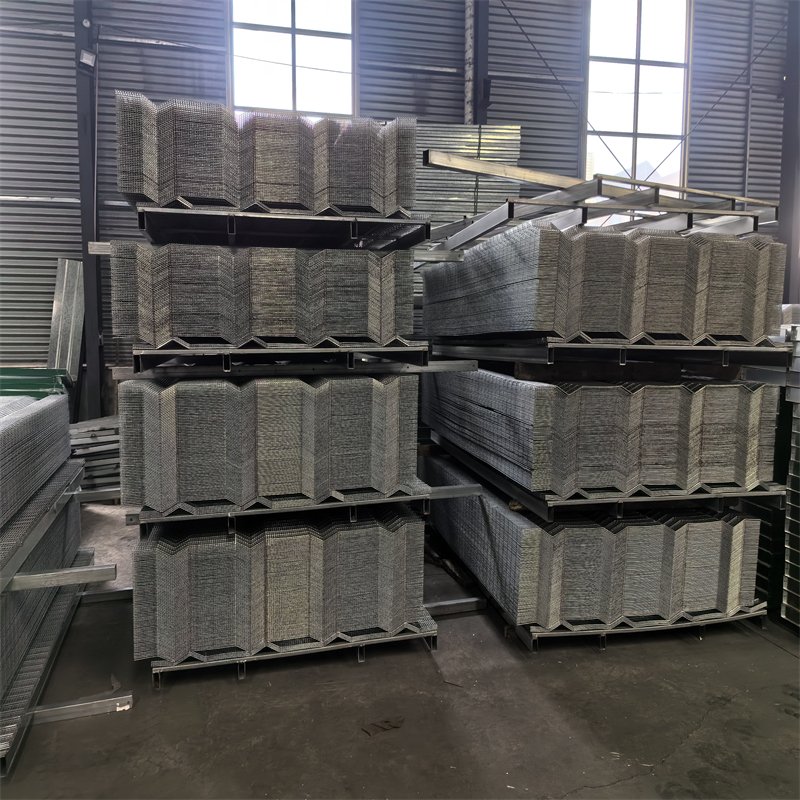
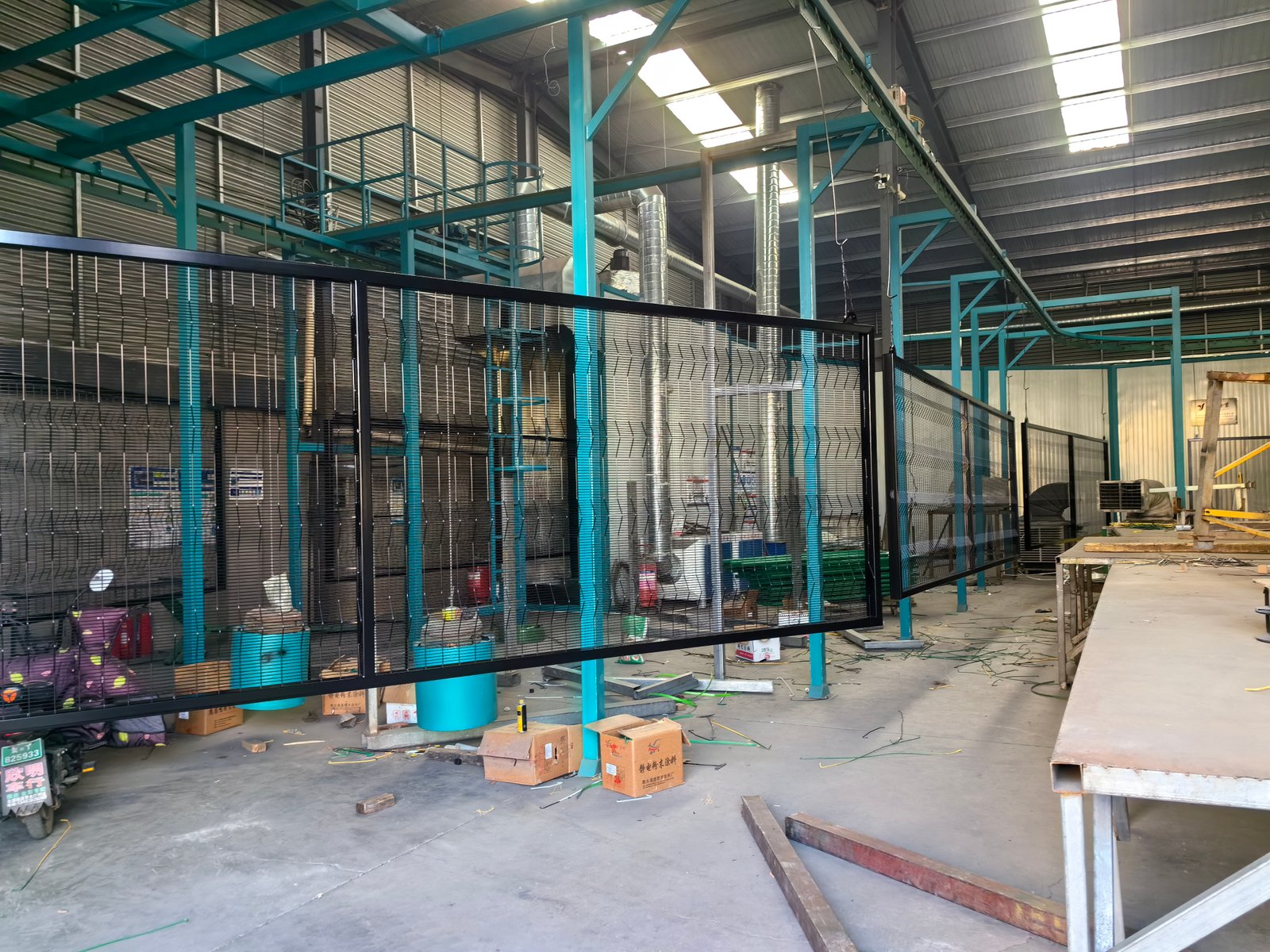
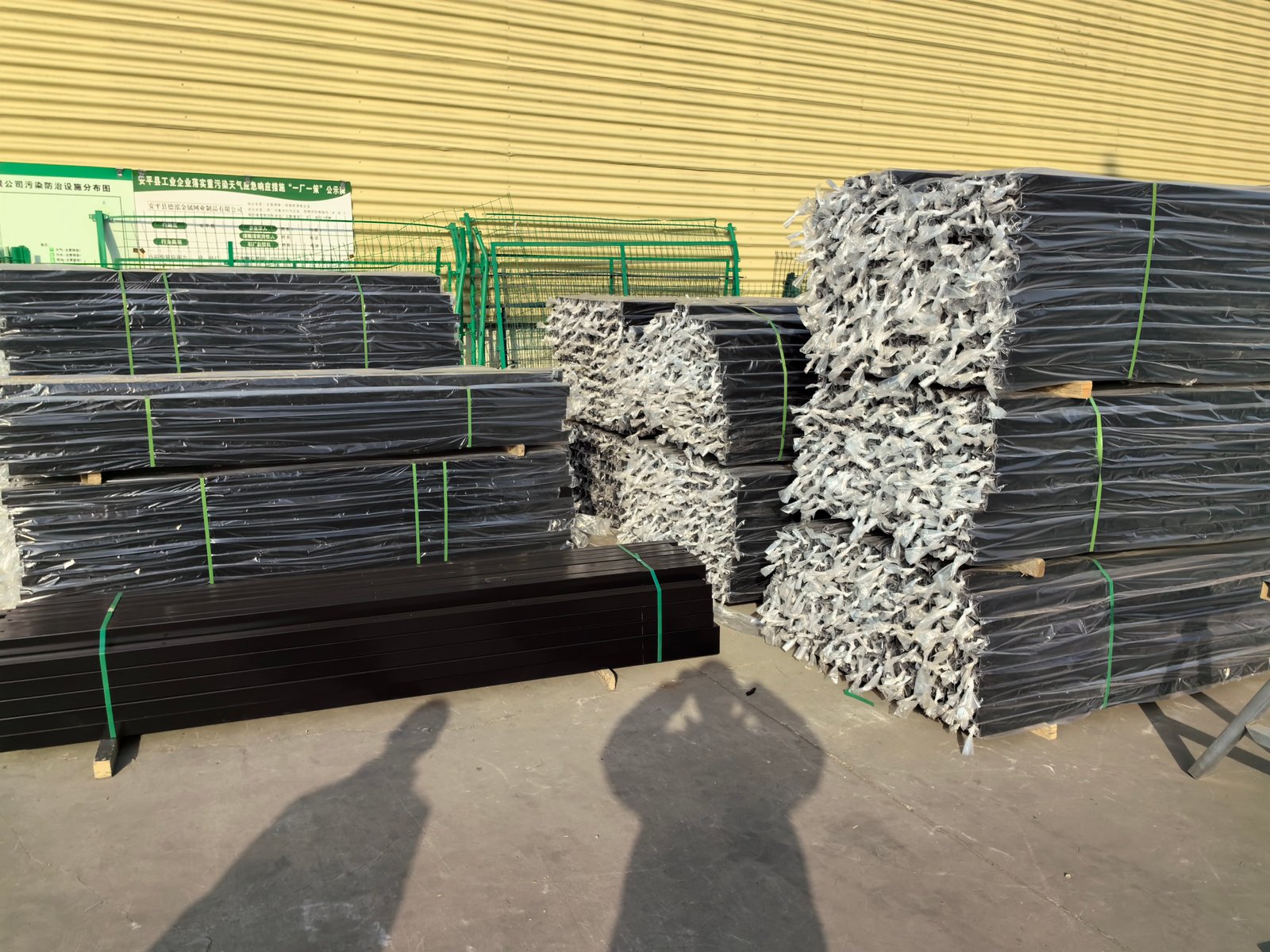
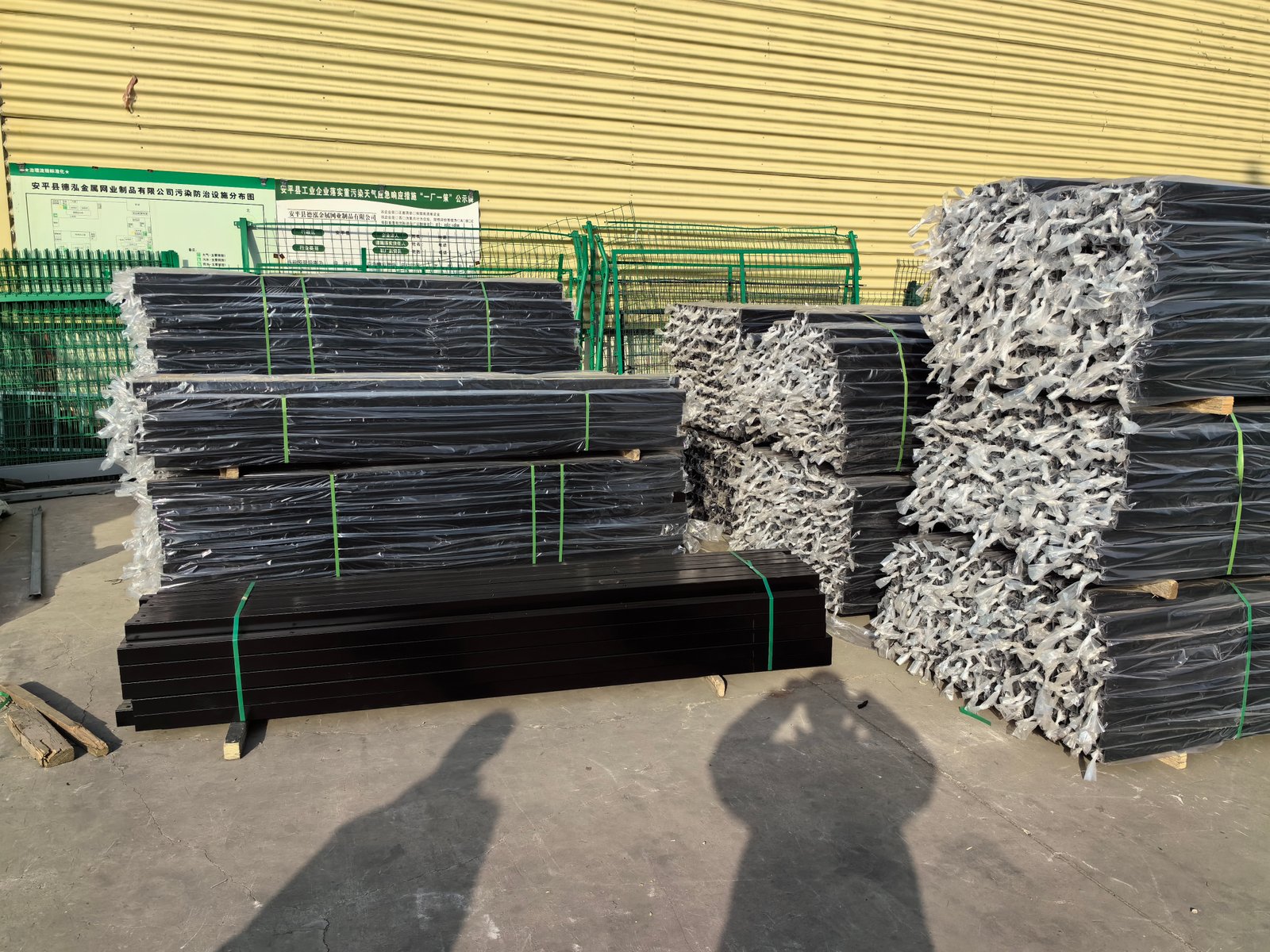
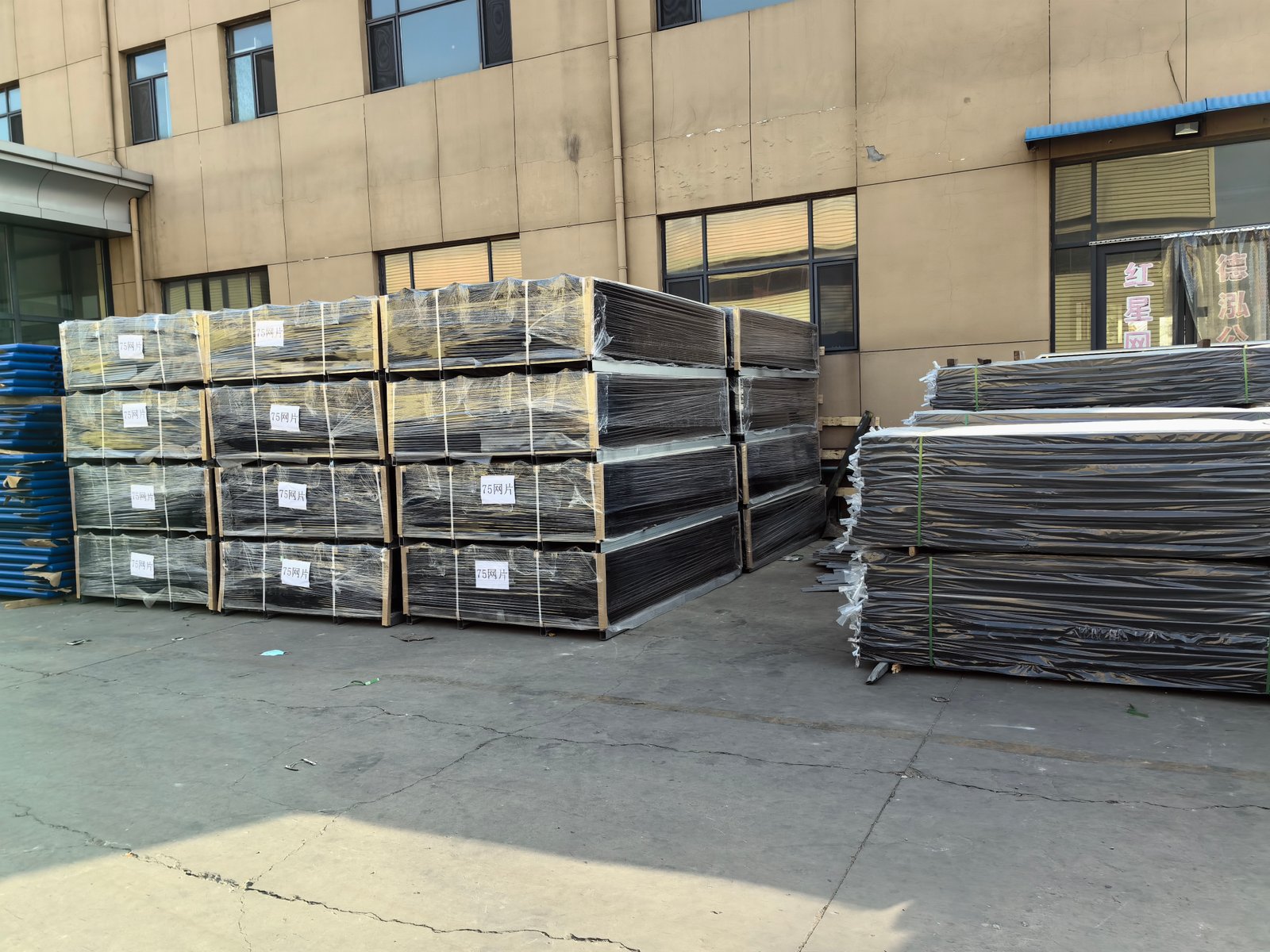
Description 358 galvanized mesh fencing delivers strong perimeter protection through narrow welded steel openings, durable coatings, and practical anti-climb geometry. BMP manufactures security fencing for industrial facilities, airports, logistics centers, power stations, and restricted infrastructure. Closely spaced wires discourage ordinary climbing attempts while maintaining useful visibility for security personnel. Galvanized protection helps reduce corrosion risks across challenging outdoor environments.
Modern property security requires careful coordination between steel panels, supporting posts, access gates, and surveillance equipment. Traditional wide-aperture fences may provide convenient climbing points. Dense welded mesh creates a more challenging physical obstacle without forming an opaque boundary. Its open construction also supports routine observation and security monitoring.
BMP supplies 358 galvanized mesh fencing with different wire combinations, panel widths, protective finishes, and structural posts. Customers can select V-bend configurations, galvanized surfaces, compatible powder coatings, and additional accessories. This guide covers technical specifications, manufacturing methods, environmental performance, installation planning, and project procurement.
What Is 358 Galvanized Mesh Fencing?
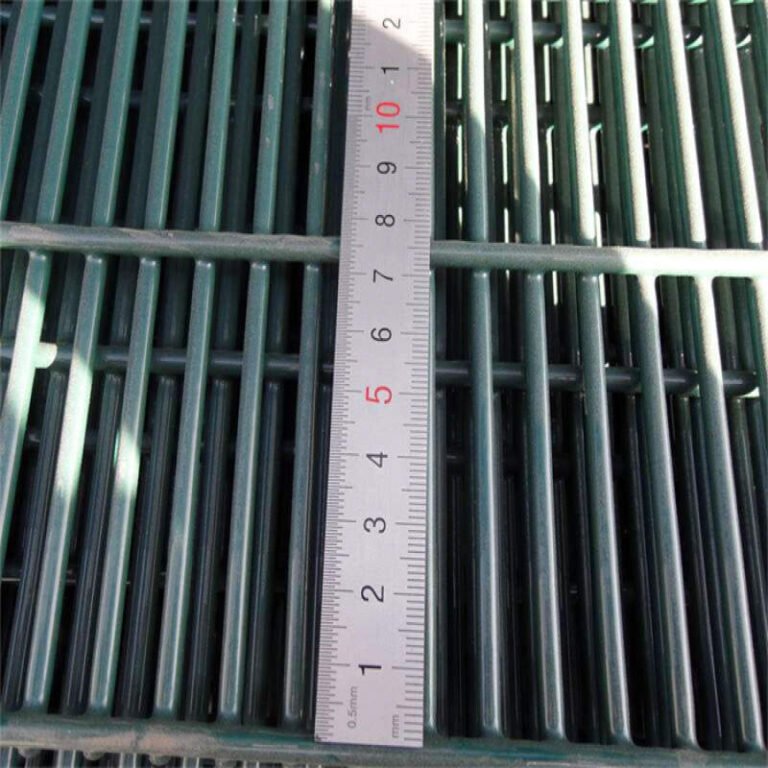
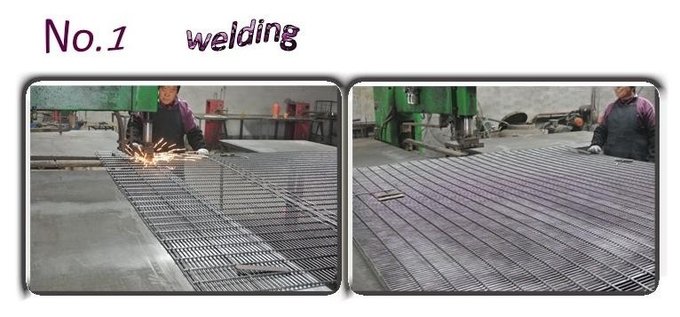
358 galvanized mesh fencing uses horizontal and vertical steel wires joined through resistance welding. The traditional designation refers to three inches, half an inch, and eight-gauge wire. These measurements correspond approximately to 76.2 × 12.7 mm spacing and 4 mm diameter.
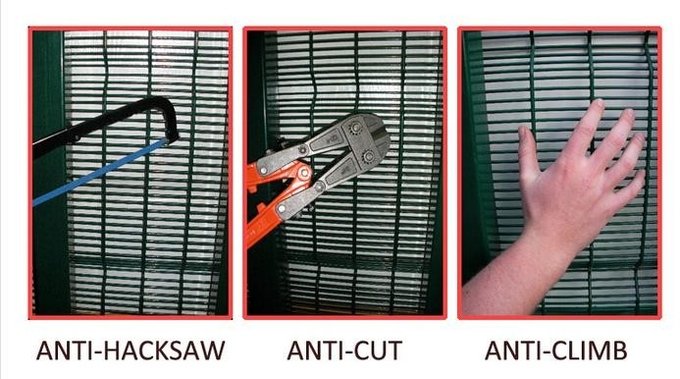
The compact horizontal openings provide limited room for ordinary fingers and footwear. This geometry increases climbing difficulty compared with many conventional fencing systems. Strong welded intersections also help preserve panel rigidity.
Galvanized steel contains a protective zinc coating that helps reduce atmospheric corrosion. Manufacturers may add compatible polymer finishes for further protection and decorative color. The complete security system includes panels, posts, brackets, fasteners, and suitable foundations.
358 Galvanized Mesh Fencing Opening Dimensions
Mesh measurements generally describe distances between corresponding wire centres. Actual clear openings become smaller after accounting for wire thickness. Traditional 4 mm wires create approximate clear openings of 72.2 × 8.7 mm.
Different products may use alternative wire diameters or mesh patterns. Buyers should verify both dimensions before approving production. Manufacturing tolerances also influence final measurements.
Why Narrow Openings Matter
Ordinary climbing depends on accessible handholds and footholds. Small horizontal openings restrict these opportunities. Dense steel wires may also limit access for certain conventional cutting tools.
However, specialized equipment can still damage steel fencing. Security planning should include controlled gates, surveillance, and appropriate site procedures. No single physical barrier guarantees complete intrusion prevention.
358 Galvanized Mesh Fencing Product Gallery
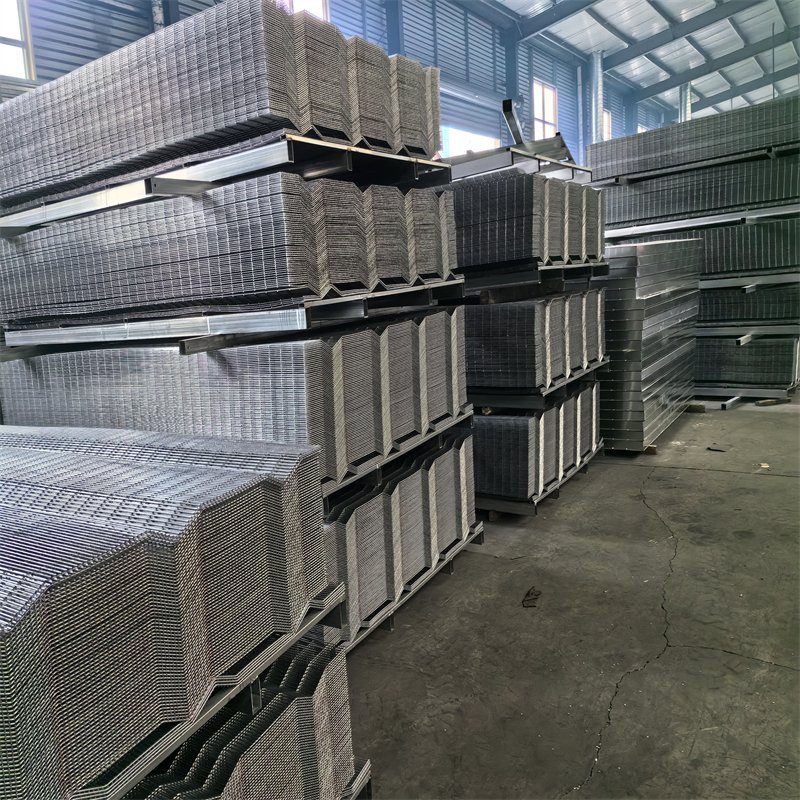
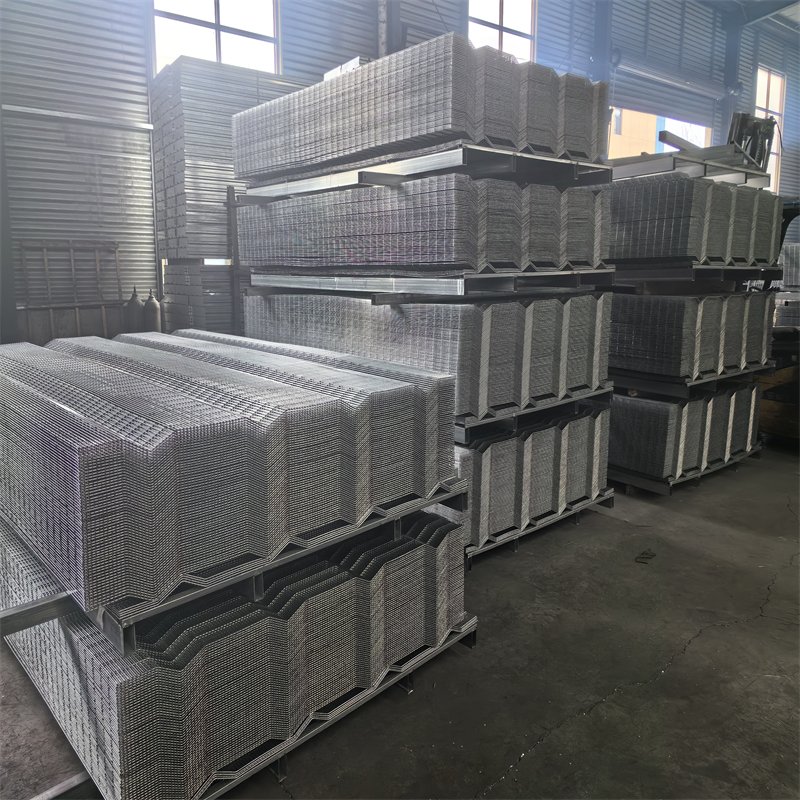
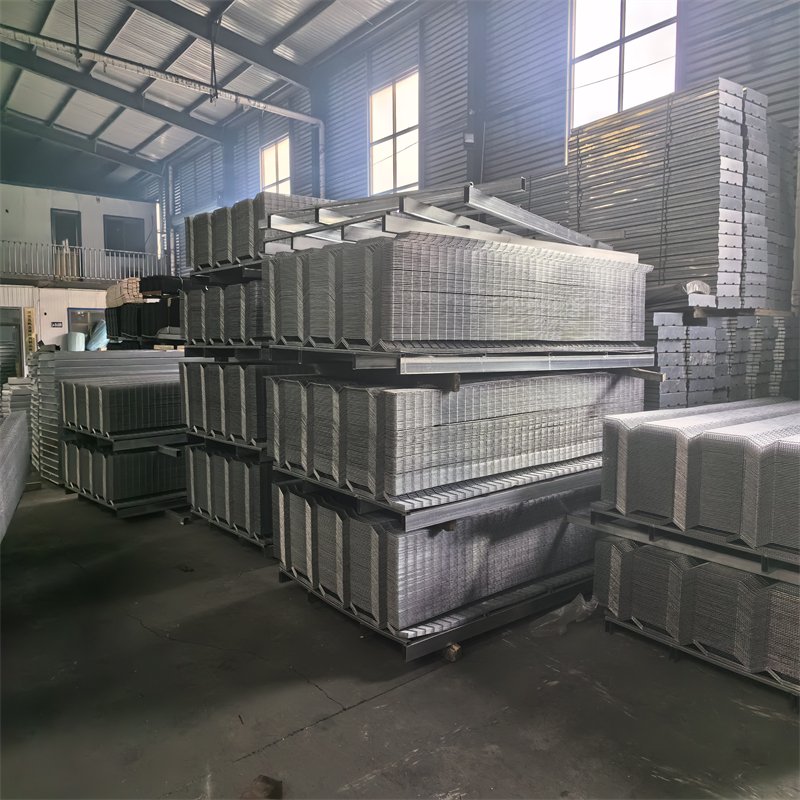
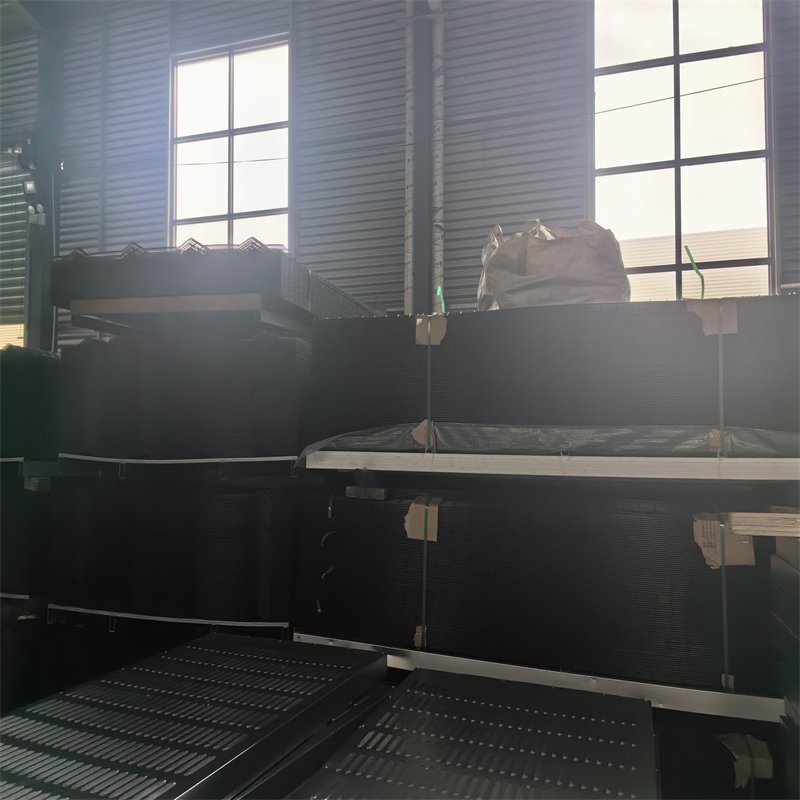
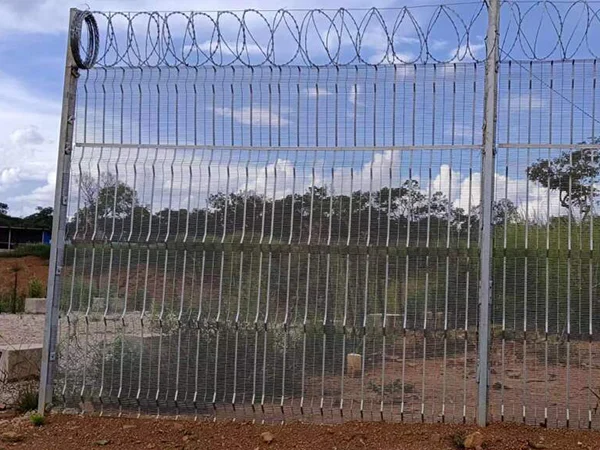
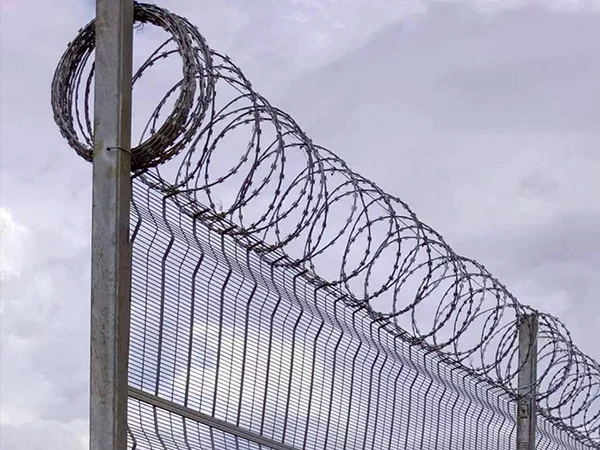
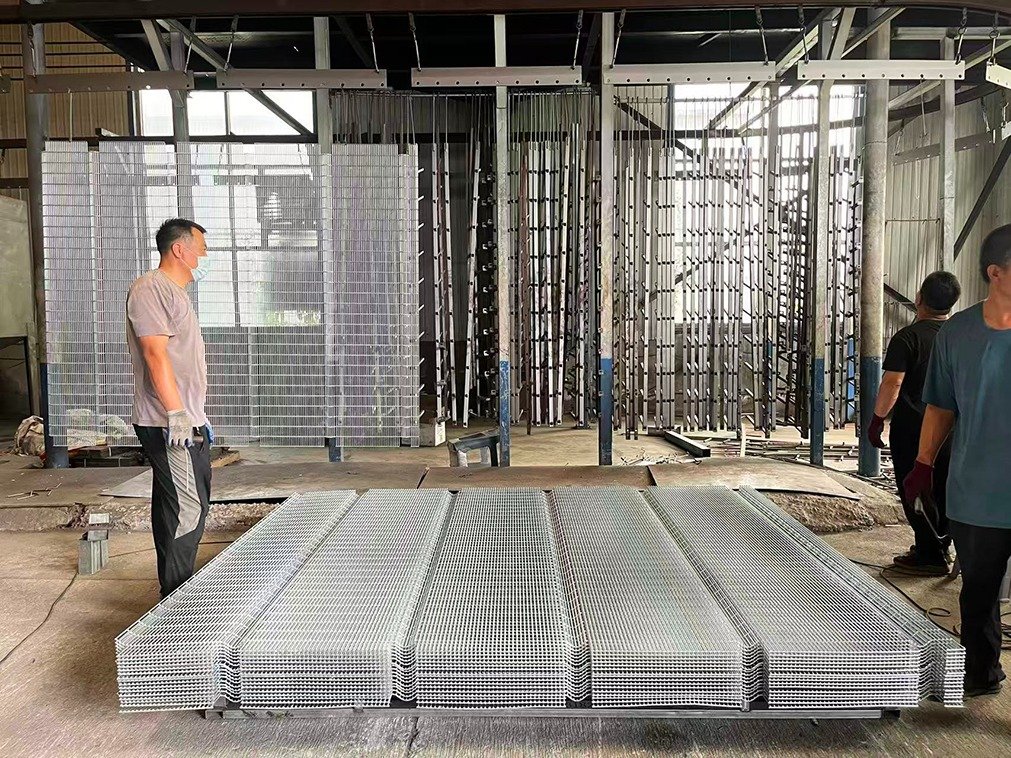
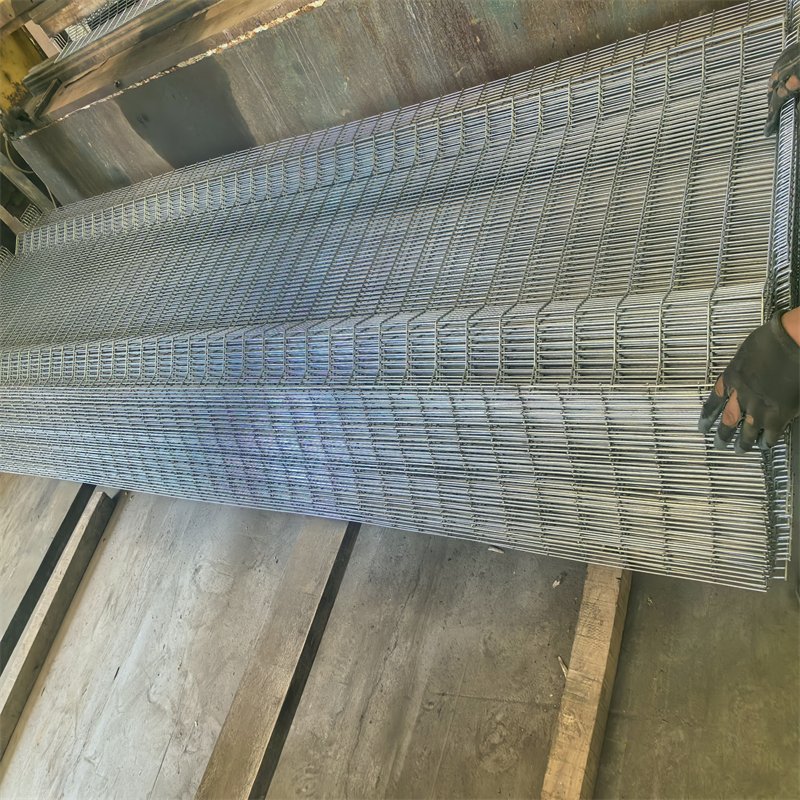
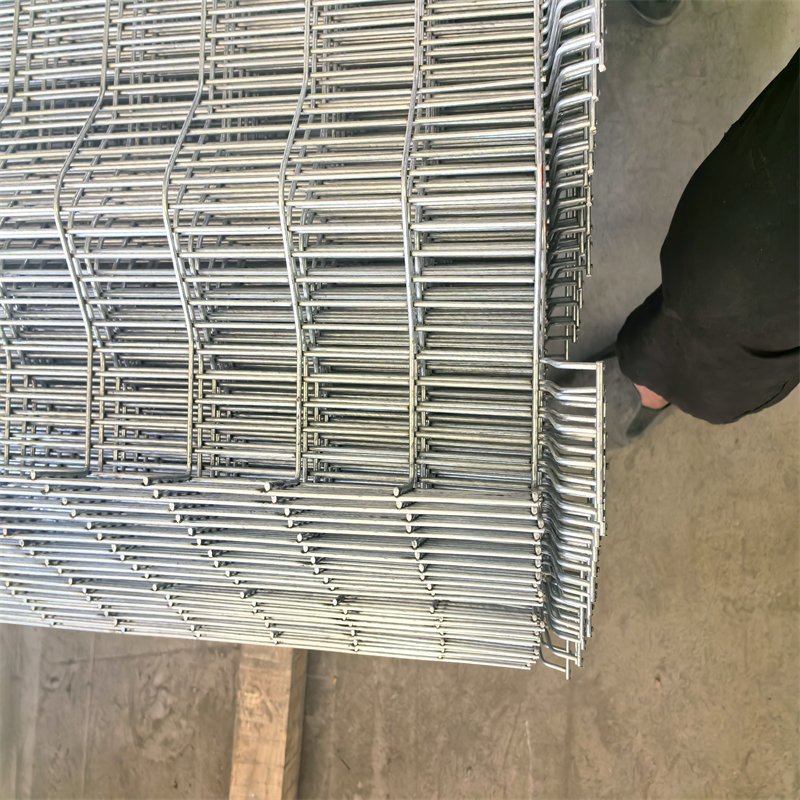
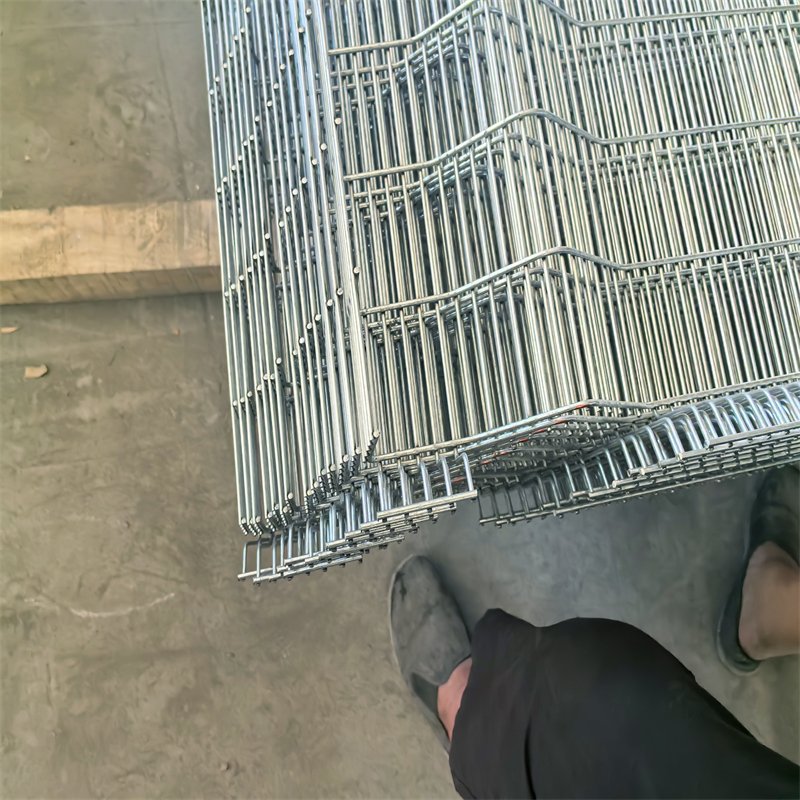
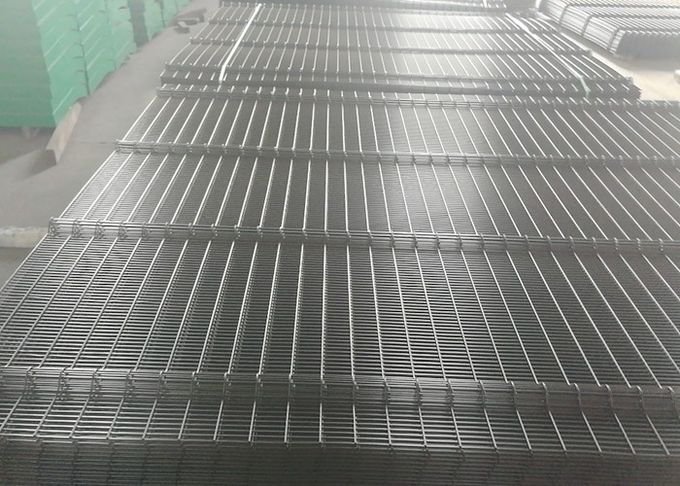
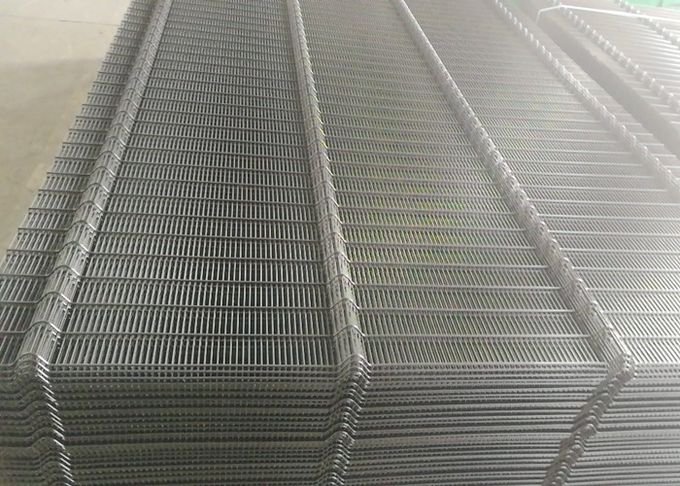
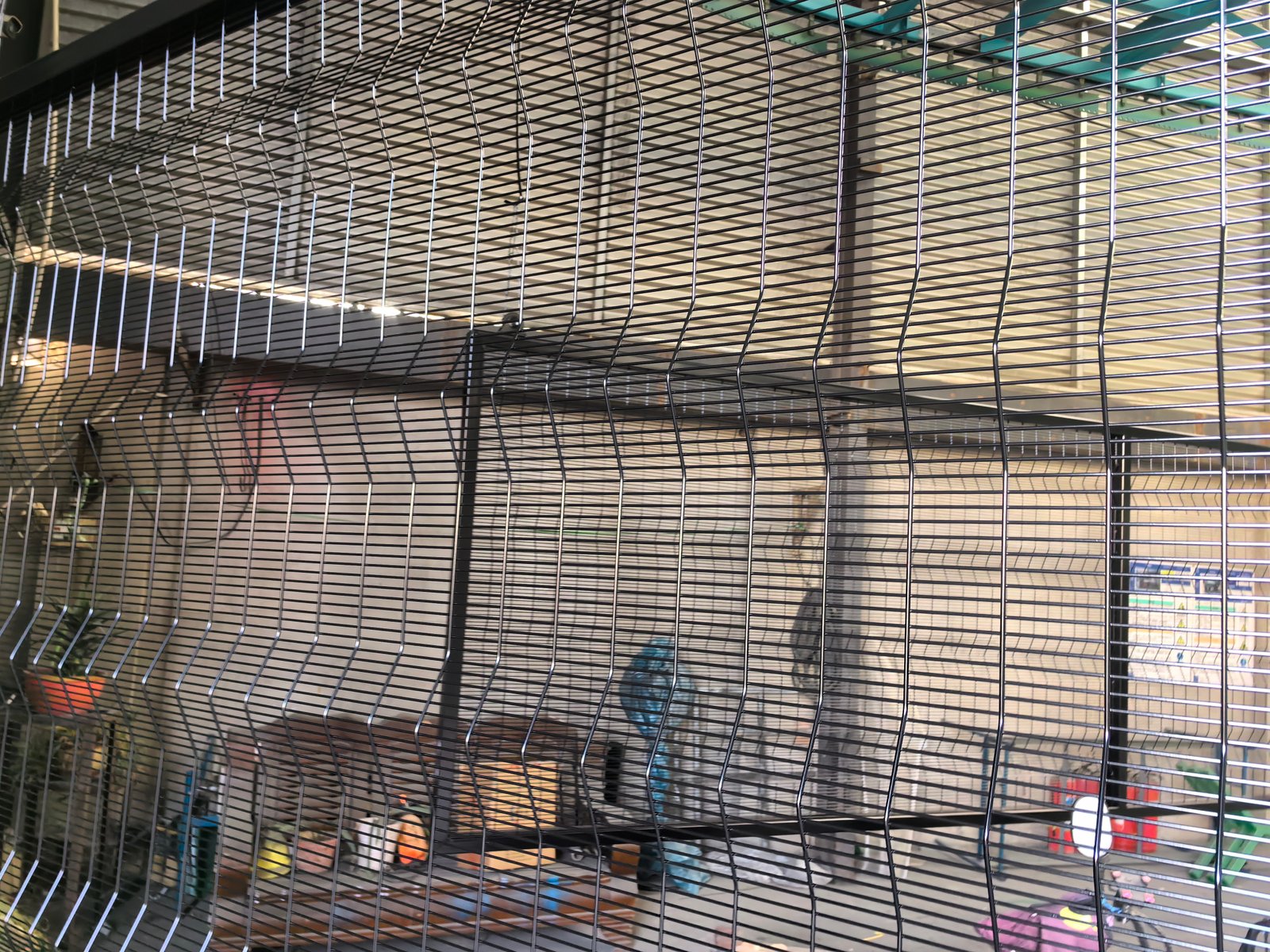
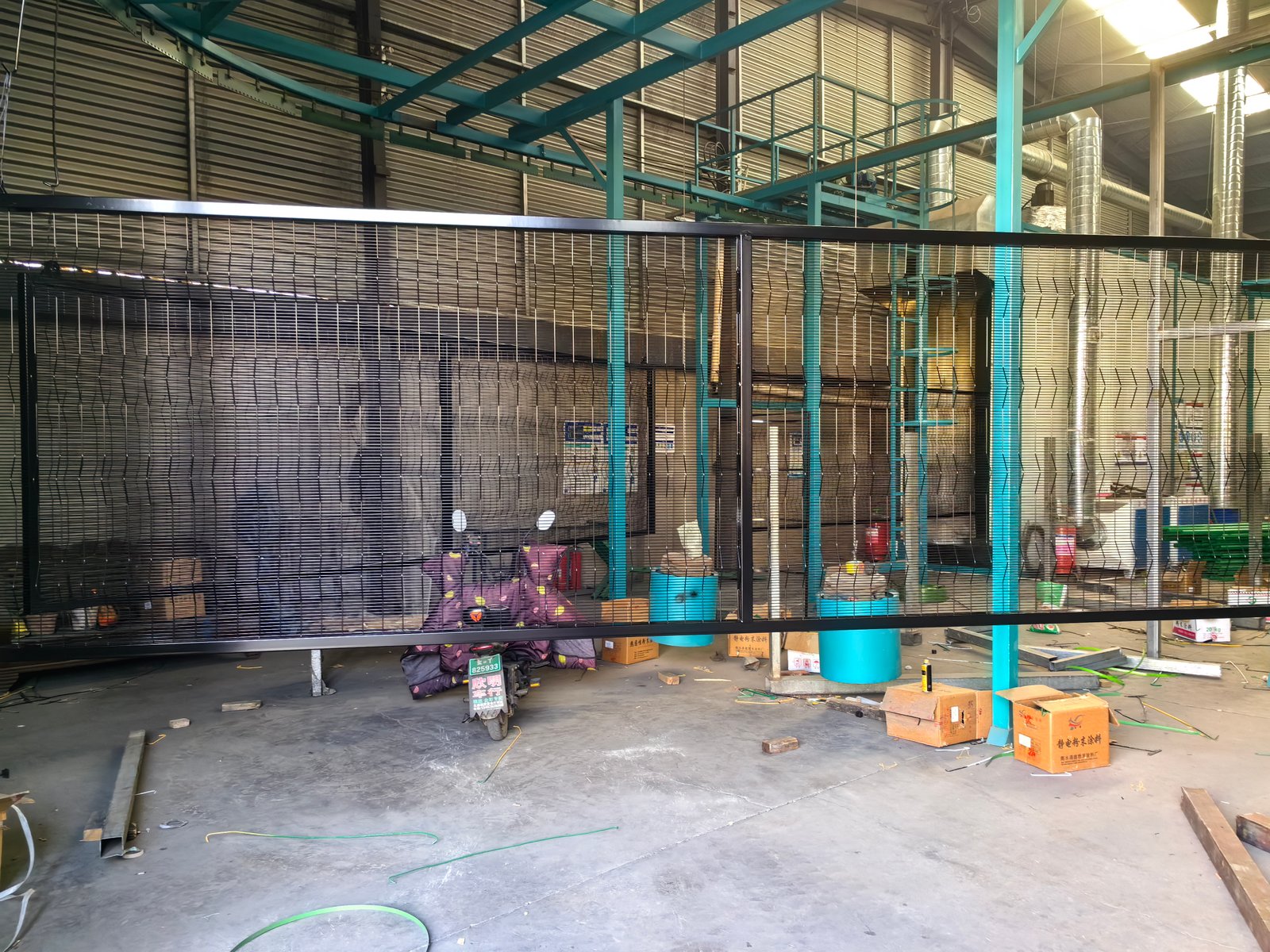
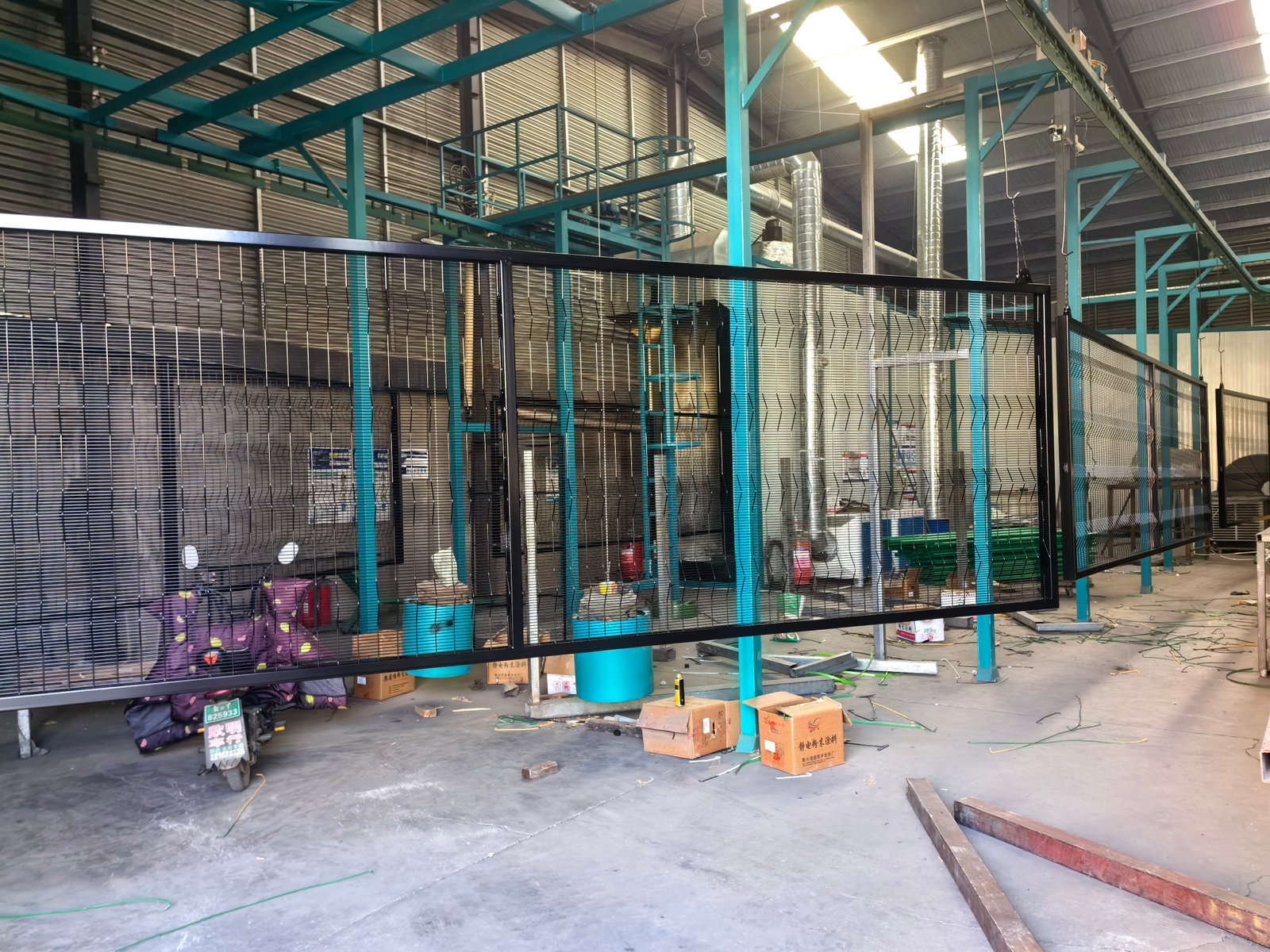
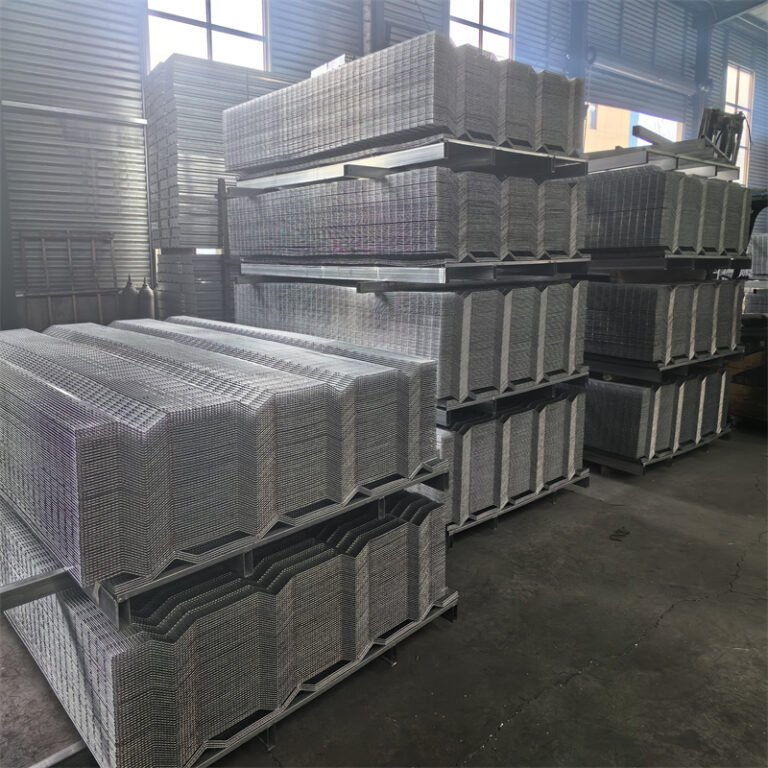
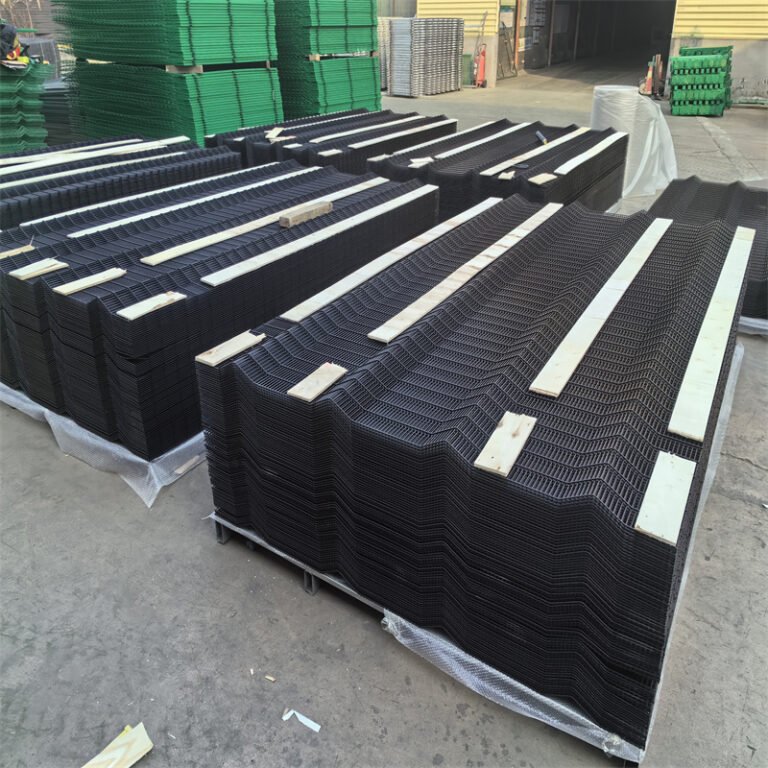
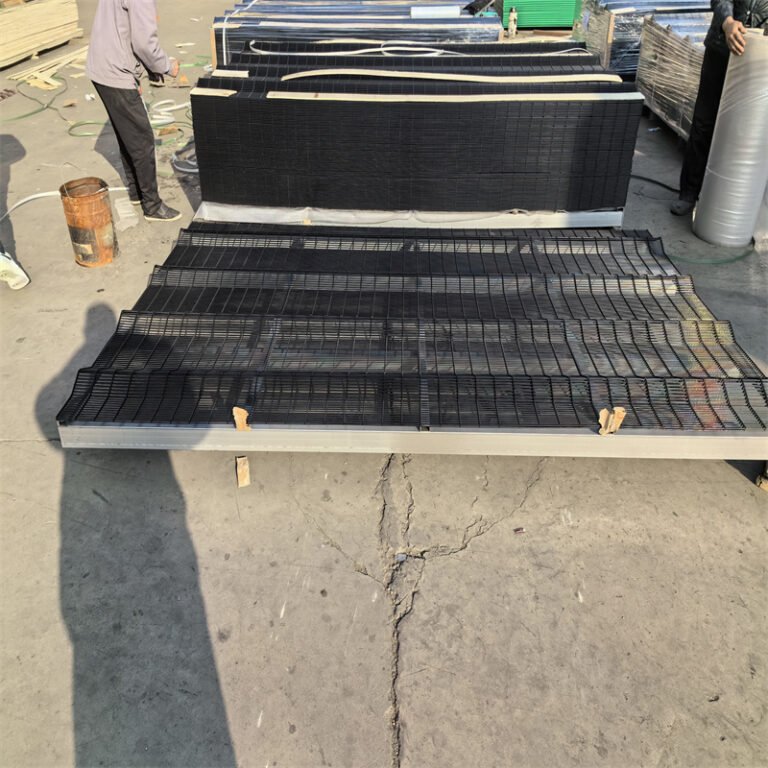
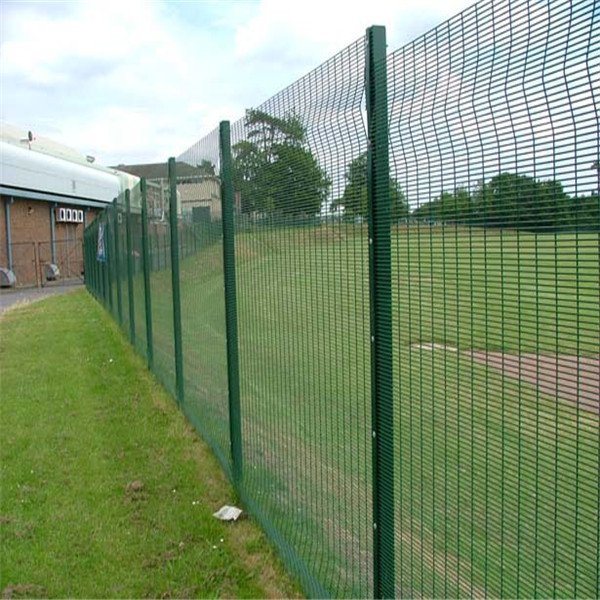
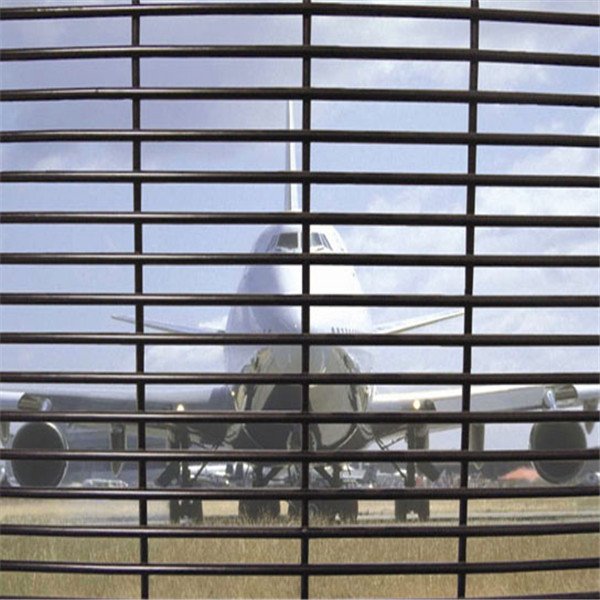
358 galvanized mesh fencing combines rigid construction with a relatively open appearance. The welded structure offers a consistent security boundary without blocking every sightline. Different finishes can complement industrial buildings and commercial properties.
 |
 |
| Narrow welded steel openings help discourage climbing while preserving surveillance visibility. |
Rigid security panels combine galvanized protection with an open welded wire structure. |
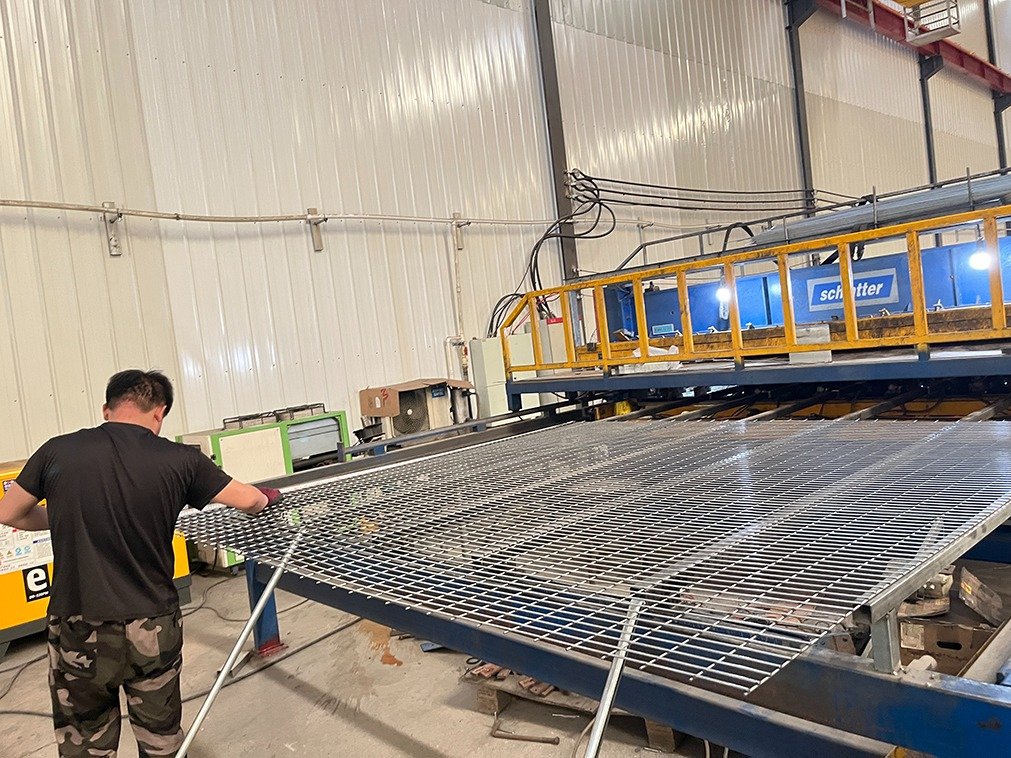
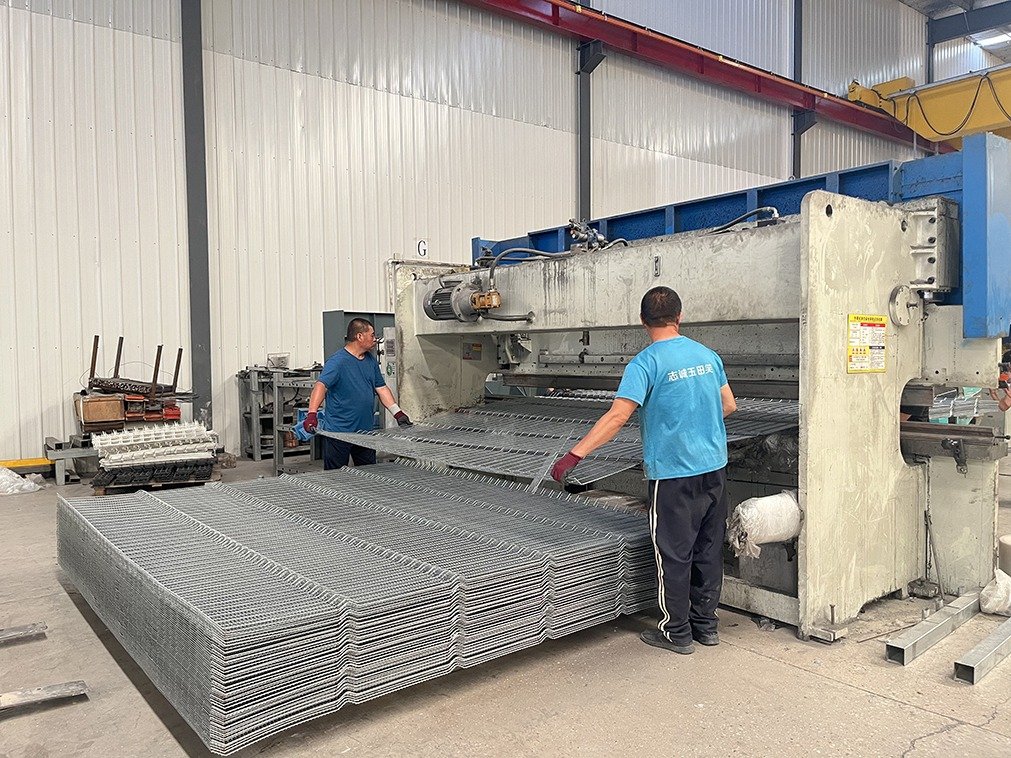
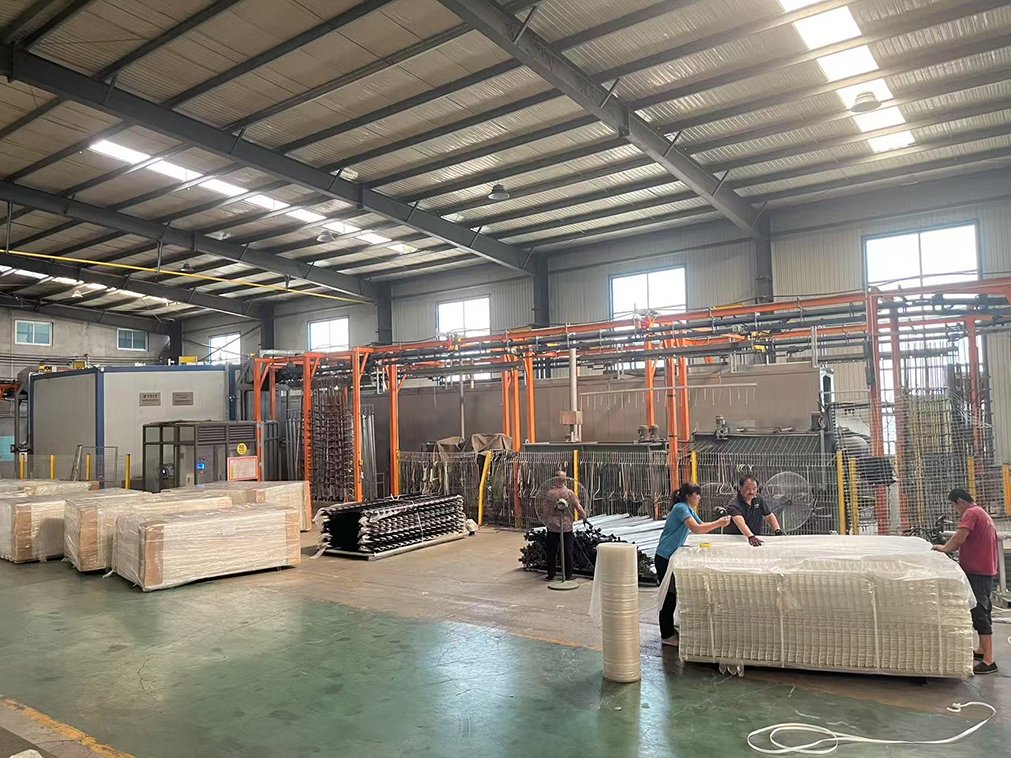
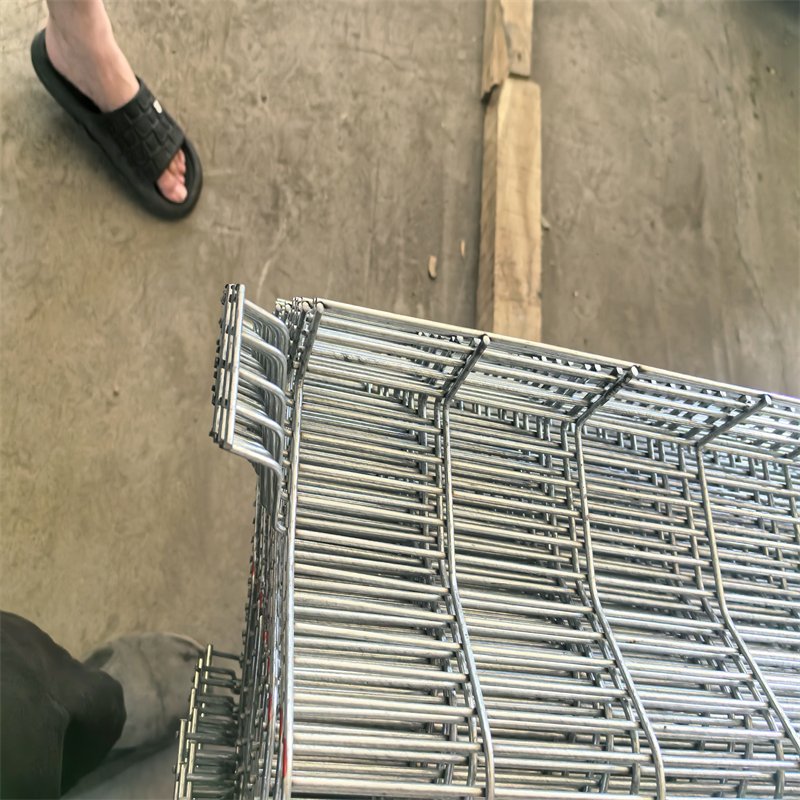
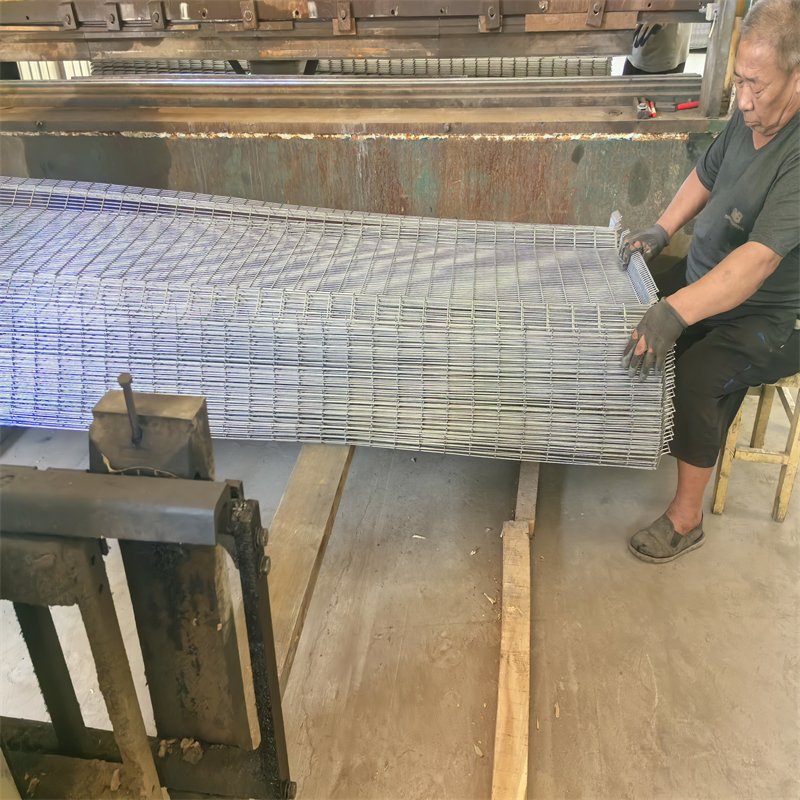
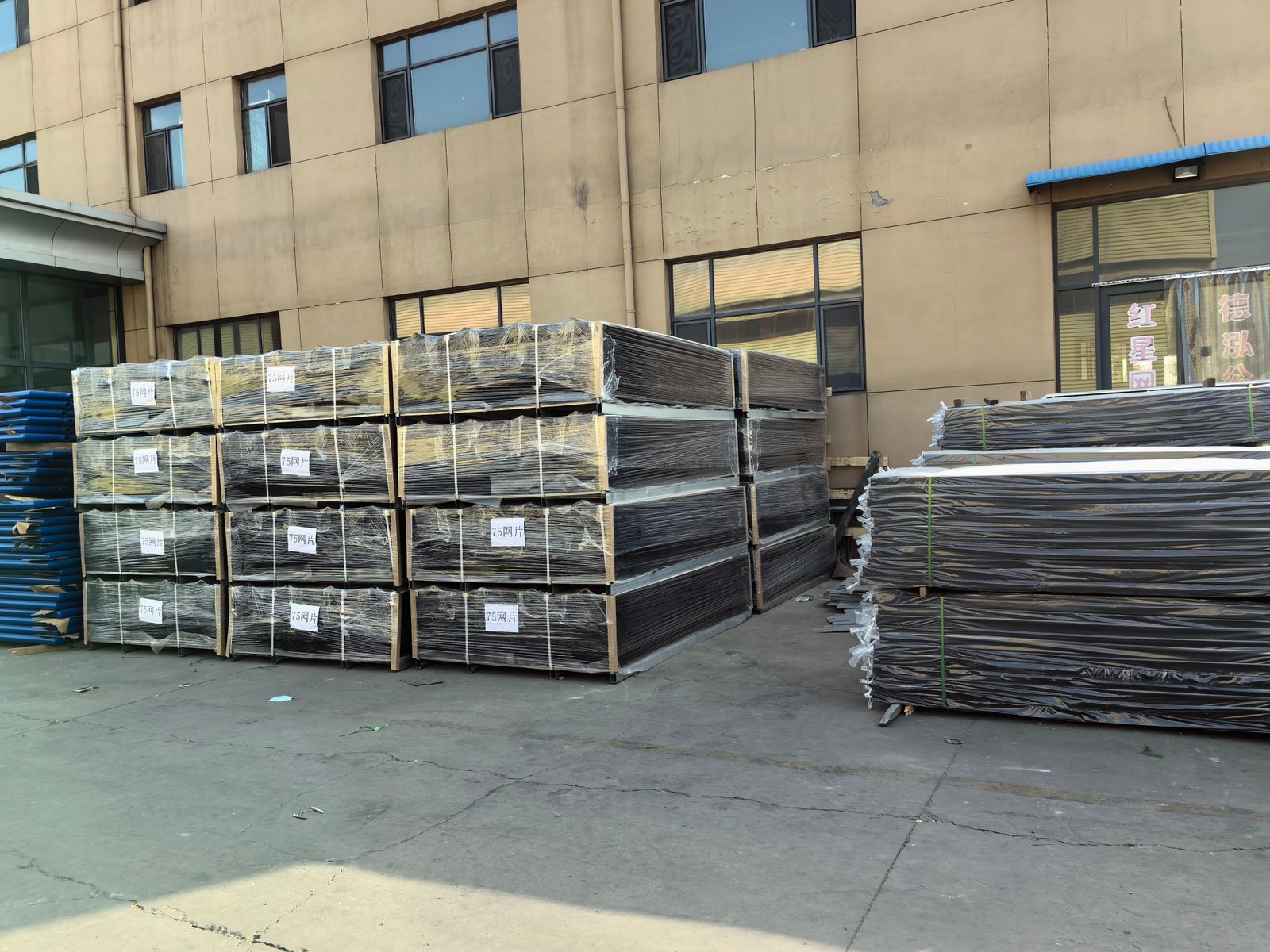
The photographs illustrate product construction and appearance. Final technical specifications should follow the confirmed order documents. Different configurations may use different post arrangements and coating systems.
358 Galvanized Mesh Fencing 3D Panel Specifications
358 galvanized mesh fencing can incorporate horizontal V-shaped bends for additional geometric depth. The original BMP reference range includes seven panel heights. Available widths, wire combinations, and bracket quantities vary across these configurations.
V-bend panels provide an alternative to flat welded mesh. Their formed profile may influence stiffness under selected loading conditions. Structural performance still depends on wire geometry, supports, and installation details.
| Mesh Centres (mm) |
Panel Height (mm) |
Panel Width (mm) |
Line × Cross Wire (mm) |
V-Bends |
Post Length (mm) |
Brackets |
| 76.2 × 12.7 / 75 × 12.5 |
1800 |
2500 / 2750 / 3000 |
3.0 × 4.0 / 3.2 × 4.0 / 3.4 × 4.0 |
3 |
2600 |
6 |
| 101.6 × 12.7 |
2000 |
2500 / 2750 / 3000 |
3.0 × 4.0 / 3.2 × 4.0 / 3.4 × 4.0 |
4 |
2700 |
7 |
| 101.6 × 12.7 |
2200 |
2500 / 2750 / 3000 |
3.0 × 4.0 / 3.2 × 4.0 / 3.4 × 4.0 |
4 |
2800 |
8 |
| 101.6 × 12.7 |
2400 |
2500 / 2750 / 3000 |
3.0 × 4.0 / 3.2 × 4.0 / 3.4 × 4.0 |
4 |
3000 |
9 |
| 101.6 × 12.7 |
2700 |
2500 / 2750 / 3000 |
3.0 × 4.0 / 3.2 × 4.0 / 3.4 × 4.0 |
5 |
3500 |
10 |
| 101.6 × 12.7 |
3000 |
2250 / 3000 |
3.0 × 4.0 / 3.2 × 4.0 / 3.4 × 4.0 |
5 |
4000 |
12 |
| 101.6 × 12.7 |
4000 |
2250 |
3.0 × 4.0 / 3.2 × 4.0 / 3.4 × 4.0 |
5 |
5200 |
14 |
The catalogue includes 101.6 × 12.7 mm configurations alongside conventional 358 dimensions. These alternative patterns do not share identical mesh geometry. Buyers should confirm their required security classification before ordering.
358 Galvanized Mesh Fencing Wire Combinations
358 galvanized mesh fencing can use different horizontal and vertical wire diameters. BMP's reference options include 3.0 × 4.0, 3.2 × 4.0, and 3.4 × 4.0 mm combinations.
Wire diameter influences steel consumption, stiffness, and panel weight. Thicker wires generally require more raw material. Welding consistency and structural connections remain important for overall performance.
V-Bend Configuration by Panel Height
Horizontal V-bends introduce geometric depth into the welded panel. Their number changes with selected fence heights. The original BMP schedule lists three, four, or five bends.
Different bend arrangements influence panel geometry and fastening compatibility. Engineers should verify the intended design rather than assuming identical performance.
358 Galvanized Mesh Fencing Post Specifications
358 galvanized mesh fencing requires structural steel posts that match its panel geometry and loading requirements. BMP offers several post profiles for different installations. Each type provides distinct mounting and structural characteristics.
| Post Type |
Size A (mm) |
Size B (mm) |
Size C (mm) |
Reference Wall Thickness |
| Square Post (P1-SHS) |
60 × 60 |
80 × 80 |
100 × 100 |
1.2–1.5 mm |
| IPE Post (P2-IPE) |
100 × 55 |
100 × 68 |
120 × 74 |
1.2–2.0 mm |
| Rectangular Post (P3-RHS) |
60 × 80 |
80 × 100 |
100 × 150 |
2.5–5.0 mm |
| C-Post with Flat Bar (P4-C+F) |
60 × 80 |
80 × 100 |
100 × 150 |
2.0–5.0 mm |
These post sizes preserve the original BMP reference range. Structural suitability requires separate engineering verification. The IPE dimensions and thickness values also require confirmation of the exact profile specification.
358 Galvanized Mesh Fencing Square Posts
358 galvanized mesh fencing may use square hollow posts for selected applications. Their flat mounting surfaces support compatible clamp arrangements. Available sections include 60 × 60 and 80 × 80 mm.
However, wall thickness affects bending performance and installation suitability. Buyers should confirm the required section through approved calculations.
Rectangular Steel Posts
Rectangular hollow sections provide different bending properties along their principal axes. Larger profiles may suit demanding installation conditions. Engineers should verify section orientation and support requirements.
C-Posts with Flat Bars
C-shaped profiles support alternative fastening arrangements. Compatible flat bars help secure panel edges. The exact connection geometry depends on approved drawings.
Post Caps and Water Protection
Suitable caps help close exposed post openings. Proper detailing may reduce water accumulation inside hollow sections. Coating continuity also contributes to corrosion protection.
358 Galvanized Mesh Fencing Razor Wire and Angle Arms
358 galvanized mesh fencing can accommodate additional security accessories where project requirements permit. Optional angle arms may support approved perimeter topping arrangements. Such additions require careful safety and structural assessment.
| Accessory |
Application |
Design Consideration |
| Razor Wire |
Selected Restricted Security Perimeters |
Safety, Legal Compliance, and Approved Installation |
| Angle Arm |
Optional Support for Security Toppings |
Post Loading and Connection Strength |
Security Topping Requirements
Additional topping systems can change the overall perimeter arrangement. Structural posts must support the approved accessories. Local safety restrictions may limit their use.
358 Galvanized Mesh Fencing Topping Compatibility
358 galvanized mesh fencing can support selected security enhancements with suitable engineering approval. Buyers should confirm post length, hardware, and safety requirements.
Schools, public parks, and residential properties may require different safety arrangements. Project designers should avoid inappropriate hazardous accessories near accessible public areas.
 |
| Optional security accessories require compatible structural supports and approved installation arrangements. |
358 Galvanized Mesh Fencing Surface Treatment Options
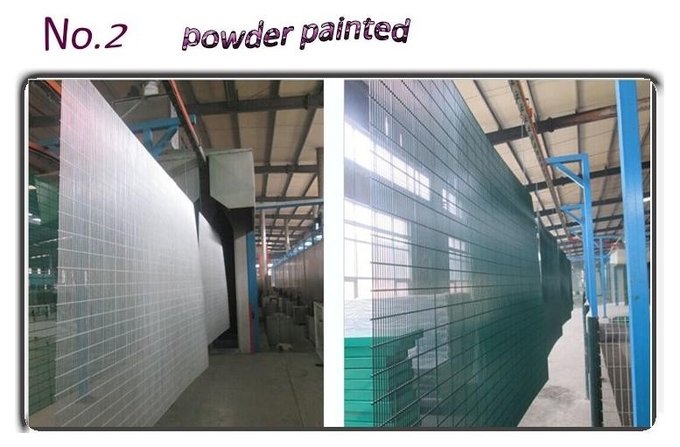
358 galvanized mesh fencing can receive different metallic and organic protective finishes. BMP identifies five reference treatment systems. Each system has distinct manufacturing steps and application requirements.
Coating selection should reflect corrosion exposure, color preferences, and project specifications. Buyers should confirm the manufacturing sequence before ordering.
| System |
Mesh |
Post |
Coating Specification |
| ST1 — PRE-EDG + PP |
Yes |
Not Listed |
Polyester powder coating over pre-electrogalvanized mesh |
| ST2 — PRE-HDG + PP |
Yes |
Yes |
Polyester coating over pre-hot-dip galvanized material; 40–60, 80–100, or 200–300 g/m² zinc classes |
| ST3 — PRE-GALFAN + PP |
Yes |
Not Listed |
Polyester coating over pre-Galfan wire; nominal Zn95Al5 alloy |
| ST4 — HDG |
Yes |
Yes |
Hot-dip galvanized finish; reference zinc thickness 75–100 microns |
| ST5 — HDG + PP |
Yes |
Yes |
Polyester powder coating over hot-dip galvanized surfaces |
PP means polyester powder coating. EDG describes electrogalvanizing, while HDG refers to hot-dip galvanizing. Galfan commonly uses approximately 95% zinc and 5% aluminium.
The listed coating quantities are reference specifications, not universal manufacturing requirements. Zinc coating mass and thickness describe different measurements. Applicable acceptance criteria depend on the selected product and coating process.
ST1: Electrogalvanized and Powder-Coated Mesh
Electrogalvanizing deposits zinc through an electrolytic process. A compatible polyester coating adds decorative color and another protective barrier. Appropriate preparation supports coating adhesion.
Customers should evaluate the complete coating specification for outdoor applications. Environmental exposure determines whether this system meets their expectations.
ST2: Pre-Galvanized Steel with Polyester Coating
Pre-galvanized wire receives its metallic coating before subsequent manufacturing operations. A compatible powder coating provides additional surface protection. Welding may affect coatings near intersections.
Manufacturers should inspect weld areas and follow approved production methods. Coating mass requirements must match the purchase specification.
ST3: Galfan and Polyester Protective System
Galfan contains nominally 95% zinc and 5% aluminium. This alloy offers useful corrosion-protection characteristics under suitable conditions. A compatible polyester finish can provide additional color and protection.
Actual durability depends on coating mass, manufacturing quality, and exposure. Buyers should avoid assuming a fixed service life.
ST4: Hot-Dip Galvanized Finish
Hot-dip galvanizing provides a protective zinc coating through an appropriate immersion process. Zinc offers barrier and sacrificial corrosion protection. Different galvanized products may require different standards.
Fabricated steel articles may follow ISO 1461 where the process falls within its scope. Continuously galvanized steel wire and welded mesh require applicable product-specific requirements.
ST5: Galvanized and Polyester Powder-Coated System
A compatible duplex coating combines zinc protection with an organic finish. Proper surface preparation supports adhesion and long-term performance. Environmental conditions influence coating selection.
358 Galvanized Mesh Fencing Coating Selection Guide
358 galvanized mesh fencing buyers should select finishes according to actual environmental exposure. Coastal locations, industrial pollution, and humid conditions create different corrosion risks.
| Environment |
Key Exposure |
Recommended Evaluation |
| Coastal Industrial Area |
Airborne Salt and Moisture |
Coating Durability and Maintenance Access |
| Inland Warehouse |
Dust and Periodic Rainfall |
Suitable Metallic and Organic Protection |
| Mining Compound |
Industrial Contaminants and Mechanical Damage |
Coating Strength and Repair Procedures |
| Commercial Property |
Weather and Appearance Requirements |
Color Consistency and Corrosion Resistance |
| Remote Infrastructure |
Limited Maintenance Access |
Durability and Replaceable Components |
358 Galvanized Mesh Fencing Gallery and Finish Details
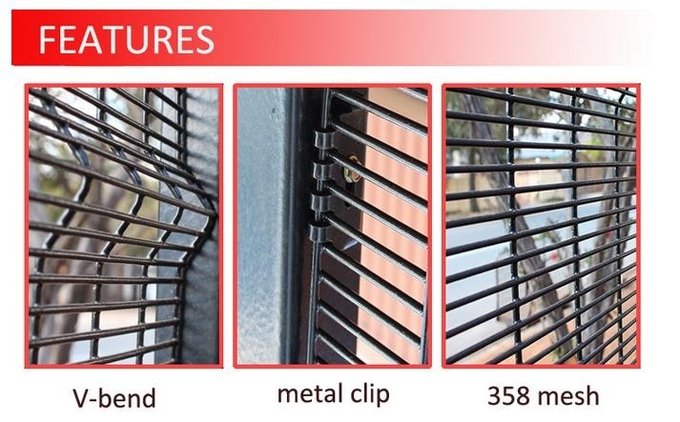
358 galvanized mesh fencing offers several appearance and construction options. Different wire patterns, post systems, and coatings influence the finished installation. Buyers should compare actual product photographs with approved drawings.
 |
 |
| Consistent welded intersections support rigid panel geometry and reliable installation alignment. |
Protective surface finishes help steel fencing resist outdoor weather exposure. |
 |
 |
| Narrow horizontal wire spacing restricts ordinary climbing access through the mesh openings. |
Selected V-bend configurations introduce geometric depth into welded steel security panels. |
 |
 |
| Accurate fabrication helps maintain panel dimensions and compatible fastening arrangements. |
Proper metallic coatings help reduce corrosion on exposed steel surfaces. |
 |
 |
| Compatible structural posts and fasteners contribute to stable perimeter assemblies. |
Finished galvanized panels require careful handling to preserve their protective surfaces. |
358 Galvanized Mesh Fencing for Durban's Coastal Environment
358 galvanized mesh fencing can protect warehouses and industrial facilities around Durban. The city's coastal climate exposes outdoor steel to humidity and airborne salt. Port operations also require controlled boundaries around valuable cargo.
Marine Corrosion and Steel Protection
Salt deposits may increase corrosion risks near exposed waterfront locations. Suitable metallic coatings help reduce steel deterioration. Maintenance teams should inspect post bases and fastening components.
Port Security and Warehouse Operations
Durban's logistics facilities manage cargo, machinery, and vehicle movement. Unauthorized access can create financial and operational risks. Rigid security mesh helps define controlled storage areas.
358 Galvanized Mesh Fencing Near Shipping Terminals
358 galvanized mesh fencing provides narrow openings while maintaining surveillance visibility. Security teams can coordinate cameras with access-control systems. Suitable gates support normal operations.
Projects requiring alternative panel configurations may also use ClearVu fence panels. Buyers should compare actual wire dimensions and protective finishes.
358 Galvanized Mesh Fencing for Cape Town
358 galvanized mesh fencing installations around Cape Town face varied wind and coastal exposure. Outdoor security systems require suitable corrosion protection and structural engineering.
Wind Loading Considerations
Strong winds can impose bending forces on fence posts. Taller panels may create greater structural demands. Engineers should verify posts and foundations.
Salt Exposure Along the Coast
Marine air can deposit salts on exposed steel. Appropriate coatings help reduce corrosion risks. Regular inspections support long-term performance.
Commercial and Residential Applications
Business properties may prefer black or green security mesh. These finishes can complement building exteriors. Open mesh preserves useful visual connections across boundaries.
358 Galvanized Mesh Fencing for Gauteng Industry
358 galvanized mesh fencing also suits inland industrial locations such as Johannesburg and Pretoria. Warehouses, logistics compounds, and manufacturing facilities require controlled access around valuable assets.
Warehouse Protection
Storage facilities manage goods, equipment, and commercial vehicles. Security mesh can help establish monitored boundaries. Gate systems support authorized access.
Industrial Equipment Areas
Factories may require restricted zones around machinery and technical installations. Welded steel fencing supports visible separation. Engineering approval remains important near operating equipment.
Commercial Property Security
Office and business properties often value clear perimeter visibility. Selected powder coatings provide a restrained architectural appearance. Lighting and surveillance can supplement the physical barrier.
358 Galvanized Mesh Fencing for Mining Facilities
358 galvanized mesh fencing can support mining compounds and remote industrial installations. Valuable machinery and infrastructure often require strong access control. Maintenance logistics also influence material selection.
Equipment Storage Compounds
Mining companies may store valuable equipment within controlled yards. Rigid security mesh creates a physical boundary. Authorized vehicle gates support operational access.
Electrical Infrastructure
Substations and technical systems require protection against unauthorized entry. Appropriate fencing helps establish restricted areas. Electrical safety requirements remain essential.
Corrosion and Industrial Contaminants
Industrial dust and chemical exposure may affect protective finishes. Buyers should evaluate coating suitability for actual conditions. Maintenance plans should address vulnerable areas.
Remote Maintenance Planning
Remote projects may experience long replacement lead times. Compatible spare hardware reduces installation and repair difficulties. Accurate drawings help maintenance teams identify components.
358 Galvanized Mesh Fencing Security Applications
358 galvanized mesh fencing supports facilities requiring restricted access and practical visibility. Each application presents different operational and safety considerations.
Correctional Facilities
Prisons need controlled boundaries and effective observation. Narrow mesh can discourage ordinary climbing. Additional security systems may improve perimeter monitoring.
Airport Infrastructure
Airports require secure separation between public and restricted areas. Welded security fencing supports access management. Applicable aviation requirements determine final specifications.
Electrical Substations
Electrical facilities contain potentially hazardous equipment. Strong fences help restrict unauthorized entry. Designers must account for earthing and electrical clearances.
Industrial Warehouses
Storage properties often hold valuable materials and machinery. Security mesh supports monitored boundaries. Compatible gates help manage vehicle movement.
Water Treatment Facilities
Water infrastructure includes pumps, controls, and operational equipment. Security fencing helps define restricted zones. Maintenance access remains important.
Educational Institutions
Selected schools need controlled boundaries that maintain visibility. Designers should prioritize public safety and emergency access. Hazardous security toppings may be inappropriate.
Commercial Developments
Modern properties may prefer visually unobtrusive boundaries. Welded mesh combines security with a relatively open appearance. Color selection can complement surrounding architecture.
358 Galvanized Mesh Fencing Installation Planning
358 galvanized mesh fencing installation requires accurate site measurements and suitable foundations. Structural support depends on panel size, wind loading, and ground conditions. Contractors should follow approved technical drawings.
Step 1: Survey the Perimeter
Measure the boundary and identify gates, corners, and terrain changes. Check underground utilities before excavation.
Step 2: Determine Post Centres
Use manufacturer drawings to calculate installed spacing. Panel width does not always equal post centre distance.
Step 3: Prepare Foundations
Excavate according to structural requirements. Soil conditions and imposed loads influence foundation dimensions.
Step 4: Install Steel Posts
Position posts vertically and confirm their alignment. Temporary support may help during concrete placement.
Step 5: Mount Mesh Panels
Use suitable lifting equipment for large panels. Align panel edges before fastening. Protect coatings against unnecessary damage.
Step 6: Secure Brackets
Install compatible brackets and security bolts. Follow approved tightening procedures. Inspect connections for correct assembly.
Step 7: Complete Final Inspection
Verify panel alignment, coating condition, and gate operation. Repair damaged surfaces before project handover.
Contractors working with related systems can review ClearVu fence installation methods. Actual 358 connection details must follow approved drawings.
358 Galvanized Mesh Fencing Quantity Calculation
358 galvanized mesh fencing procurement starts with accurate fence measurements. A complete schedule includes panels, posts, brackets, gates, and fastening components.
Measure the Effective Fence Length
Record each straight boundary section separately. Deduct vehicle and pedestrian gate openings.
Confirm Installed Bay Spacing
Use the approved panel and bracket arrangement. Different panel widths may require different post centres.
Calculate Panel Quantities
Divide each straight run by its installed module. Review remaining lengths for special panels.
Calculate Post Positions
A straight run normally requires one more post than its number of bays. Shared corners alter final quantities.
Determine Bracket Requirements
Use the original fixing schedule for the selected panel height. Different configurations require different bracket quantities.
Example: 300-Metre Straight Perimeter
Consider a straight 300-metre fence line. Assume an approved installed module of 3.0 metres for illustration.
| Calculation |
Illustrative Quantity |
| Total Fence Length |
300 m |
| Assumed Installed Spacing |
3.0 m |
| Number of Bays |
100 |
| Panel Quantity |
100 |
| Post Positions |
101 |
| Brackets |
According to the Selected Panel Schedule |
| Gate Components |
Excluded from This Example |
This calculation uses an illustrative module rather than a universal installation dimension. Actual quantities depend on approved drawings and connection geometry.
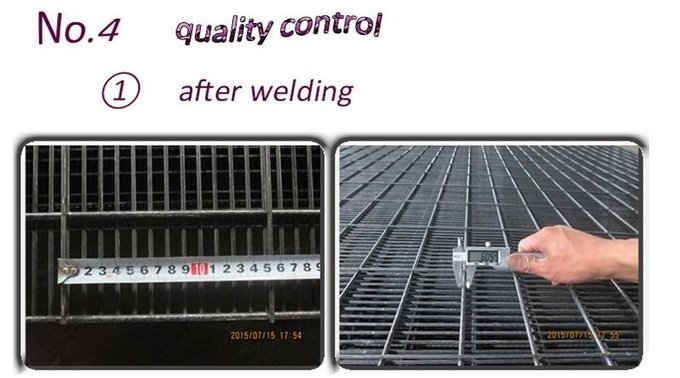
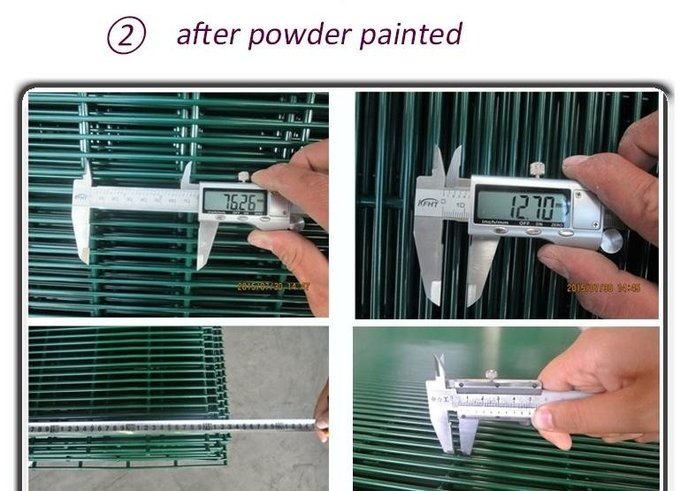
358 Galvanized Mesh Fencing Quality Control
358 galvanized mesh fencing quality depends on accurate wire dimensions, consistent welding, and suitable coatings. Buyers should agree on inspection requirements before manufacturing.
| Inspection Item |
Recommended Verification |
| Wire Diameter |
Measure horizontal and vertical steel wires. |
| Mesh Centres |
Verify the specified wire spacing. |
| Weld Quality |
Inspect intersections and agreed test results. |
| Panel Dimensions |
Check height, width, and squareness. |
| V-Bend Geometry |
Confirm bend count and positions. |
| Steel Posts |
Verify dimensions and wall thickness. |
| Brackets |
Check compatibility and quantities. |
| Zinc Coating |
Verify the agreed coating specification. |
| Powder Coating |
Inspect appearance, thickness, and adhesion where required. |
| Packaging |
Check protective materials and load stability. |
358 Galvanized Mesh Fencing Weld Inspection
358 galvanized mesh fencing requires consistent welded intersections. Incomplete joints can reduce panel rigidity. Manufacturing teams should follow appropriate inspection procedures.
Coating Thickness Verification
Metallic coating mass and film thickness represent different properties. Buyers should select the correct inspection method for each finish.
Dimensional Accuracy
Accurate dimensions simplify installation and reduce adjustment work. Manufacturing tolerances should follow the purchase agreement.
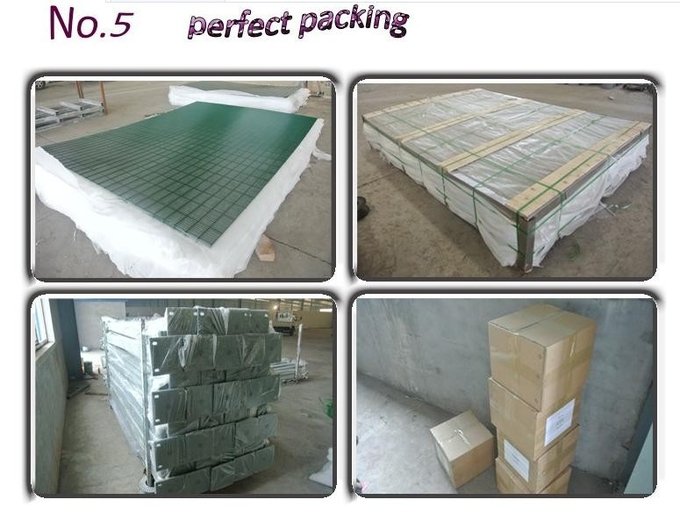
358 Galvanized Mesh Fencing Packaging and Export
358 galvanized mesh fencing requires suitable protection during factory handling and international transport. BMP can arrange wooden or steel pallets with protective wrapping.
Panel Stacking
Secure stacking helps prevent movement and deformation. Protective separators reduce surface contact between coated panels.
Pallet Protection
Strong pallets support organized lifting operations. Reinforced corners can help protect vulnerable areas.
Plastic Film Wrapping
Protective film helps limit contamination and abrasion. Correct strapping prevents unnecessary cargo movement.
Accessory Packaging
Posts, brackets, fasteners, and caps require clear identification. Accurate packing lists simplify destination inspections.
Container Loading
Shipping teams must consider panel dimensions and total cargo weight. Suitable restraints reduce movement during transportation.
358 Galvanized Mesh Fencing Maintenance
358 galvanized mesh fencing requires periodic inspections despite its corrosion-resistant finish. Maintenance needs depend on exposure conditions and physical damage.
Inspect Protective Coatings
Check for scratches, corrosion, and damaged surfaces. Use compatible repair materials where necessary.
Examine Steel Fasteners
Loose connections may reduce security performance. Replace damaged hardware with compatible components.
Maintain Perimeter Visibility
Vegetation can obstruct cameras and inspection routes. Keep critical areas clear according to site procedures.
Check Foundation Stability
Ground movement and erosion may affect supporting posts. Investigate unusual movement promptly.
358 Galvanized Mesh Fencing Manufacturer Warranty
358 galvanized mesh fencing products may qualify for BMP's 15-year manufacturer warranty under applicable contractual terms. Coverage depends on the confirmed product specification.
Customers should review maintenance obligations and warranty exclusions. Regular inspections remain important throughout service.
358 Galvanized Mesh Fencing Cost Factors
358 galvanized mesh fencing costs depend on wire diameter, panel dimensions, coatings, and structural accessories. Buyers should compare complete technical specifications before selecting suppliers.
Steel Consumption
Thicker wires increase raw material requirements. Different mesh patterns may also affect panel mass.
Panel Dimensions
Taller and wider panels generally consume more material. Structural support requirements may increase.
Protective Finish
Electrogalvanizing, hot-dip galvanizing, and alloy coatings involve different manufacturing processes. Compatible polyester coatings add another production step.
Accessories
Posts, brackets, security fasteners, and gates influence total project costs. Panel-only pricing may exclude essential components.
Freight and Installation
Shipping routes, cargo dimensions, foundations, and labor affect the installed cost. Buyers should confirm delivery responsibilities.
Early budgeting may benefit from comparing Clear View fence price per meter information. Actual quotations depend on the selected technical specifications.
358 Galvanized Mesh Fencing Common Purchasing Mistakes
358 galvanized mesh fencing purchases may encounter avoidable problems when specifications remain incomplete. Detailed technical communication helps reduce these risks.
Confusing Different Mesh Patterns
Traditional 358 geometry differs from 101.6 × 12.7 mm variants. Buyers should verify the intended aperture.
Ignoring Wire Diameter
Different wire combinations change material consumption and panel behavior. Quotations should use equivalent specifications.
Selecting Inadequate Posts
Post sections must support the selected panels. Structural approval should consider wind and foundation conditions.
Mixing Coating Systems
Different metallic finishes require different manufacturing methods. Buyers should specify the complete coating sequence.
Excluding Bracket Quantities
Missing accessories can delay installation. A complete material schedule reduces procurement errors.
Assuming Maintenance-Free Performance
Outdoor steel still needs routine inspections. Environmental exposure and accidental damage can affect coating durability.
358 Galvanized Mesh Fencing Frequently Asked Questions
What does 358 mean?
The designation represents three inches, half an inch, and eight-gauge wire. Traditional mesh uses approximately 76.2 × 12.7 mm centres.
Is every 3D panel a traditional 358 panel?
No. Some variants use alternative horizontal spacing. Buyers should verify actual mesh geometry.
Why does galvanized mesh resist corrosion?
Zinc provides protective barrier and sacrificial effects. Performance depends on coating quality and exposure conditions.
What is Galfan?
Galfan commonly contains approximately 95% zinc and 5% aluminium. This alloy offers useful corrosion-protection characteristics.
What is the difference between ST2 and ST5?
ST2 references polyester coating over pre-galvanized material. ST5 uses polyester coating over hot-dip galvanized surfaces.
Can the fence resist climbing?
Narrow openings discourage ordinary climbing attempts. Complete security also depends on gates and surrounding conditions.
Does BMP offer V-bend panels?
Yes. BMP's reference range includes several V-bend configurations with different heights.
Which post types are available?
Options include square, rectangular, IPE-style, and C-shaped profiles. Final sections require technical confirmation.
Can customers order black fencing?
Selected powder-coated systems offer black finishes. Customers should specify their preferred RAL color.
Is the system suitable for coastal areas?
Appropriate protective coatings can help manage marine corrosion. Buyers should assess local exposure conditions.
Can the fence protect warehouses?
Yes. Security mesh can support controlled industrial boundaries. Cameras and gates provide additional protection.
Does the system require maintenance?
Yes. Regular inspections help identify corrosion, loose fasteners, and structural damage.
How should contractors calculate panel quantities?
Use approved installed spacing and actual perimeter measurements. Gates and corners affect final quantities.
What determines the shipping cost?
Cargo weight, panel dimensions, container utilization, and destination influence freight charges.
What information helps BMP prepare a quotation?
Provide fence length, panel dimensions, mesh spacing, wire diameter, coating requirements, and destination. Technical drawings improve accuracy.
Why Choose BMP for 358 Galvanized Mesh Fencing?
358 galvanized mesh fencing projects require accurate technical specifications and consistent manufacturing procedures. BMP supplies welded security panels, structural posts, protective finishes, and accessories.
Our team can review panel dimensions, coating systems, bracket arrangements, and export requirements. Clear communication helps reduce manufacturing and installation problems.
Projects requiring related support components may also use ClearVu fence posts where technical compatibility permits. Temporary pedestrian management can involve crowd control barriers outside permanent security zones.
These products serve different operational purposes. Buyers should confirm their complete system specifications before procurement.
Conclusion: 358 Galvanized Mesh Fencing from BMP
358 galvanized mesh fencing combines narrow welded openings, strong steel construction, and corrosion-protection options for demanding security projects. Different mesh configurations and finishes offer flexibility for industrial and commercial applications.
Successful installations depend on compatible posts, secure brackets, suitable foundations, and professional construction. Routine maintenance also supports long-term reliability.
BMP offers multiple panel heights, post profiles, and protective finishes for international customers. Our team can review project drawings and delivery requirements.
Contact BMP to discuss your 358 galvanized mesh fencing project and request a technical quotation.