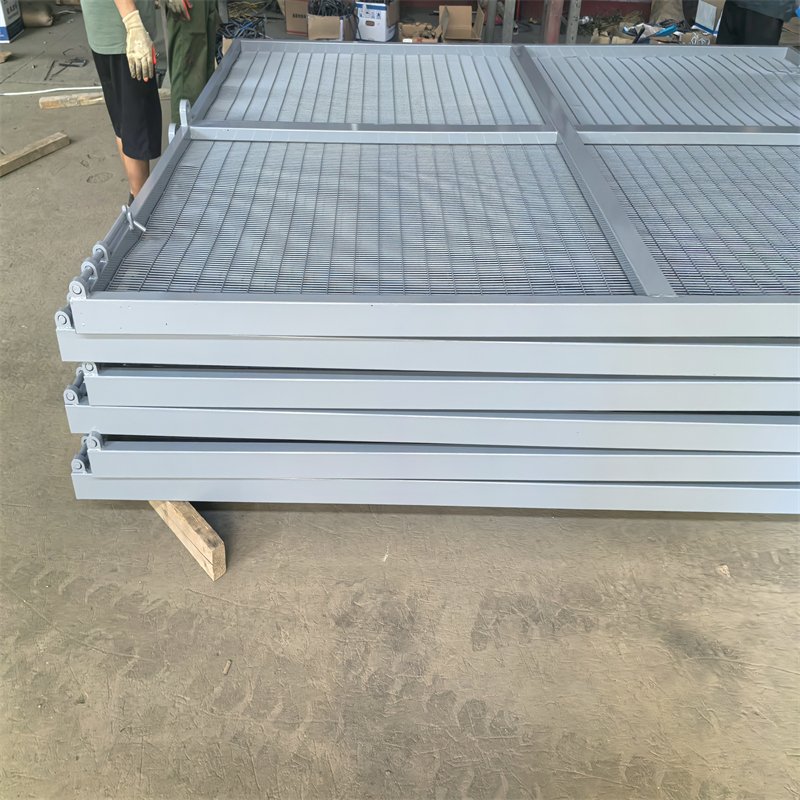
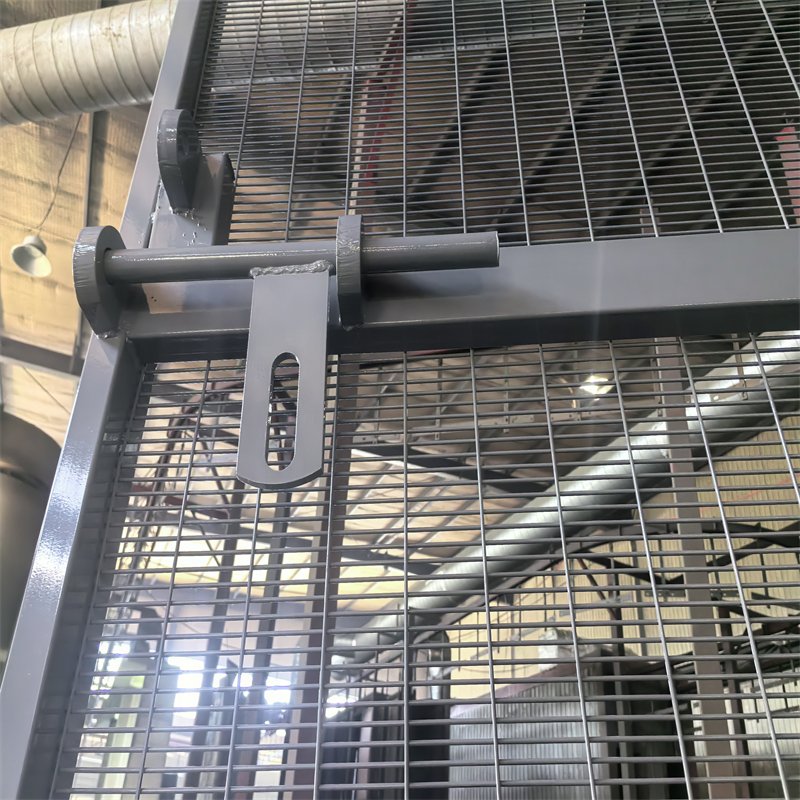
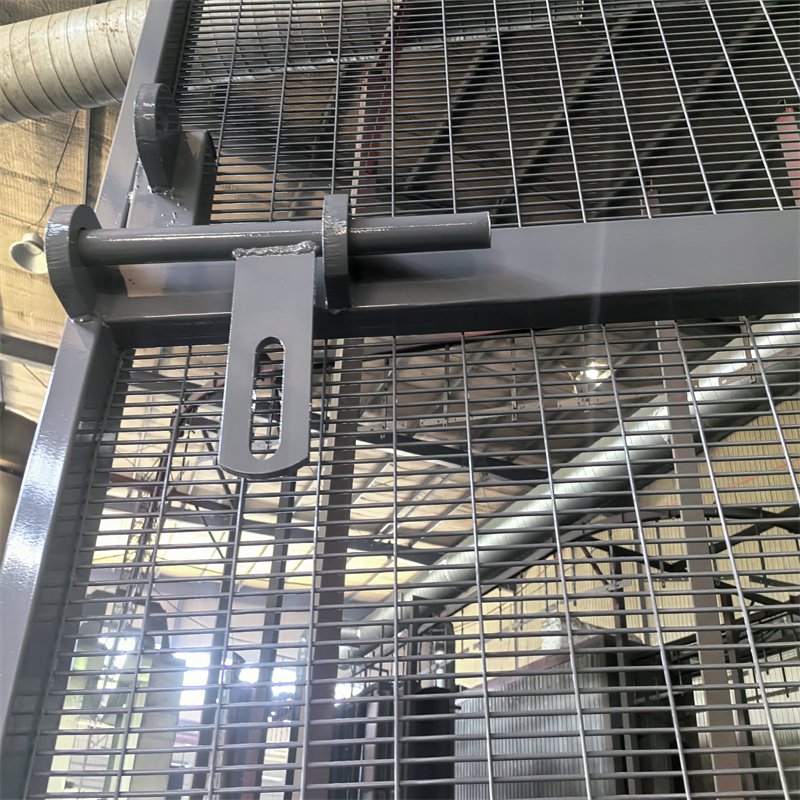
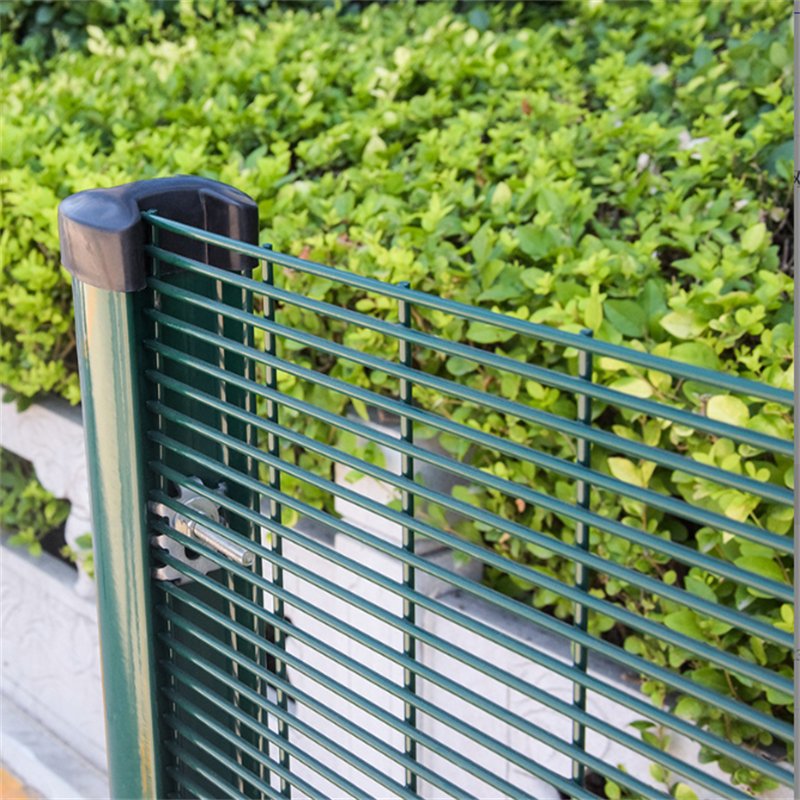
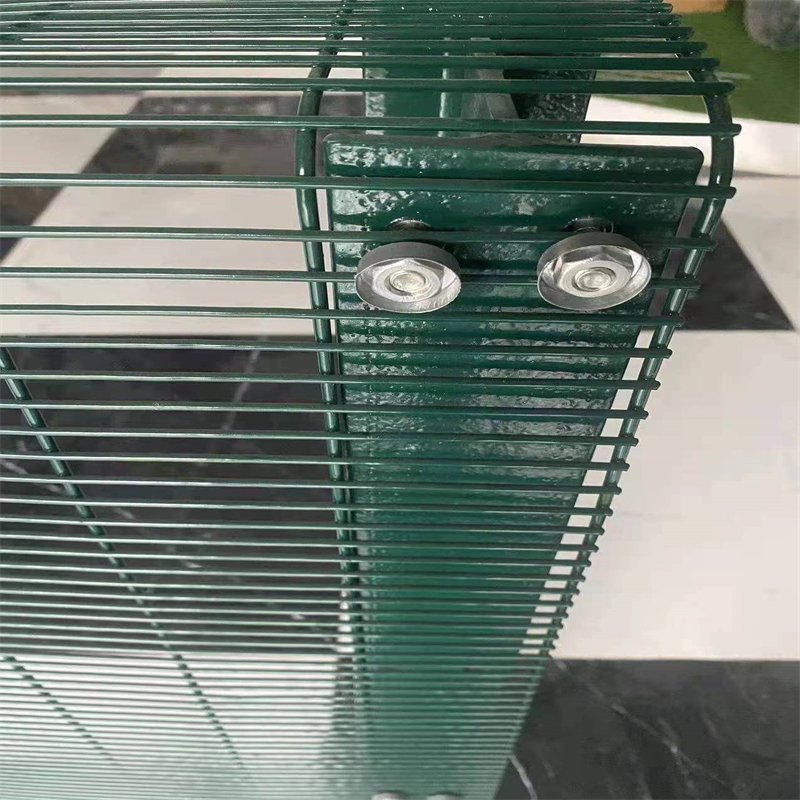
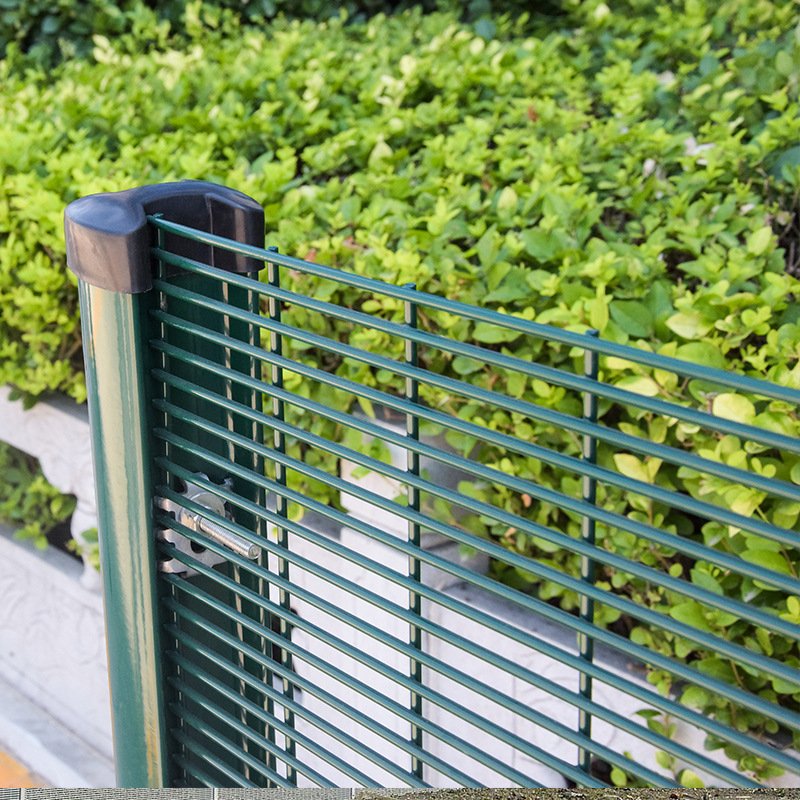
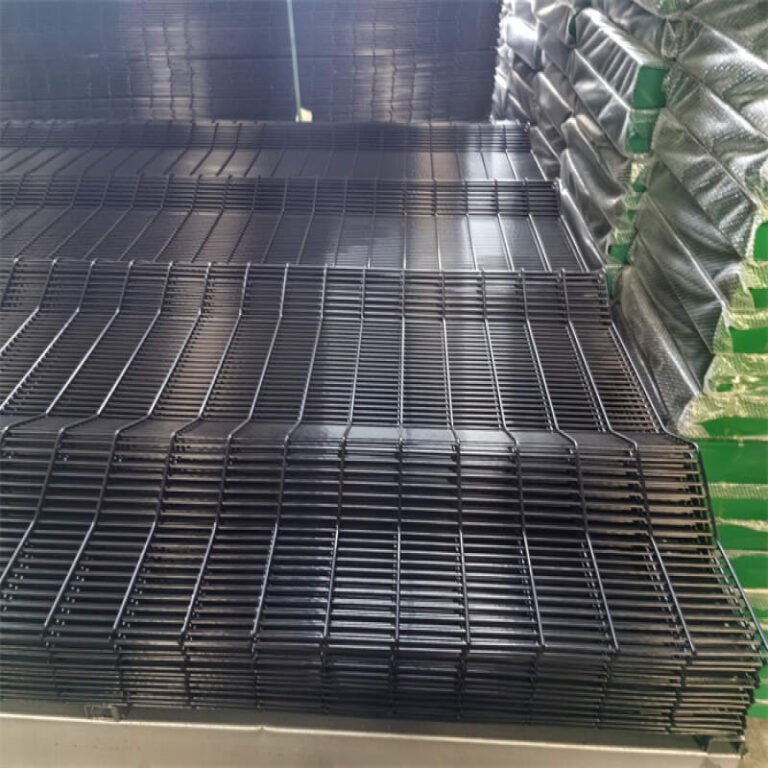
Description Clearvu Fence Galvanised Epoxy Coating: How the Layers Protect Steel
Clearvu fence galvanised epoxy coating describes a corrosion-protection approach combining zinc-coated steel with a compatible epoxy coating system. For outdoor fencing, an epoxy primer may sit beneath a weather-resistant polyester topcoat. BMP can review such multilayer finishes against an approved project specification.
The finish matters because welded security mesh presents thousands of intersections, edges, and exposed connections. Moisture can enter damaged coating areas and reach the supporting steel. A good design therefore considers the substrate, pretreatment, primer, topcoat, and maintenance together.
Buyers selecting Clear View Fence Panels should request the exact coating sequence, rather than the word epoxy alone. Some Clear Vu Fence projects require a complete duplex specification. An attractive coloured surface cannot prove the zinc thickness beneath it. Laboratory results must identify the tested product and method.
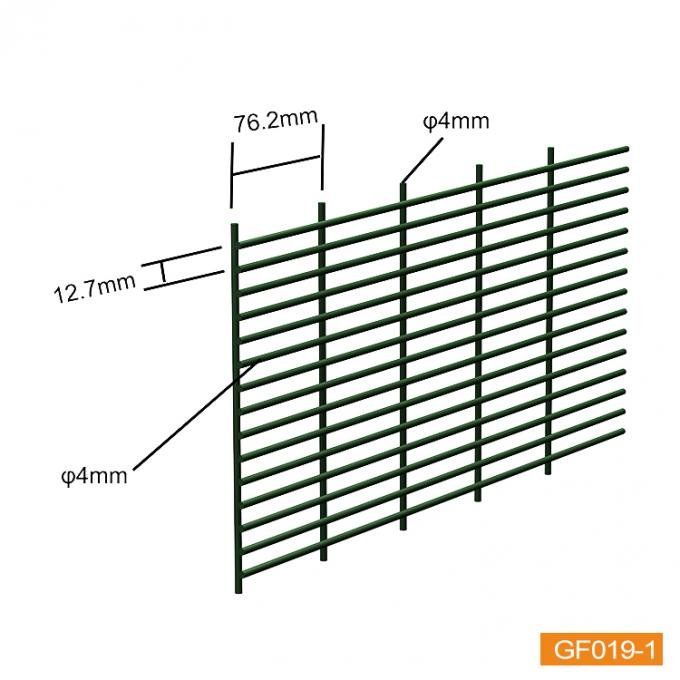 |
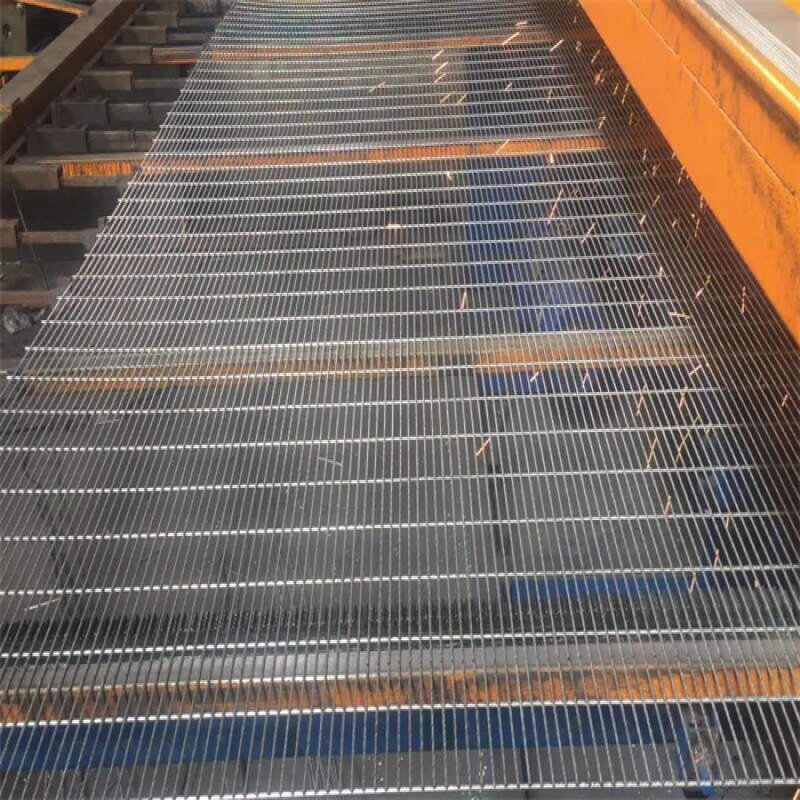
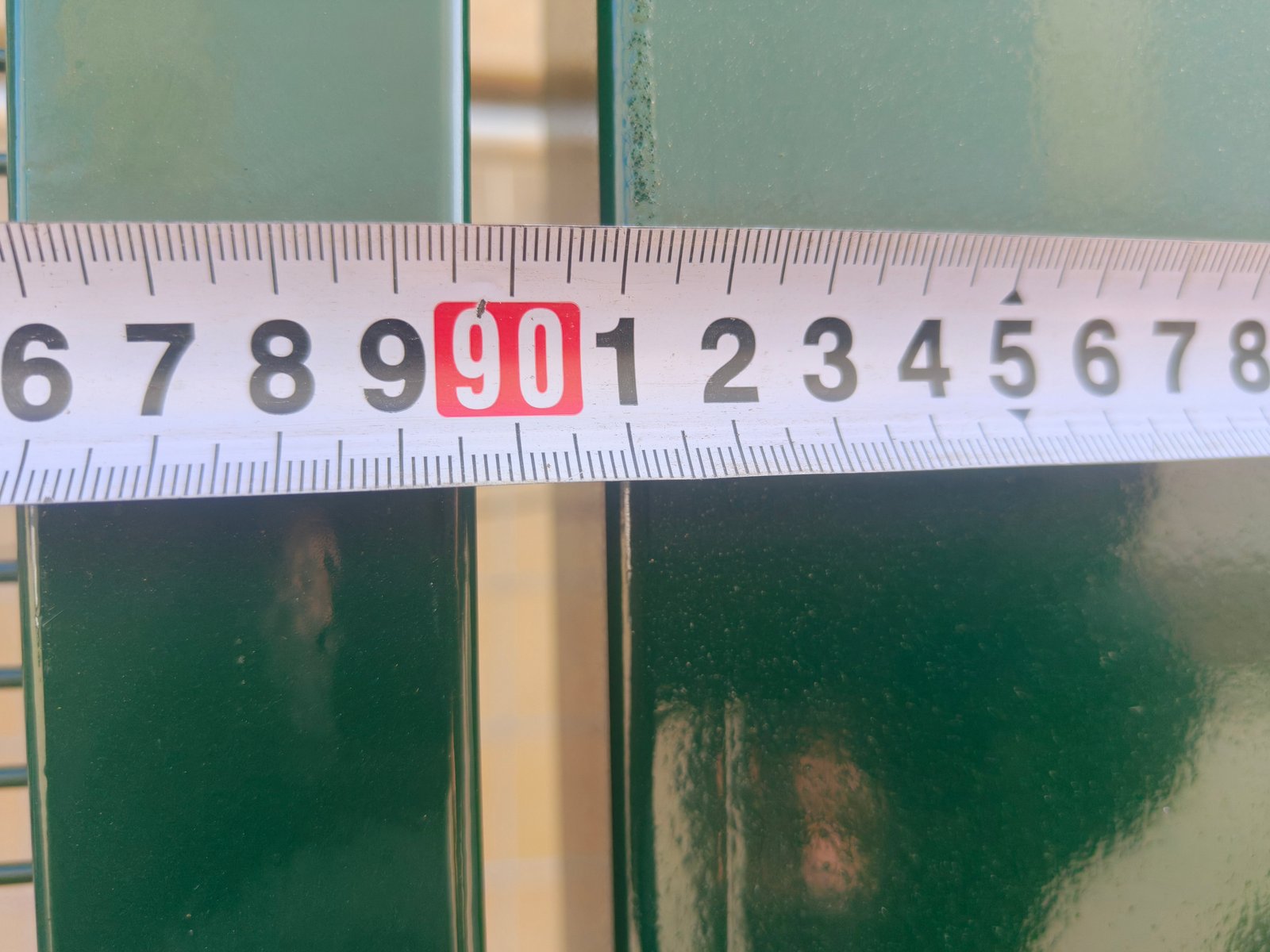
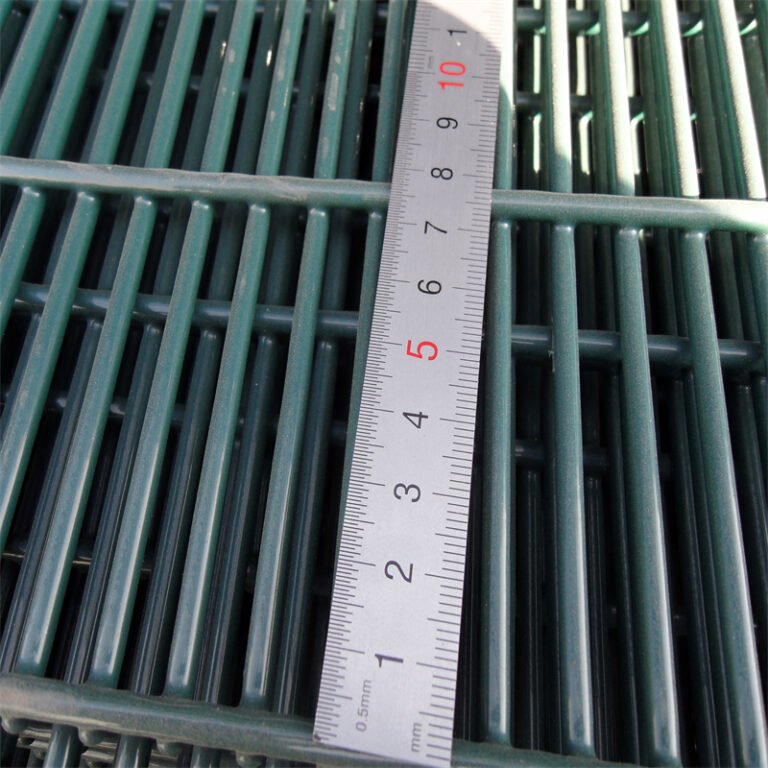
| Original BMP mesh diagram: dimensions describe wire centres, not the clear space between coated wires. |
Galvanizing, Epoxy Primer and Polyester Are Different Materials
Zinc coatings help protect steel through a metallic barrier and sacrificial action. Epoxy primers can improve the protective barrier when the substrate preparation and compatibility are correct. Polyester topcoats provide a more suitable outdoor colour layer than unprotected general-purpose epoxy.
Not every galvanized fence receives three layers. Some projects specify zinc protection alone, while others choose galvanized steel with one polyester finish. A genuine three-stage arrangement needs separate documented layers and an approved application process.
Clearvu Fence Galvanised Epoxy Coating Versus Basic Powder Coating
Basic powder-coated products may use pre-galvanized wire and a polyester layer. Another system starts with batch-galvanized finished steel components. A specified epoxy primer can add an intermediate barrier, subject to application compatibility.
Powder Coated Clear View Fence options include several zinc and polymer combinations. The number of applied coats affects cost, inspection scope, and expected performance. Buyers should compare written specifications instead of appearance alone.
Why Exposed Epoxy Is Not the Ideal Outdoor Colour Coat
Many conventional epoxy finishes lose gloss or chalk under prolonged ultraviolet exposure. That behaviour limits their suitability as an exposed decorative topcoat. An appropriate exterior polyester layer can improve weathering and colour retention.
Epoxy chemistry varies, so the coating manufacturer's technical sheet takes priority. Hybrid epoxy-polyester products also differ from separate epoxy primer and polyester topcoat systems. Ask which chemistry the supplier will actually use.
Clearvu Fence Galvanised Epoxy Coating Layer Sequence
Contractors should understand the application order before approving a coating quotation. Zinc protection comes first on the relevant steel component. Surface preparation then creates suitable conditions for an approved primer or exterior coating.
| Stage |
Reference Process |
Purpose |
Evidence to Request |
| 1. Steel substrate |
Low-carbon welded mesh or formed steel post |
Provides structural material |
Material grade and dimensional check |
| 2. Zinc protection |
Approved pre-galvanizing, Galfan, or batch hot-dip galvanizing |
Helps resist steel corrosion |
Relevant zinc coating measurement |
| 3. Surface preparation |
Cleaning and approved conversion treatment or controlled sweep blasting |
Promotes subsequent coating adhesion |
Process log and cleanliness checks |
| 4. Optional epoxy primer |
Compatible epoxy primer where specified |
Adds a protective intermediate coating |
Primer technical sheet and measured film |
| 5. Exterior topcoat |
Compatible UV-resistant polyester or approved exterior system |
Provides colour and weather protection |
Topcoat grade, curing record, and film thickness |
| 6. Final inspection |
Coating condition, adhesion, edges, fittings, and packing |
Confirms the agreed finish |
Inspection records matching each batch |
This sequence illustrates a possible system rather than a universal factory formula. Some products require different pretreatments, baking schedules, or degassing procedures. Obtain coating-manufacturer approval for each combined system.
Clearvu Fence Galvanised Epoxy Coating Surface Preparation
Newly galvanized surfaces may carry oils, passivation residues, zinc compounds, or contaminants. These materials can undermine adhesion when workers coat an unprepared surface. Suitable preparation may include cleaning, zinc phosphating, or controlled abrasive treatment.
Excessive blasting can damage the protective zinc layer. Uncontrolled curing may create pinholes or trapped-gas defects. The plant should follow an established galvanized-steel coating procedure.
Spotting Pinholes, Blisters and Poor Adhesion
Pinholes can arise when gas escapes during powder curing. Blisters may indicate contamination, moisture, or incompatible pretreatment. Flaking can expose zinc and later the steel substrate.
Inspect dense weld intersections and deep post recesses carefully. These shapes present difficult coating surfaces and possible moisture traps. Factory photographs should complement actual coating checks.
Clearvu Fence Galvanised Epoxy Coating and Mesh Specifications
Coating selection should never obscure the fence's underlying steel geometry. Standard ClearVu designs use tight welded openings, with several wire grades available. The source reference includes widths of 3305 mm and multiple finished heights.
For a typical close grid, ClearVu Fence Panels use the 76.2 × 12.7 mm centre reference. Alternative products may vary in wire diameter or strengthening bends. Confirm the physical mesh before specifying coating thickness.
Clearvu Fence Galvanised Epoxy Coating on 358 Mesh
The 358 designation reflects approximately three-inch by half-inch centres and eight-gauge wire. Actual clear openings become smaller than the nominal pitch. Coatings also change the measured wire diameter slightly.
Dense meshes discourage easy climbing while maintaining useful visibility. However, camera placement and lighting still influence surveillance. A fine aperture does not eliminate every security risk.
| Original Panel Size, W × H |
Mesh Centres |
Wire Combination |
Reference V-Bands |
Edge Formation |
| 3305 × 1800 mm |
76.2 × 12.7 mm |
3 / 3 mm |
4 × 50 mm |
2 × 70° × 75 mm plus 2 × 30°, or 2 × 90° × 50 mm |
| 3305 × 2000 mm |
76.2 × 12.7 mm |
3 / 4 mm |
4 × 50 mm |
Same reference options |
| 3305 × 2100 mm |
76.2 × 12.7 mm |
4 / 4 mm |
4 × 50 mm |
Same reference options |
| 3305 × 2400 mm |
76.2 × 12.7 mm |
4 / 4.5 mm |
4 × 50 mm |
Same reference options |
| 3305 × 3000 mm |
76.2 × 12.7 mm |
5 / 6 mm |
4 × 50 mm |
Same reference options |
These original wire combinations are catalogue references, not a single mandatory design. ClearVu Fence Panels can use other approved diameters. Final drawings must define the vertical and horizontal diameters. More steel changes panel weight and transport requirements.
Panel Edges and Coating Coverage
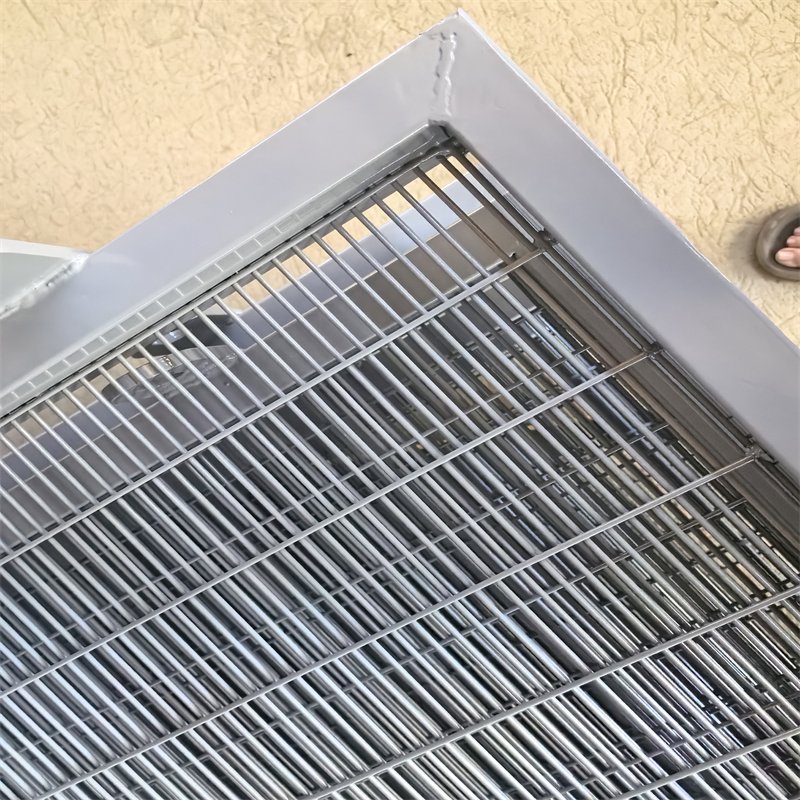
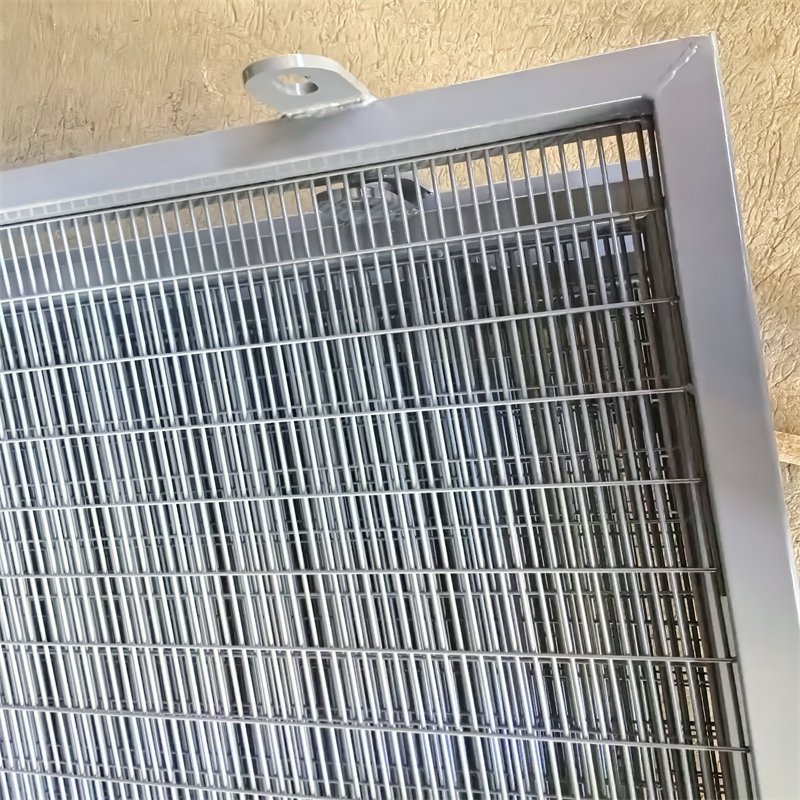
V-bends add rigidity but create narrow internal surfaces around their transitions. Folded edges also require careful application and inspection. The factory should examine these regions during finishing.
Builders choosing ClearVu Mesh should inspect corner geometry and welded edges before dispatch. Sharp transport contact can scratch the finish. Protective pallet separators help limit abrasion.
Clearvu Fence Galvanised Epoxy Coating for Tapered Posts
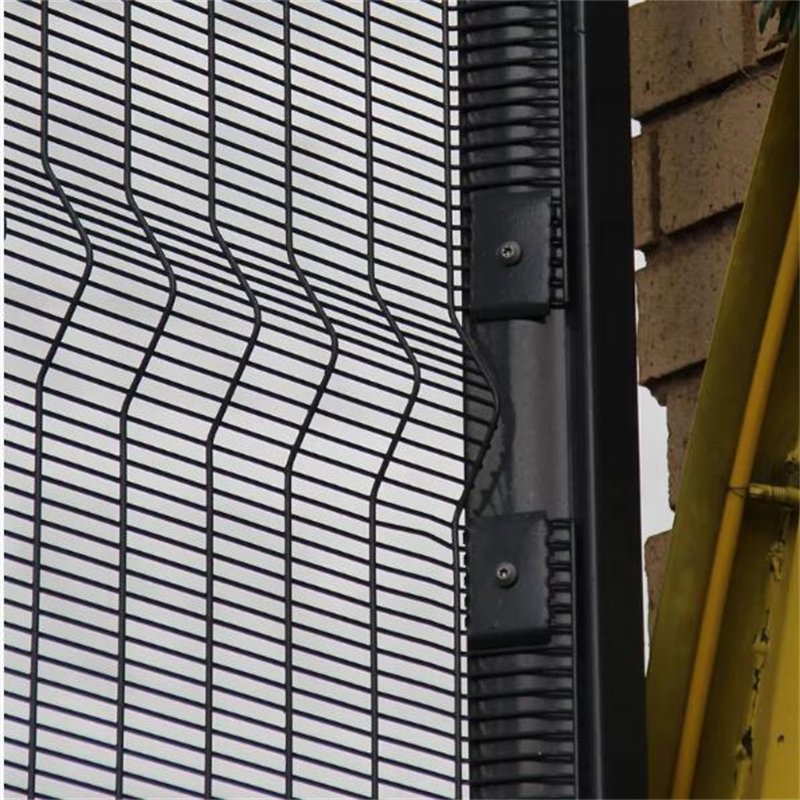
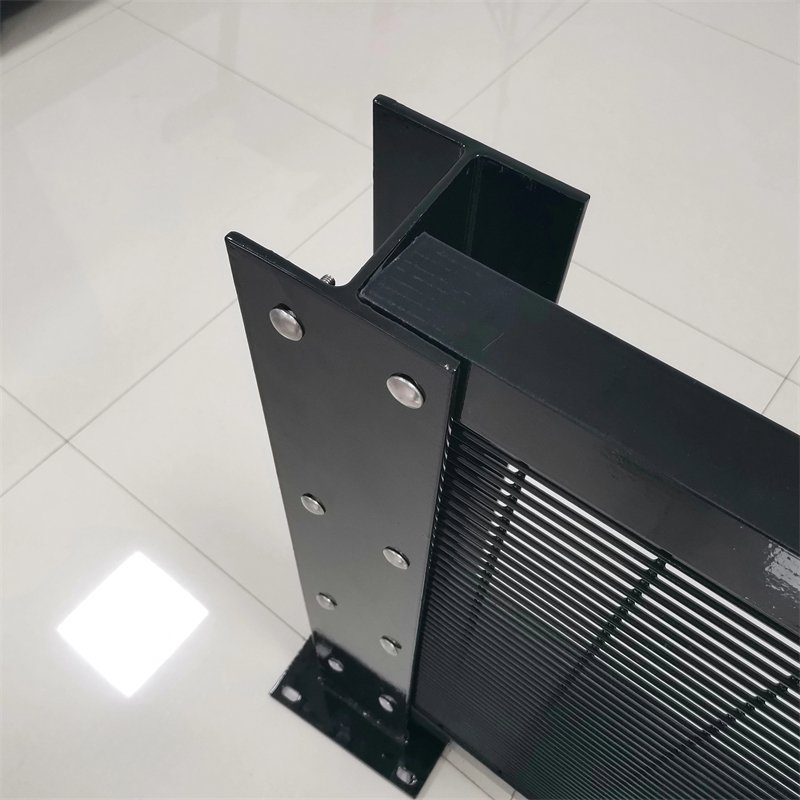
Panels need compatible steel posts to carry wind and contact loads. Tapered profiles introduce recessed fixing surfaces that complicate coating access. Internal surfaces deserve attention where moisture can collect.
The original source lists 85 × 85 × 45 mm and 150 × 75 × 150 mm tapered post configurations. It also gives alternative post-centre distances of 3390 mm and 3455 mm. These depend on the chosen post geometry.
| Reference Post Item |
Catalogue Value |
Buyer Confirmation |
| Panel widths |
3305 mm |
Approve actual installed width and overlap |
| Tapered post A |
85 × 85 × 45 mm |
Check wall thickness and lock recess |
| Tapered post B |
150 × 75 × 150 mm |
Check actual cross-section drawing |
| Post centres, A |
3390 mm |
Verify finished connection arrangement |
| Post centres, B |
3455 mm |
Verify finished connection arrangement |
| Post length options |
2.4 / 2.6 / 2.7 / 3.0 / 3.6 m |
Engineer embedment and foundation details |
| Top closure |
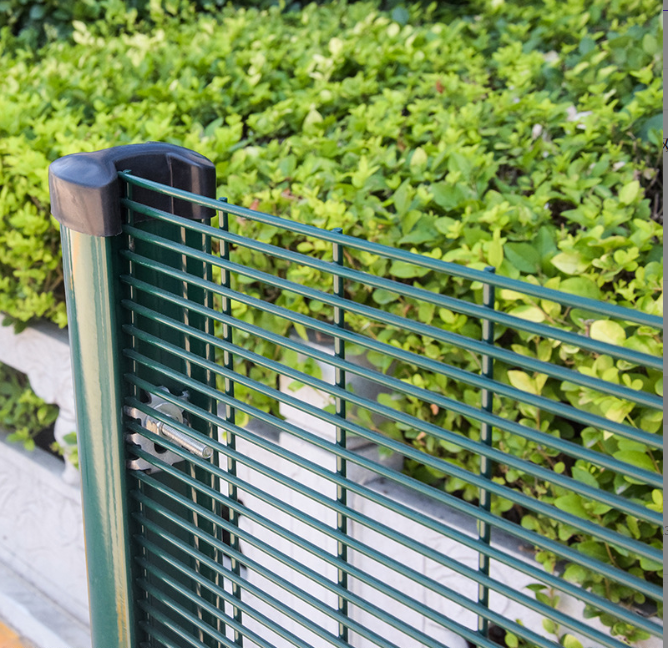
Polymer or compatible steel cap |
Confirm watertight fit and UV resistance |
Post length does not follow panel height through a universal formula. Wind loads, soil conditions, gates, and slopes may demand different steel sections. A qualified designer should review the actual installation.
Coating Inside Recesses and Hollow Profiles
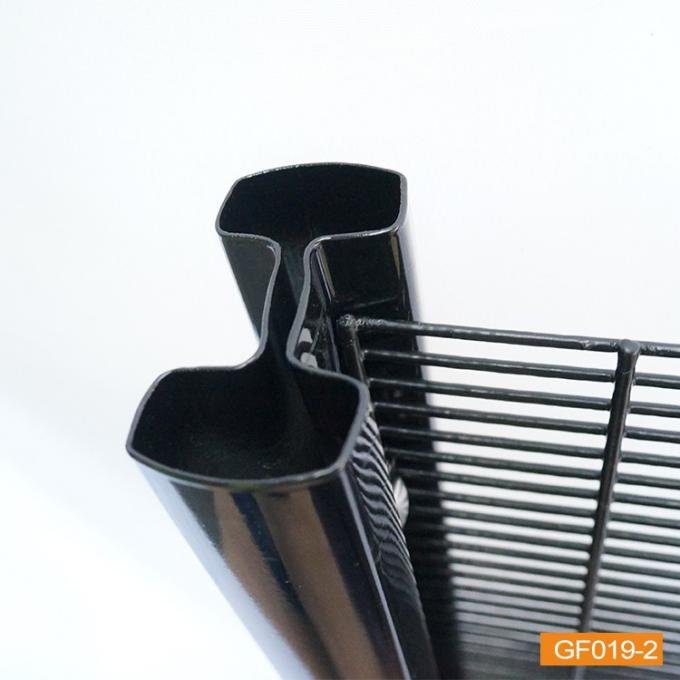
Open recesses can retain contaminants that weaken coating adhesion. Hollow steel sections also need suitable drainage or closed caps. Galvanizing process requirements differ between continuous wire and fabricated posts.
ClearVu Fencing IPE Post systems use other flange geometries. Their coating and fastening details require separate approval. Avoid treating every I-shaped profile as identical.
 |
 |
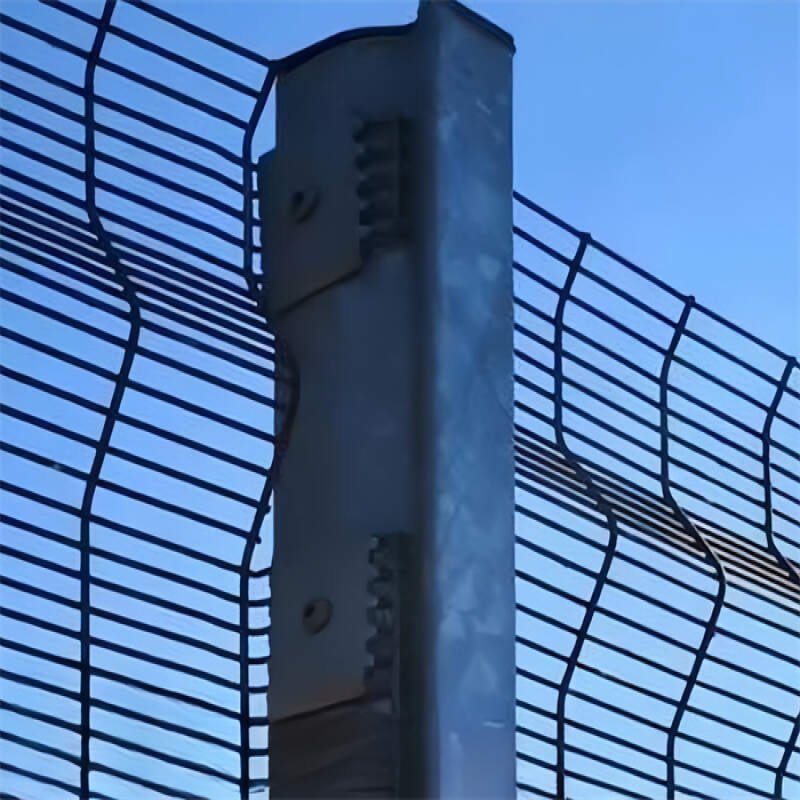
| BMP post detail: inspect the coating within shaped steel profiles. |
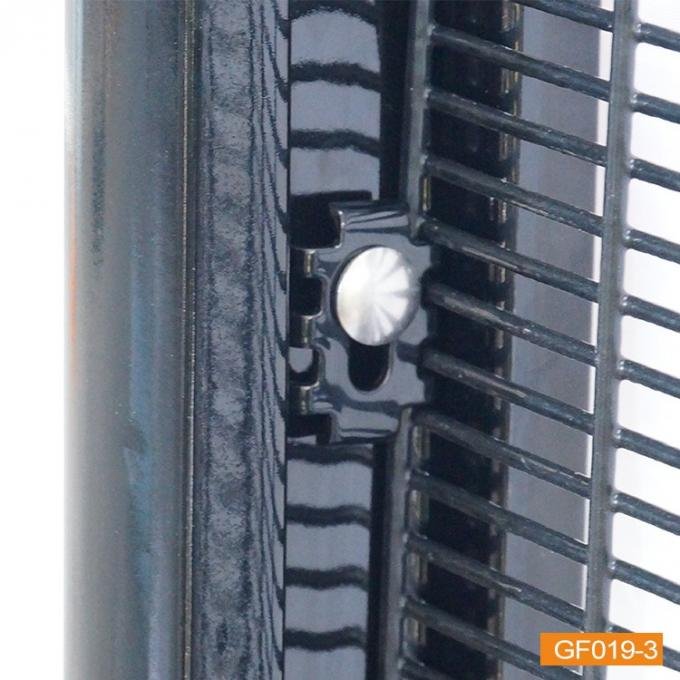
BMP fixing detail: inspect edges, bolt areas, and finish coverage. |
Galvanizing and Epoxy on Clamps, Bolts and Gates
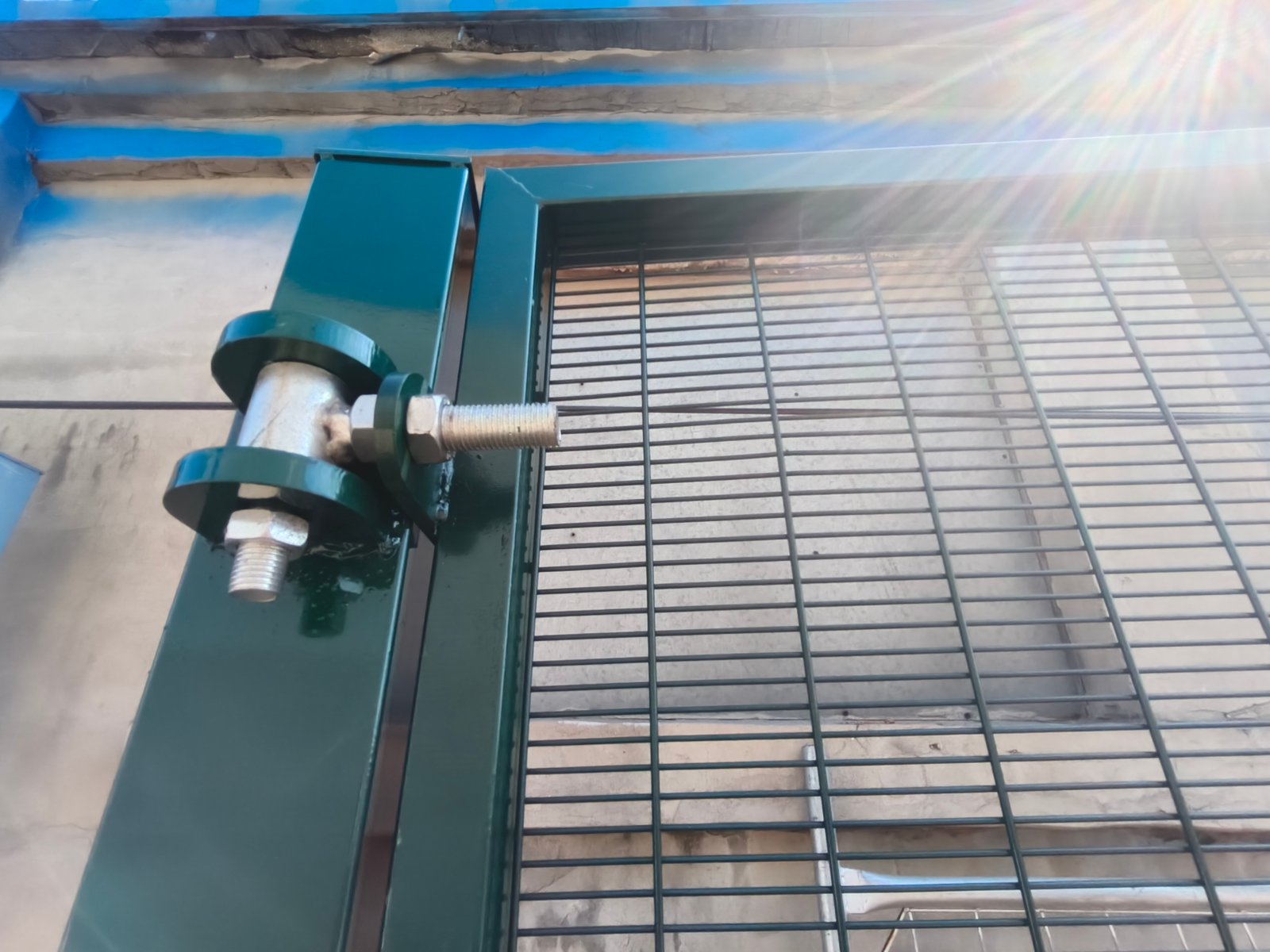
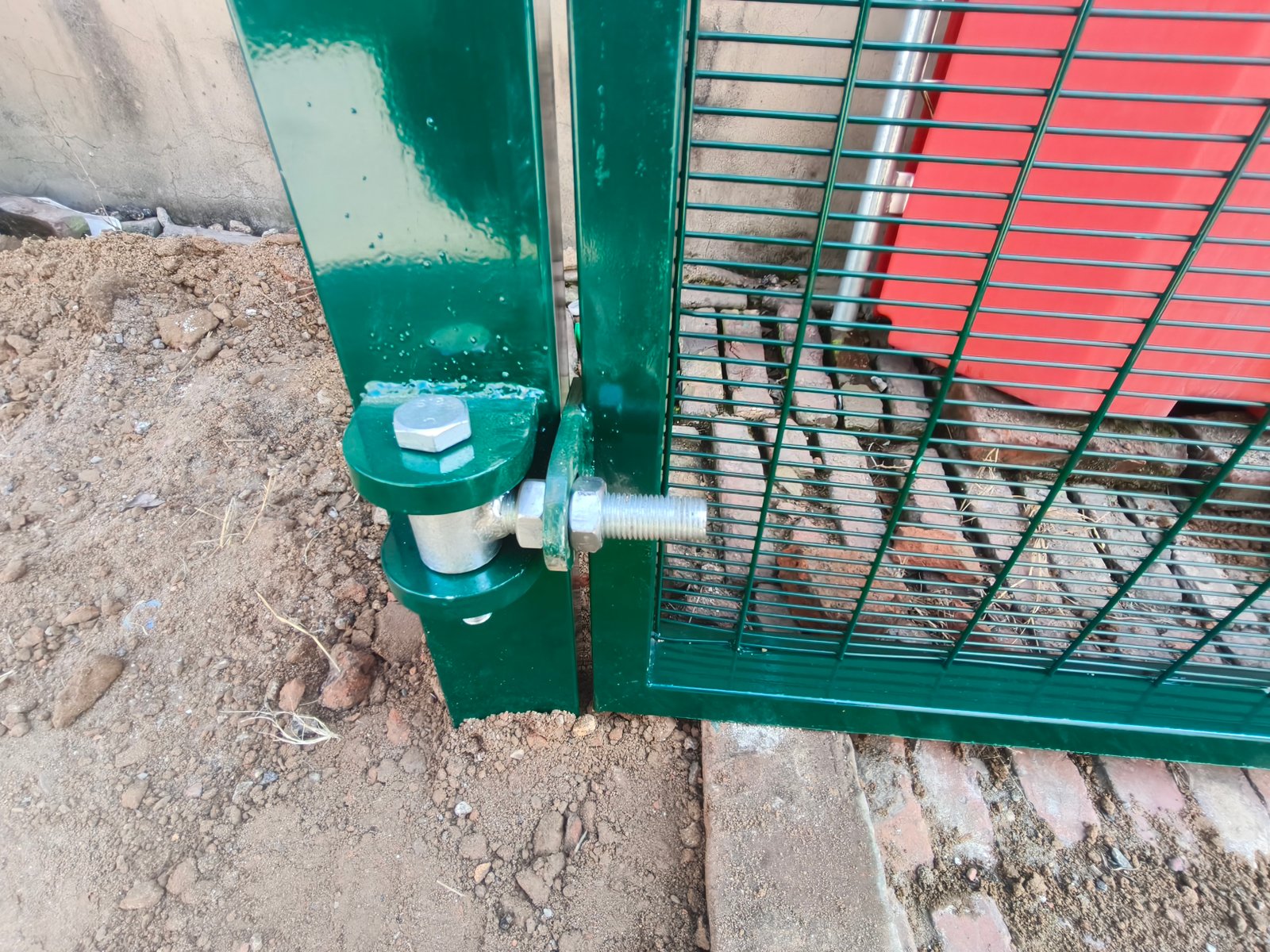
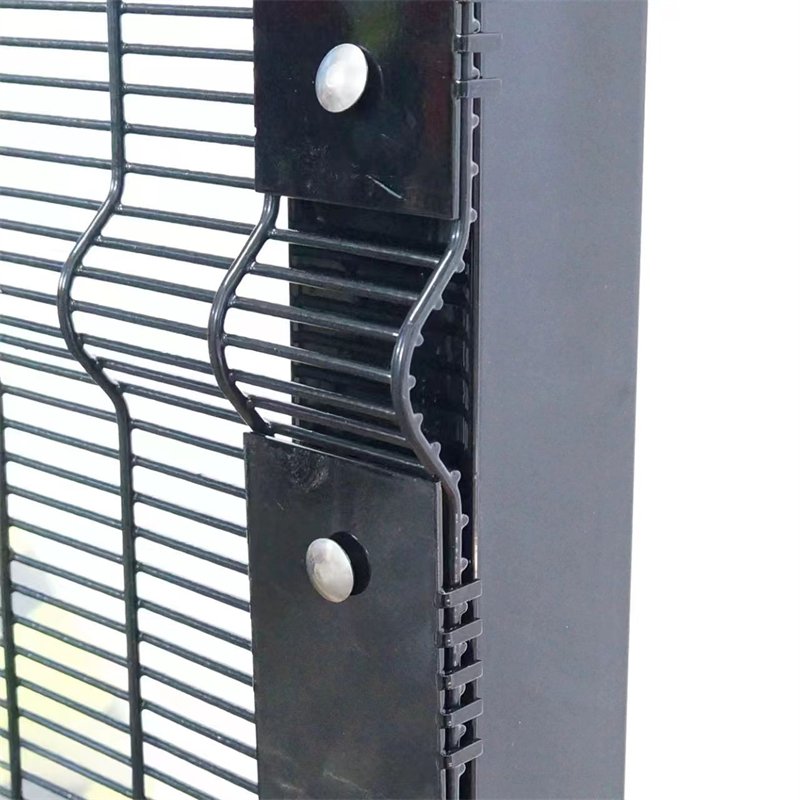
Clamps, bolts, and gate hardware expose edges that may see frequent contact or maintenance. Metal fittings need corrosion protection compatible with the main fence. Repeated tightening can also damage painted surfaces.
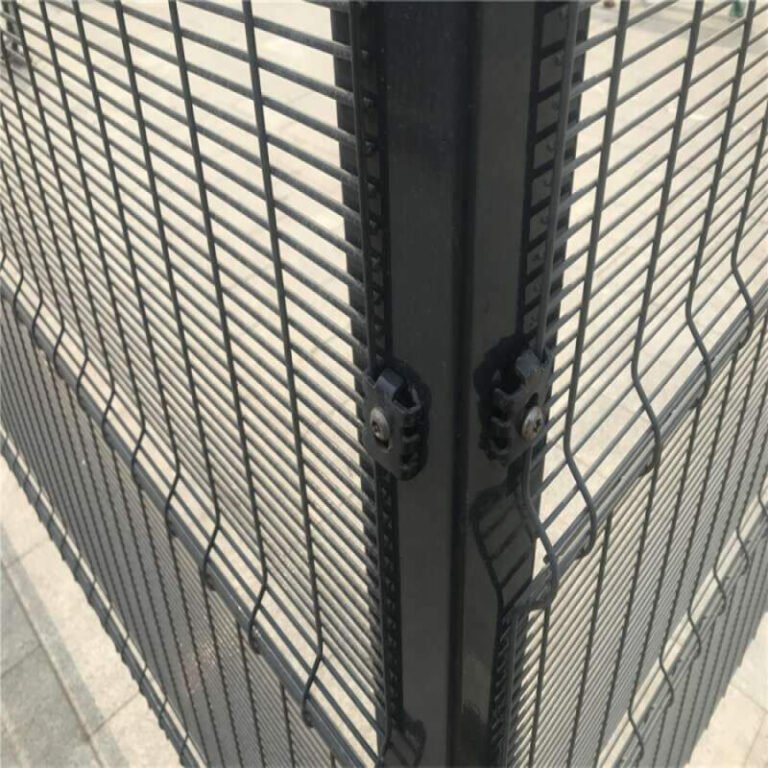
Some ClearVu Fence Clamps use single or double security bolts. Their protective finish should suit the chosen post material. Fastener corrosion can undermine an otherwise durable panel finish.
Clearvu Fence Galvanised Epoxy Coating Clamp Specifications
| Original Clamp Type |
Plate Dimensions |
Thickness |
Hardware |
Check Before Ordering |
| Single-bolt clamp |
50 × 76 mm |
3–5 mm |
One 8 mm bolt; 25 mm reference length |
Confirm exact bolt type and zinc coating |
| Double-bolt clamp |
50 × 165 mm |
3–5 mm |
Two 8 mm bolts; 25 mm reference length |
Confirm hole pitch and protected edges |
The source describes hot-dipped or black steel plates as material options. Black steel needs an approved finishing system before outdoor exposure. Clamp replacement should not require damaging the adjacent coating.
Gate Frames Need the Same Coating Logic
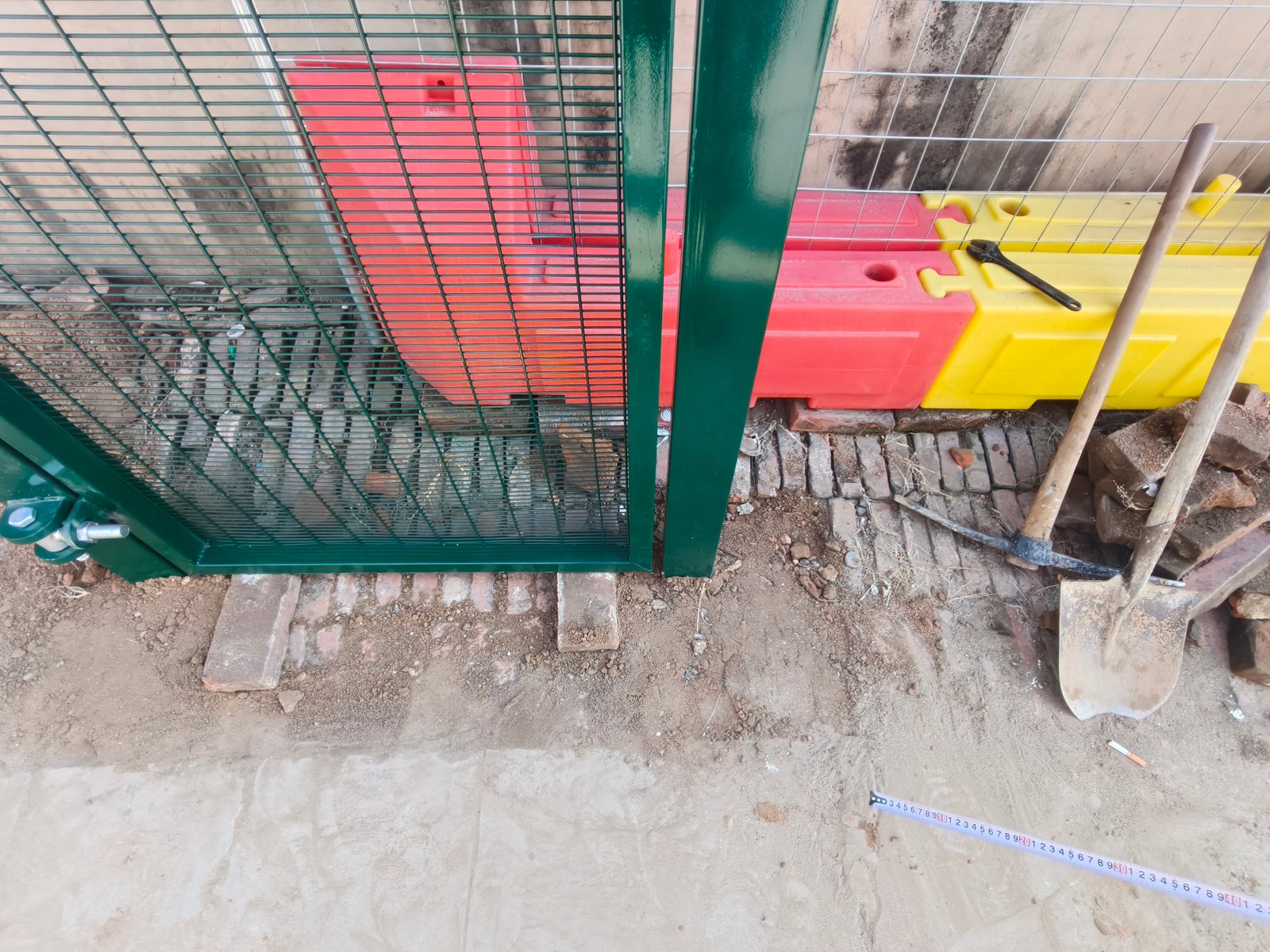
Clear View Fence Gate assemblies include hinges, stops, locks, and moving frames. These parts can trap water or encounter abrasion. Treat the complete gate schedule separately from the fixed panels.
Large ClearVu Fence Sliding Gates add tracks and rolling hardware. Mechanical wear may demand different protection at contact points. Do not powder-coat functional bearing surfaces without engineering approval.
Clearvu Fence Galvanised Epoxy Coating for Optional Wall Spikes
Sharp security toppings need compatible protective finishes and controlled public separation. The original reference describes three steel wall-spike options. These components require separate safety approval rather than automatic inclusion with every fence.
| Wall Spike Option |
Steel Plate Thickness |
Barb Length |
Pitch |
Base Width |
Original Packing |
| Small |
1 mm |
65 mm |
70 mm |
40 mm |
60 pieces per carton |
| Medium |
2 mm |
95 mm |
125 mm |
45 mm |
60 pieces per carton |
| Large |
2 mm |
110 mm |
78.3 mm |
50 mm |
30 pieces per carton |
Galvanized and stainless options appear in the source catalogue. Powder finishes need compatibility checks where the project requests colour. Do not place exposed sharp toppings beside ordinary child-accessible routes.
Clearvu Fence Galvanised Epoxy Coating in Coastal South Africa
Marine air creates a different corrosion environment from a sheltered inland commercial estate. Durban and Cape Town sites may accumulate salt on fencing near exposed waterfronts. Rain and humid conditions can keep deposits active.
A suitable zinc-plus-polymer system may improve long-term durability in such settings. Surface preparation remains critical around welds, folds, and fasteners. Choose the coating schedule after considering actual distance, exposure, and maintenance access.
Durban Port Yards and Salt-Laden Air
Coastal logistics yards combine salt exposure with forklift activity and moving vehicles. Protective finishes cannot stop structural damage from direct impacts. Install vehicle guards where drivers operate close to fence posts.
Inspect the lowest panel edges after rain and washdown operations. Dirt and trapped water can accelerate deterioration at existing scratches. Regular cleaning reduces deposits without replacing coating inspections.
Inland Gauteng and Industrial Condensation
Johannesburg and surrounding industrial areas experience different pollution, dust, and seasonal rainfall patterns. Indoor-outdoor temperature changes may also cause condensation near equipment compounds. Coating choices should match that particular exposure.
Drainage around base plates can matter more than the decorative colour. Maintain service access to bolts and recesses. A duplex coating should complement good construction detailing.
Clearvu Fence Galvanised Epoxy Coating Thickness and Adhesion Tests
Technical acceptance needs measurable criteria for each protective layer. Zinc mass and dry-film thickness use different units. A single total coating figure can conceal missing or incompatible process steps.
| Check |
Reason |
Requested Record |
| Zinc layer |
Confirms the metallic coating specification |
Coating mass or thickness test with appropriate standard |
| Pretreatment |
Supports adhesion on zinc-coated steel |
Approved process and batch log |
| Epoxy primer, if required |
Confirms application of the specified intermediate layer |
Product sheet and dry-film thickness record |
| Polyester topcoat |
Confirms exterior colour layer |
Film thickness, curing and colour inspection |
| Adhesion |
Checks layer bonding |
Agreed test method and acceptance level |
| Corrosion testing |
Evaluates the qualified test assembly |
Named test standard, duration, specimen and result |
Salt-spray hours cannot predict an exact number of outdoor service years. Field conditions differ across marine, industrial, and inland installations. Compare qualified systems with similar test conditions.
Clearvu Fence Galvanised Epoxy Coating Quality Records
Request actual test reports from the factory rather than unsupported numerical claims. Each certificate should identify its steel substrate and coating route. Sample preparation must match the supplied product where certification matters.
A ClearVu Fencing Specifications schedule helps collect post, mesh and clamp dimensions. The coating acceptance plan should accompany that schedule. Written confirmation reduces disputes over multiple coating layers.
What the Factory Should Show in Photographs
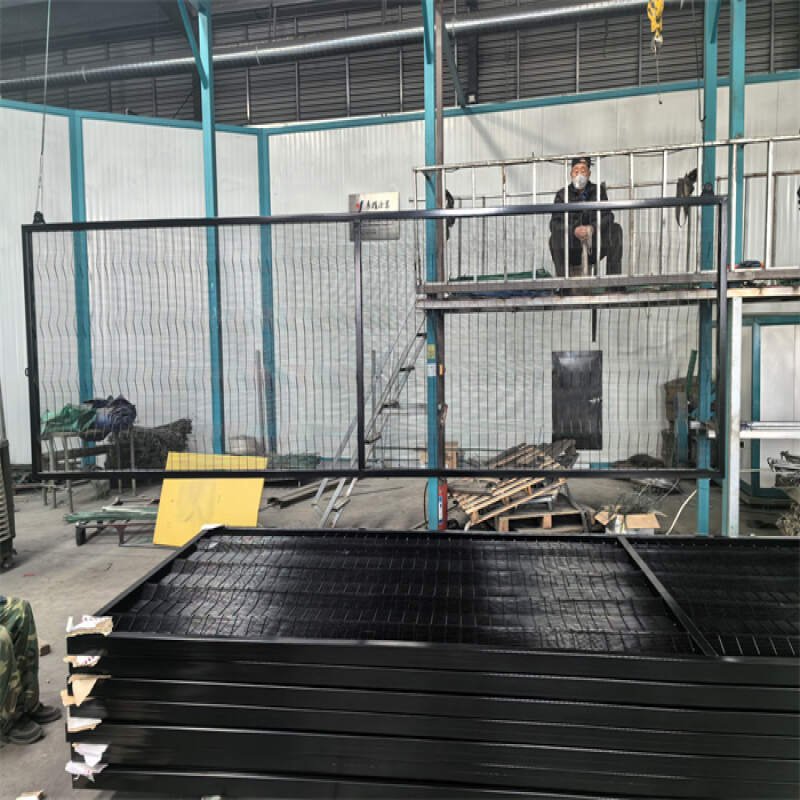
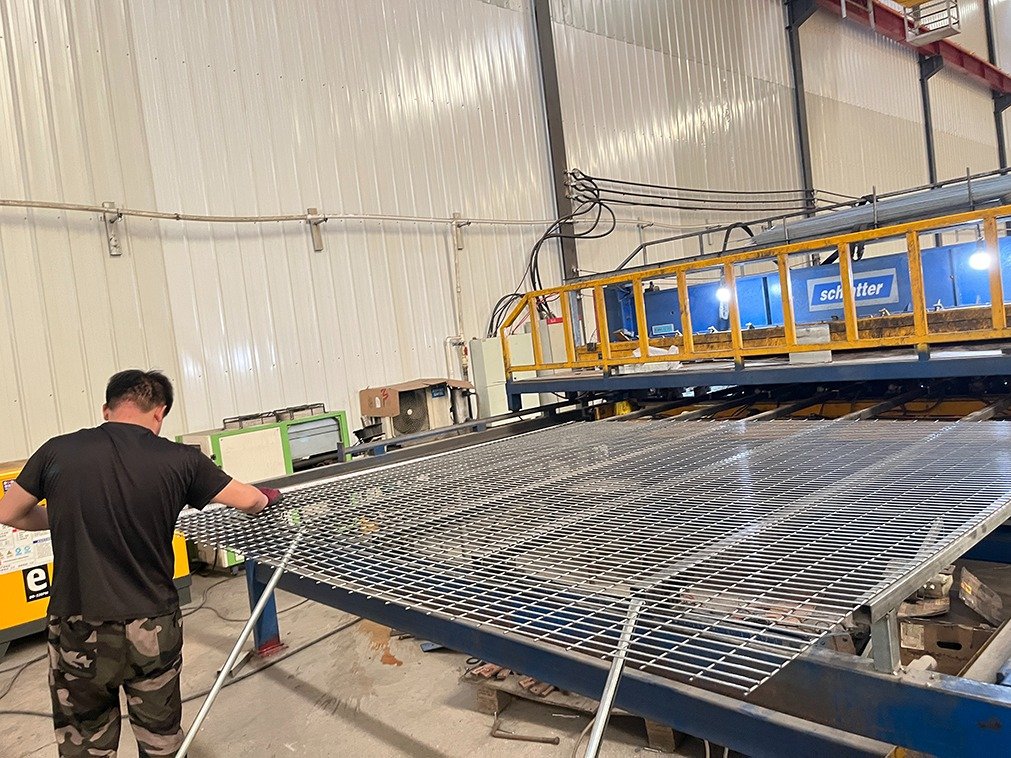
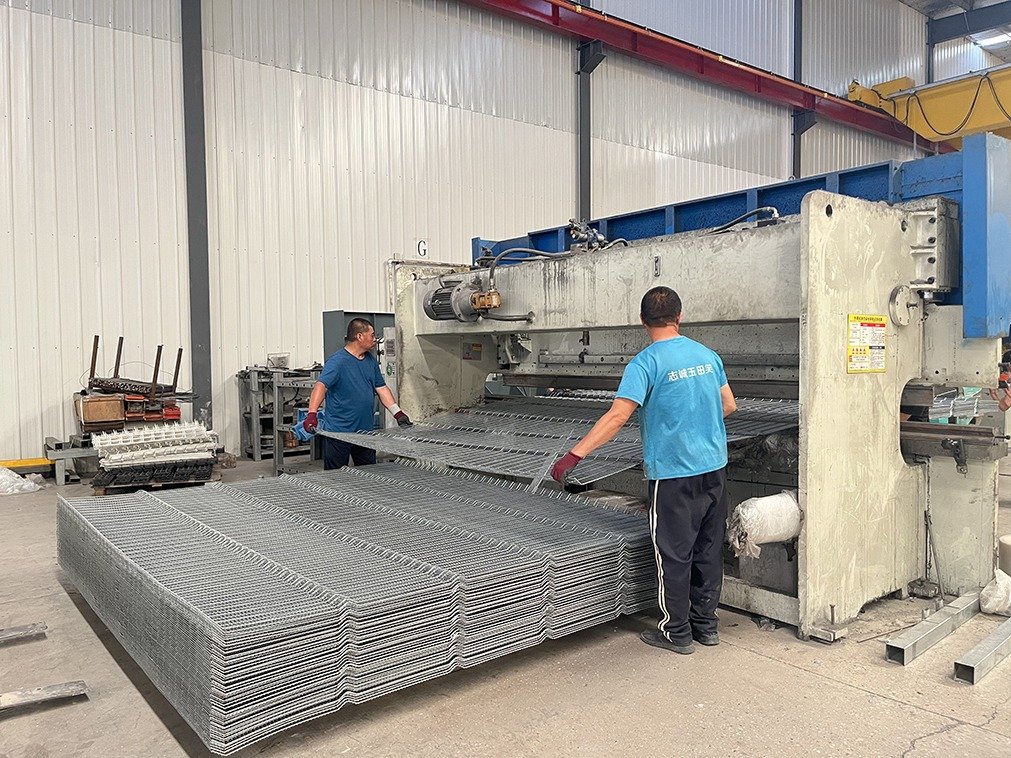
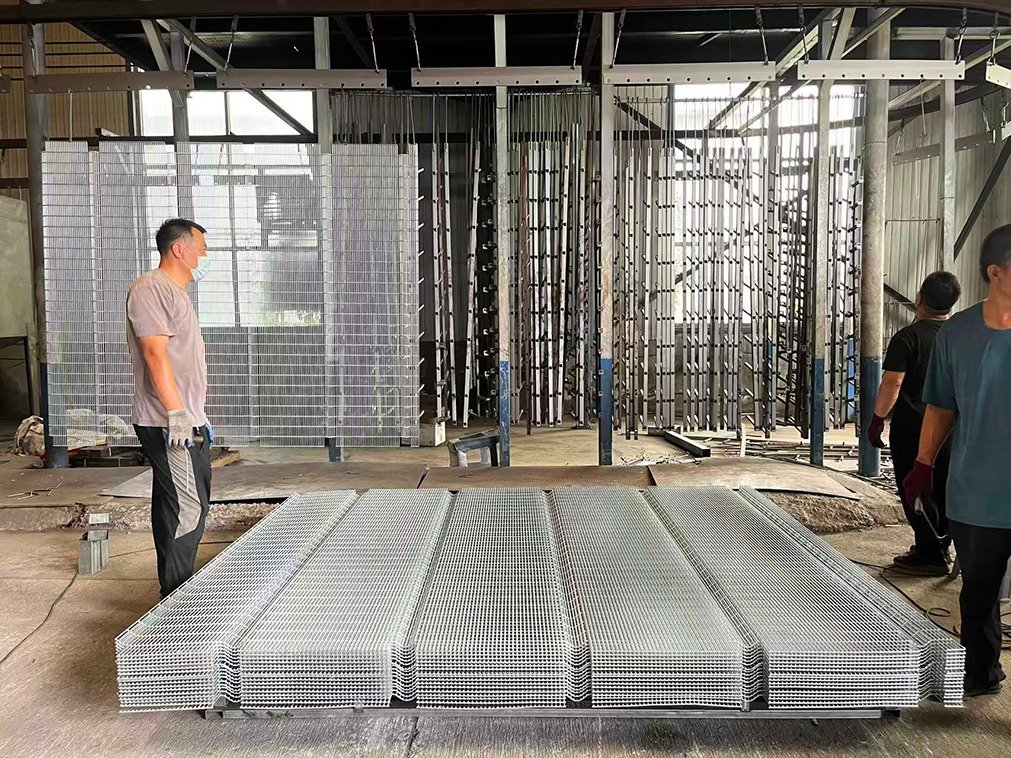
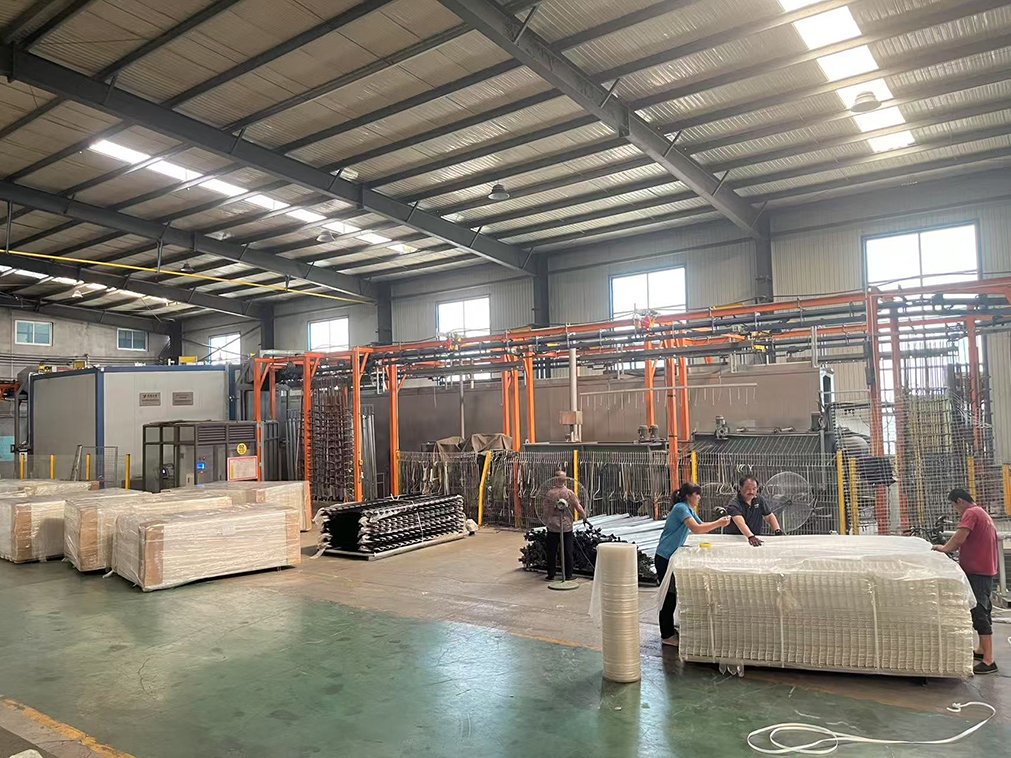
Photographs can document weld condition, coating appearance, colour, pallet protection, and completed assemblies. They cannot establish invisible primer thickness or zinc mass. Instruments and suitable reports must support those measurements.
Ask the factory to photograph a sample panel and its matching post. Include clamp installation details and any topcoat variations. Inspection evidence should match the approved purchase order.
Clearvu Fence Galvanised Epoxy Coating for Different Budget Levels
Extra protective layers can increase finishing time and total manufacturing cost. Their benefit depends on the exposure and verified coating system. An inland installation may not require the same construction as an exposed coastal compound.
ClearVu Fencing for Sale quotations may omit primers, zinc mass, or post treatment. Compare the same finished components before accepting a cost difference. Installation and maintenance can outweigh a small factory price saving.
| Finish Package |
Reference Structure |
What to Confirm |
| Zinc only |
Approved galvanized or zinc-aluminium steel |
Coating grade and welded-area coverage |
| Standard duplex |
Compatible galvanized substrate plus exterior polyester coating |
Pretreatment, adhesion, and topcoat thickness |
| Specified multilayer |
Galvanized substrate, compatible epoxy primer, exterior polyester topcoat |
Manufacturer-approved primer, cure, and combined testing |
Coating Repair After Installation
Transport scratches and field drilling can expose steel or zinc surfaces. Repair methods depend on the original coating and location. The coating manufacturer should approve any zinc repair and colour restoration products.
Do not paint over contaminated or wet metal. Clean and prepare each affected area first. Record repairs around gate posts and high-contact fasteners.
Comparing ClearVu with Other Steel Barriers
Fence designs can differ in mesh openings, post shapes, and the amount of exposed surface. Their corrosion resistance also depends on coatings and maintenance. Buyers should compare complete assemblies rather than colour samples alone.
Corromesh uses another welded security mesh design with its own finish options. Garrison Security Fencing uses steel pickets and rails. Both require distinct coating and connection specifications.
Clearvu Fence Galvanised Epoxy Coating Versus Temporary Panels
Permanent security mesh typically relies on engineered foundations and long-term exposure assumptions. Temporary Construction Fencing uses removable framed panels and portable supports. These barriers face different handling and maintenance conditions.
Frequent relocation can cause scratches even when zinc protection remains intact. Temporary panels also need regular clamp and foot inspections. Their coating specification should match the planned reuse cycle.
Clearvu Fence Galvanised Epoxy Coating Export Packing
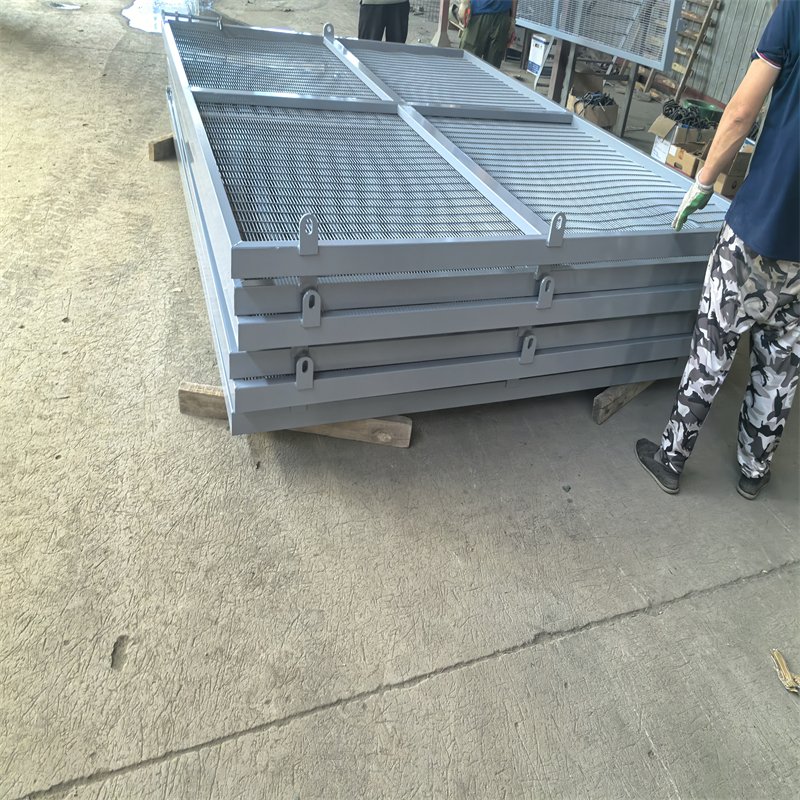
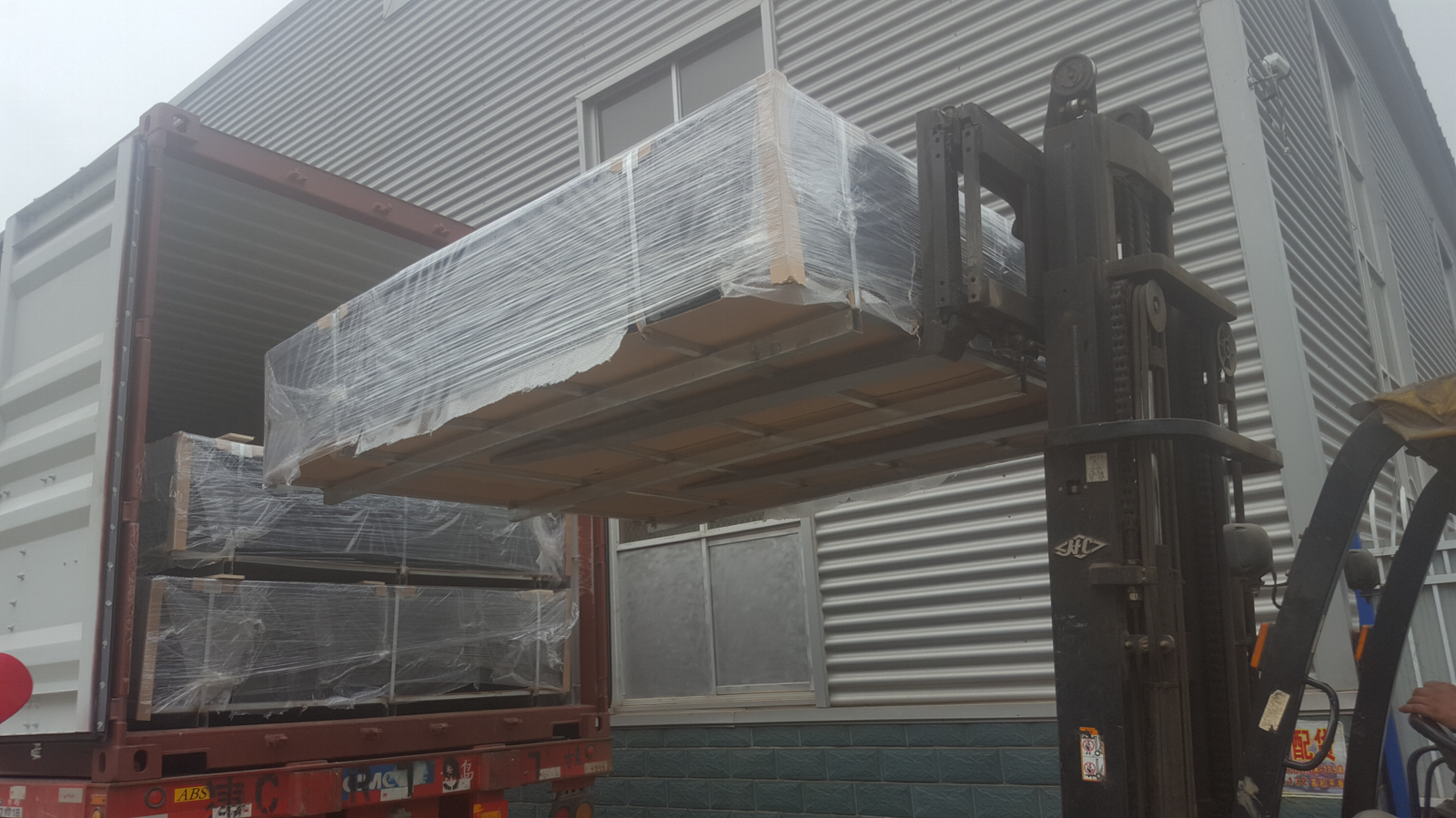
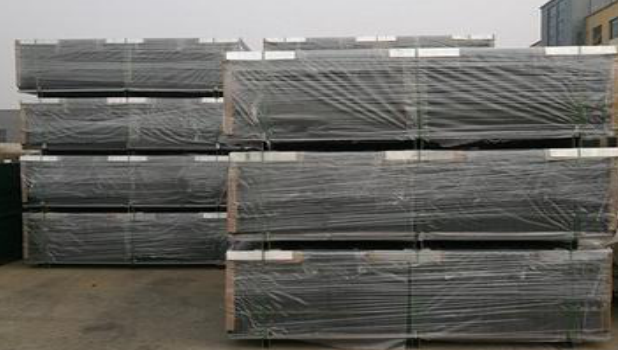
Coated panels can suffer abrasion when large sheets rub during ocean transport. Protective film, pallet separators, and secure corner restraints help prevent surface damage. Heavy posts should not rest directly against finished mesh.
The original BMP reference describes plastic film, reinforced pallet corners, wooden top protection, and 40 × 80 mm support tubes. These are packing examples requiring confirmation for each shipment. The final plan must reflect actual pallet weights.
 |
 |
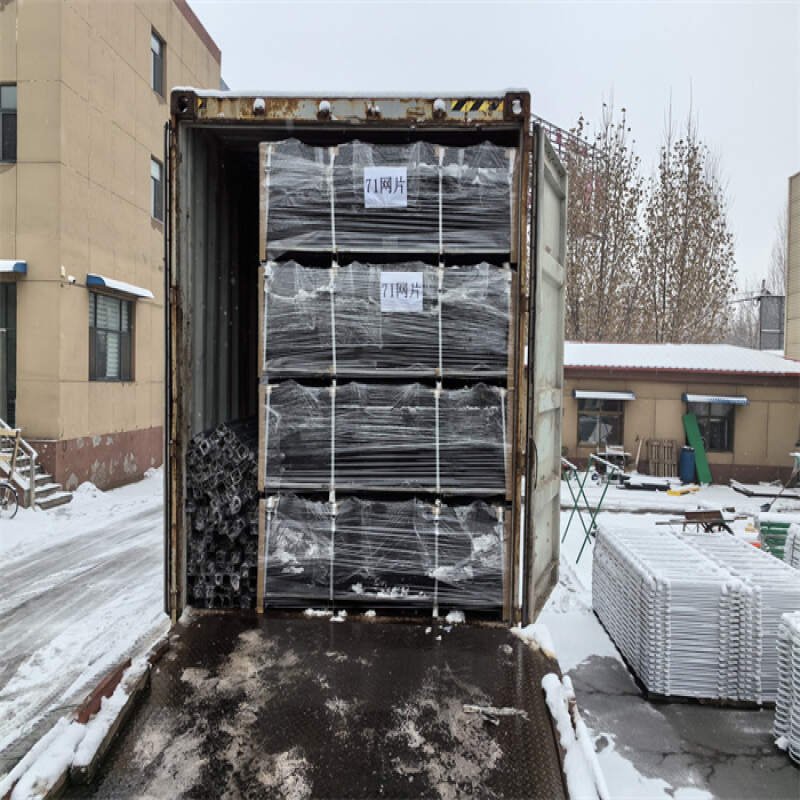
| BMP export reference: wrapped panel pallets moving toward the container. |
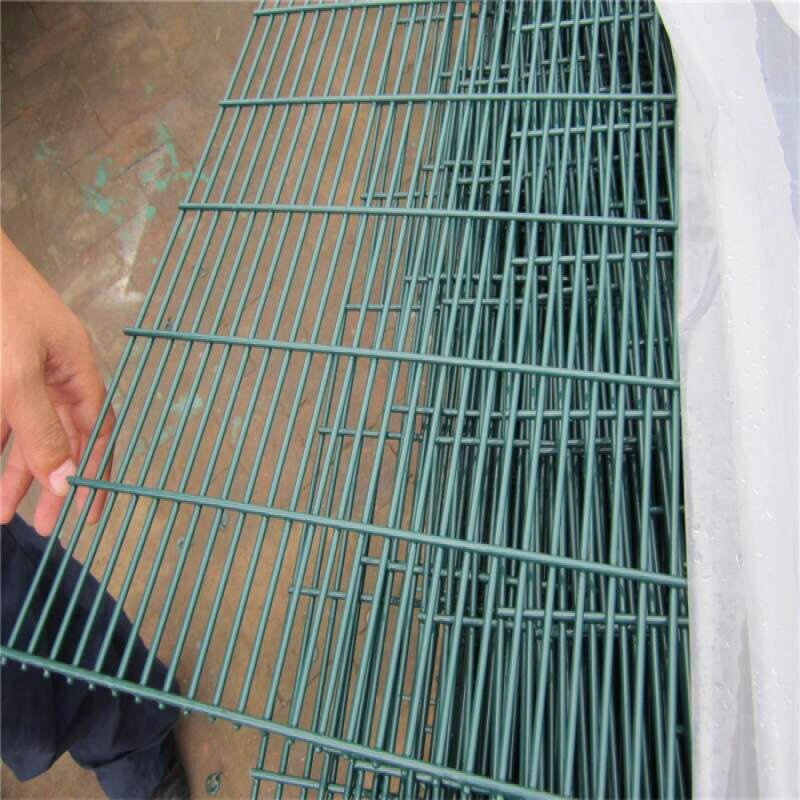
BMP export reference: protective packing and restrained fence bundles. |
Clearvu Fence Galvanised Epoxy Coating Packing Checks
Verify the final coating has completed its specified curing process before packaging. Inspect each pallet for scratches, sharp contacts, and loose straps. Keep accessories in labelled cartons for easy identification.
A good packing list separates panels, posts, gates, caps, clamps, and bolts. Gross weight should include pallets and protective materials. Photographs can document condition before shipment.
Common Questions About This Coating System
Does Every Galvanized ClearVu Fence Need Epoxy?
No. Galvanized steel can work without an epoxy primer when the project accepts that protection system. A compatible polyester coating can also create a duplex finish. Extra epoxy belongs in the specification only when technically justified.
Clearvu Fence Galvanised Epoxy Coating and UV Resistance
Epoxy primers mainly serve as protective intermediate layers in many outdoor systems. Suitable polyester topcoats help retain exterior appearance. The supplier should identify the exact powder chemistry and approved cure schedule.
Can Zinc Thickness and Powder Thickness Be Added Together?
Those measurements describe different materials and may use different units. Zinc coating mass cannot simply be added to polymer microns. Inspect each layer against its own agreed requirement.
What Warranty Applies to BMP ClearVu Products?
BMP offers a 15-year manufacturer warranty for its ClearVu and Clearview products under applicable written terms. Confirm coverage for the selected coating system and installation environment. Routine maintenance and correct installation remain important.
Clearvu Fence Galvanised Epoxy Coating: Request a Technical Quotation
BMP supplies welded security mesh, tapered posts, clamps, and related gates for international projects. The available coating routes depend on material compatibility and factory approval. Buyers should specify the complete desired protection sequence before ordering.
Provide panel sizes, post drawings, site exposure, and required inspection methods. Regional ClearVu Fence Panels offer additional product references for comparison. A confirmed specification helps the factory plan finishing, testing, and export packing.