Palisade fencing Durban projects face two demanding conditions: exposed coastal weather and varied property security requirements. Steel pales create a clear physical boundary without completely blocking the surrounding view. Businesses can control access, protect equipment, and keep service yards visible. Homeowners can combine attractive steelwork with practical gate security. The right design depends on exposure, site layout, and the owner's risk assessment.
BMP manufactures palisade systems with W-section pales, D-section pales, steel rails, posts, and tamper-resistant fixings. Our range also includes matching entrances and alternative security fencing systems. Durban buyers should consider coating quality and foundation engineering before confirming a specification.
Palisade Fencing Durban for Coastal and Urban Perimeters
Durban combines coastal suburbs, shopping districts, busy logistics routes, and large industrial properties. These environments need different perimeter layouts. A Bayhead storage yard prioritises access control and corrosion resistance. A school needs visibility and safer head profiles. A coastal residence may favour a subdued colour and pedestrian access.
Traditional Palisade Fencing uses vertical steel pales on horizontal rails. The pale shape discourages straightforward climbing and creates a conspicuous boundary. Compare each property with suitable Security Steel Fence configurations before choosing a system.
A Security Boundary That Preserves Visibility
Steel palisade panels let guards inspect movement across parking areas and building entrances. Open spacing also helps cameras observe activity near the fence. This matters at warehouses where drivers, visitors, and contractors arrive throughout the day. Visibility cannot replace reliable lighting, controlled gates, or active security procedures.
For decorative commercial boundaries, Steel Fence Panels offer tubular pickets and varied top profiles. A Tubular Steel Fence may suit offices requiring softer architectural lines. Palisade profiles serve a different visual and security purpose.
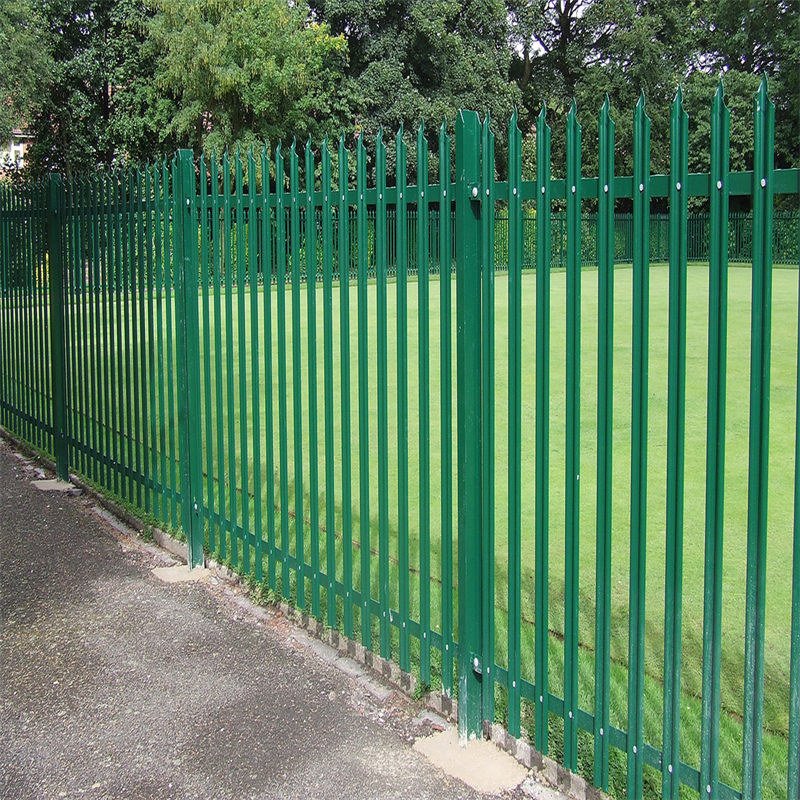
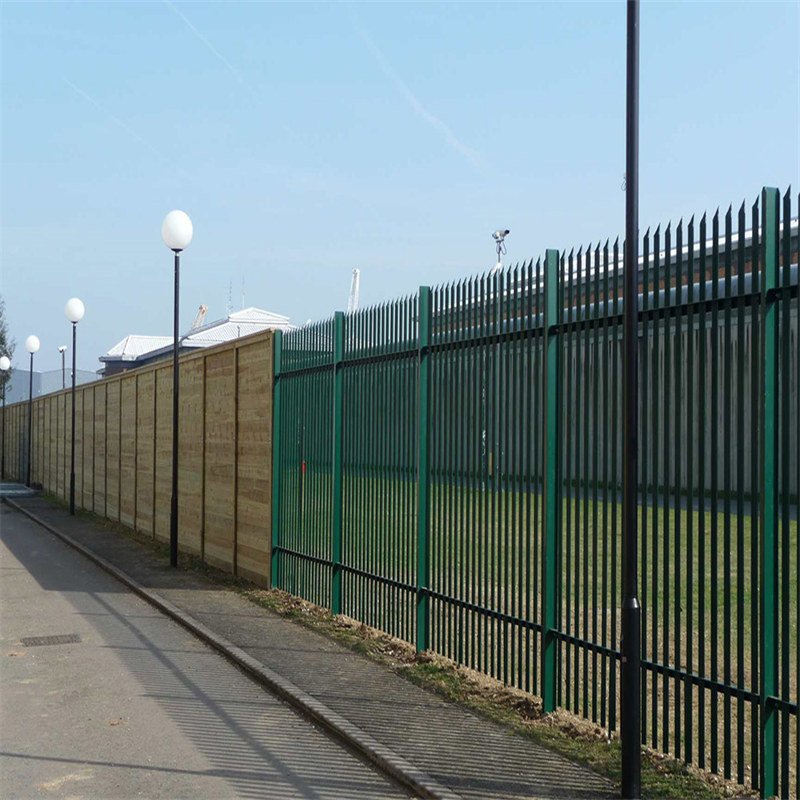
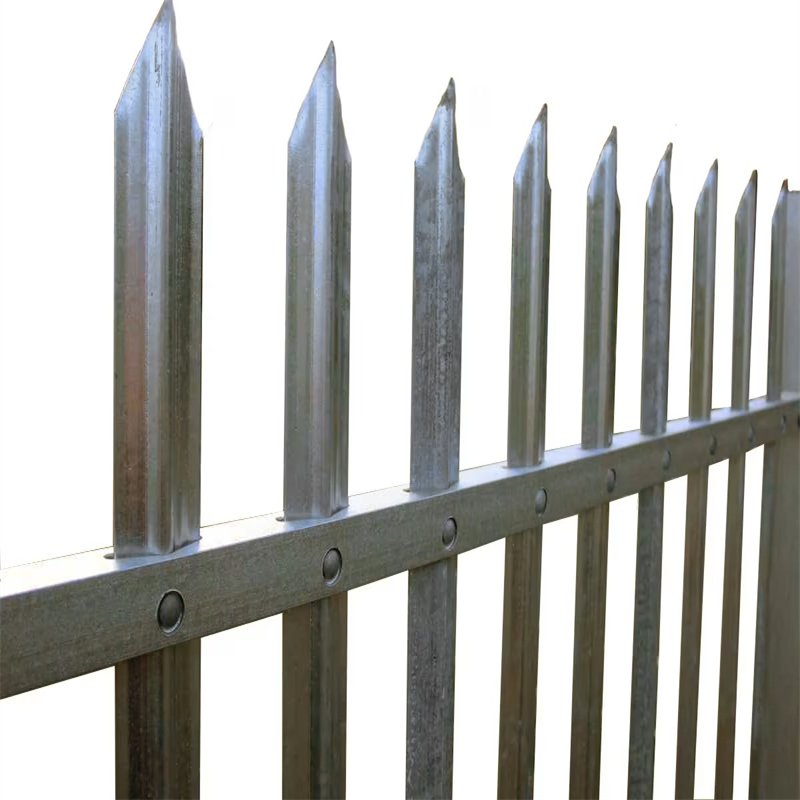
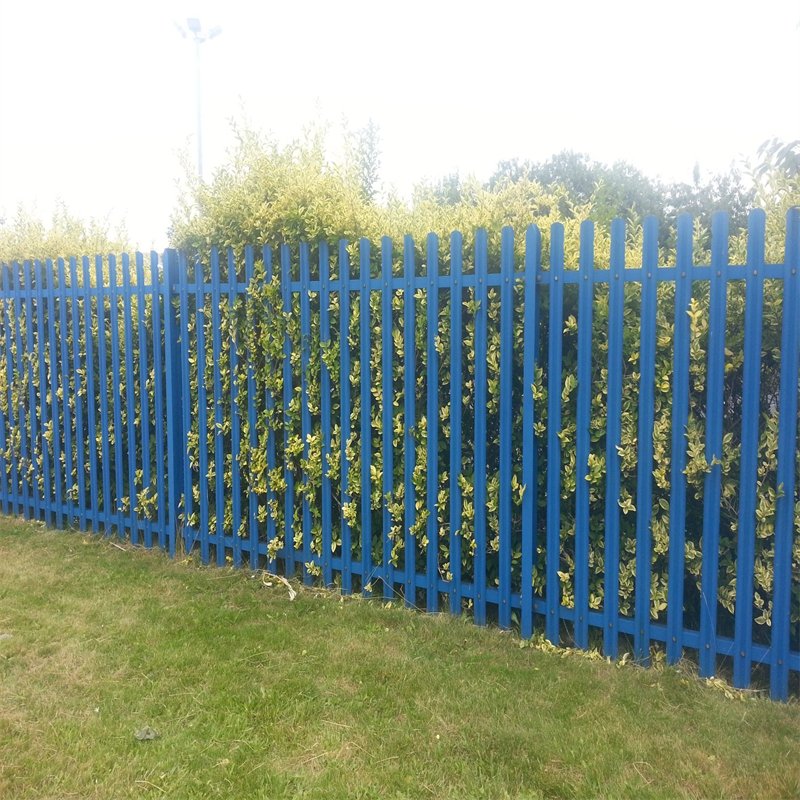
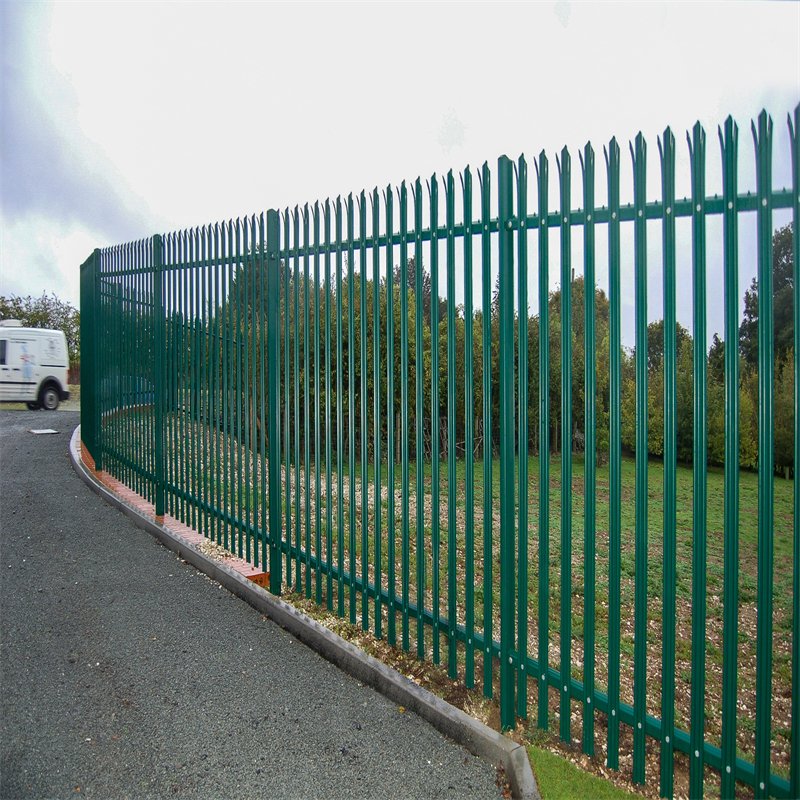
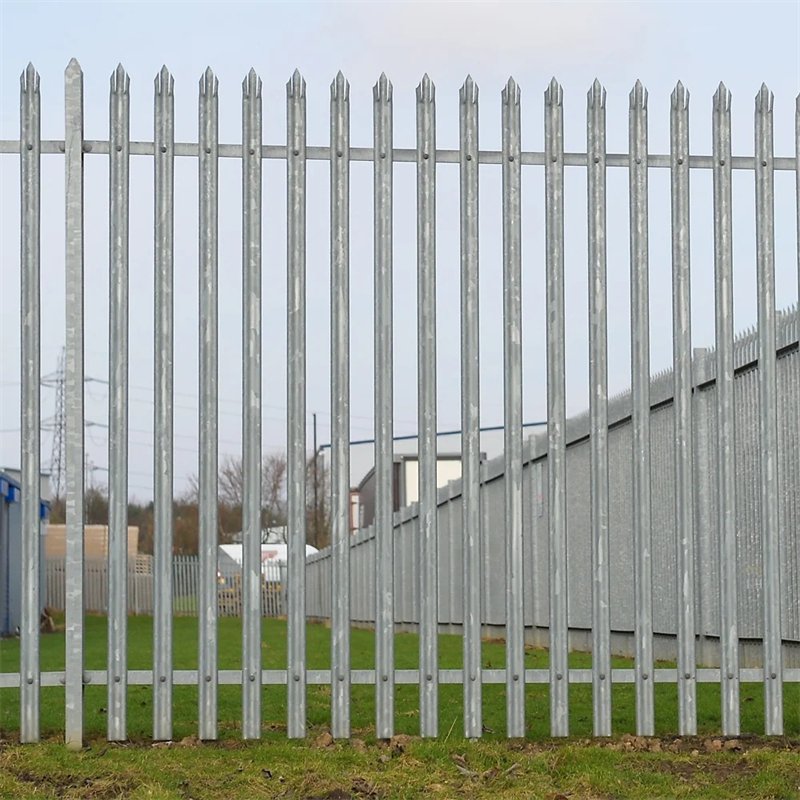
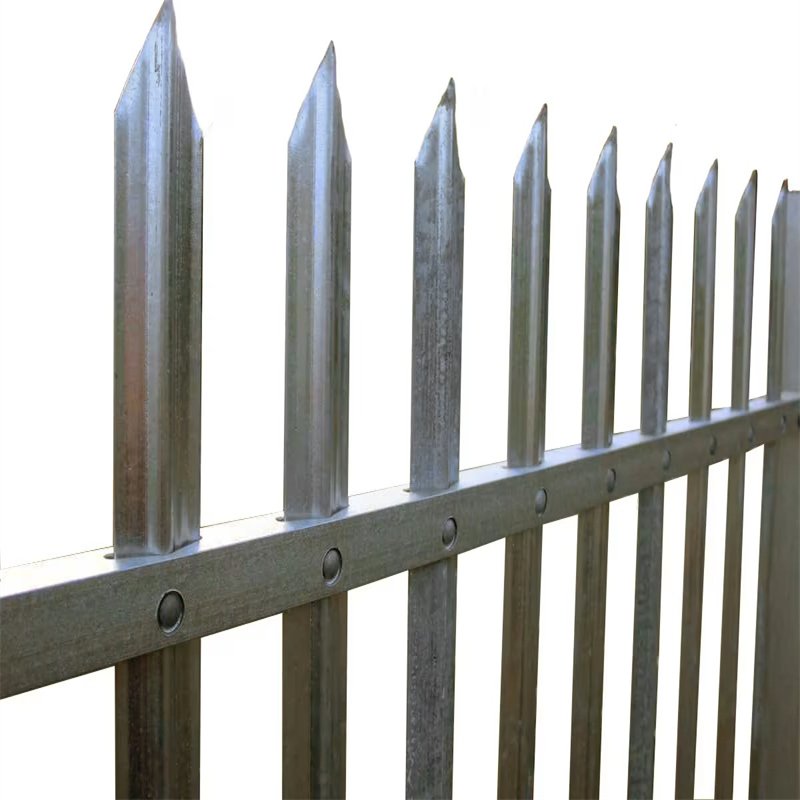
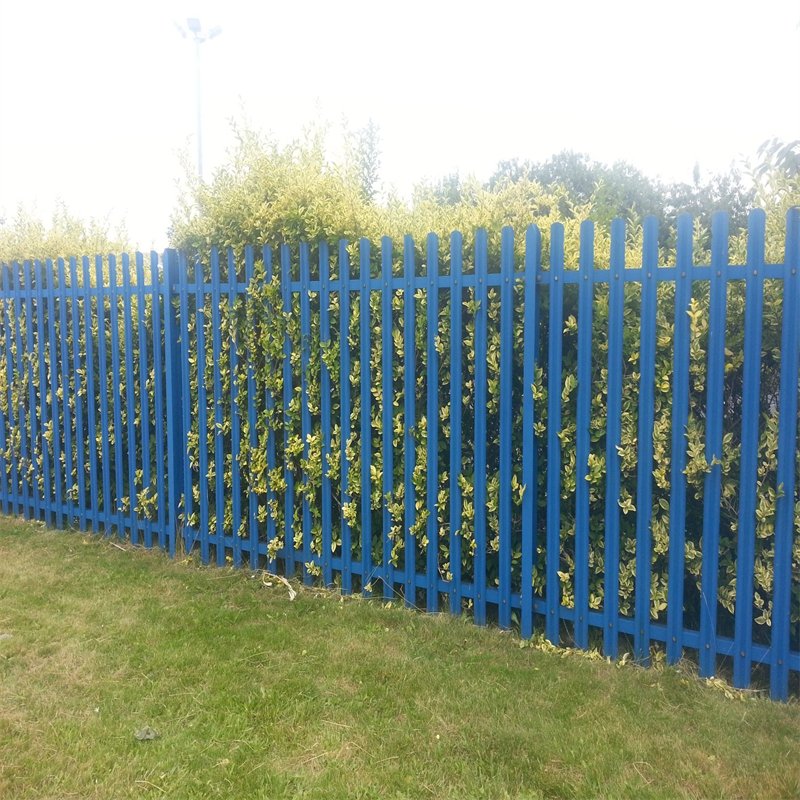
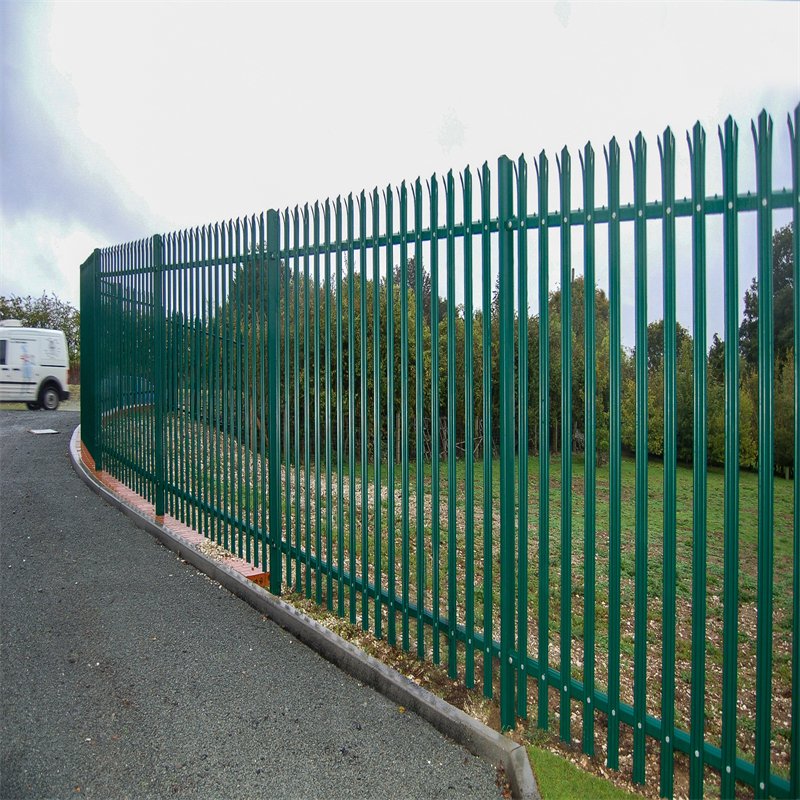
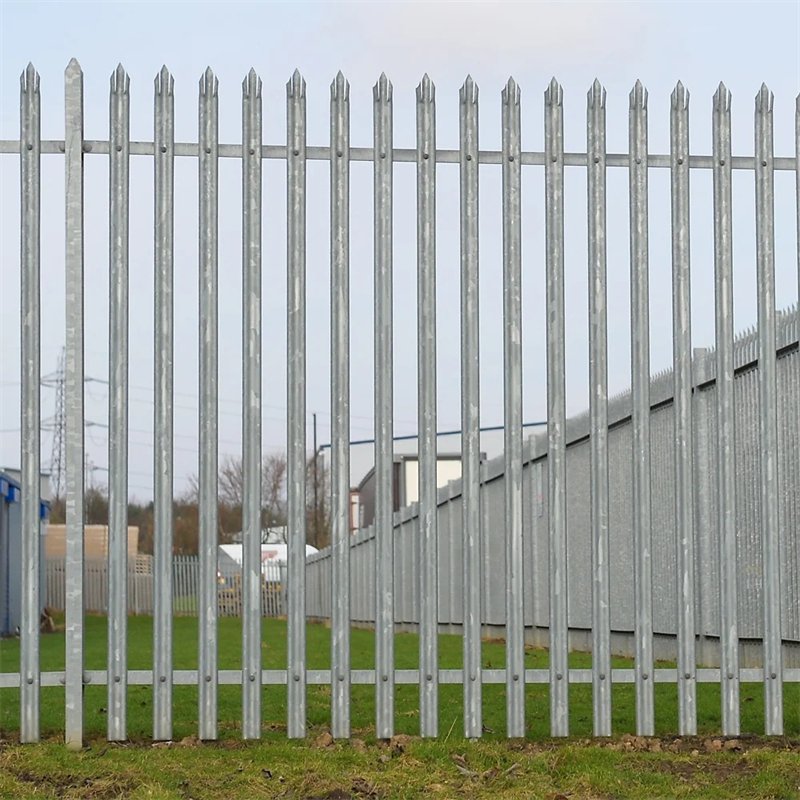
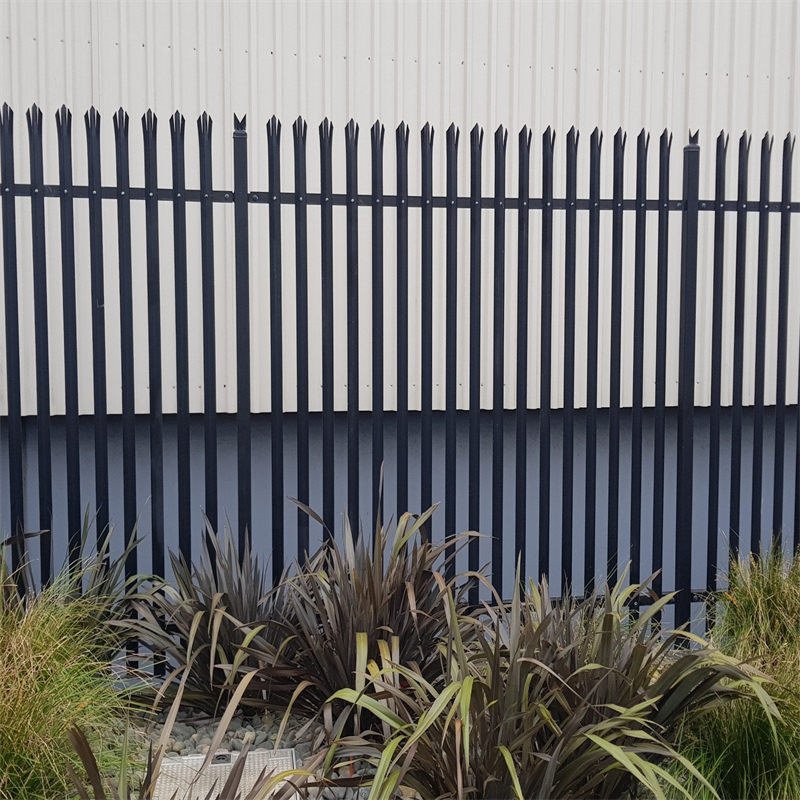
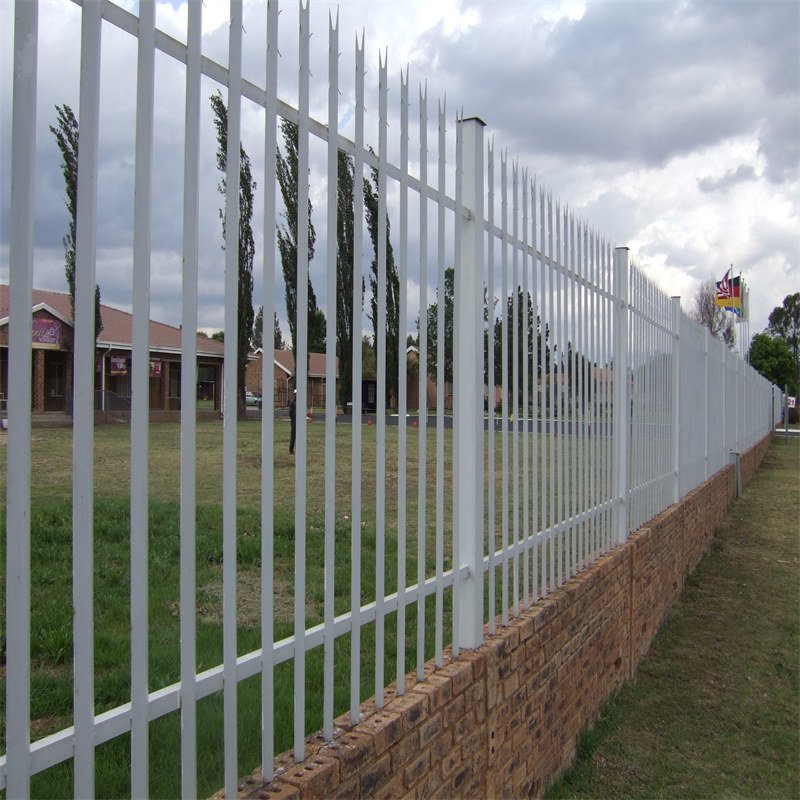
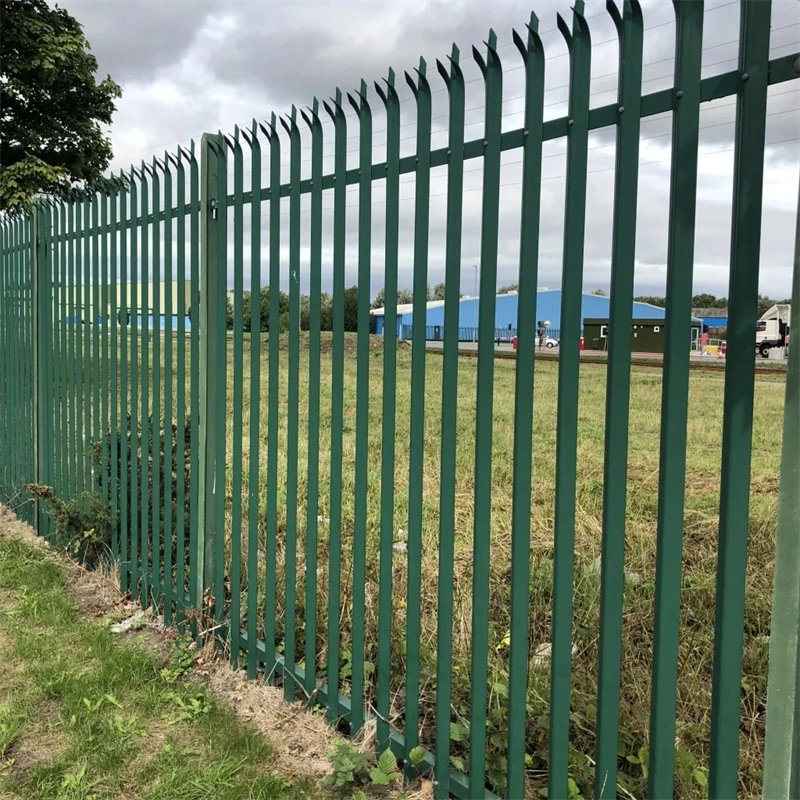
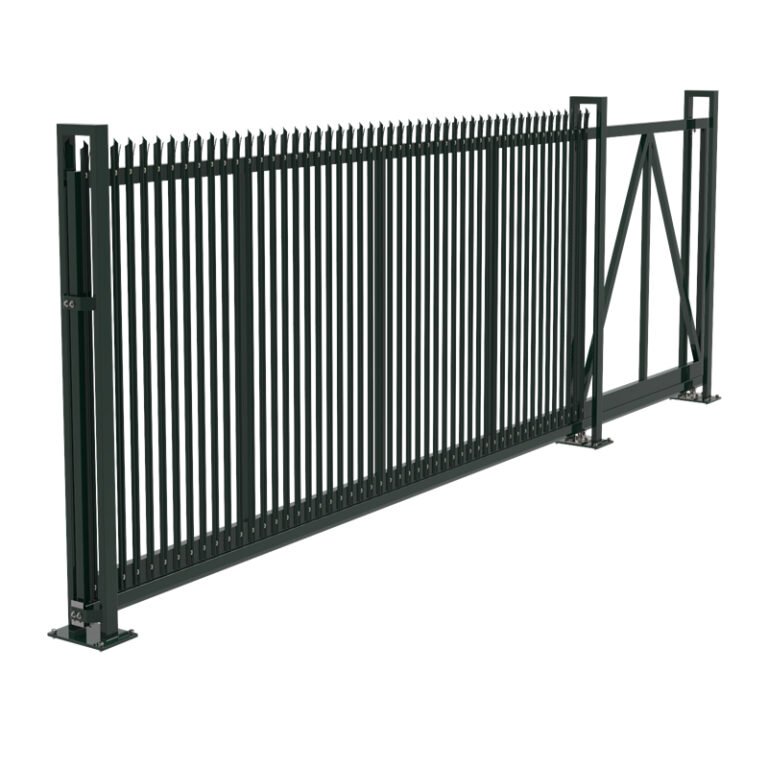
Steel palisade fencing combines upright pales, supporting rails, and steel posts for perimeter protection.
The Indian Ocean brings salt aerosols into Durban's waterfront and nearby neighbourhoods. Coastal humidity also increases moisture exposure around steel joints. Salt deposition varies with distance, prevailing winds, shelter, and local terrain. Therefore, a Bayhead installation may require more corrosion protection than an inland site.
Industrial air pollutants can add another challenge near port operations and manufacturing areas. Buyers should evaluate each site's atmospheric conditions instead of choosing one coating for every address. Better zinc protection and suitable topcoats can reduce premature surface deterioration.
Salt Spray, Humidity, and Coating Selection
Hot-dip galvanising creates a zinc barrier around compatible fabricated steel components. A duplex system adds a suitable organic coating over prepared galvanised surfaces. This combination offers an additional protective layer and allows custom colours. Specify surface preparation, zinc requirements, and finish thickness on the purchase drawing.
Coating selection should follow site conditions and relevant standards, such as SANS 121 or ISO 1461 where applicable. Powder coating alone does not replace proper steel preparation. Inspect rail connections, cut edges, bolts, and areas where rainwater collects.
Palisade Fencing Durban Around Industrial Sites
Industrial estates near Jacobs, Prospecton, and Bayhead often operate through extended shifts. Loading bays and equipment yards benefit from clearly defined pedestrian and vehicle routes. Palisade panels can deter opportunistic access while keeping the fence line visible to personnel.
On commercial streets, Palisade Fencing Durban designs can combine secure frontage with controlled visitor entrances. Site owners should also assess blind corners, shared driveways, emergency exits, and delivery schedules. A strong fence accomplishes little when gates remain unsecured.
Threat Assessment Without Blanket Assumptions
Security conditions differ across Durban suburbs and individual properties. Buyers should consider recorded incidents, asset values, operating hours, and existing access controls. Schools may focus on visitor management and child safety. Depots may focus on theft prevention and perimeter monitoring.
Where a property requires a different visual barrier, Clear View Fence Panels offer closer mesh apertures. Neither system makes a property intrusion-proof. A layered plan may combine fencing, lighting, alarms, and response procedures.
W-Section Palisade Fencing Durban Profiles
W-section pales use a corrugated cross-section instead of a simple flat steel strip. This geometry increases stiffness and changes how the pale resists bending. Typical widths range from 60 to 72 mm. Available material thicknesses include 2.0, 2.5, and 3.0 mm.
The original project reference also specifies a 71 × 21 × 3 mm W profile. Buyers should confirm the measurement convention before manufacturing begins. Single-point and triple-point tops offer different appearance and deterrence levels. Select heads according to local access rules and site safety needs.
D-Section Pales and Alternative Head Styles
D-section pales provide another formed steel option with distinct geometry. The reference range includes 60–72 mm pale widths and three steel thicknesses. Angle steel pales provide a separate configuration, commonly with a 40 × 40 mm section.
Pointed tops can discourage climbing, but exposed spikes create safety considerations near public paths. Rounded or less aggressive heads may suit schools and residential frontages. Always consider the fence's position relative to pedestrian movement.
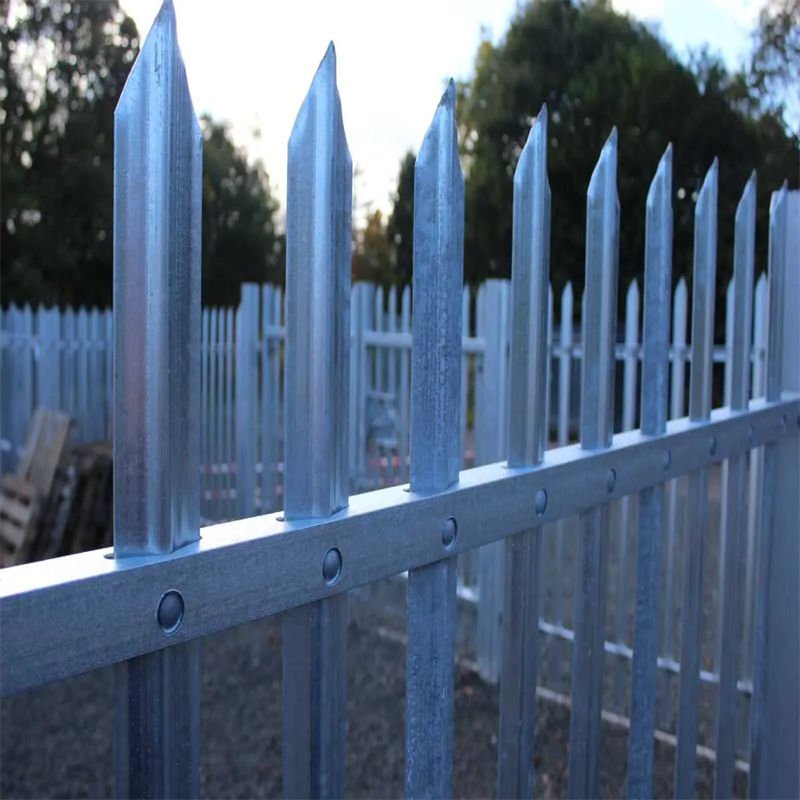
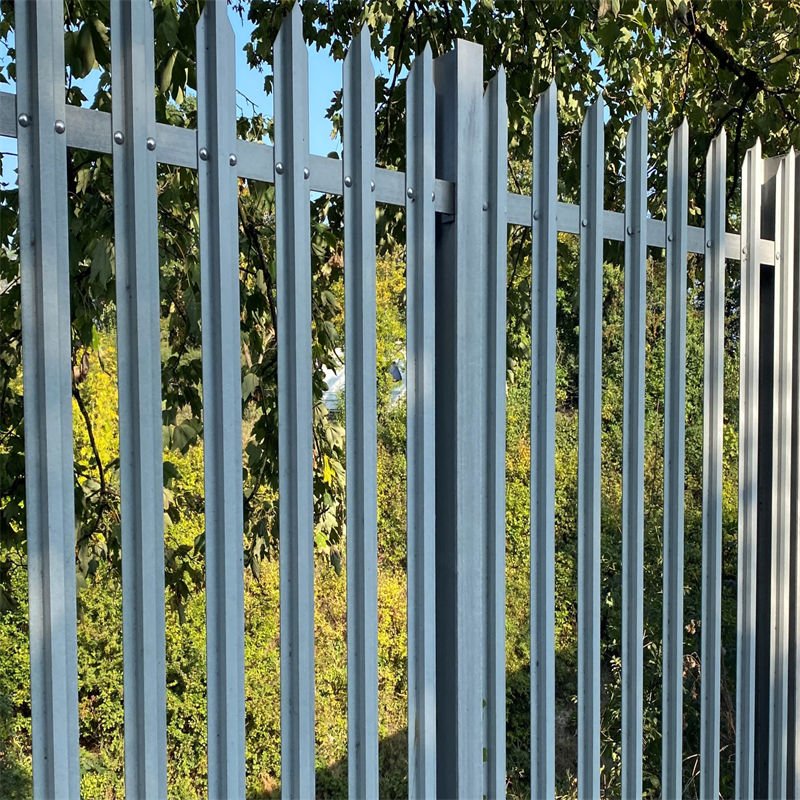
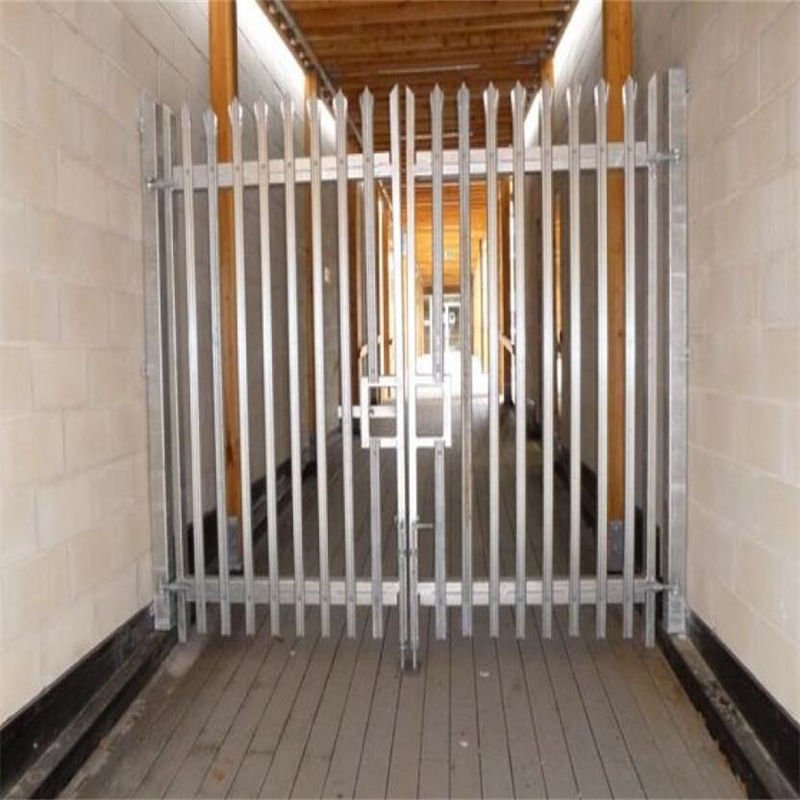
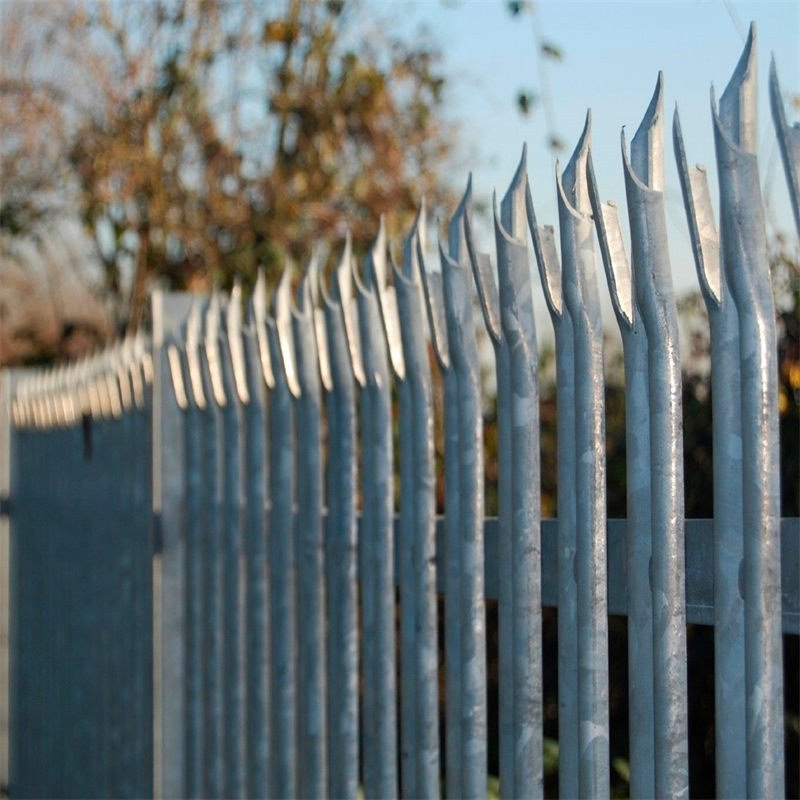
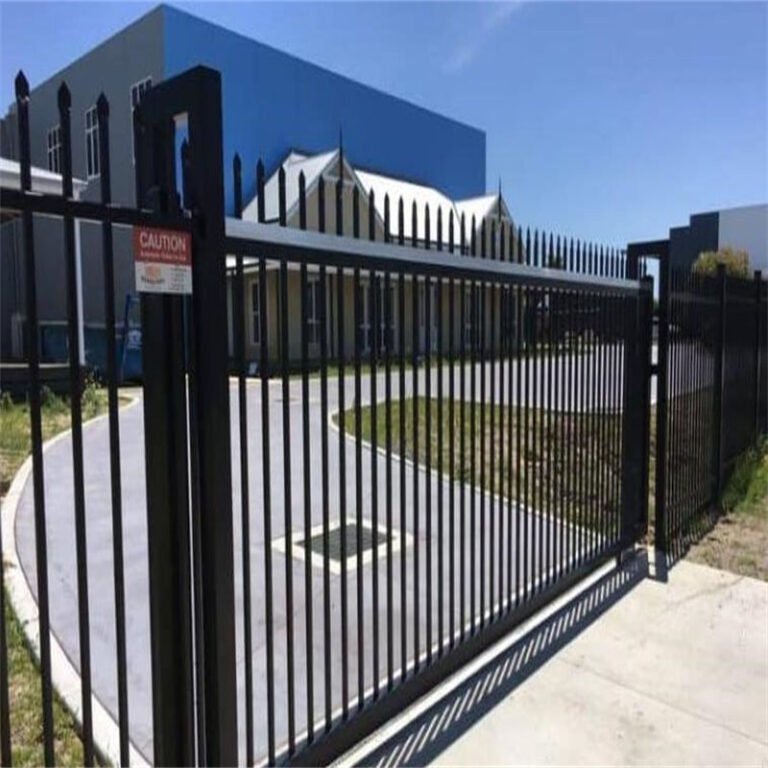
Palisade fence designs can use different pale sections, head styles, and security hardware.
Palisade Fencing Durban Technical Components
Each fence bay needs compatible pales, drilled rails, steel posts, connection plates, and security fasteners. The source design specifies a 50 × 50 × 6 mm equal angle rail. It also lists fish plates for straight joints and corners. Exact component quantities depend on bay geometry.
The original reference provides a 40 × 8 × 140 mm fish plate. Corner joints use a 40 × 8 × 215 mm plate for the specified W profile. Larger assemblies may require additional supports after structural review.
Fixing Hardware and Bay Connections
Rail connections can use M12 × 30 mm cup-head bolts with shear nuts. Pale fixings include M8 × 25 mm T-bolts and shear nuts. Stainless steel Huck pins and collars provide another specified fastening option. The reference also includes an M12 × 500 mm threaded mid-bay support.
Every connection needs suitable hole alignment, bolt engagement, and corrosion compatibility. Security nuts discourage casual removal, but installers must verify proper tightening. Different manufacturers may use different hole patterns. Avoid mixing unverified components during installation.
Palisade Fencing Durban Pale Specifications
These reference dimensions cover three pale types. Final profiles, head forms, and finish selections should follow approved shop drawings.
The options above describe possible combinations rather than one universal construction. Verify the project coating sequence and finish compatibility before production.
Angle Rails and Hole Alignment
Rails support the pale line and transfer loads toward the posts. Consistent drilling keeps pale spacing regular and improves assembly. The supplied 2710 mm rail reference includes 19 holes along one edge. Hole centres must match the pale layout and connections.
For coastal sites, inspect exposed rail edges and fixing holes carefully. Water can settle near horizontal members, especially where dirt blocks drainage. Regular washing helps remove salt deposits from accessible surfaces.
Palisade Fencing Durban Rail Specifications
Rail Type
Nominal Section
Listed Thickness
Drilling
Rail Length
Finish
Equal angle steel
40 × 40 mm / 50 × 50 mm
4.0 / 5.0 mm
19 holes on one edge
2710 mm
Galvanised / Polyester powder coated
The source also identifies a 50 × 50 × 6 mm equal angle for one assembly. Match rail sizes to approved loading requirements. Rail length does not automatically equal the finished fence bay width.
Posts, Foundations, and Coastal Wind
Durban properties may encounter varying winds, slopes, soil conditions, and existing concrete structures. Engineers should size footings around soil capacity and structural loads. Coastal exposure does not justify one universal footing depth. The final design must account for site conditions.
For a 2400 mm reference fence, the source lists a 100 × 45 mm TFB post. A 3000 mm version lists a 150 UB 14.0 post. Confirm these designations with the relevant structural specification.
Palisade Fencing Durban Post Specifications
Available post families include IPE sections, rectangular hollow sections, and square hollow sections. Caps protect open tubular ends where applicable. The final post length depends on fence height and foundation detail.
Hot-dip galvanising suits many steel fence components, provided the fabrication and venting details allow proper processing. Electro-galvanising applies a different zinc process and may offer less zinc protection. Specify performance requirements rather than treating every galvanised finish as equivalent.
Durban buyers sometimes compare palisade finishes with Powder Coated Clear View Fence systems. The coatings may follow similar protection principles, but the fence constructions differ. Request appropriate surface treatment records for each order.
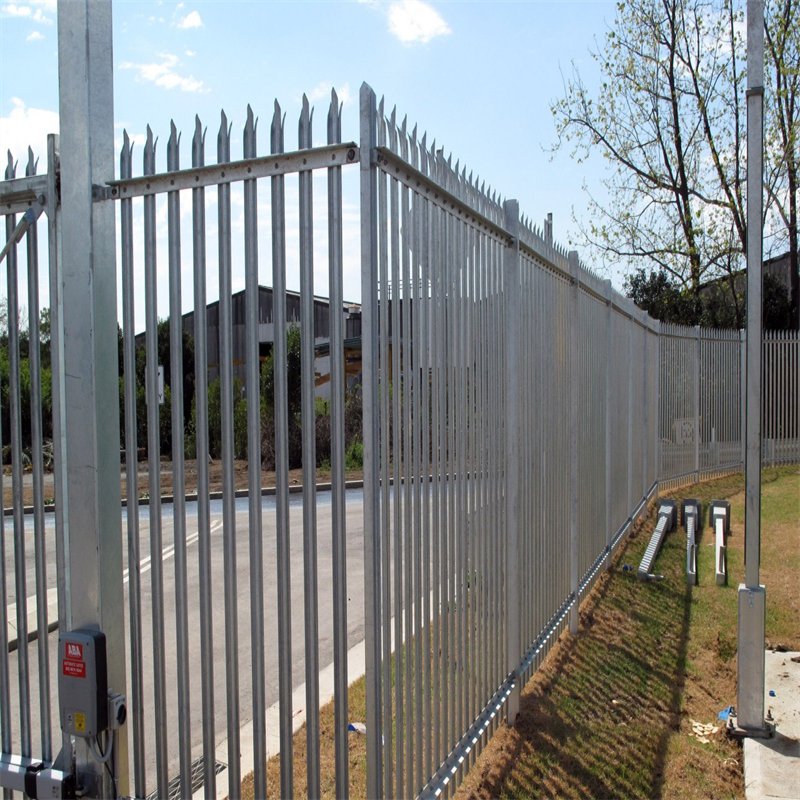
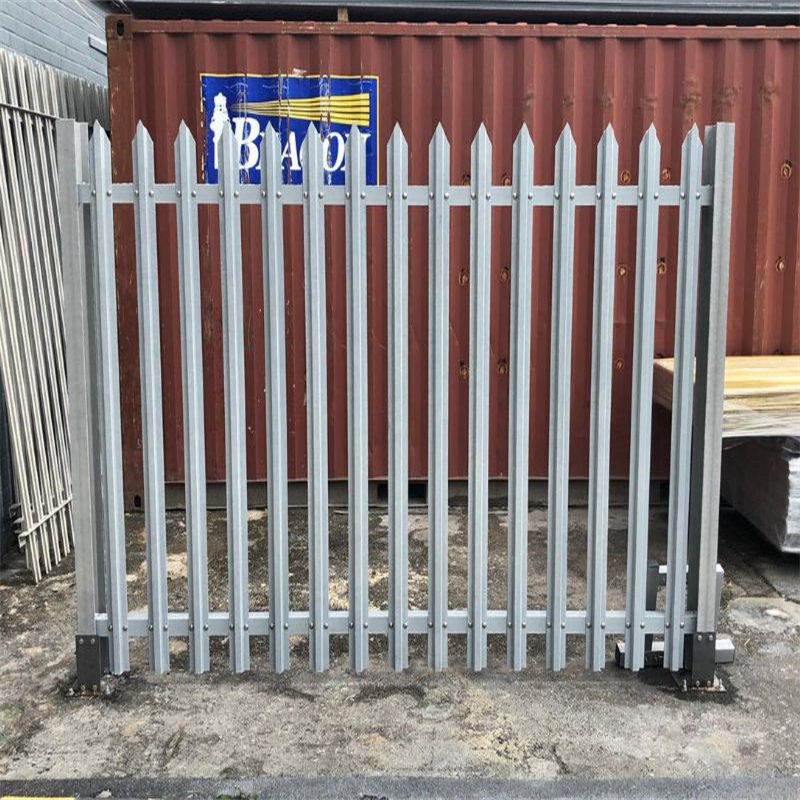
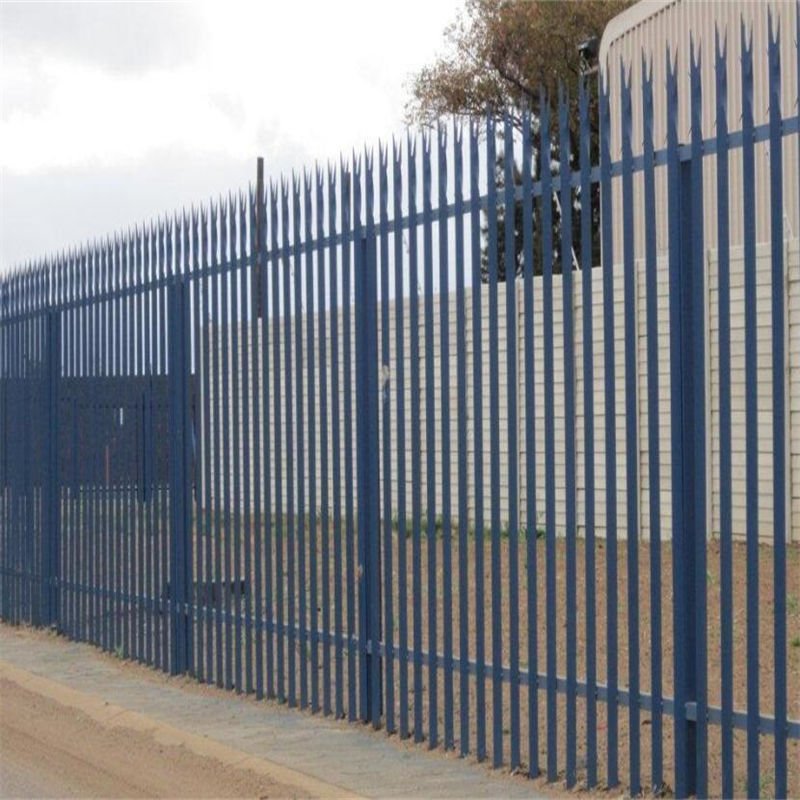
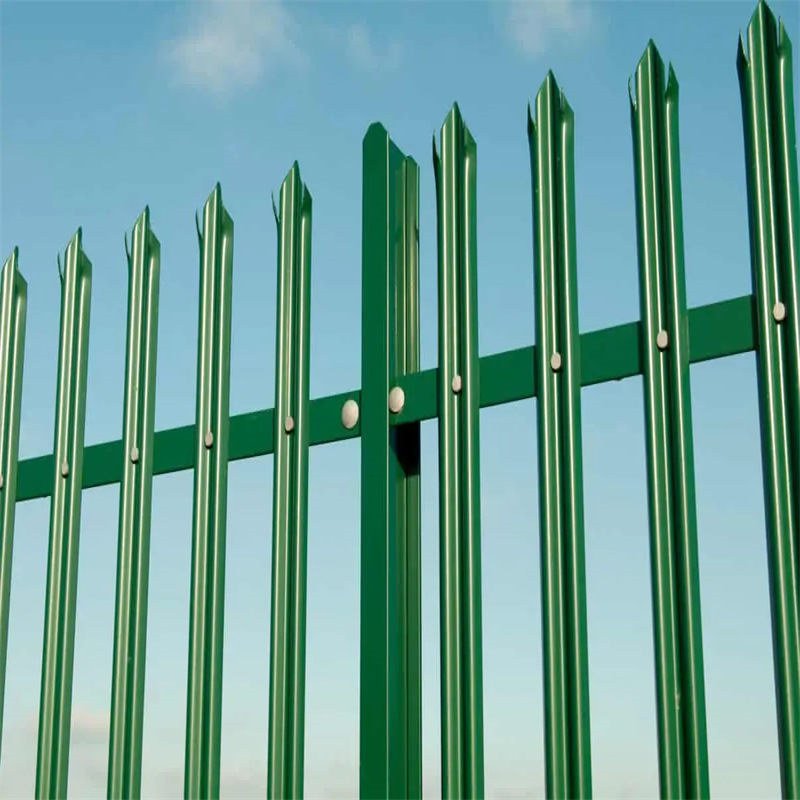
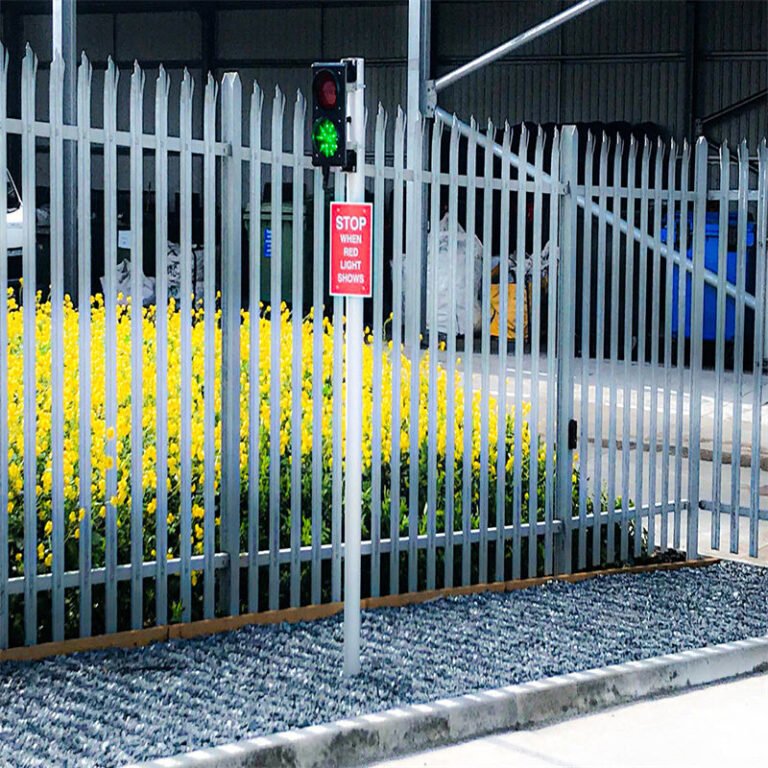
Steel pale and rail details require consistent fabrication and corrosion protection, especially in coastal service.
Palisade Fencing Durban Installation Sequence
Installers should survey the boundary before setting post locations. Identify underground services, drainage routes, slopes, and vehicle access points. Establish corner positions first, then mark intermediate bays. Inspect each foundation before mounting the steel framework.
Fix rails to compatible posts, check level and alignment, and install pales with the specified fasteners. Use approved procedures when repairing zinc coating damage. Check all moving gates before handing over the fence.
Gates, Security Lighting, and Surveillance
Pedestrian and vehicle entrances remain critical points in a perimeter. Hinges, locks, stops, and gate frames need suitable security ratings. Lighting can improve camera visibility near entrances. Safety signage helps guide delivery drivers and visitors.
Some projects combine palisade boundaries with a separate Clear View Fence Gate at a monitored entrance. Buyers may also consider Clearvu Sliding Gates or Clearvu Gates for alternative mesh gate layouts. Confirm structural and dimensional compatibility before combining different systems.
Palisade Fencing Durban Compared With Mesh Options
Palisade fencing uses shaped steel pales, while welded mesh uses intersecting steel wires. This difference affects climbing resistance, visibility, maintenance access, and appearance. Fence height alone cannot define security performance. Compare complete systems, including post connections and gates.
For dense mesh boundaries, buyers can evaluate 358 Mesh Fencing or Clearvu Fence Panels. Their narrow apertures offer a different approach to climb resistance. Palisade pales may offer greater architectural presence at industrial entrances.
Mesh buyers should pair their systems with compatible Clearvu Fence Posts and Clearvu Fence Clamps. These accessories do not automatically fit palisade rails. Compare each Clear View Fence Post with the selected mesh system. Request separate drawings for mixed-material projects.
Choosing Boundaries for Schools and Homes
Residential properties in Durban North, Westville, and other suburban areas may prioritise appearance and privacy balance. School layouts may require controlled entry and safer tops near walkways. A fence must also preserve emergency escape routes.
Some buyers select Clear View Fencing near buildings that need unobstructed camera views. Others prefer palisade steelwork around equipment yards or parking facilities. Compare installation constraints and maintenance requirements before final selection.
Palisade Fencing Durban Packaging and Shipping
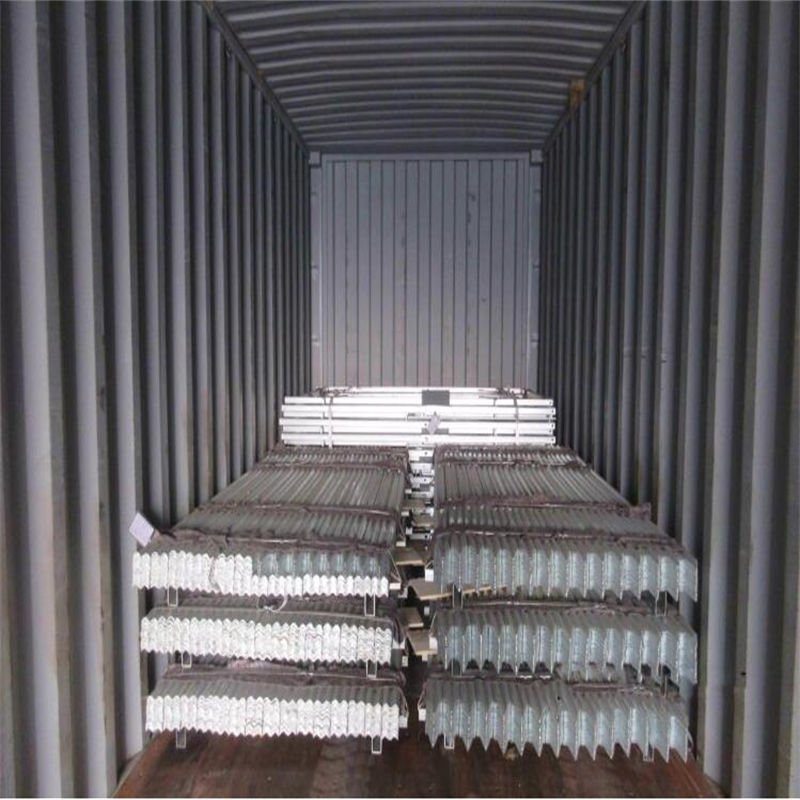
BMP can bundle pales and rails with protective separators for export handling. Steel pallets help organise long components and allow mechanical loading. Protective film reduces scuffing during normal transport. Use suitable restraints to prevent shifting inside containers.
Separate bolts, nuts, plates, and caps into clearly identified cartons or bags. Mark each package according to its assembly group. Buyers can request packing lists that match the approved drawings and bill of materials.
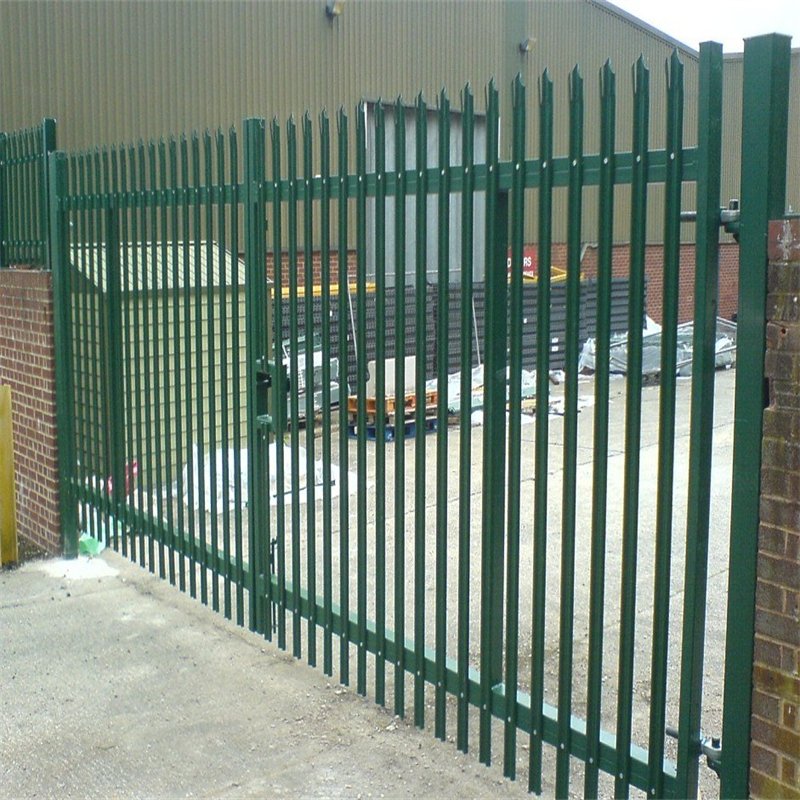
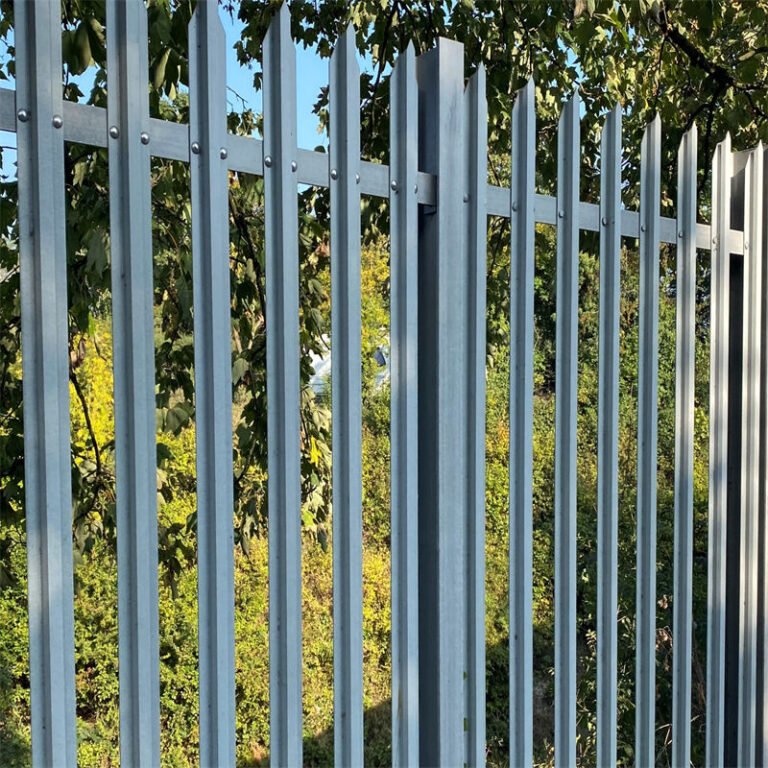
Palisade fence systems require matched pales, steel rails, posts, fasteners, and documented packing quantities.
Inspection Records and Maintenance Planning
Factory checks should cover pale dimensions, rail drilling, coating appearance, and package counts. Record coating requirements before manufacturing and inspect finished parts against the approved sample. Inspectors should also verify head profiles and fixing quantities.
Once installed, wash salt deposits from accessible steelwork when needed. Review fasteners, hinges, and surface damage during scheduled inspections. Repair coating defects promptly using an approved method. Maintenance intervals should reflect actual coastal exposure.
Which steel profile suits industrial facilities? W-section and D-section pales offer different formed geometries. Select the profile after reviewing site risk and structural requirements.
Does Durban coastal weather affect steel fencing? Salt spray and high humidity can accelerate corrosion. Proper galvanising and compatible coatings help manage that exposure.
Can installers add security toppings? Some sites consider Razor Wire Flat Wrap or other approved toppings. Check local rules, safe clearances, and support design first.
Are palisade fittings interchangeable with mesh clamps? Not necessarily. Palisade rails and mesh panels use different fixing arrangements. Verify each connection against approved drawings.
Can the design follow a sloping boundary? Many layouts allow stepped or adjusted bays. Confirm ground clearance, post geometry, and rail connections before ordering.
Requesting Project Drawings and Production Details
Send BMP the boundary length, preferred height, pale profile, coating requirement, and site conditions. Include photos or drawings of corners, slopes, and gates. Specify whether the location faces the coast or an industrial roadway.
BMP can review components, proposed packing, and fabrication requirements against the project information. Confirm material grades, zinc coating, bolt types, and installation details in writing. This process supports accurate manufacturing and a consistent finished perimeter.