Cheap palisade fencing should reduce purchasing costs without sacrificing dependable steel components. A suitable system combines formed pales, horizontal rails, strong posts, and secure mechanical fixings. Its open profile provides useful surveillance views around factories, warehouses, utility compounds, and controlled estates. Buyers can choose W-section, D-section, or angle steel designs according to the site's security requirements.
Price comparisons need more than a headline rate per metre. Pale thickness, post spacing, protective coatings, and accessories can change the completed project cost. For commercial boundaries, Steel Palisade Fencing combines visible deterrence with a straightforward assembly method. This article explains how to compare specifications, calculate quantities, and prepare a reliable purchase order.
Cheap palisade fencing without cutting essential steel
Good-value palisade fencing starts with a practical security target. A warehouse may need clear sightlines and controlled vehicle access. A factory near public roads may prioritise a durable finish and restricted entry points. Schools or visitor-facing facilities may require rounded heads instead of sharp tips.
Cheap palisade fencing achieves better value when manufacturers match the steel grade and sections to actual loads. Thinner pales can lower material weight, but they may also reduce resistance to bending. More expensive steel does not automatically improve the entire barrier. Posts, foundations, connections, and gates must suit the same design.
Before comparing offers, request the dimensions and thickness for every component. Palisade Fencing for Sale includes different pales, rails, and posts. Select one configuration across all supplier quotations to make the comparison meaningful.
Understanding W, D and angle pales
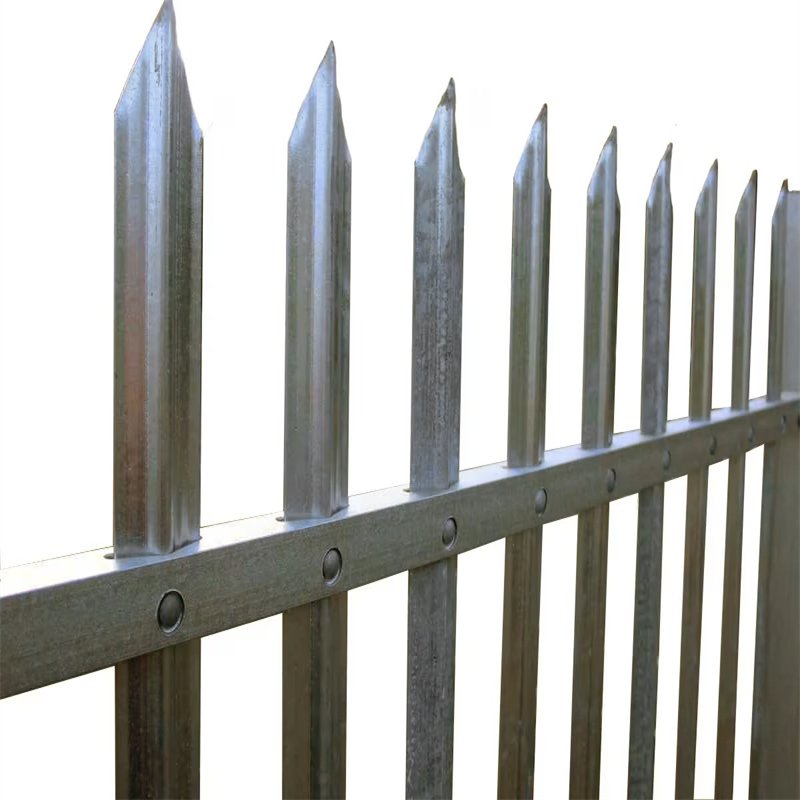
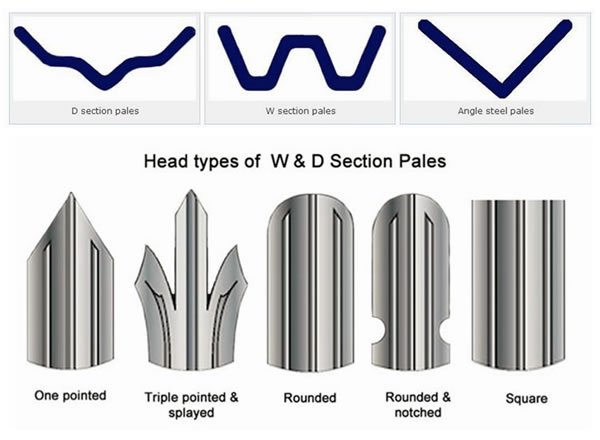
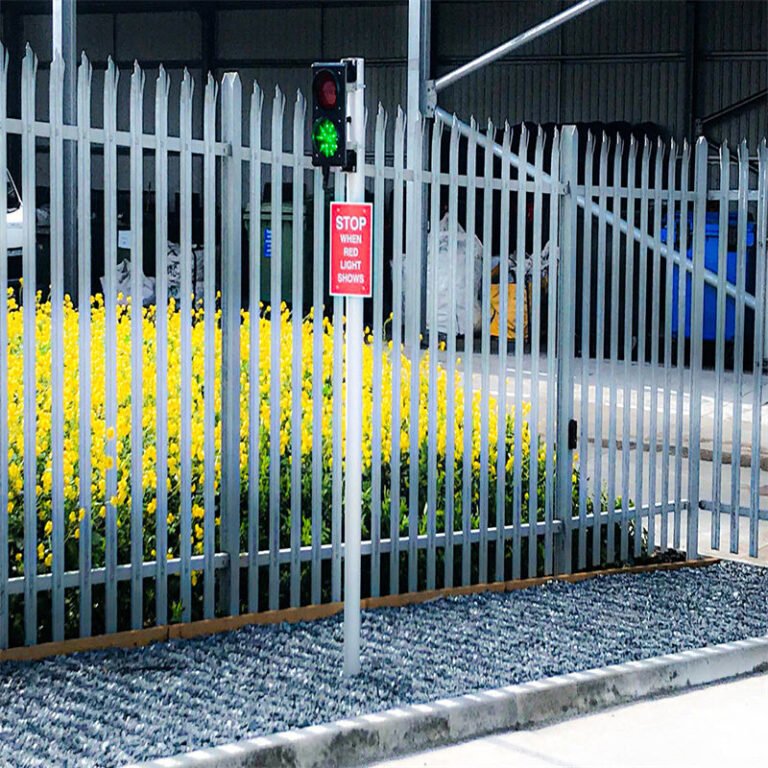
W-section pales have formed ribs that increase their stiffness compared with flat strips of similar material. D-section pales use a different curved profile and create another visual appearance. Angle steel pales offer a simpler geometry for selected industrial or economical installations. These sections are not interchangeable without checking their dimensions and connections.
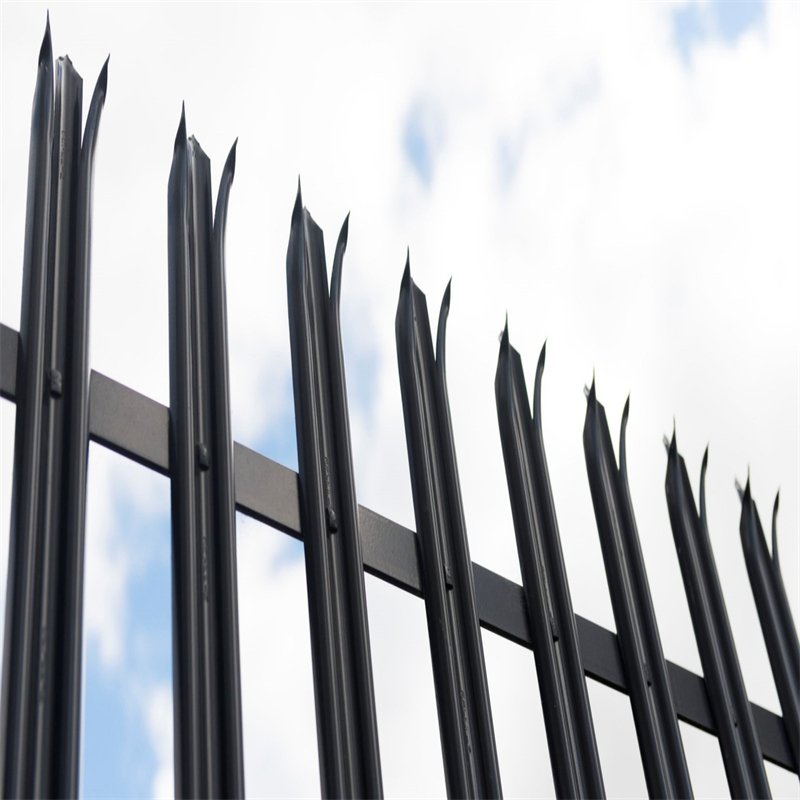
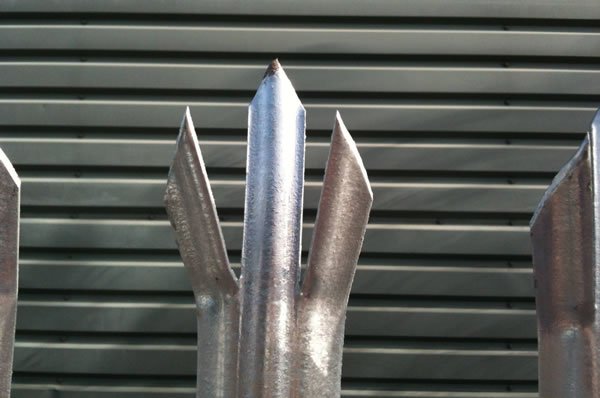
Head geometry also matters. Triple-pointed heads create a strong visual warning, while single-pointed heads provide another specification choice. Rounded or notched heads may better suit areas with regular public access. A Palisade Fence can combine different profiles and head shapes within one project specification.
Do not confuse traditional steel palisade with lightweight ornamental tubular picket fencing. A 16 × 16 mm picket and 32 × 32 mm rail describe a different construction system. Compare those decorative options separately from the heavy W-section and D-section steel assemblies.
Identify pale geometry and head shape before comparing steel thickness or pricing.
Cheap palisade fencing specification choices
The reference configuration uses an 1800 × 2750 mm bay with steel pales and two horizontal rails. It includes a triple-pointed head and a 100 × 55 mm H-section post. The original project description lists a 3.5 mm post thickness. Another component schedule specifies a 100 × 55 × 5 mm H post. Confirm which post belongs to the final quotation.
Cheap palisade fencing can cover heights from 1000 to 3600 mm, subject to project engineering. Higher fences generally need stronger posts and carefully designed foundations. Buyers should not assume one 2750 mm bay suits every wind condition.
Reference palisade fencing component schedule
Component
Specification
Reference quantity
Nominal panel
1800 × 2750 mm
1 bay
H-section post
100 × 55 × 5 mm
1 pc in original kit schedule
Alternative post
100 × 55 × 3.5 mm
Project option; confirm design
Horizontal rail
Angle steel 50 × 50 × 5 mm
2 pcs per bay
D-section pale
65 mm wide × 3.0 mm thick
17 pcs per bay
W-section pale
75 mm wide × 2.0 mm thick
17 pcs per bay
Fish plate
115 × 30 × 6 mm or 140 × 39 × 8 mm
2 pcs per reference bay
Pale fasteners
M8 × 40 mm saddle-head bolts
34 sets per bay
Rail fasteners
M12 × 30 mm cup-square bolts
4 sets per reference bay
Head option
Triple pointed / single pointed / rounded
Specify per project
The figures reflect the supplied example, not a universal engineering schedule. Shared posts affect total quantities along continuous fence runs. Palisade Fence Panels also vary by height, pale thickness, and fixing arrangement. Confirm every dimension on the approved shop drawing.
Palisade bay components and fixing counts
Each steel pale usually connects to two horizontal rails. With 17 pales, two fixings per pale produce 34 pale-to-rail fixing sets. Fish plates link selected rail ends to posts, while larger bolts secure rail connections. The supplied bill lists 34 M8 sets and four M12 sets per bay.
Buyers should confirm whether quoted fastener sets include washers and security nuts. Ordinary nuts may allow easier unauthorised dismantling. Anti-tamper nuts increase resistance to casual removal but do not replace a sound mechanical design.
Posts serve adjacent bays along straight fence runs. Consequently, the post count normally differs from the number of assembled bays. A standalone gate also needs suitable support posts and hinges. Galvanised Steel Palisade Fencing projects should account for these components before shipping.
Cheap palisade fencing cost drivers per metre
Cheap palisade fencing quotations can look similar despite substantial specification differences. The steel weight, finishing process, and number of components drive much of the factory cost. Freight, foundations, gates, and installation can change the delivered project budget.
Cost items to compare between quotations
Cost driver
What to confirm
Why it matters
Pales
Profile, thickness, length, head type
Changes steel consumption and stiffness
Posts
Section, thickness, length, spacing
Affects structural support and foundations
Rails
Size, thickness, quantity
Controls restraint and connection geometry
Fixings
Actual bolt sets and security nuts
Affects assembly cost and tamper resistance
Coatings
Galvanising route and final finish
Changes production steps and upkeep
Logistics
Pallet dimensions, gross weight, unloading
Influences freight and handling costs
Site works
Footings, ground conditions, gate bases
Can exceed expected accessory costs
Ask each supplier for a consistent scope: steel panels, posts, fixings, gates, packing, and delivery terms. Comparing a bare panel price against a complete fence kit creates a misleading saving. Confirm whether the price covers an individual bay or a finished linear metre.
Posts, foundations and sloping ground
H-section posts transfer loads from rails into the foundations. Suitable post size depends on fence height, wind exposure, soil conditions, and spacing. Buyers should supply site wind criteria and soil information where available. Engineers can then confirm embedment, footing width, reinforcement, or base-plate requirements.
On sloping sites, installers may step the bays or follow the terrain with suitable rail geometry. Keep pale heads aligned with the planned security envelope. Check the gap beneath the rails, especially near drainage channels and driveways. Excessive clearance can weaken the boundary despite strong steel pales.
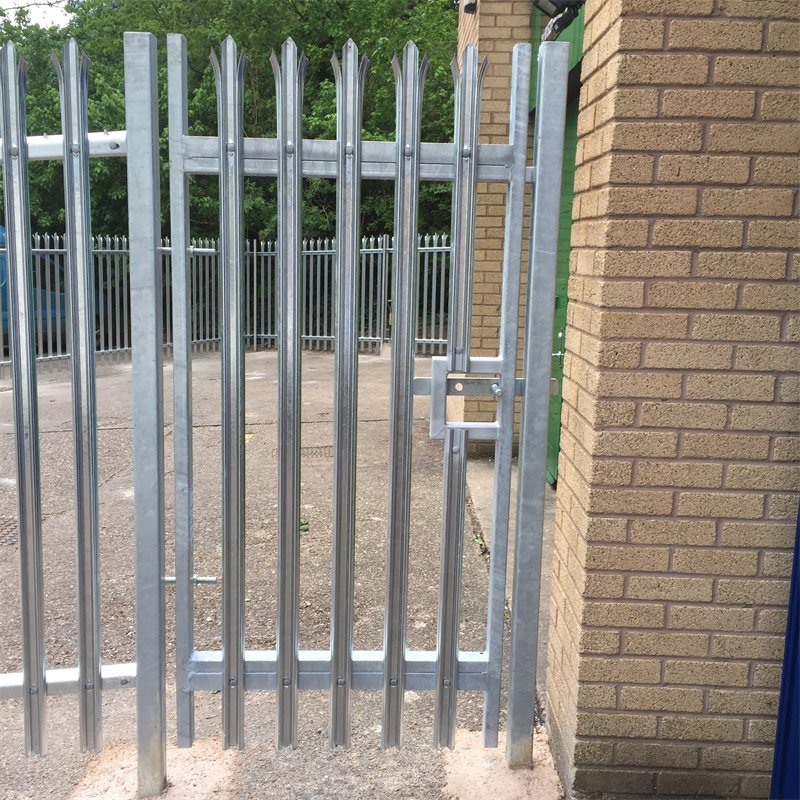
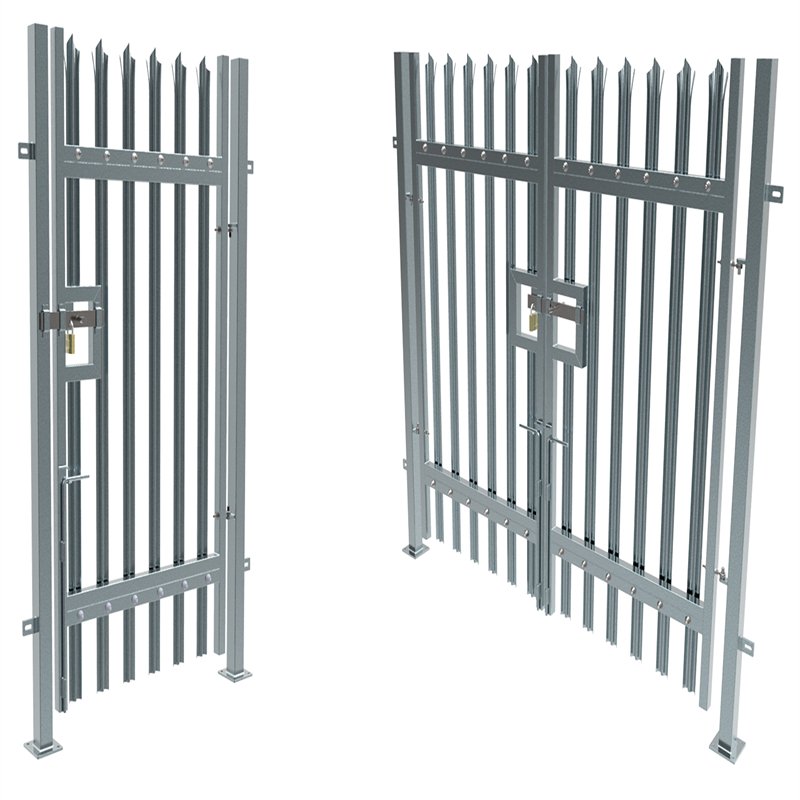
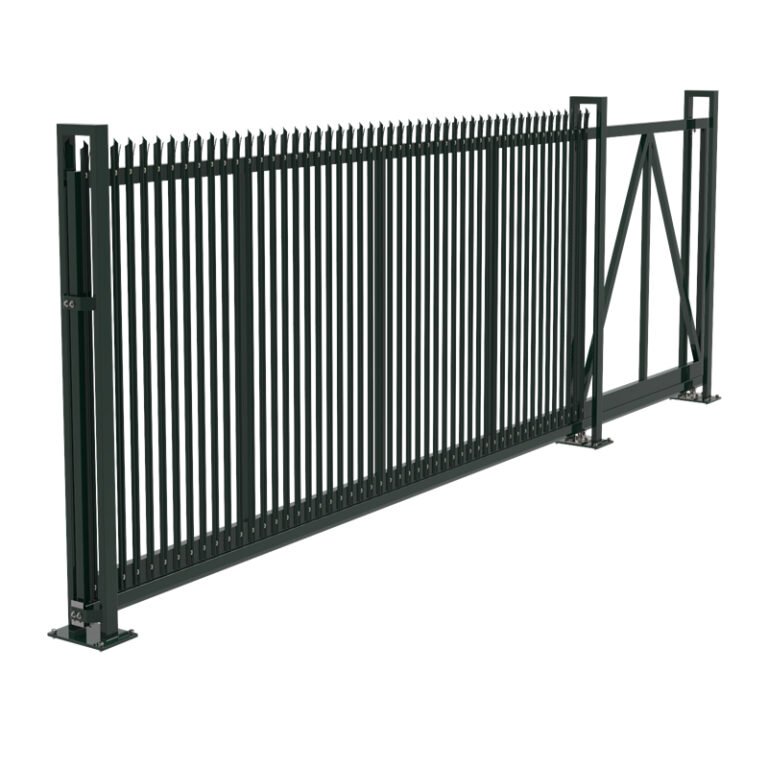
A nearby pedestrian entrance needs a stable support and a safe swing area. Heavy vehicle gates may need independent foundations and additional clearance. Palisade Fencing Gates include pedestrian, swing, and sliding configurations. Confirm hinge loads, latch positions, and access-control needs before fabrication.
Cheap palisade fencing coating choices
Cheap palisade fencing should not achieve savings through an undefined zinc finish. Batch hot-dip galvanising protects fabricated steel after suitable preparation. Specify the galvanising requirements and inspection records in the order.
BS EN ISO 1461:2022 covers batch hot-dip galvanised coatings on fabricated iron and steel articles. It replaces the older 2009 edition. The standard does not automatically cover every continuously galvanised wire or sheet product. BS EN 13438:2013 addresses powder coating performance on relevant galvanised construction articles.
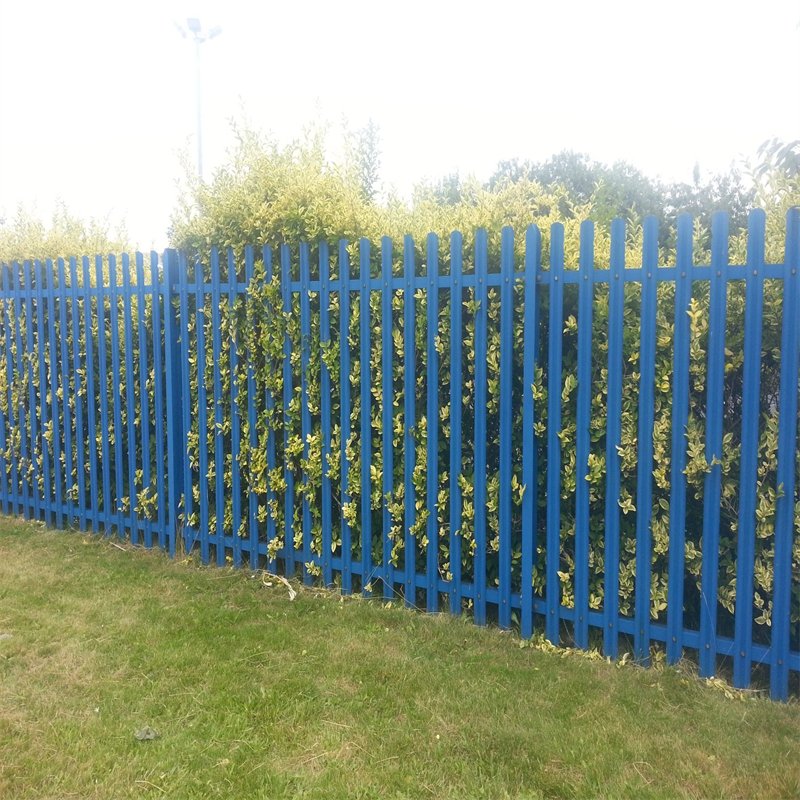
A duplex system combines suitable zinc protection with an additional organic coating. Customers may choose green, black, or other approved RAL colours. Ask for the coating schedule, pretreatment, finish thickness, and acceptance criteria. Avoid assuming a coloured surface guarantees corrosion performance.
Palisade Fencing Cape Town projects may require closer attention to marine exposure and coating damage. Indoor or dry inland projects can have different maintenance conditions. Select the coating system for the actual environment, not solely the destination country.
Gates and perimeter transitions
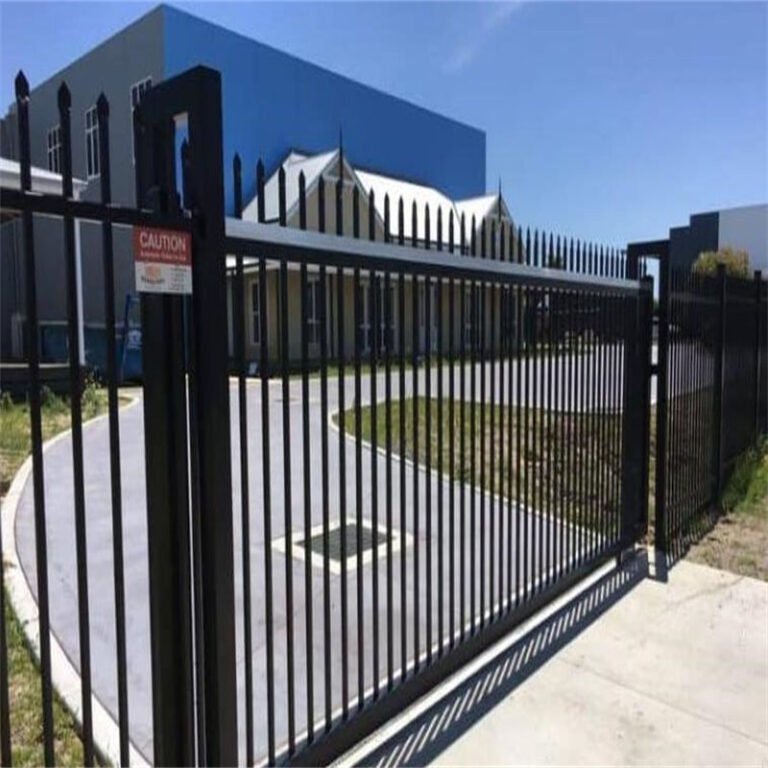
A fence line often combines straight bays with vehicle gates, pedestrian entrances, and changes in direction. Gate posts carry different loads from ordinary intermediate posts. Specify gate leaf width, opening direction, hinges, locks, and operating equipment. A matching finish helps the whole boundary age consistently.
For mixed security sites, Clear View Fence Gate options serve separate mesh fence sections. Clearvu Gates may also suit those mesh sections. Confirm transitions between unlike systems instead of mixing incompatible fittings.
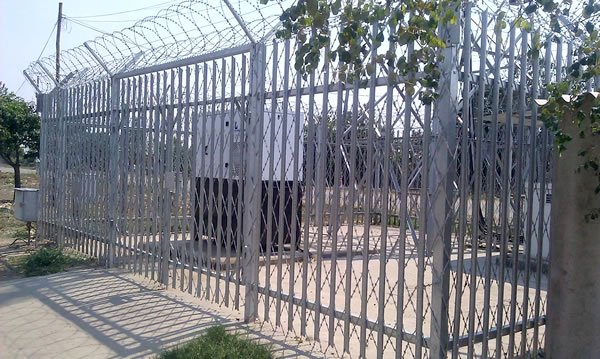
Wall-top deterrents need separate safety and structural checks. Razor Spikes offer one option, while Razor Wire Flat Wrap follows a lower-profile topping arrangement. Razor Coils need additional space and suitable supports. Review local rules and maintenance access before adding sharp components.
Cheap palisade fencing for African environments
Cheap palisade fencing performs best when its finish and foundations match local site conditions. Southern African sites can range from dry inland industrial areas to humid coastal facilities. Rainfall, dust, salt exposure, and ground movement influence maintenance and component selection.
Palisade Fencing Durban installations near the coast should consider moisture, salt deposits, and coating maintenance. Factory compounds near heavy vehicle routes may face accidental impacts and vibration. Farms may instead need reliable gates and long fence runs with predictable replacement components.
Security needs also vary by property. A commercial depot may require visible deterrence alongside CCTV and controlled delivery entrances. A school may prioritise sightlines and safer head profiles. Neither application should rely on fence height alone to manage access.
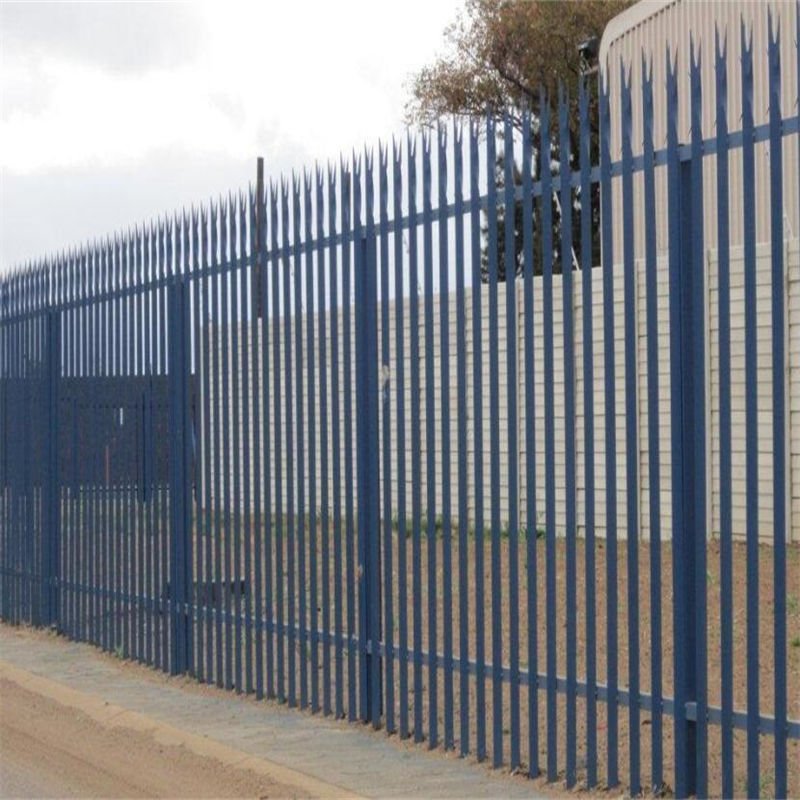
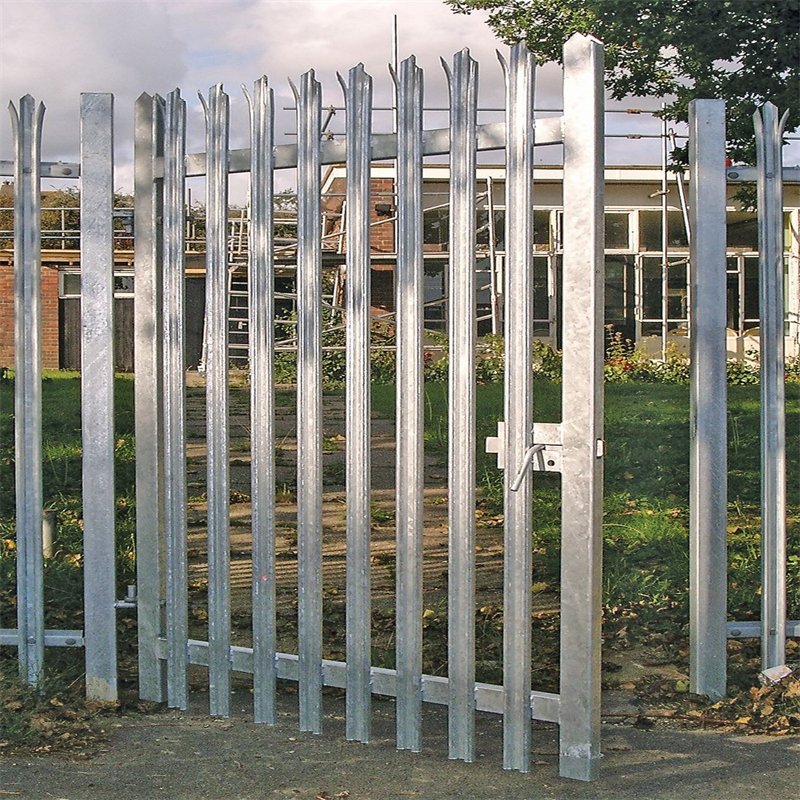
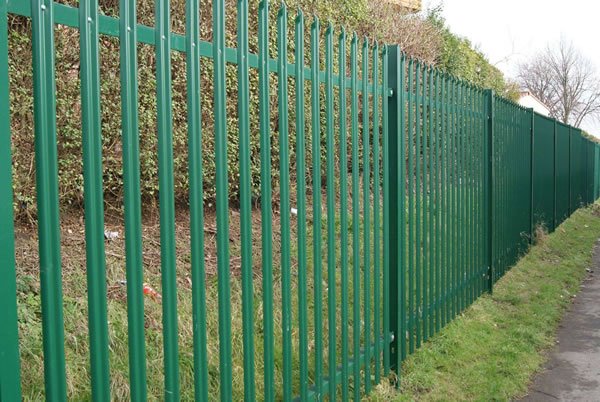
W-section pales create a visible steel barrier for industrial and commercial boundaries.
Manufacturing checks and installation acceptance
Inspect representative samples before mass production when the project needs tight dimensional control. Confirm pale width, thickness, length, head geometry, rail size, and post wall thickness. Check drilled holes against the approved bolt schedule. Examine galvanised surfaces for uncoated areas and transport damage.
During installation, check post alignment, bay spacing, rail attachment, and bolt tightness. Confirm gate movement and clearances before the final handover. Document any site deviations and agree on repairs. Retain coating and inspection records for later maintenance.
For buyers comparing protection types, Clearvu Fence Panels use welded mesh rather than separate steel pales. These products need different supports and fixing details. Do not substitute one system without reviewing the drawings.
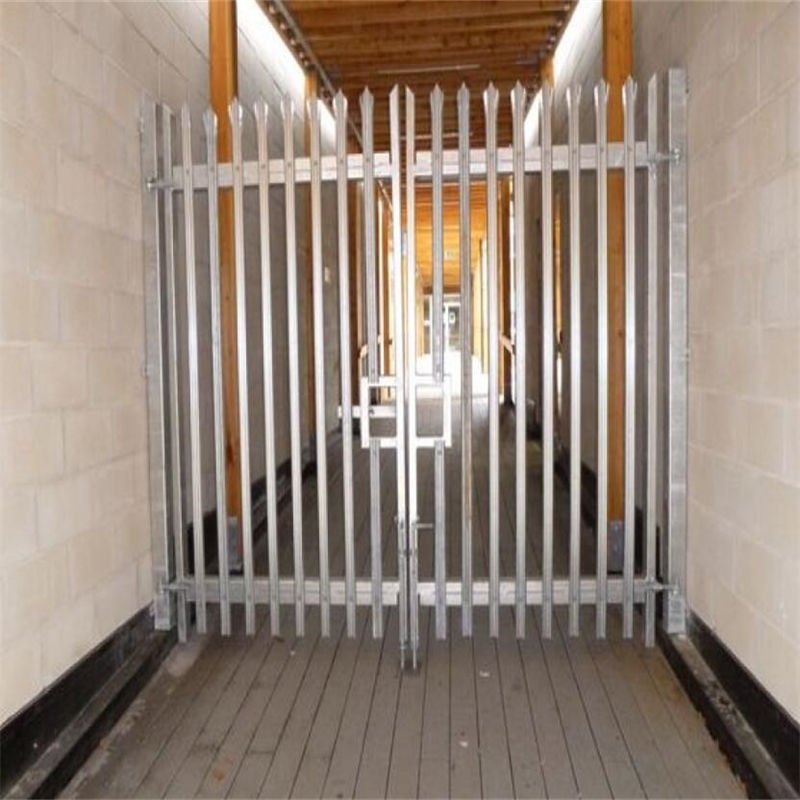
Sharp pale heads and optional toppings require security planning and safe access procedures.
Cheap palisade fencing packaging and shipping
Cheap palisade fencing becomes expensive when poor packaging damages finished components during shipping. Group pales by size and separate coated surfaces with suitable protective materials. Use steel pallets, corner protection, carton board, and securing bands according to the shipment. Label posts, rails, pale profiles, and fasteners for easy identification.
The source packing arrangement includes plastic film, carton board, steel bands, and steel pallets. Buyers can request custom labels and project references on each pallet. Small hardware should travel in sealed, labelled cartons with clear quantities. Verify gross weight and unloading equipment before confirming container capacity.
Inspect a loading report for pallet count, package dimensions, and visible packing condition. Include spare bolts if the installation plan requires them. Discuss any site unloading restrictions before shipment, especially for remote projects.
Applications and safety around public areas
Steel palisade fencing suits warehouses, factories, utility yards, logistics facilities, and controlled commercial property. D-section or rounded tops can create a less aggressive appearance where local requirements permit. Triple-pointed heads provide a stronger deterrent for selected restricted sites.
Decorative tubular systems suit a different design purpose. Do not compare lightweight ornamental pickets with heavy security pales on appearance alone. Palisade Fencing Durban includes W-section and D-section choices for different project priorities.
Sharp heads and concertina additions create potential injury hazards. Follow applicable site regulations, setback requirements, and access policies. Consider safe maintenance routes, public exposure, and emergency access from the beginning.
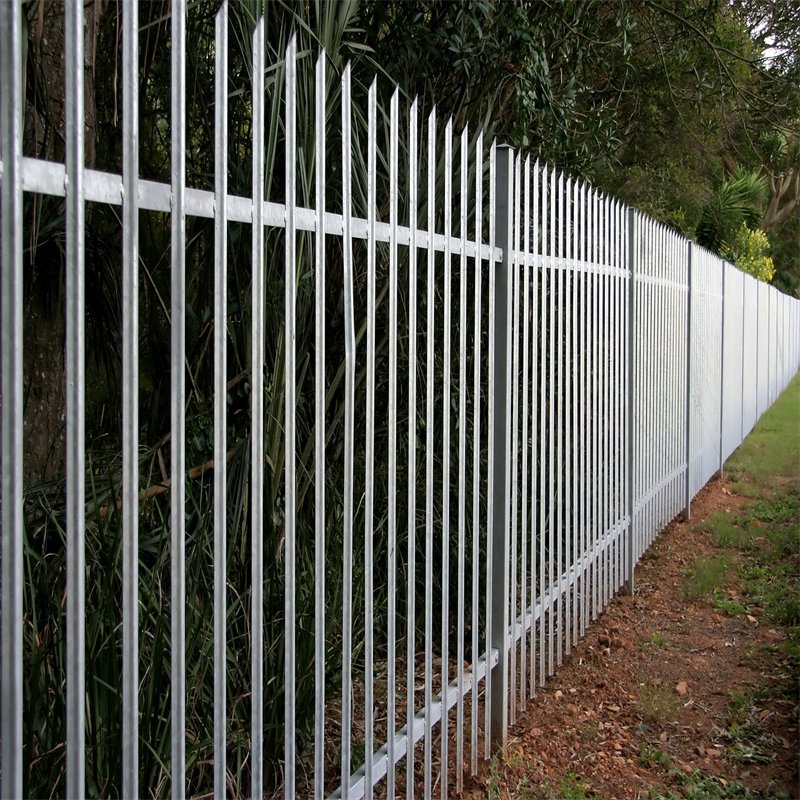
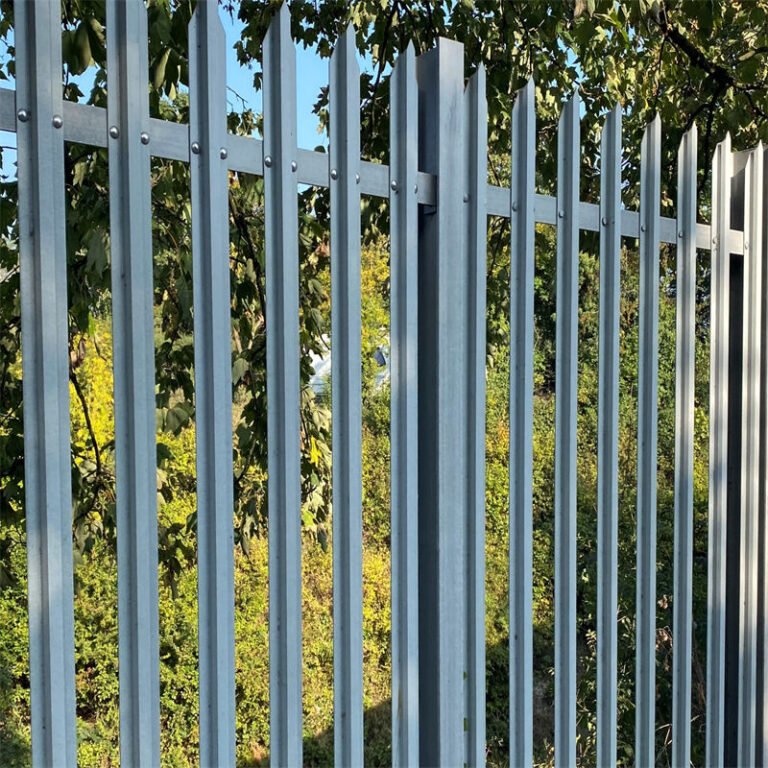
Colour coatings allow the steel boundary to coordinate with industrial and landscaped surroundings.
Cheap palisade fencing project quantities
Cheap palisade fencing estimates become clearer when the quote includes full bay counts and accessories. Consider a straight 110 m perimeter with nominal 2750 mm bays. That layout uses 40 bays before allowing for gates or changes in direction. A continuous straight run needs 41 posts because adjacent bays share intermediate supports.
Illustrative material takeoff for a 110 m straight run
Component
Calculation
Indicative quantity
Bays
110 ÷ 2.75
40
Posts
40 bays + 1
41
Pales
40 × 17
680
Horizontal rails
40 × 2
80
M8 pale fixing sets
40 × 34
1360
Reference fish plates
40 × 2
80
Reference M12 fixing sets
40 × 4
160
This example assumes 17 pales per bay and the source's standard fastener schedule. Corners, gates, terminal fittings, and partial bays can change the quantities. The manufacturer's engineering drawings must determine final parts and supports. Confirm whether each bay kit includes shared posts or independent posts.
What to include in a purchase enquiry
Give the supplier a precise fence height, total length, pale profile, and bay spacing. Specify post size, rail section, fastening system, and preferred top shape. Include any gates, corners, slopes, and unusual ground conditions. Request a detailed coating schedule and packing list.
Ask for material quantities, approximate gross weight, production lead time, and the relevant shipping terms. Palisade Fence projects can include several specification levels within the same perimeter. Identify these sections separately to avoid incomplete quotations.
BMP can prepare a component-based proposal from an approved drawing or a detailed request. Cheap palisade fencing should offer measurable value through correct quantities, dependable finishes, and compatible hardware. Compare the complete installed scope before selecting the lowest apparent price.
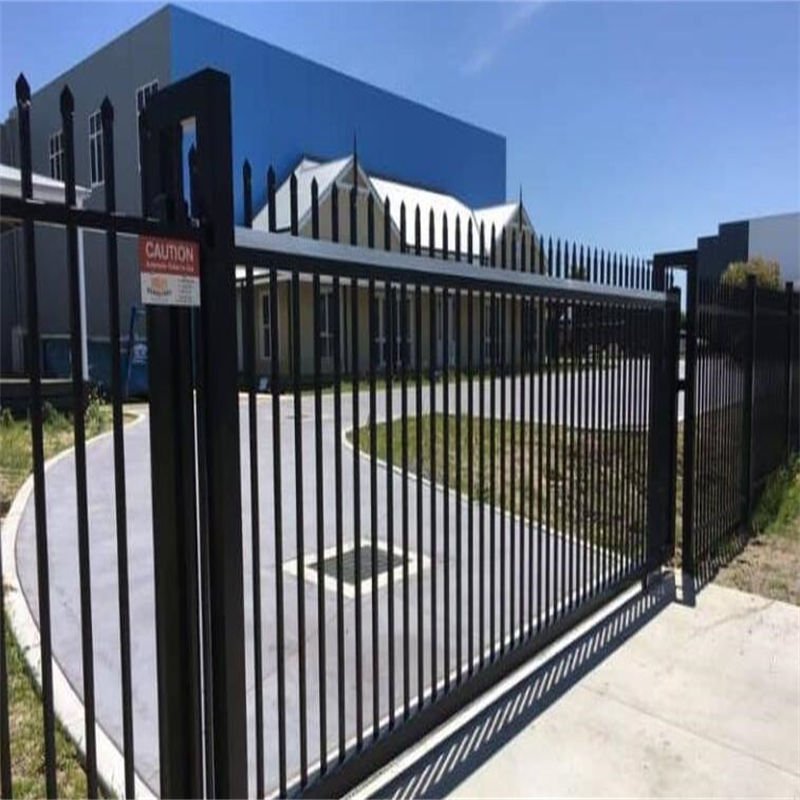
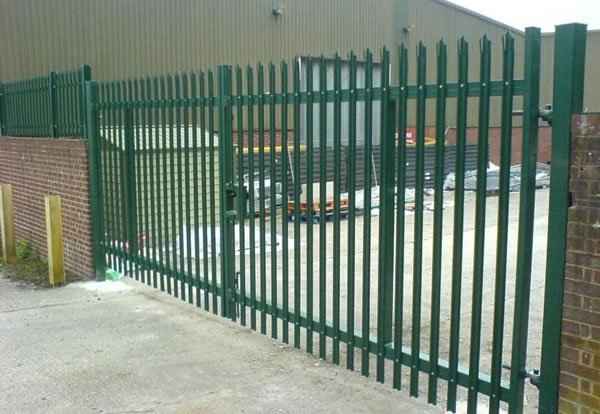
Gate dimensions and supporting posts need their own structural and operational checks.